
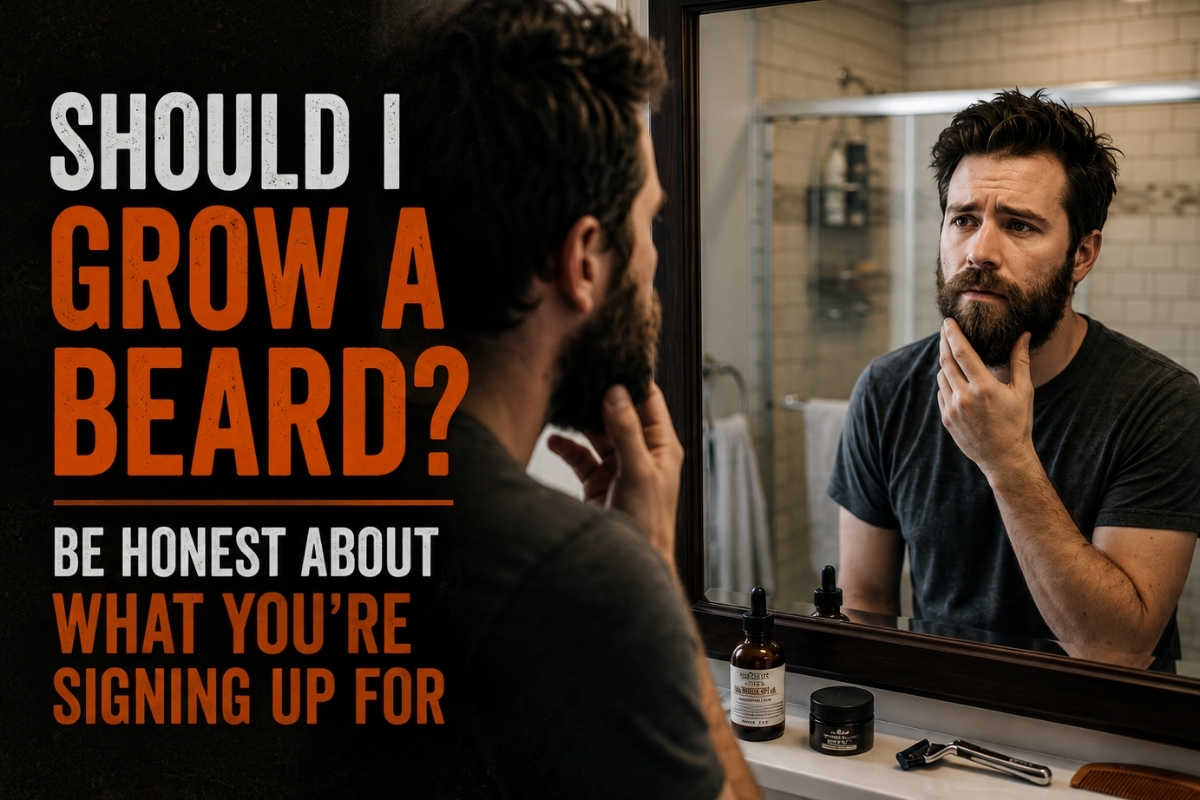
Should I grow a beard? It sounds like a simple question until you stop shaving and start wondering whether you actually like what you’re seeing.
You might like the extra facial hair straight away, hate the awkward stage or change your mind every few days. The beard you pictured before you started growing it might not be the beard you end up with.
That’s why I wouldn’t make the decision based on one first impression. There are a few things worth figuring out before you decide whether the beard stays or the razor comes back out.

In this article
How Long Should You Grow a Beard Before Deciding?
If you’re deciding whether a beard suits you after a week or two, you’re probably judging the awkward stage more than the beard itself.

Early growth can look more uneven because there isn’t much length yet. A thinner area can stand out more when the surrounding hairs are still short, while hairs that stick out in different directions can settle once they get some length. Waiting won’t magically fill a truly sparse patch, but two weeks isn’t enough to see how the beard will come together.
Around four weeks is a better time to judge it. By then you can start seeing where your beard is densest, which areas stay thinner and which way the hair grows and what that does to the shape. If you’re aiming for a fuller beard, I’d give it around eight weeks before deciding what you can realistically grow.
I wouldn’t start trimming the beard just because one side looks awkward early on. If the neck is bothering you, keep the obvious neck growth under control, but leave the cheeks and main beard alone long enough to see what you’re working with.
The exact number of days matters less than having enough length to judge it fairly. You want to see what the beard looks like once it’s had a chance to grow, not make the call halfway through.
Can You Grow the Beard You Actually Want?
Once you’ve given your beard enough time, look at whether your growth can actually give you the beard you wanted.

Your facial hair may be dense across the cheeks, chin and mustache, or most of the growth may be around the jaw and chin while the cheeks stay thinner. Your mustache might connect to the rest of the beard, or there may always be a gap. Those differences matter because some beard styles need more growth in certain areas than others.
This is where I’d stop trying to copy a beard you saw on Instagram. If his cheeks are dense and yours stay sparse, trimming yours to the same shape won’t give you the same result. If most of your growth is around the chin and mustache, I’d look at styles that work better with that instead of one that needs heavy cheek growth.
A thinner area doesn’t mean you shouldn’t grow a beard. It may just change which beard makes sense for you.
What I wouldn’t do is spend months chasing a style that needs coverage you simply don’t have. Work with the areas that grow well and choose from there.
Will a Beard Suit Your Face? Don’t Expect It to Fix Everything
A beard can change how your face looks, but I wouldn’t expect it to fix everything you dislike about your face.
More length at the chin can make the lower half of your face look longer, while leaving more bulk through the sides can make it look wider. I’d think about that before worrying too much about whether your face is oval, square or round and what a face-shape chart says you should grow.
If your face already looks long to you, keeping the chin area a little more compact can help. If you want more width through the lower face, that’s where letting the sides fill out works in your favor.
A beard doesn’t have to correct anything about your face. What matters is what you see in the mirror, not whether it matches a face-shape rule.
How Much Beard Maintenance Are You Willing to Do?
Growing a beard doesn’t automatically mean spending less time on your facial hair. How much work it takes depends on the length you keep and how much you care about keeping it under control.

Short stubble doesn’t need much product, but keeping it at roughly the same length can mean trimming it every few days. A longer beard may not need the length touched as often, but you’ll have more hair to wash, condition and keep under control. You may also want to trim the neckline and deal with hairs that start sticking out.
I’d think about which part of that’s likely to annoy you. If frequent trimming gets on your nerves, very short stubble may actually become more of a chore than letting the beard grow longer. If you don’t want to spend much time looking after longer facial hair, keeping it shorter may make more sense.
A shelf full of beard products isn’t required either. Keep the routine simple and only add something when there’s a clear reason for it.
Before you decide to keep growing it, ask yourself whether you actually want to deal with the upkeep. If you already know you’re going to resent maintaining the length you want, I’d go shorter instead.
When You Shouldn’t Grow a Beard
You don’t need a beard just because you can grow one. If you prefer yourself clean-shaven or with stubble, that’s enough reason not to keep it.
There can be practical reasons too. Some jobs have grooming rules, and facial hair can interfere with tight-fitting respirators that need to seal against your face.
And sometimes you simply don’t like having facial hair. You might like how a beard looks but hate how it feels day to day. I wouldn’t force yourself to keep one because other people think it suits you.
Beard Beasts Verdict: Should I Grow a Beard?
If you’re asking should I grow a beard?, my answer is yes if you’re honestly curious about having one. Give it a fair try and find out instead of wondering what you’d look like with more facial hair.
But growing one doesn’t mean you have to keep it. You don’t need an especially full beard, and you don’t need anyone else to tell you it suits you. What matters is whether you actually like yourself with a beard and whether having one fits your life.
If the answer is yes, keep it. If it isn’t, shave it off.