
You run your beard comb through your beard and it suddenly doesn’t move as easily as it used to. There are hairs stuck between the teeth, the surface feels greasy, and beard oil or balm has started collecting around the base.
That doesn’t necessarily mean you need a new comb. Most of the time, it has simply picked up hair, product and dust through regular use and needs a proper clean.
Knowing how to clean a beard comb isn’t difficult, but the material matters. I’d treat a wooden comb differently from plastic or metal because too much water can cause problems with wood.

In this article
How to Clean a Wooden Beard Comb
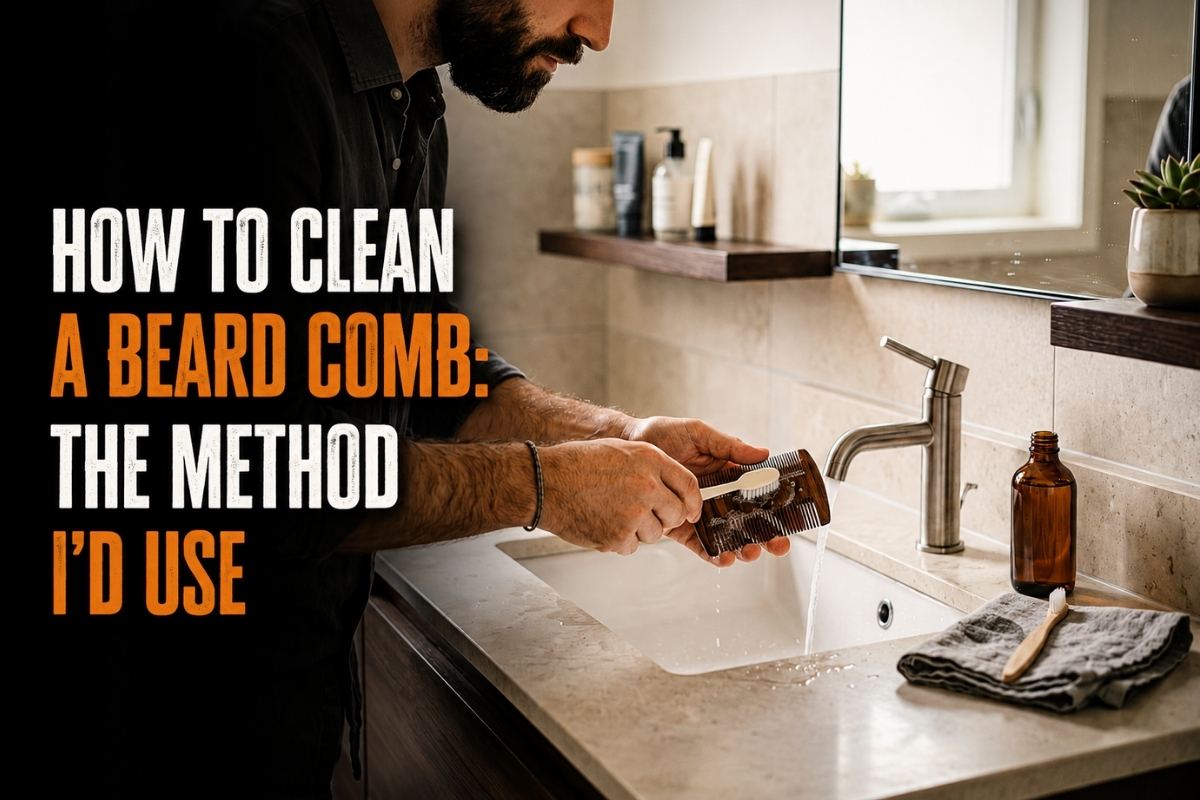
Start while the comb is dry. Pull out any loose hairs with your fingers, then use a soft toothbrush to get between the teeth if anything is stuck. It’s much easier to remove loose hair and debris before you introduce any water.

Next, put a little mild soap on a slightly damp cloth and wipe the teeth and both sides of the comb. If beard oil or balm has collected in the smaller gaps, use the toothbrush to loosen it rather than soaking the whole comb.
Once the buildup is gone, wipe away any soap with a clean damp cloth and dry the comb straight away. With wood, I’d use as little water as I need to get the job done.
The main thing I’d avoid is leaving a wooden comb sitting in water. Wood can absorb moisture, and too much of it can lead to swelling, warping or cracking as the comb dries.
If the wood starts looking or feeling dry, a small amount of food-grade mineral oil can help condition a wooden comb. I wouldn’t oil it every time you clean it. Only do it when the wood starts to look or feel dry.
How to Clean a Plastic or Metal Beard Comb
Plastic and metal combs are easier to wash because you can use more water. Start by removing any trapped hairs, then rinse the comb under warm water to loosen any oil, balm and grime.

Add a little mild soap and use a soft toothbrush between the teeth. Spend some time around the base of the teeth because that’s where product tends to collect and can be harder to see.
If something has dried onto the comb, keep working at it gently with the toothbrush. I wouldn’t use a knife, pin or anything else sharp to scrape it away because you will likely scratch the surface or damage a tooth.
Rinse off the soap once the comb feels free of residue. Plastic can simply be towel dried and left to finish drying, while I’d take a little more care with metal and make sure moisture isn’t left around the teeth, joints or other small gaps.
For coated or finished metal combs, stick with mild soap and avoid strong cleansers that could damage the finish. Warm water, mild soap and a toothbrush should handle normal beard oil, balm and everyday grime.
How Often Should You Clean a Beard Comb?
I don’t think a beard comb needs a fixed weekly or monthly cleaning schedule. What matters is how quickly yours gets dirty.
Someone who regularly uses beard butter, balm or beard wax can get buildup much faster than someone who uses very little product. Where you store the comb matters too. One that’s carried loose in a pocket or grooming bag can pick up hair, dust and other debris between uses.
I’d remove trapped hairs whenever I notice them. For a proper wash, look at the comb itself. A greasy surface, visible product between the teeth or grime around the base are all good signs that it’s time.
You may also notice the difference while you’re using it. If the comb starts feeling sticky or isn’t moving through the beard as easily as normal, check it for buildup before assuming there’s something wrong with the teeth.
That’s the approach I’d use rather than cleaning it because a certain number of days have passed.
When I’d Replace a Beard Comb Instead of Cleaning It
Cleaning can fix buildup, but it can’t fix a damaged comb. If you’ve cleaned it and the same area still keeps catching or pulling hairs, I’d start looking closely at the teeth.
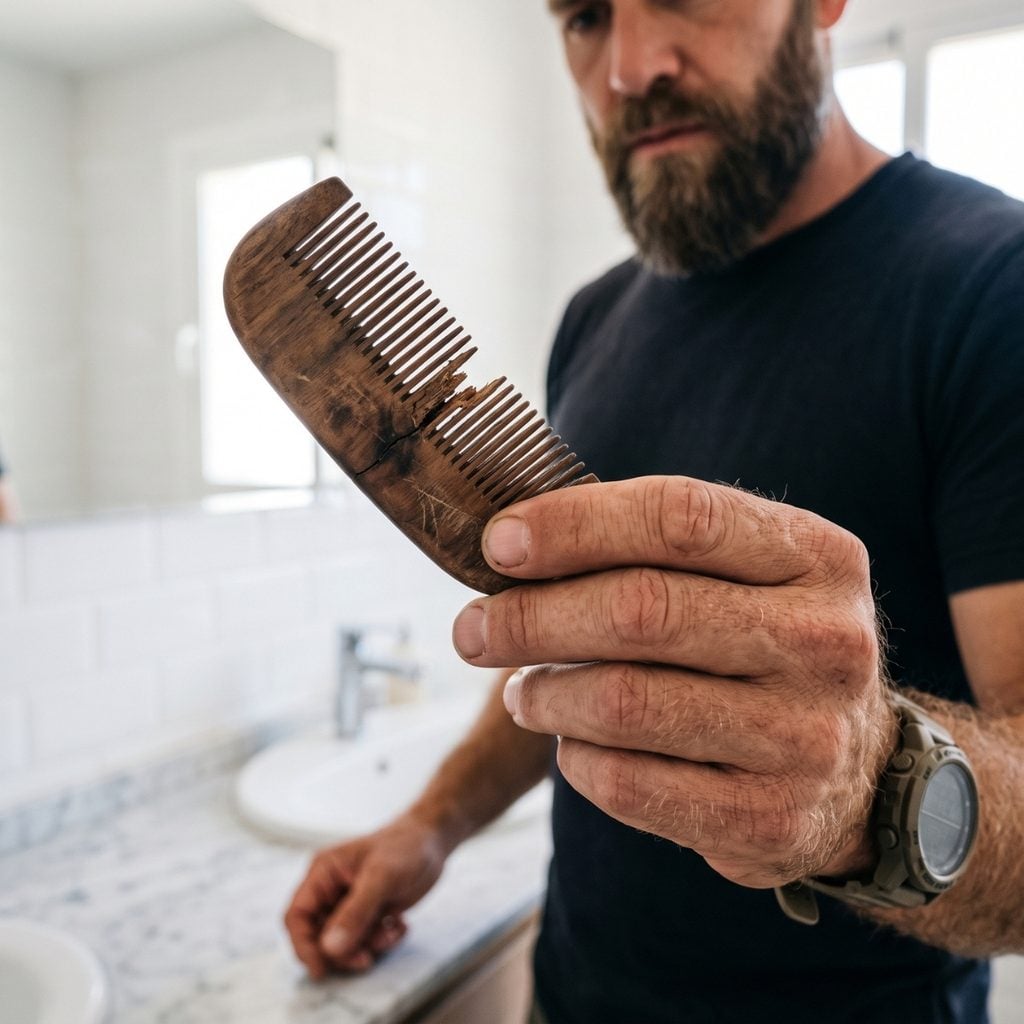
On a wooden comb, check for cracks, splits, splinters or rough areas. A damaged wooden tooth can catch hairs that used to pass through easily, and once that keeps happening, I’d replace the comb rather than keep fighting with it.
Metal combs can end up with bent or damaged teeth. If a tooth moves out of position, it can change the spacing and start catching or pulling beard hair in one part of the comb.
With plastic combs, look for chipped, broken or damaged teeth that can start catching beard hair. I don’t recommend plastic beard combs anyway because I think they’re too harsh on beard hair. If you’re replacing one, I’d move to a good wooden comb or a well-finished metal one instead.
The main thing is working out whether the problem is dirt or damage. If cleaning fixes it, keep using the comb. If a damaged tooth still catches or pulls your beard, it’s time to replace it.
Verdict: Cleaning a Beard Comb Should Be Simple
If you’re wondering how to clean a beard comb, you don’t need a complicated routine. Remove the trapped hair, clean away beard oil and product buildup with mild soap, then dry the comb properly.
I’d be more careful with a wooden comb because it doesn’t need to be soaked. Plastic and metal can take a more normal wash, although metal still needs to be dried properly afterward.
Let the comb tell you when it needs attention rather than following a made-up cleaning schedule. And if it still catches or pulls hairs once it’s clean, check for damage before putting it back through your beard.