

Hair clay can give short and medium styles serious texture, strong hold, and a low-shine finish. But knowing how to use hair clay is not simply about scooping out less product.
Get the preparation or application wrong, and the same clay leaves the hair flat, stiff, and overloaded.
Most problems start before you even touch the product. Hair clay can add grip and separation, but it cannot rescue roots that were damp, flat, or already weighed down.

In this article
Hair Clay Adds Grip, but It Cannot Fix Bad Preparation
Hair clay earns its place in a grooming routine, but it is not a magic fix just because the packaging promises firm hold.
I like it on short and medium cuts where the hair needs grip without much shine. Textured crops, quiffs, messier finishes, and shorter side parts can all benefit from it. The product helps sections stay separated and gives softer hair more resistance.
Fine hair needs a lighter hand and usually a lighter formula. Too much clay weighs down the roots before any texture has a chance to show. Thick or coarse hair can take more product, but it may also need a stronger formula to stop the style falling apart.
Longer hair is not automatically ruled out, but clay becomes harder to distribute as the length increases. A small amount can add separation or reduce shine, though paste or cream is usually easier when the hair needs more movement.
Pomade is not automatically the opposite of clay either. Some pomades are glossy, while others have little shine. Choose clay when you want dry grip and a more textured finish, not simply because you assume it is the strongest product on the shelf.
Most Flat Clay Styles Were Flat Before the Product Went In
Clay struggles when the roots are damp, greasy, or weighed down by old product. That does not mean you need to shampoo every morning.
I want the hair free from heavy buildup, but not stripped until it feels brittle. Strong shampoo can leave it too dry, while heavy conditioner near the roots makes it slippery and harder to lift.
Second-day hair often takes clay well because it already has some grip. The exception is when oily roots or yesterday’s product have started pulling everything down.
The roots matter more than whether every strand is completely dry. If the style depends on height, dry the roots while lifting the hair in the direction you want it to move. Use low or medium heat and guide it with your fingers rather than pressing it flat with a brush.

Dry hair gives clay a firmer hold and a more separated finish. Slightly damp hair makes the product easier to spread, but the result is usually looser once the remaining moisture disappears.
Soaking-wet hair is where the process breaks down. The product cannot grip evenly through saturated hair, and any volume tends to disappear as it dries.
The hairdryer creates most of the height. Clay helps that height last.
The Amount Depends More on Density Than Length
Most bad results come from using too much clay, not from choosing a product that is too weak.
A pea-sized amount is a sensible starting point, but it is not a universal serving. Dense, thick hair may need more, and a soft clay will spread differently from a dry, firm formula.

This is why coin-sized measurements are not especially useful. Two men with the same hair length can need completely different amounts depending on density, texture, and the strength of the product.
I’d rather build the hold in stages than dump one large scoop into the hair and hope for the best. Once too much clay reaches the roots, the style flattens, sections stick together, and reshaping becomes harder.
If the hair has lift and the sections are holding, stop adding product. The goal is enough grip to support the style without leaving an obvious coating behind.
Put the Clay Through the Hair Before You Shape Anything
Clay needs working between the hands before it reaches the hair.
Rub a small amount between your palms and fingertips until it spreads into a thin layer. If thick streaks remain on your hands, those streaks will land heavily on whichever section they touch first.
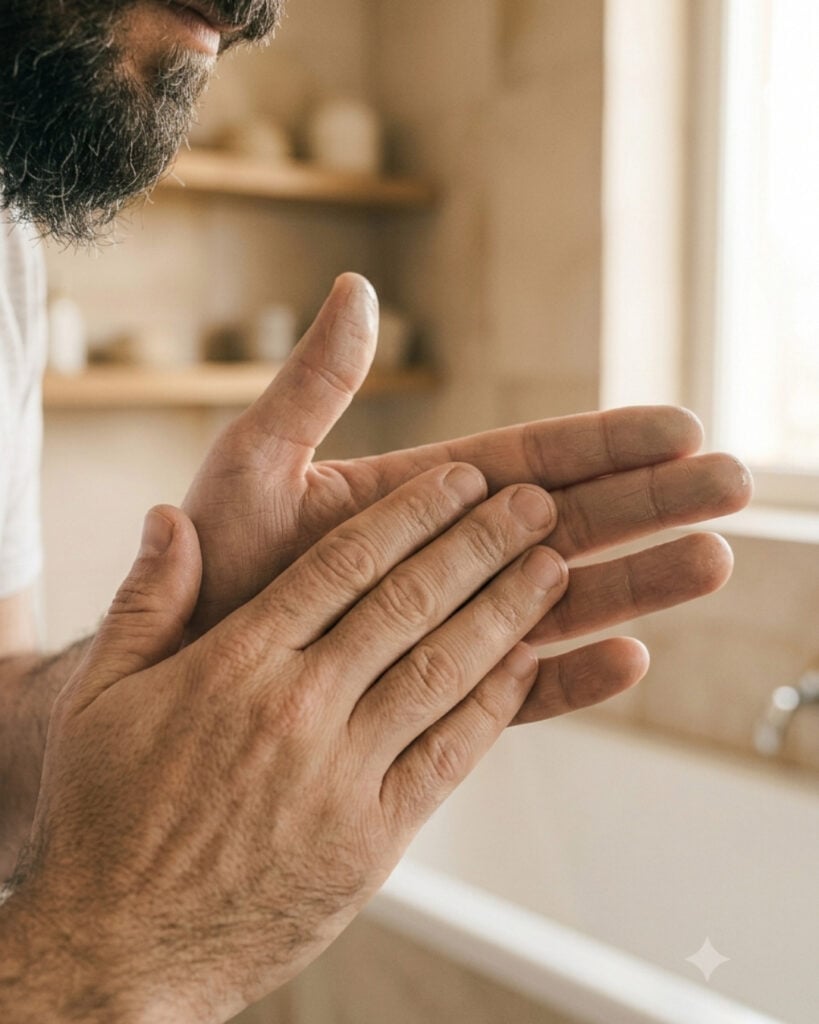
The fingertips matter most. Palms spread the clay quickly, but fingers decide where it goes.
Do not begin at the fringe. Start through the back and crown, then move across the top. Touch the sides only if they genuinely need product, and leave the front until most of the clay has already left your hands.
Work it through the hair rather than wiping it across the surface. Get close enough to the roots to support lift, but do not rub a heavy layer directly into the scalp. Fine hair needs particular care here because product concentrated at the base can pull the whole style down.
Once the clay is distributed, go back and build the shape. Lift larger sections for volume, then use the fingertips to separate smaller pieces where you want more texture.
Spread first. Shape second. That one change prevents the fringe from taking the entire amount while the rest of the hair gets almost nothing.
Flat, Stiff, and Greasy Point to Different Mistakes
Not every bad clay finish needs the same correction.
Hair that goes flat usually has too much product near the roots, was still too damp during application, or never had enough volume built before the clay went in. Adding more clay makes all three problems worse.
A stiff finish usually means too much product landed in one area or the clay is stronger and drier than the hair needs. Break the section apart with your fingers before deciding whether the formula itself is wrong.
Greasy hair can mean too much clay, old product underneath, or a formula with more shine than expected. Clay is often sold as matte, but not every tub dries completely flat.

Patchy hold points more toward distribution. The clay may not have been warmed enough, or the application started at the front and left too little for the crown and top.
If the hair looks dusty or pale, especially on darker hair, the clay may have been applied too heavily or left in thick streaks. Warming it thoroughly and using less usually prevents that.
Diagnose the finish before blaming the product. Flat, stiff, greasy, and patchy are not four versions of the same problem.
Rework the Style Before Adding More Clay
When the style starts losing its shape, reset it with your fingers before reaching for the tub.
Lift the roots again and break apart any sections that have clumped together. Pinch smaller pieces back into place where the texture has disappeared.
A comb can help with a more ordered style, but repeated combing through a matte finish removes separation and pushes the hair flatter. Looser styles usually respond better to fingers.
If the volume has dropped, use a short blast from the hairdryer on low or medium heat while lifting the roots. Heat can soften and move the product, so guide the hair instead of blasting it from every direction.
Only add more clay when one particular area still needs hold. Warm a tiny amount on the fingertips and place it where the weakness is rather than coating the entire head again.
If the style needs another full scoop to survive, the problem probably started during preparation or distribution. Better application fixes more than another layer of product.
Beard Beasts Verdict
Knowing how to use hair clay is mostly knowing when not to add more.
Create the volume first, start with less product than you think you need, and distribute it before shaping the front. If the result still falls flat, check the preparation, placement, and formula before adding another layer.
I judge the result by what the hair does, not by how much product went into it. The texture should remain visible, the roots should stay lifted, and the hair should still move when you rework it with your fingers.
When hair clay has been applied well, you notice the style before you notice the product.