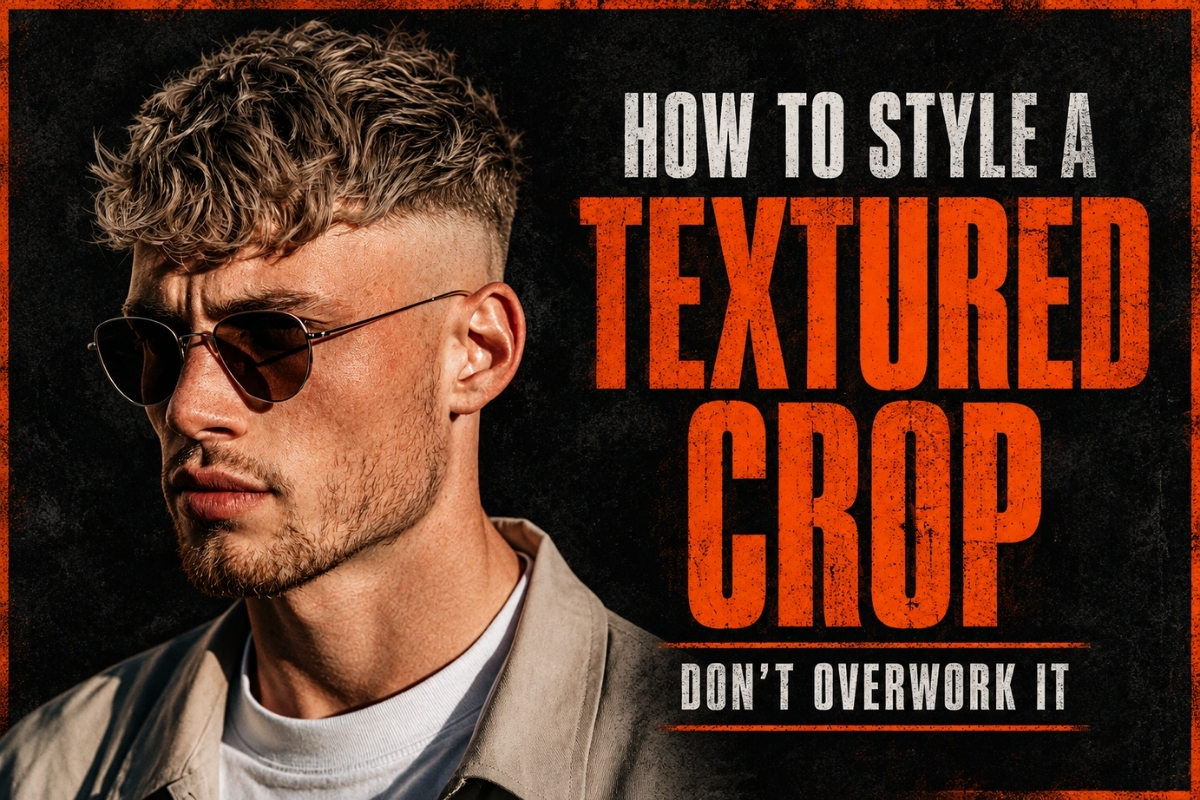
How to Style a Textured Crop (Step-by-Step Guide)
Men’s Hair Styling

How to Style a Textured Crop (Step-by-Step Guide)

How to Style a Textured Crop (Step-by-Step Guide)

If you want to know how to style a textured crop, understand this first. This cut exposes lazy styling fast. Tight sides, broken layers, and a forward fringe mean every mistake sits right on your forehead.

A textured crop works on control and direction. Get those right and it looks sharp without effort. Get them wrong and it falls flat or clumps together. What follows is a simple, repeatable system that keeps the shape disciplined every time.

If you’re still deciding which variation suits you, explore our full guide to Textured Crop Haircuts for Men, where we break down 25 versions from tight fades to longer fringe-driven styles.

How to Style a Textured Crop (Quick Answer)

Start with clean hair because buildup ruins separation. On damp hair, I apply sea salt spray for root grip, then blow dry forward on medium heat using your fingers to keep the texture rough, not smooth. Once dry, I work in a small amount of matte clay from back to front and pinch the ends for sharp separation. I keep the finish matte because shine kills the grit that makes this cut work.

What Makes a Textured Crop Different to Style

A textured crop isn’t just short hair with product. The forward fringe changes everything. You are styling toward the face, not up or back, which means any mistake sits front and centre.

The top is cut into broken, choppy layers, not smooth flow. That contrast is the whole point. Overwork it and it clumps. Underwork it and it falls flat.

Then you’ve got tight sides locking the shape in place. There’s very little room for error. Too much weight, too much shine, or the wrong direction and the shape collapses fast.

That’s why technique matters more than product.

How to Style a Textured Crop Step by Step

Man with textured crop haircut and skin fade styled forward with natural separation

If you really want to understand how to style a textured crop, you need a repeatable system. This cut rewards discipline and punishes guesswork. Follow the steps properly and the shape takes care of itself.

Step 1 – Wash and Reset

If your hair feels heavy or limp, you’re fighting buildup. Old product sticks to the layers and turns sharp texture into soft clumps of fuzz.

I reset with a proper wash so the hair feels light and reactive again. When it moves easily and doesn’t snag under your fingers, you’re ready to build from scratch.

Step 2 – Apply a Pre-Styler

Sea salt is the foundation. Without it, clay sits on the hair instead of gripping into it.

I spray lightly into damp hair and work it through with my hands, focusing on the roots. That grit at the base gives lift and makes everything you apply after feel lighter and more controlled.

Skip this step and you’ll compensate with too much clay. That’s when the top starts looking heavy instead of sharp.

Step 3 – Blow Dry for Direction

This is where most guys get lazy. And it shows.

I use medium heat and push everything forward with my fingers. Not a brush. Not a comb. Fingers keep the layers broken instead of smoothing them into one solid block.

Before I finish, I hit it with a blast of cool air. That sets the direction and locks the shape in place.

Step 4 – Apply Matte Product

Less than you think. Always.

I warm a small amount of matte clay between my palms, then work it in from back to front so I don’t overload the fringe. Once it’s distributed, I pinch small sections to create definition instead of raking through and flattening everything.

The goal is structure with movement. Not helmet hair.

Step 5 – Refine and Lock Shape

Now I step back and actually look at it. The fringe should sit forward with intent, not droop over your eyebrows like you gave up halfway through.

If I need more bite, I tap a small amount of texture powder at the roots. Then I adjust with my fingertips until the layers sit sharp and controlled.

If you’re unsure whether powder or spray works better for your hair type, see our full breakdown of sea salt spray vs texture powder.

When you control the direction and the grip, the haircut does the heavy lifting. The rest is discipline.

Common Textured Crop Styling Mistakes

Most guys don’t mess up the haircut. They mess up the styling. If your textured crop looks flat, greasy, or awkwardly bulky, it’s usually one of these mistakes.

Using Too Much Product

More clay does not mean more structure. It means heavy, clumped layers and zero movement.

If your fringe feels stiff and looks shiny, you’ve gone too far. Start small. You can always add more.

Skipping the Blow Dry

Air drying sounds low effort. It is.

Without heat and direction, the hair falls where it wants. That usually means flat at the roots and fluffy at the ends. A textured crop needs push and control or it loses shape fast.

Smoothing Instead of Separating

If you rake product through like you’re combing back a slick style, you kill the cut. The whole point is broken texture.

Pinch. Twist lightly. Create gaps between sections. Smooth equals soft. Soft equals boring.

Styling Against Your Natural Growth Pattern

If your fringe naturally falls slightly to the left and you force it right every morning, you’re fighting physics. And physics wins.

Work with the way your hair grows. Guide it. Don’t wrestle it.

Ignoring Your Trim Schedule

This cut does not age well. Once the top gets too long or the sides lose their tight shape, the structure fades.

If you’re stretching trims past four weeks, don’t blame your product. Blame your calendar.

Most problems with a textured crop come down to impatience or rushing the process. You either rush it, or you try to force it into something it isn’t.

Fix those habits and the cut sharpens up immediately. Clean texture. Controlled direction. No drama.

Best Products for Styling a Textured Crop

Black hair dryer, brushes, scissors and styling spray arranged on a light background for textured crop styling tools

You don’t need a cabinet full of experiments. You need control. The right foundation, the right hold, and nothing that adds shine or weight where it doesn’t belong.

Sea Salt Texturizer

This is the base layer.

Sea salt adds grit, light hold, and lift at the roots so the hair doesn’t collapse the second you step outside. It makes the top feel rougher in a good way, which means you use less heavy product later.

If your crop always feels flat by lunchtime, this is usually what you’re missing. See our guide to the best sea salt sprays for men if you want options that actually deliver grip without stiffness.

Matte Clay

This is your structure tool.

A proper matte clay gives firm hold without gloss and enough grip to pinch separation into the layers. It should feel dry and sturdy in your hands, not slick.

Use a pea-sized amount. Warm it fully. Work back to front. Add more only if you truly need it. If you’re unsure which formulas actually hold without adding shine, see our guide to the best hair clays for men.

Wax

Wax is softer control for guys who don’t want a rigid finish.

It works well if your hair already has natural thickness and grit. The hold is more flexible, but the risk of shine is higher, so go light.

If the finish starts looking glossy, you’ve used too much.

The product isn’t the magic. Your technique is. Choose tools that support texture and structure, not ones that mask bad habits with gloss.

How to Maintain a Textured Crop Between Cuts

Barber trimming a textured crop haircut to maintain shape and length

A textured crop looks sharp for about three weeks. After that, it starts testing your discipline. If the fringe starts dropping into your eyes or splitting unevenly, it’s time for a trim.

Trim every 3 to 4 weeks. Push it to five and you’ll notice the fringe losing shape and the sides looking bulky. The clean contrast is what makes the top look intentional.

Reset buildup properly. Even good clay leaves residue over time, and that kills separation. Use a clarifying wash once a week so the hair feels light and reactive again instead of coated and heavy.

If the texture starts looking flat midweek, reactivate it with a light mist of sea salt on damp hair and a quick blow dry forward. Don’t pile more product on top of old product. That’s how you end up with clumps instead of grit.

Keep the fringe disciplined. If it starts dropping into your eyes or splitting awkwardly, it’s not edgy. It’s overdue.

Maintain the shape, respect the trim cycle, and the crop keeps doing what it was designed to do: look sharp without trying too hard.

How To Style A Textured Crop FAQs

How to style a textured crop at home?

Start with clean, damp hair. Apply sea salt for grip, blow dry forward with your fingers to set direction, then work in a small amount of matte clay and pinch the layers for separation. Keep it matte and controlled. If you skip the blow dry or overload product, it falls apart fast.

What product is best for a textured crop?

Matte clay is the backbone. It gives hold and structure without shine, which is critical for this cut. Sea salt works underneath as a foundation for grit and lift. Wax can work, but only if you keep it light and avoid that glossy finish.

Do you need to blow dry a textured crop?

If you want it to look sharp, yes. Air drying leaves the roots flat and the direction random. A quick blow dry forward builds structure and locks the fringe into place so the layers sit where they should.

How often should you trim it?

Every three to four weeks. The sides lose their tight shape quickly, and once the top grows too long, the texture turns soft instead of sharp. Stretch it too far and the whole cut starts looking tired.

Why does my textured crop look flat?

Usually one of three things. Too much product weighing it down, no pre-styler for root grip, or you skipped the blow dry. Sometimes it’s just overgrown and needs tightening up. Flat hair is rarely a product problem. It’s almost always technique or timing.

The Beard Beasts Verdict

When you understand how to style a textured crop, you realise it’s not about piling on product. It’s about control. Direction. Discipline.

A textured crop is sharp and unforgiving. Skip the blow dry, overload the clay, ignore your trim cycle, and it shows immediately.

Master the technique and this cut becomes one of the easiest styles to maintain. You’re not fighting your hair every morning. You’re guiding it.

That’s the difference between having the cut and owning it.

Written by Rick Attwood

Lead Researcher & Grooming Analyst

Rick focuses on separating grooming marketing from physiological fact, drawing on years of personal product testing and deep dives into nutritional studies to deliver accurate advice to the beard community.

About Beard Beasts: Every guide we publish is verified through our Review & Testing Methodology.

Subscribe
Straightforward Grooming, Nothing Else

Actionable tips, tested picks, and simple routines that work. Only when it’s useful, no spam, no gimmicks.

EU/UK: Double opt-in. Unsubscribe anytime.

© 2025 Beard Beasts | Privacy Policy | Terms of Use | Cookies | Affiliate Disclosure | Accessibility