
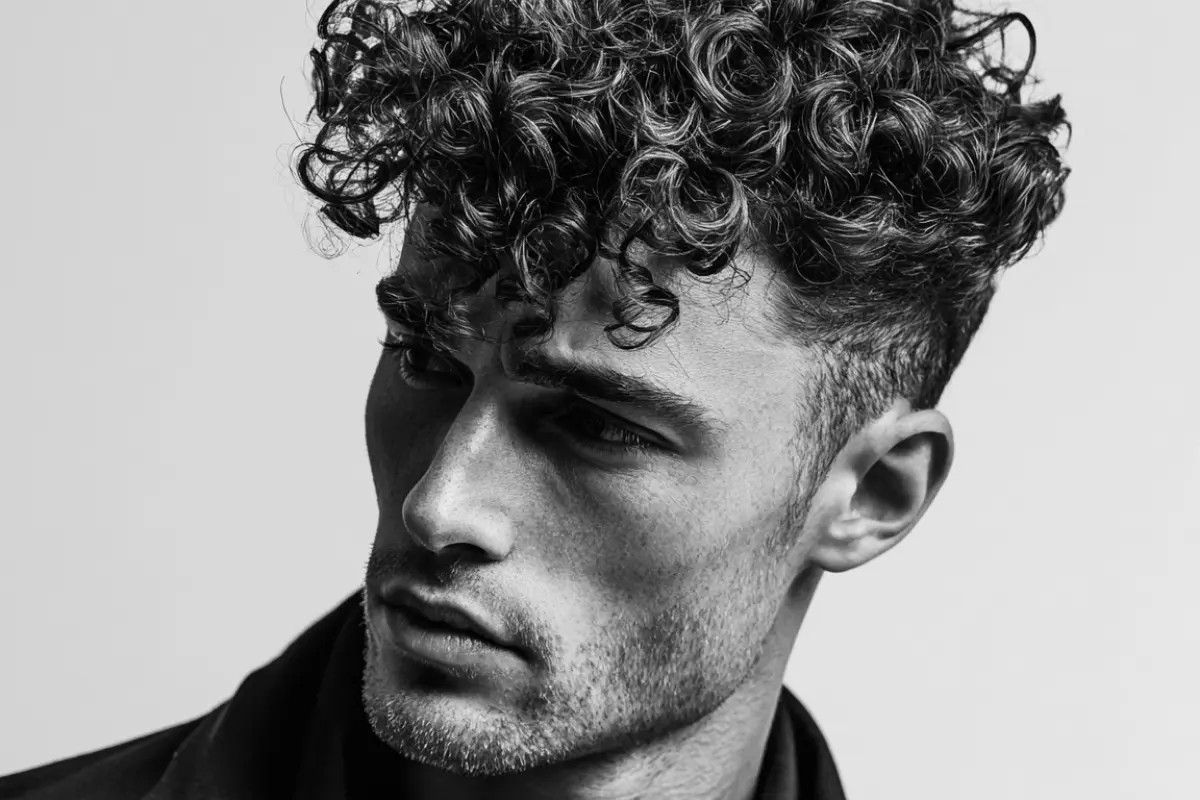
A 2mm beard is barely any length at all. Run your hand over it and you’ll feel a bit of grit, nothing more.
And that’s exactly why the small stuff matters so much here. There’s no length to hide behind, so every detail you get wrong shows up right away.
Here’s the thing most guys miss. At this length, a beard can read two completely different ways. It can look like clean, deliberate stubble that you chose on purpose. Or it can look like you forgot to shave for a few days and didn’t get around to cleaning it up.

The gap between those two looks isn’t about the facial hair itself. It comes down to three things: your density, your neckline, and your cheek line. Get those right and 2mm carries its weight. Get them wrong and you’re just walking around looking scruffy.

In this article
2mm Is Light Stubble, Not a Beard
Let’s be clear about what you’re actually working with. 2mm is light stubble. It throws a bit of shadow across your jaw and gives you some texture, but it doesn’t have the visual weight of a real short beard.
You’re not building structure at this length. You’re adding a hint, a suggestion of growth that softens the face without covering it.
That’s not a knock against it. Light stubble is a sharp look on a lot of men. But you need honest expectations going in. If you’re after something with body and presence, 2mm isn’t going to deliver that, no matter how neatly you trim it.
So here’s my simple test. If 2mm gives you enough shadow that people can clearly see you’ve got stubble, stay right where you are.
If you look in the mirror and you’re squinting to see anything at all, grow it longer. Don’t fight a length that isn’t doing the job for your face.
The Difference Is the Neckline and Cheek Line
When there’s this little beard to play with, the edges do almost all the heavy lifting. You can’t rely on volume or coverage to pull the look together, so the lines you shape become the whole show. This is where a lot of guys either nail it or fall apart.
Start with the neckline. You want it sitting just under the jaw, following the natural line where your head meets your neck.
The classic mistake is taking it too high, up onto the jaw itself, which gives you this floating beard that looks chopped off and wrong. Keep it low and natural. The neckline should look like where your beard would stop on its own, just cleaned up a little.
The cheek line needs a different hand entirely. Go light-touch here. At 2mm you’ve got so little beard that a hard, sharp cheek line looks completely out of proportion, like you put in a ton of work for almost no return.
You want to clean up the obvious strays above your natural growth and leave it at that. A soft, slightly faded cheek line always beats a razored edge on light stubble.

If Your Neckline Gets Irritated
Short stubble looks low-maintenance, but the neckline can punish you if you overwork it. The skin there is thinner and more sensitive than your cheeks, and at 2mm you’re shaving close enough to cause trouble.
The usual suspects are razor burn, those small red bumps that flare up after shaving, dryness, and ingrown beard hairs that get trapped under the skin.
Most of that comes from a few bad habits. Too much pressure on the blade. Going over the same patch five or six times trying to get it perfect. A dull blade dragging instead of cutting. Shaving hard against the grain because someone told you it gives a closer result. All of that adds up to an angry neck.
The fix is mostly about easing off. Use a clean, sharp blade so it cuts cleanly on the first pass instead of tearing at the hair. Keep your hand light, let the razor do the work.
And don’t shave that neckline dry. A good shave gel or cream gives the blade something to glide on and cuts the friction right down. The The Plow 2.0 is a solid pick for neckline work, the build feels controlled in the hand and it handles the close edging without dragging.
One more thing. If your neck feels tight or looks red after you’ve finished, put some moisturizer on it. People skip this and then wonder why their skin stays irritated. A bit of moisture after shaving calms everything down and stops the dryness building up over time.
Density Decides Whether 2mm Has Any Point
Two men can both trim to exactly 2mm and end up looking nothing alike. That’s because the length isn’t really the variable that matters most. Density and color are.
Thick, dark growth at 2mm gives you a clear stubble shadow. The hairs are close together and they show up against the skin, so even at this short length you get a defined, obvious look.
Fair, fine, or thin growth tells a different story. At 2mm it can look faint to the point of barely registering, a vague shadow that nobody really notices.
And here’s the important part. If your 2mm beard looks too faint, that’s not something you can trim your way out of. It’s not a technique problem and it’s not about your blade. It’s a length problem, plain and simple.
The answer in that case is to grow it. Try 5mm and let the extra length build up enough overlap to actually show. Sometimes more length is the only fix, and no amount of careful edging will change that.

When Less Beard Looks Better Than More
A lot of men assume more beard is always the upgrade. It isn’t. Plenty of guys look sharper in light stubble than they ever would in a longer beard their growth can’t really support.
The reasons stack up. At 2mm your face stays visible, your features don’t get buried under hair. If you’ve got a strong jaw, light stubble lets it do its own thing rather than smothering it.
And mild patchiness, the kind that becomes glaringly obvious when you grow a beard out, often disappears at this length because there’s not enough hair for the gaps to show.
I’ll add one caveat. Sparse growth is a different animal from mild patchiness. If your growth is truly thin and gappy, 2mm might just emphasize that, and you may be better served growing past it to fill things in.
So read your own face honestly. But for a good number of men, the verdict holds: a 2mm beard that actually suits your face beats a longer beard that’s trying too hard and not quite getting there.
2mm vs 5mm vs 10mm: Choose the Job, Not the Number
People treat these like tiny guard changes, a click up or down on the trimmer. They’re not. Each one is a different job entirely, and once you think of them that way the choice gets a lot easier.
2mm is light stubble. It’s shadow and texture, a suggestion of beard. 5mm is heavy stubble, where the hair starts to gain more presence and reads as a intentional, fuller look. 10mm is where you cross into short beard territory, where you get actual coverage and the lower half of your face starts to change shape.
So work backwards from what you want. If you’re after light shadow and nothing more, stay at 2mm. If 2mm looks too faint for your density, step up to 5mm and let it build.
And if you want coverage, structure, a real change to your lower face, 10mm is where that conversation begins. Pick the result first, then the number follows.
The Beard Beasts Verdict
A 2mm beard works when you want light stubble with just enough clean edge to look like you meant it. That’s the whole game at this length. Intentional, not accidental.
If it’s working for you, keep it simple. Trim evenly across the face so you don’t get random thick patches. Clean up the neckline and keep it low. Clear the cheek strays with a light hand. And resist the urge to carve hard lines, because at 2mm they always look like overkill.
But if you’ve done all that and it still looks too faint to register, take the hint and grow past it. That’s really what 2mm is. It’s the point where stubble either starts working for your face, or quietly tells you to head somewhere longer.