Beard Flakes but No Itch — Why It’s Happening and How to Fix It

Beard flakes are usually treated like a problem that’s already gone too far. The assumption is irritation, beard dandruff, or something that needs to be attacked quickly. But when flakes appear without itchiness, redness, or discomfort, that assumption breaks down.

Non-itchy beard flakes aren’t a warning sign of a medical condition or neglect. They’re an early signal that the skin underneath the beard is out of balance — often from routine choices that feel harmless but compound over time.

The beard can look neglected even when everything else feels fine. No irritation. No urgency. Just visible flaking that undermines an otherwise well-kept appearance. That disconnect is what leads men to overcorrect, reaching for harsher cleansers or treatments that quietly make the problem harder to resolve.

Quick Summary

If your beard flakes but doesn’t itch, you likely don’t have dandruff. You have dry skin. The solution isn’t medication—it’s restoring moisture and fixing your washing routine.

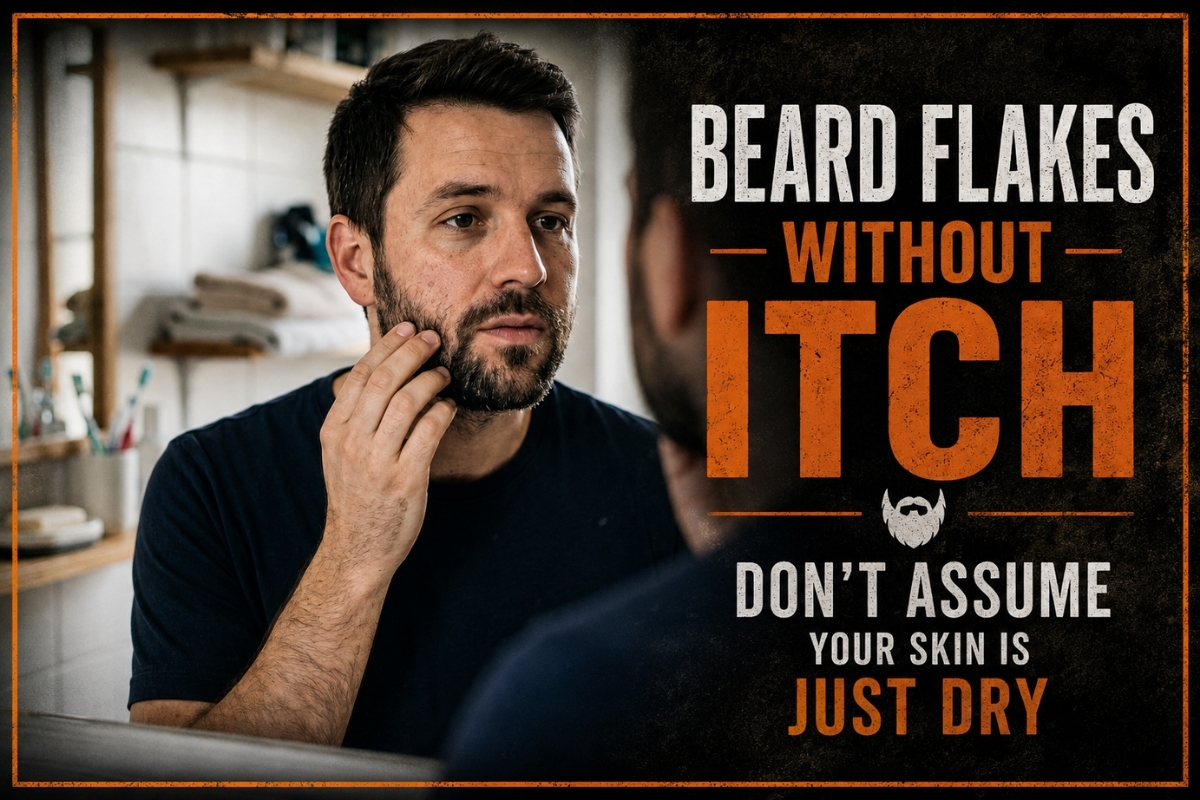
Man checking his beard in the mirror for beard flakes

Beard Flakes Without Itch: What That Actually Tells You

Beard flakes without itch are one of the most misunderstood beard grooming problems. The reason is simple: flakes are automatically treated as dandruff, even when the skin isn’t behaving like dandruff at all.

When itch is absent, the skin usually isn’t inflamed. That matters, because inflammation is what changes treatment. Without it, the cause is far more likely dry skin under the beard or residue sitting on the surface, rather than a fungal issue that needs medication.

This is where many routines quietly go wrong. Men see flakes and reach for anti-dandruff shampoo, harsher cleansers, or decide to wash their beard more often. The beard begins to look worse, not better, because the original problem wasn’t excess oil or yeast — it was a lack of balance.

Flaking often shows up before discomfort does. The skin sheds long before it becomes irritated, especially under dense beard hair where moisture loss is harder to feel. In other words, your beard is giving you early feedback.

That feedback is useful. When beard flakes appear without itch, you’re usually dealing with a fixable grooming issue, not a skin condition. Correct the routine, restore moisture, and the flakes stop being a recurring problem instead of something you’re constantly reacting to.

Dry Skin vs Beardruff (Seborrheic Dermatitis)

Not all beard flakes come from the same problem, even though they often look similar at first glance. The difference matters, because treating dry skin like beardruff — or vice versa — is one of the fastest ways to make flaking persistent.

When It’s Beardruff

Beardruff, clinically known as seborrheic dermatitis, behaves differently from simple dryness. It’s driven by yeast activity on oil-rich skin and tends to come with visible irritation.

The flakes are often yellowish or greasy, the skin underneath looks red or inflamed, and itching is usually part of the picture — sometimes mild, sometimes constant.

When It’s Dry Skin Under the Beard

Dry skin under the beard tells a quieter story. The flakes are finer, whiter, and more powder-like. The skin may feel neutral or slightly tight, but it doesn’t burn, sting, or demand attention.

There’s no redness, no swelling, and no sense that the skin is “angry.” It’s simply under-hydrated.

Why the Difference Matters

This distinction is more than cosmetic. Seborrheic dermatitis thrives in oily conditions and responds to treatments that reduce yeast and regulate oil. Dry skin does not.

It improves when the skin barrier is protected, moisture is restored, and harsh routines are stopped.

If your beard flakes without itch and the skin underneath looks calm, you’re far more likely dealing with dryness or surface residue, not a dermatological condition. That means the solution is corrective, not clinical.

The Most Common Causes of Non-Itchy Beard Flakes

Once fungal dandruff is ruled out, beard flakes usually come down to routine. Not bad grooming — just small, repeated habits that quietly strip moisture or leave residue behind.

Man washing beard in hot shower, a common cause of dry skin and beard flakes without itch

Harsh Soaps and Scalp Shampoos

Most hair shampoos are formulated to remove oil from the scalp. Facial skin doesn’t tolerate that level of cleansing well, especially under beard hair where oil distribution is already uneven.

The result is predictable: the skin dries out, begins shedding faster, and flakes become visible long before irritation shows up.

Hot Water and Skin Barrier Breakdown

Hot showers feel productive, but heat weakens the skin’s protective barrier. When that barrier breaks down, moisture escapes faster than it can be replaced.

Under a beard, this often shows up as flaking without itch — the skin is dry, not inflamed.

Seasonal Dryness and Indoor Air

Cold outdoor air holds less moisture. Indoor heating removes even more. Together, they create an environment where hydrated skin struggles to stay that way.

This is why beard flakes often appear suddenly in winter or during long periods of air-conditioned living, even when nothing else has changed.

Product Buildup That Looks Like Dandruff

Beard balms, waxes, and styling products don’t disappear on their own. When they aren’t fully washed out, they dry, break apart, and shed as white residue.

What looks like skin flaking is often leftover product announcing that cleansing is out of sync.

The Anti-Dandruff Shampoo Mistake

When beard flakes show up, anti-dandruff shampoo feels like the obvious fix. It’s widely recommended, easy to find, and marketed as a universal solution. For the beard, it’s usually the wrong move — regardless of what’s causing the flakes.

Most anti-dandruff shampoos are formulated for the scalp, not facial skin. They’re designed to aggressively reduce oil and suppress yeast in an environment that’s thicker, oilier, and far more resilient than the skin under a beard.

That approach doesn’t translate well. Facial skin has a weaker barrier and loses moisture more easily. When exposed to scalp-strength anti-dandruff formulas, it often becomes drier, more reactive, and slower to recover — even in cases where yeast is involved.

This is why some men see brief improvement, followed by worse flaking. The surface looks calmer at first, but the underlying skin becomes progressively more compromised.

Whether flakes are caused by dryness, buildup, or mild dandruff, the beard responds best to balance, not suppression. Treating facial skin like a scalp problem rarely fixes the cause. It usually extends it.

How to Fix Beard Flakes Without Medication

When beard flakes aren’t caused by inflammation, the fix isn’t aggressive. It’s corrective. The goal is to remove what doesn’t belong on the skin, then restore what’s missing — without overworking either step.

Man brushing beard with wooden comb to remove dry skin flakes without itch

Step 1: Lift What’s Already Loose

Flakes don’t need to be scrubbed off. They need to be lifted.

A boar bristle brush used on a dry beard before washing helps dislodge loose skin and surface residue without irritating living skin underneath. This matters because washing alone often leaves flakes trapped at the base of the beard, where they resurface later.

Light pressure is enough. The purpose isn’t exfoliation for its own sake — it’s clearing the surface so the skin can reset.

Step 2: Wash Less, but Wash Smarter

Facial skin doesn’t benefit from daily cleansing. For most men, washing the beard two to three times per week with a beard wash is enough.

On off days, water is sufficient. Rinsing removes sweat and debris without stripping natural oils the skin needs to stay balanced. Over-washing fixes nothing here; it only extends the problem.

Step 3: Restore Moisture at the Skin Level

Beard oil isn’t for the beard. It’s for the skin under it.

Applied correctly, a lightweight oil helps replace the skin’s natural oils, slow moisture loss, and normalize skin behavior. The key is contact. Use fingertips to work the oil through the beard and into the skin rather than coating the hair and stopping there.

For longer beards, a small amount of beard balm can help seal moisture in and reduce exposure to dry air — but only after the skin itself is hydrated.

When beard flakes come from dryness, this approach works quietly and predictably. No harsh resets, no cycling through products — just a routine that allows the skin to behave normally again.

How to Prevent Beard Flakes From Coming Back

Once beard flakes are under control, the focus changes. Prevention isn’t about doing more — it’s about avoiding the small habits that quietly undo progress.

Hot water is one of the most common setbacks. Long, steamy showers feel harmless, but repeated heat exposure weakens the skin barrier and accelerates moisture loss. Finishing with cooler water helps the skin retain hydration and recover more efficiently.

Air quality matters more than most men realize. Dry indoor environments, especially during winter or heavy air-conditioning use, pull moisture from the skin continuously. Maintaining indoor humidity reduces this background stress and keeps the skin from slipping back into dryness.

Consistency beats intensity. Applying beard oil regularly, not excessively, keeps the skin’s natural oils balanced and prevents the slow return of flaking. Skipping days, then over-applying later, tends to recreate the same imbalance that caused the issue in the first place.

Finally, be mindful of product layering. Heavier balms and styling products should only be used when they’re being properly washed out. Residue left behind doesn’t just affect appearance, it interferes with the skin’s ability to regulate itself.

Prevention works when the beard is treated as part of the skin, not a separate grooming problem.

Beard Flakes Without Itch: Common Questions

Non-itchy beard flakes tend to raise the same questions. Most stem from confusion between dry skin, dandruff, and product buildup — issues that can look similar but behave very differently.

These answers focus on what matters when irritation isn’t part of the picture.

How do I stop my beard from flaking?

When beard flakes don’t itch, the solution is usually routine correction, not treatment. Reduce harsh washing, avoid scalp shampoos on the beard, and restore moisture at the skin level with a lightweight beard oil applied consistently.

Why do I get white flakes when I rub my beard?

White flakes that appear when you rub your beard are typically dry skin or dried product residue that was already loose. Rubbing doesn’t cause flaking — it simply exposes what’s sitting on the surface.

Is a flaky beard a fungus?

Not in most cases. Fungal-related beard dandruff is more likely when flakes are greasy, yellowish, and paired with redness or itching. Dry, white flakes without irritation are far more commonly caused by dry skin or buildup.

Is it dermatitis or just dry beard skin?

Dermatitis usually involves visible redness, irritation, or persistent itching. Dry beard skin tends to flake without discomfort and improves once moisture is restored and harsh routines are removed.

Is beard dandruff yeast?

Sometimes, but not always. Yeast plays a role in seborrheic dermatitis, not simple dryness. When itch and inflammation are absent, yeast involvement is unlikely.

How do I rehydrate my beard?

Rehydration starts with the skin, not the hair. Use a gentle wash, avoid hot water, and apply beard oil directly to the skin beneath the beard. Hydrated skin sheds less and supports a healthier-looking beard overall.

Should I see a doctor for beard flakes?

If flakes are persistent, itchy, red, or spreading beyond the beard, medical advice is appropriate. If there’s no itch or irritation, the issue is usually non-medical and responds well to routine grooming adjustments.

When beard flakes don’t itch, the explanation is usually simpler than expected. Once dryness and routine imbalance are addressed, the beard settles quickly and stays predictable. If symptoms change or irritation appears, that’s the signal to reassess — not before.

Final Thoughts

Beard flakes without itch aren’t a mystery. They’re feedback.

Not from irritation or disease, but from imbalance. The skin is signaling that something in the routine isn’t supporting how it’s meant to function.

When there’s no itch, no redness, and no discomfort, the solution doesn’t need to be aggressive. It needs to be intentional. Strip away harsh washing, restore moisture where it actually matters, and stop treating dryness like an infection.

Most men never resolve this issue because they overcorrect. Too much cleansing. Too much product cycling. Too much focus on suppression instead of balance. Once that pattern stops, beard flakes usually stop with it.

A well-kept beard shouldn’t demand attention — positive or negative. When the skin underneath is behaving properly, the beard looks cleaner, feels softer, and stays out of the spotlight for the wrong reasons. That’s not a special trick. It’s the result of doing the right things consistently — and leaving the rest alone.

Written by Rick Attwood

Lead Researcher & Grooming Analyst

Rick focuses on separating grooming marketing from physiological fact, drawing on years of personal product testing and deep dives into nutritional studies to deliver accurate advice to the beard community.

About Beard Beasts: Every guide we publish is verified through our Review & Testing Methodology.

Leave a Comment

Subscribe — Straightforward
Grooming, Nothing Else

Actionable tips, tested picks, and simple routines that work. Only when it’s useful — no spam, no gimmicks.

EU/UK: Double opt-in. Unsubscribe anytime.

[mc4wp_form id="7409"]

© 2025 Beard Beasts | Privacy Policy | Terms of Use | Cookies | Affiliate Disclosure | Accessibility