
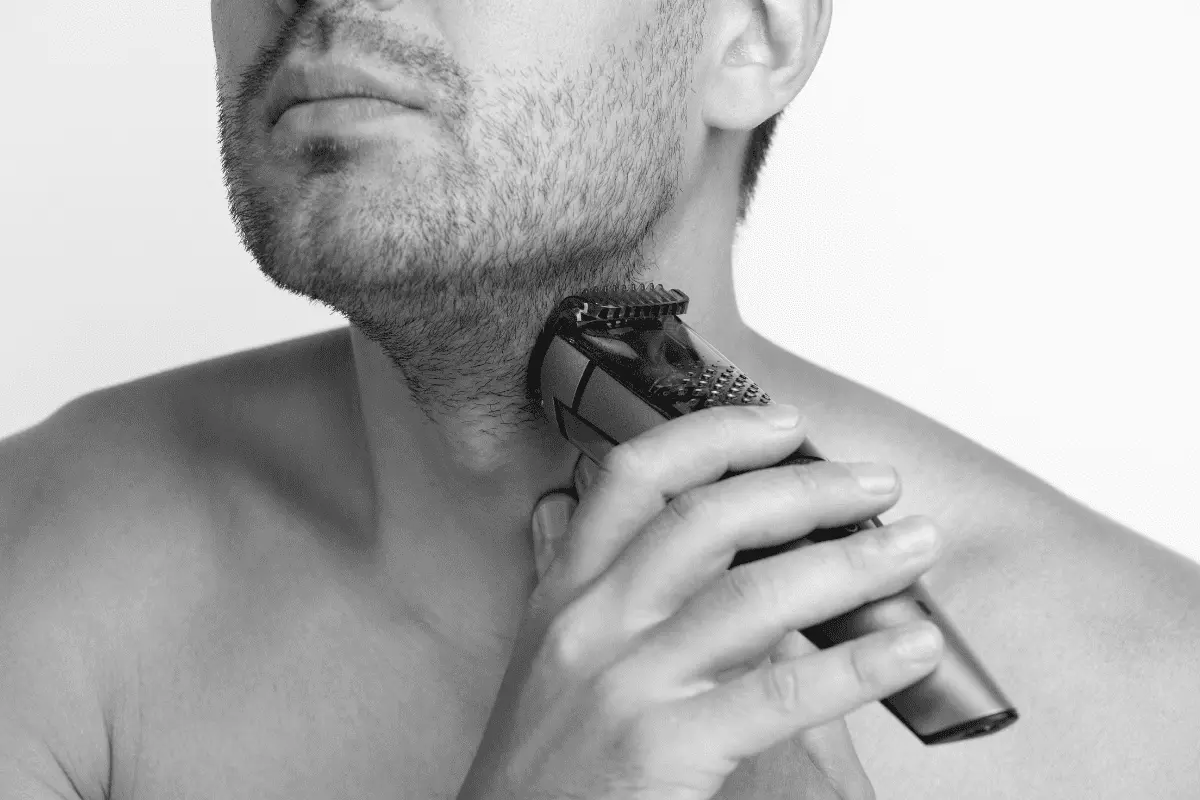
The best beard trimmers aren’t about hype, brand loyalty, or a drawer full of flashy attachments. In my experience, they’re about precision — how clean your lines sit, how even your length looks, and how your beard actually frames your face.
Most men don’t struggle to grow a beard. They struggle to manage it. I’ve seen guys blame their genetics when the real problem was the tool in their hand. The difference between sharp and sloppy usually isn’t growth. It’s equipment.
In this 2026 guide, I break down what actually affects the cut: motor strength, blade sharpness, guard stability, battery reliability, and how different trimmers perform across real beard types. Thick growth behaves differently than tight stubble. Travel trimming isn’t the same as weekly bulk reduction.
This isn’t a hype list. It’s a practical breakdown built around performance, so you can choose a beard trimmer that works with your growth pattern instead of fighting it.

In this article
Best Beard Trimmers
How I Evaluated These Beard Trimmers
I didn’t rank these beard trimmers by popularity, ad spend, or how many attachments came in the box.
What I care about is how they perform where it matters: under resistance.
Every model in this guide was judged against the same criteria:
- Motor strength under dense growth
- Blade sharpness and consistency over time
- Guard stability at shorter lengths
- Battery reliability and output consistency
- Ease of cleaning and long-term durability
In my experience, thick, coarse beards expose weak motors quickly. Short stubble exposes unstable guards. Travel exposes battery weaknesses. Shower trimming exposes sealing flaws.
Some trimmers look impressive on paper. Far fewer hold up in weekly grooming routines.
The models included here earned their place because they deliver consistent results across specific beard types and real-world use cases.
Performance first. Everything else second.
Best Beard Trimmers by Use Case and Beard Type
Here’s the truth. The best beard trimmers aren’t universal. They’re situational.
Your beard doesn’t grow like mine. It doesn’t sit the same. It doesn’t resist the same. A thick, wiry mane needs serious cutting power. Patchy fuzz needs precision. Razor-sharp lines demand accuracy.
I don’t rank trimmers by popularity. I look at how they perform against specific beard types and routines.
Brand hype doesn’t trim your beard. Motor strength, blade bite, and guard stability do.
So I’ve broken the best beard trimmers down by real-world use. Full density. Tight stubble. Travel kits. Shower routines. Budget workhorses.
Pick the tool that matches your beard. Not your ego.
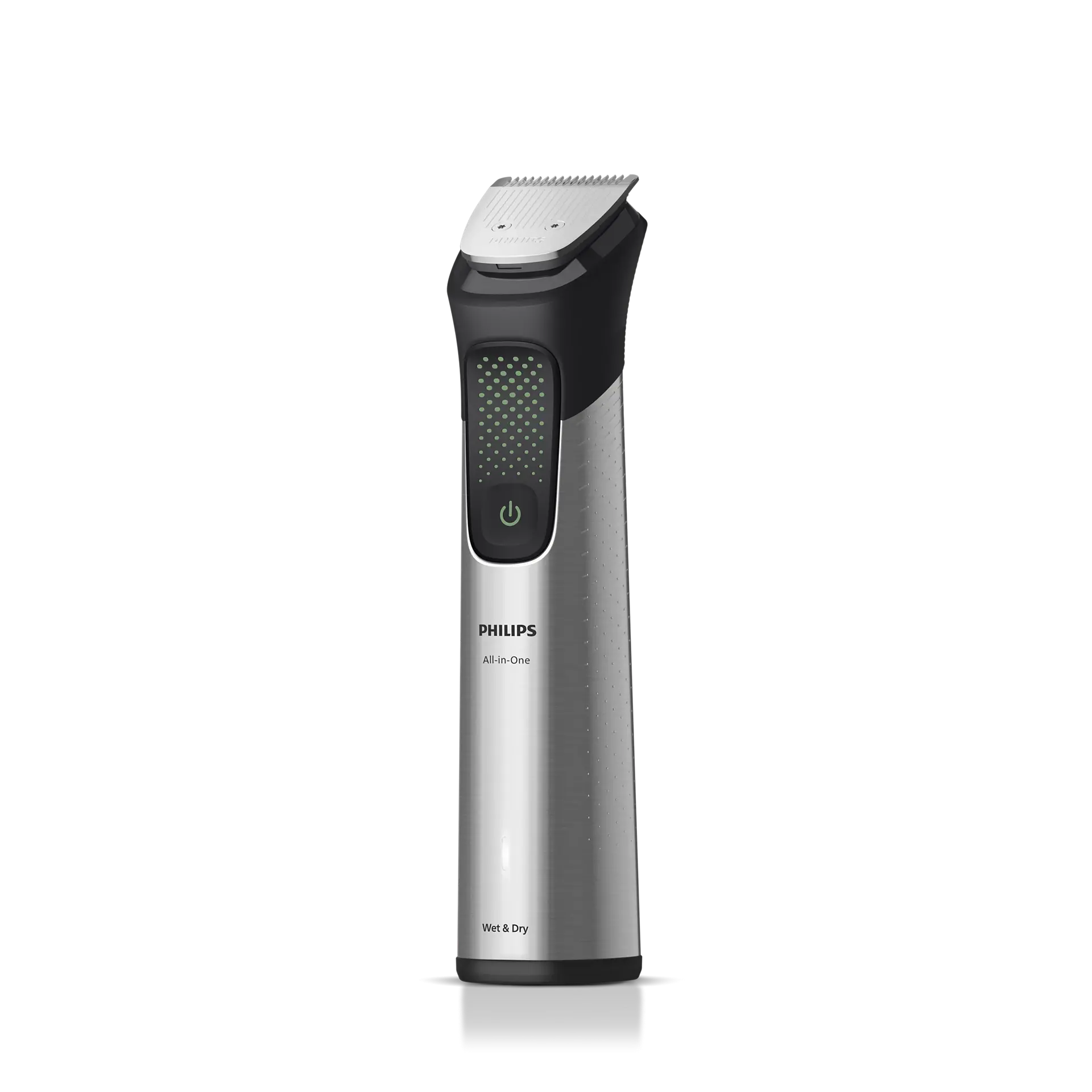
Best Overall Beard Trimmer: Philips Norelco Series 9000
View On Amazon
Pros
Cons
- ✓Strong, adaptive motor cuts through most beard types
- ✓Long battery life (up to ~6 hours) with quick charge
- ✓Self-sharpening metal blades stay sharp longer
- ✓Stable guard system with wide attachment range
- xCan feel over-equipped if you only want a simple trimmer
- xNot the most aggressive motor for extremely dense beards
If you want one tool that handles almost everything without complaint, this is it.
In my experience, the Philips Norelco Multigroom 9000 Series earns its place because it hits the balance most men actually need. Strong motor, stable guards, excellent battery life, and a wide attachment range. Nothing feels underpowered. Nothing feels excessive.
It moves through thick growth cleanly without snagging. It won’t dominate the most stubborn wire-like beards on earth, but for most men it trims evenly in fewer passes and doesn’t stall along the jawline.
The self-sharpening metal blades keep their bite. When blades dull, they drag and irritate. These stay consistent. That reliability is exactly why I consider it one of the best beard trimmers for everyday grooming.
You get beard and hair guards, a detail head, nose and ear trimmer, body groomer, and a small foil shaver. One device replaces several without feeling cluttered.
The adjustable comb locks in firmly and doesn’t flex mid-trim. Battery life is excellent, offering up to six hours of runtime plus quick charge for last-minute fixes.
If I had to recommend one dependable all-round beard trimmer for short to medium beards, this would be the balanced choice.
Best for: Men who want one tool to manage beard, head, and detailing.
Skip if: Your beard is extremely coarse or razor-sharp line work is your only focus.
Balanced. Reliable. Hard to argue with.
Features at a Glance
| Model Number | MG9585/49 |
|---|---|
| Length Range | 0.5mm to 20mm |
| Length Settings | 27 length settings with precision comb (0.2mm increments) |
| Waterproof | 100% showerproof and fully washable |
| Runtime | Up to 6 hours |
| Quick Charge | 5-minute quick charge for one trim |
| Blade Material | Self-sharpening full metal blades |
| Technology | BeardSense adaptive power technology |
| Attachments Included | 28 grooming tools including beard guards, hair guards, detail head, nose & ear trimmer, body groomer, foil shaver, and storage pouch |
| Power Source | Lithium-ion rechargeable battery |
| Charging Port | USB-A (adapter not included) |
| Maintenance | No blade oil required |
| Best For | Short to medium beards and all-in-one grooming |
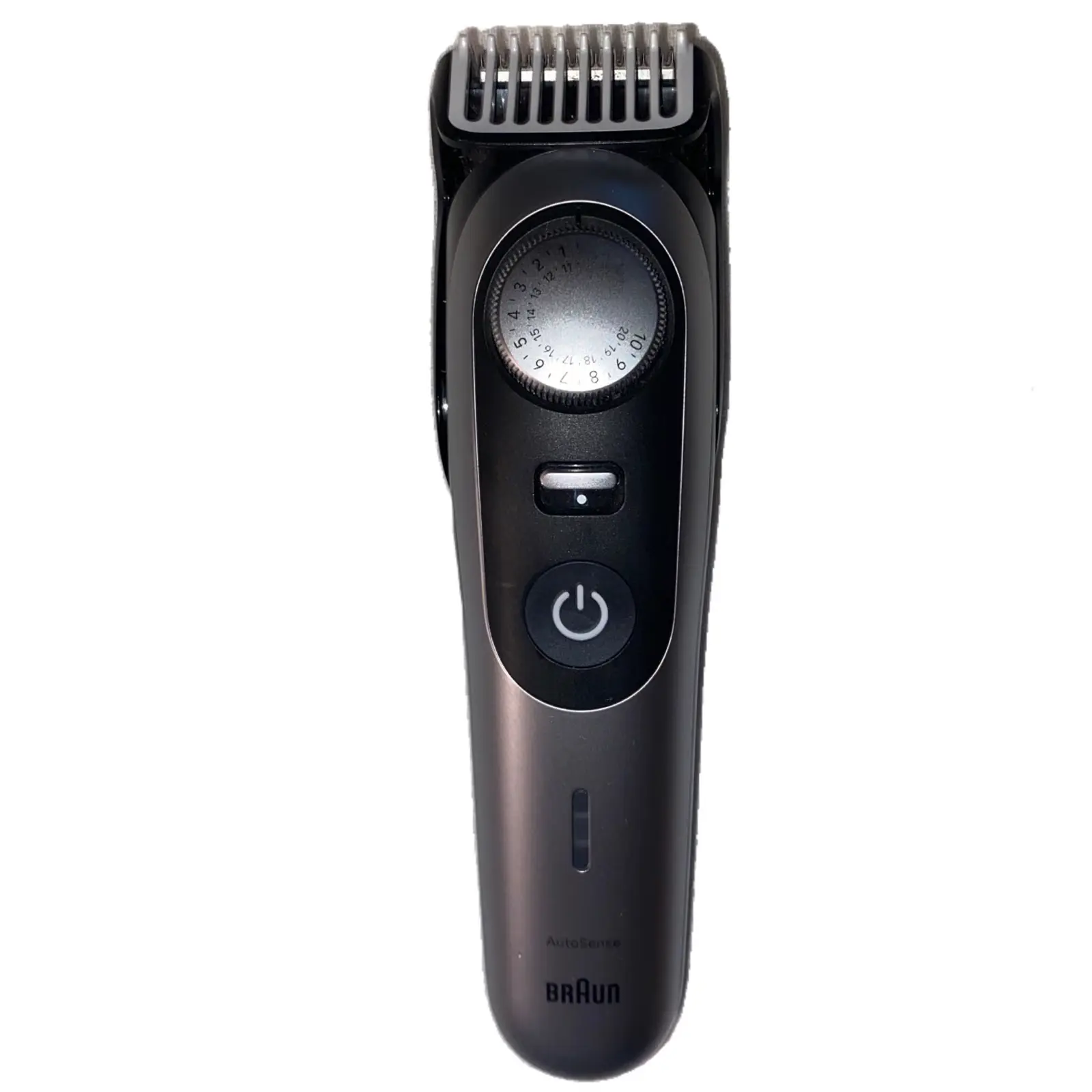
Best Beard Trimmer for Coarse or Thick Beards: Braun All-in-One Series 9
View On Amazon
Pros
Cons
- ✓High-torque motor with PowerBoost for dense beards
- ✓Cuts thick growth in fewer passes
- ✓Precision dial with 50+ locked length settings
- ✓Fully waterproof, premium build quality
- ✕Overkill for light stubble or fine beards
- ✕Shorter battery life than some competitors
Some beards don’t cooperate. They push back.
When I’m looking at the best beard trimmer for thick beards, the first thing I care about is drive. Dense growth exposes weak motors quickly. The Braun Series 9 is built for resistance and doesn’t hesitate on denser growth along the jawline and under the chin.
With PowerBoost engaged, it increases output when it meets thicker growth. You can feel the difference immediately. It cuts through density cleanly, reducing passes and minimizing irritation.
In my experience, thick beards punish hesitation. Cheap motors grind. This one cuts decisively and keeps the finish even.
The precision dial locks in with over 50 length settings and doesn’t shift mid-trim. No guard wobble. No surprise dips.
Build quality feels solid and substantial without being bulky. The grip stays secure, even damp. It’s fully waterproof, which makes cleanup straightforward.
If your beard grows fast and thick, this level of cutting strength matters.
Best for: Full, dense beards trimmed regularly.
Overkill for: Light stubble or occasional shaping.
When resistance is the problem, this is the answer.
Features at a Glance
| Model Name | BT9565 Series 9 Beard Trimmer |
|---|---|
| Length Settings | 52 adjustable lengths in ~0.25mm increments |
| Blade System | ProBlade ultra-sharp cutting blades |
| Adaptive Tech | AutoSense & PowerBoost adaptive trimming |
| Water Resistance | 100% waterproof and washable |
| Runtime | Up to 180 minutes (3 hours) |
| Power Source | Rechargeable lithium-ion battery |
| Attachments Included | 14 barber-style grooming accessories |
| Best For | Coarse, dense beards and detailed shaping |
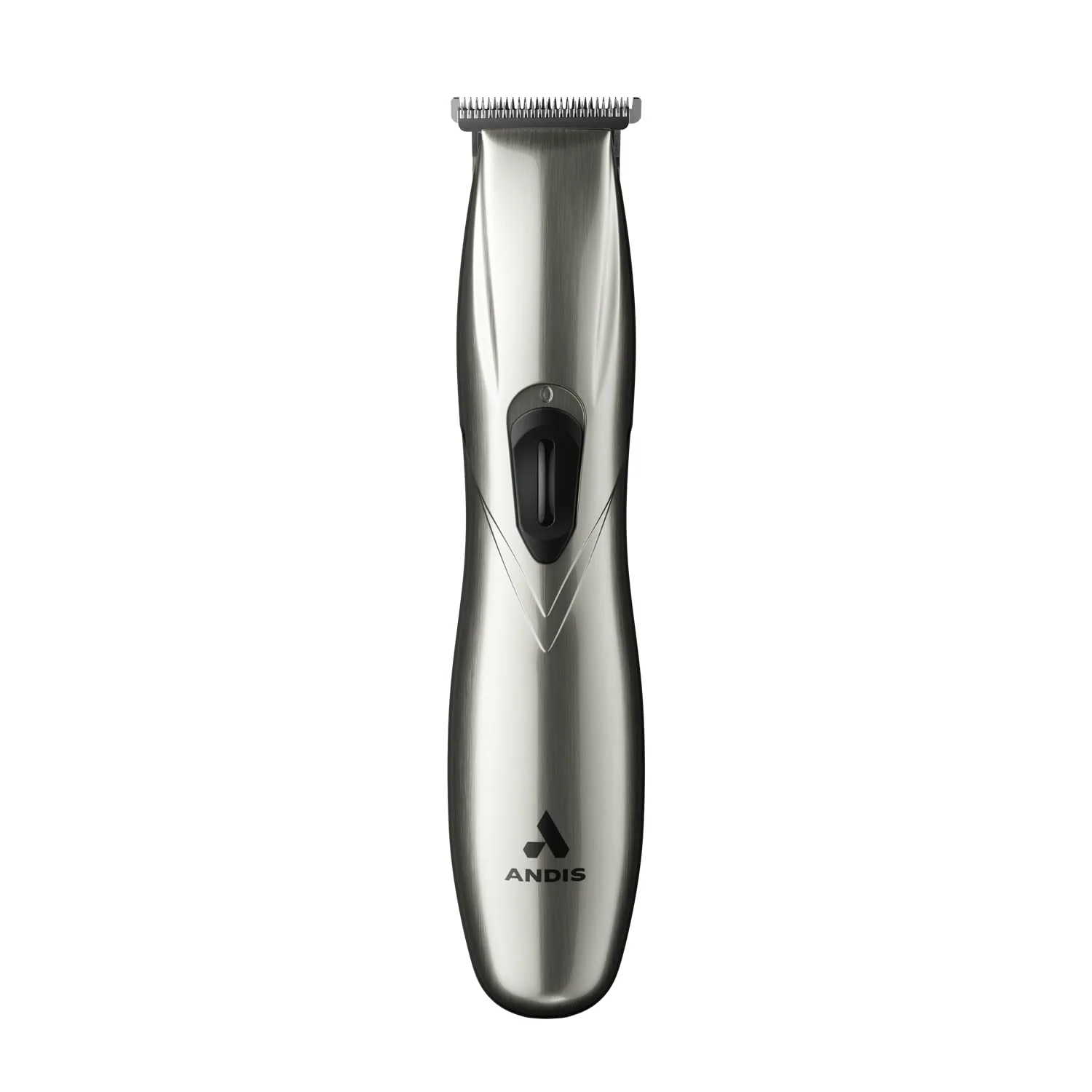
Best Beard Trimmer for Precision and Sharp Lines: Andis Slimline Pro Li
View On Amazon
Pros
Cons
- ✓Ultra-precise T-blade for crisp, sharp lines
- ✓Slim, lightweight design for maximum control
- ✓Trusted by professional barbers
- ✓Excellent for edging, outlining, and detail work
- ✕Not powerful enough for bulk beard trimming
- ✕Narrow blade width means slower full-beard coverage
If your beard looks solid from a distance but messy up close, your lines are the issue.
When I’m refining structure, I reach for something built specifically for detail work. The Andis Slimline Pro Li isn’t about bulk removal or heavy length reduction. It’s about definition.
The slim, lightweight body gives you excellent maneuverability. You can angle and steady it without fighting the weight. That control matters when shaping cheek lines or tightening a neckline.
The carbon-steel T-blade cuts close and clean, grabbing short stubble instead of flattening it. The result is crisp edges instead of fuzzy borders.
There’s a reason barbers keep this in their stations. It turns a decent trim into a finished one.
That said, it’s not a heavy-duty mower. It won’t power through thick, overgrown beards in one pass.
Best for: Line-ups, edging, and structure refinement.
Not built for: Bulk reduction or long beard trimming.
This is a finishing tool. And in that role, it excels.
Features at a Glance
| Model Name | Andis Slimline Pro Li T-Blade Trimmer (B0BRYP4NGB) |
|---|---|
| Blade Type | Carbon-steel T-blade |
| Runtime | Up to ~2 hours cordless use |
| Battery Type | Rechargeable lithium-ion battery |
| Attachments Included | 4 attachment combs (as shown on listing) |
| Additional Items Included | Charging stand / charger, blade brush, blade oil (as shown) |
| Best For | Close detailing, edging, outlining |
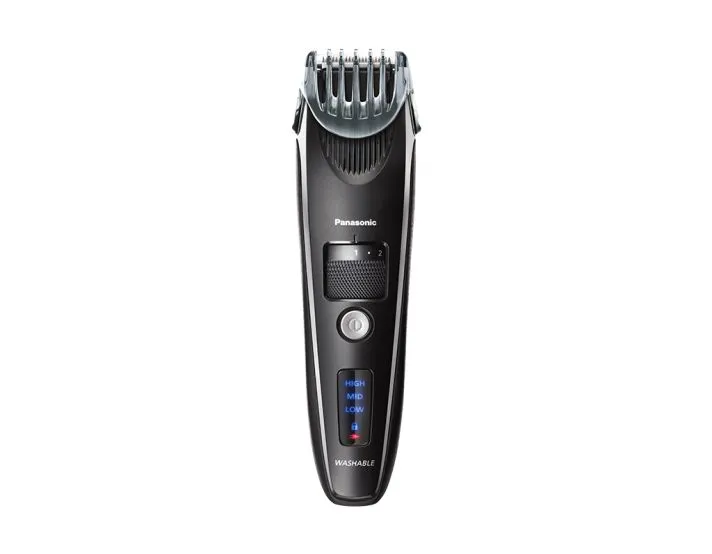
Best Beard Trimmer for Short Beards and Stubble: Panasonic ER-SB40-K Beard Trimmer
View On Amazon
Pros
Cons
- ✓Ultra-sharp stainless steel blades for clean close cuts
- ✓Consistent power output for uniform trimming
- ✓Precise adjustable dial for short-length control
- ✓Smooth skin contact reduces irritation
- ✕Not ideal for longer, dense beards
- ✕Shorter runtime compared to premium all-in-one models
Short beards are brutally honest. If your trim is uneven, everyone sees it.
When I’m evaluating a trimmer for shorter lengths, consistency matters more than raw power. The Panasonic ER-SB40-K is designed specifically for the 1mm to 10mm beard range. It’s engineered for repeatable results at tighter settings.
The ultra-sharp stainless steel blades cut clean on the first pass. No dragging. No flattening hairs against the skin.
Its linear motor maintains steady output from start to finish, keeping pressure even across the jaw and neckline. That stability is what keeps stubble looking intentional instead of patchy.
The adjustable dial allows fine length control, so once you find your ideal setting, you can maintain it week after week without guessing.
It glides smoothly against the skin, which matters if you’re trimming every few days.
Best for: Tight stubble and short beards under 10–12mm.
Not ideal for: Heavy reduction on longer growth.
This one is built for maintenance precision.
Features at a Glance
| Model Name | Panasonic ER-SB40-K Beard Trimmer |
|---|---|
| Length Settings | 19 adjustable length settings (0.5 – 10 mm; comb attached) |
| Blade Type | Hypoallergenic stainless-steel wide-tip blades |
| Motor Type | High-performance linear motor |
| Power Source | Corded/c ordless operation with rechargeable battery |
| Runtime | Up to 60 minutes cordless operation |
| Washable | Blade and attachments rinse clean under running water |
| Items Included | Comb attachment, cleaning brush, blade oil, AC adapter/charger |
| Voltage | 100–240 V universal voltage |
| Best For | Short to medium beards and everyday trims |
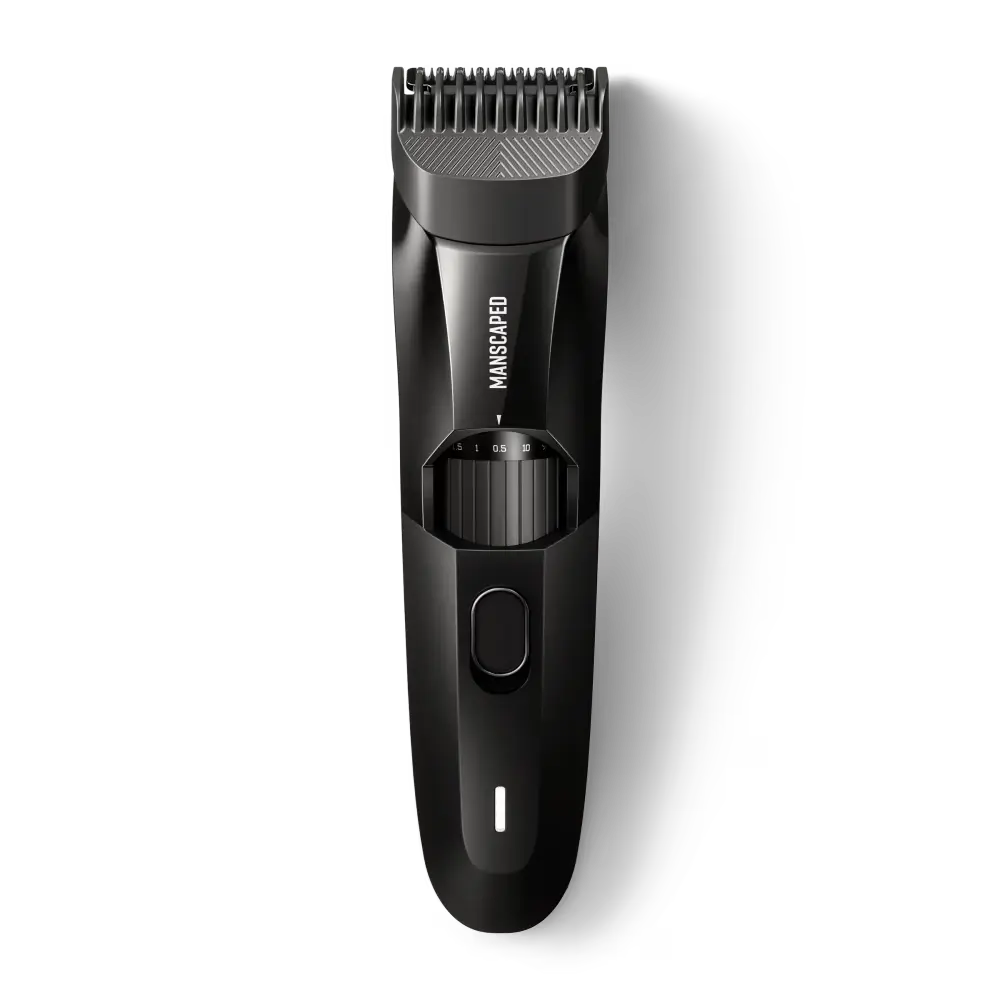
Best Waterproof Beard Trimmer: MANSCAPED® The Beard Hedger®
View On Amazon
Pros
Cons
- ✓Fully waterproof design for shower use and easy rinsing
- ✓Simple zoom wheel with 20 built-in length settings
- ✓Titanium-coated T-blade resists rust and cuts cleanly
- ✓Minimal attachment clutter for streamlined grooming
- ✕Only trims up to around 10mm maximum length
- ✕Not the most powerful option for very dense, coarse beards
If you trim in the shower and don’t want to baby your gear, waterproofing matters.
When I’m looking at shower-friendly options, full waterproofing is non-negotiable. MANSCAPED® The Beard Hedger® is fully sealed, not just the head. You can rinse it under the tap or use it mid-shower without concern.
The titanium-coated T-blade cuts cleanly through everyday growth. It’s not built for ultra-dense beards, but for short to medium maintenance it performs consistently.
The zoom wheel is the standout feature. One guard. Twenty length settings. No swapping combs. Just dial and trim.
Cleaning is straightforward. Rinse. Shake. Done.
You get around 60 minutes of runtime, USB-C charging, and a travel case, which makes it easy to keep in rotation.
Best for: Shower trimming and low-maintenance routines.
Skip if: Your beard is especially dense and needs more raw motor strength.
Simple. Practical. Shower-safe.
Features at a Glance
| Model Name | MANSCAPED® The Beard Hedger® |
|---|---|
| Length Settings | 20 adjustable length settings (0.5 – 10 mm) |
| Blade Type | Titanium-coated stainless steel blade |
| Adjustment System | Built-in zoom wheel comb |
| Waterproof | Waterproof wet/dry design |
| Power Source | Battery powered (cordless) |
| Battery Indicator | LED charge indicator |
| Items Included | USB-C charging cable, AC adapter, adjustable comb attachment, travel case |
| Best For | Short to medium beard trimming and daily maintenance |
Best Beard Trimmer for Travel — Philips OneBlade Pro 360

View On Amazon
Pros
Cons
- ✓360 flex blade maintains constant skin contact
- ✓Fully waterproof for wet or dry use
- ✓5-in-1 adjustable comb (1–5mm) for beard control
- ✓Dual-sided blade for precise edging and shaping
- ✕Not designed for very thick or long dense beards
- ✕Replacement blades required every few months
This isn’t a traditional trimmer. It’s a compact hybrid built for versatility.
When I’m packing light or trimming away from home, portability matters more than raw cutting power. The Philips OneBlade Pro 360 is designed for that role.
The cutter moves at high speed, slicing through stubble efficiently while the dual protection system keeps skin contact comfortable.
The 360 blade flexes in multiple directions, following facial contours and making line work easier when you’re working with limited space.
The 5-in-1 adjustable comb covers short maintenance lengths, and it includes a body kit for added versatility. Fully waterproof. USB charging. Travel-friendly.
Compact. Lightweight. Easy to pack.
Best for: Travel grooming and short maintenance trims.
Not ideal for: Major length removal on longer beards.
When portability matters, this makes sense.
Features at a Glance
| Model Name | Philips Norelco OneBlade 360 with Connectivity (QP4631/90) |
|---|---|
| Trimming System | OneBlade Technology with dual protection system |
| Blade Type | 360 Blade for flexible, all-direction trimming |
| Length Settings | 5-in-1 adjustable comb (1–5 mm) |
| Body Grooming Kit | Includes body comb (3 mm) and skin guard attachment |
| Waterproof | Wet and dry use; fully waterproof design |
| Power Source | Battery powered (cordless) |
| Runtime | Up to 60 minutes cordless use |
| Connectivity | Compatible with Philips OneBlade app |
| Items Included | OneBlade 360 handle, 360 blade, 5-in-1 adjustable comb, body kit, travel case, USB-A charging cable |
| Best For | Stubble, short beards, edging, and body grooming |
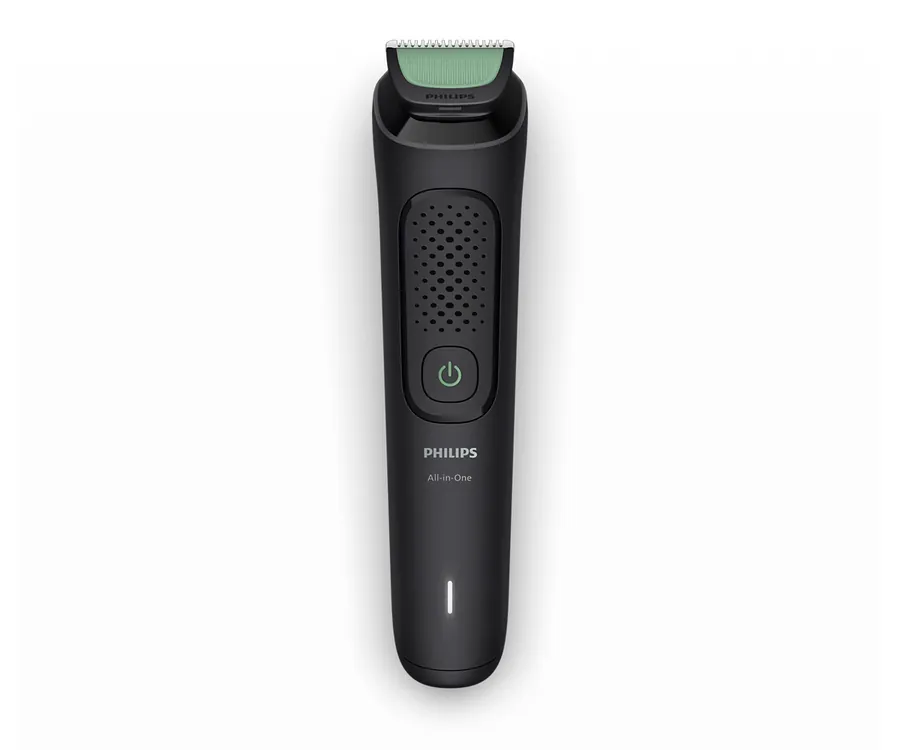
Best Budget Beard Trimmer: Philips All-In-One Trimmer Series 3000
View On Amazon
Pros
Cons
- ✓13 attachments for beard, hair, nose, and detailing versatility
- ✓Self-sharpening full metal blades require no oiling
- ✓Up to 60 minutes runtime on a single charge
- ✓Excellent value for money at an entry-level price
- ✕Not fully waterproof (rinse attachments only, not shower-safe)
- ✕Basic motor power compared to premium trimmers
Not every man needs a premium motor.
When I’m recommending an entry-level option, I’m looking for reliability first. The Philips Series 3000 is a straightforward, no-frills trimmer that handles beard, nose, and ear grooming without unnecessary extras.
The self-sharpening steel blades stay sharp without oil, and the rounded tips help reduce irritation during everyday trims.
You get up to 60 minutes of runtime with USB-A charging. Simple. Functional.
It isn’t waterproof. And it isn’t built for thick, rugged growth.
But for short to medium beards and light shaping, it delivers consistent performance without stretching your budget.
Best for: Entry-level grooming and maintenance.
Not for: Dense, resistant beards.
Affordable doesn’t have to mean unreliable.
Features at a Glance
| Model Name | Philips Norelco All-in-One 3000 Series 13-in-1 Trimmer (MG3939/50) |
|---|---|
| Attachments Included | 13 grooming tools for beard, head, nose & ear hair |
| Blade System | Self-sharpening full metal blades (no oil required) |
| Length Settings | 8 length settings (0.5 mm – 16 mm) |
| Detail Trimmer | Dedicated narrow detail trimmer for sharp lines and edges |
| Power Source | Battery powered (cordless) |
| Runtime | Up to 60 minutes cordless use |
| Charging | USB-A charging cable included (power adapter not included) |
| Cleaning | Rinseable blades and comb attachments |
| Battery Indicator | LED charging indicator light |
| Handle Design | Ergonomic grip for controlled trimming |
| Best For | All-in-one grooming for beard, head hair, and detailing |
There’s no universal winner. There never is.
In my experience, the best beard trimmers come down to fit. Your beard density. Your growth pattern. Your routine.
Heavy coverage needs power. Tight stubble needs precision. Travel needs portability. Budget needs reliability.
I don’t recommend tools based on hype. I recommend what performs.
Match the tool to your beard. Not the marketing.
When you choose based on how your hair actually grows, grooming gets simple. Clean lines. Even length. Less frustration.
That’s when your trimmer works for you instead of against you.
What Actually Matters When Choosing a Beard Trimmer
I ignore marketing buzzwords. Most beard trimmers fail for predictable, mechanical reasons.
When I choose a trimmer, I focus on what actually affects the cut. Not the logo. Not the packaging. Not how many attachments are packed into the box.
What matters is how it performs under resistance.
Motor Power and Cutting Performance
Cutting strength separates trimming from dragging.
If a motor struggles when it meets resistance, you end up going over the same patch repeatedly. That’s where irritation starts. Thick, coarse beards expose weak motors quickly. Fine or patchy growth can hide the issue for a while.
A capable motor reduces passes. Fewer passes mean less friction, less heat, and a more even finish.
If you have dense growth, strong output isn’t a luxury. It’s the baseline.
Blade Material and Longevity
Blades matter more than branding.
Stainless steel is standard. Titanium coatings improve corrosion resistance. Self-sharpening systems help maintain bite over time.
When blades lose their edge, they tug instead of slice. Tugging leads to redness, uneven lines, and irritation. If your trimmer feels like it’s pulling, it’s usually the blade.
I also look at longevity. A trimmer that maintains cutting performance for years is cheaper long-term than one that fades after a while.
Guard Stability and Length Control
Uneven trim usually starts with the guard.
Flimsy combs flex under pressure, especially on dense growth. That’s how random length dips appear along the jawline.
Adjustable dials are convenient. Fixed guards are often sturdier. Neither matters if the system shifts mid-pass.
Stability is everything.
At shorter lengths, precision becomes even more important. Half a millimeter is visible at stubble range. It disappears at longer settings.
The best beard trimmers hold their length firmly, even under pressure.
Battery Reliability
I don’t need marathon runtime. I need consistency.
For most routines, 60 minutes of cordless use is enough. Lithium-ion batteries maintain steadier output as they drain, which prevents cutting strength from dropping halfway through a trim.
Fast charge is useful. Predictable performance is more important.
A trimmer that works the same every time beats one with impressive numbers that fade under load.
Waterproofing and Maintenance
“Waterproof” doesn’t always mean shower-ready.
Some trimmers are fully sealed for wet use. Others only allow rinsing the head. I always check the difference.
Cleaning directly affects performance. Hair buildup increases friction. Friction increases heat. Heat dulls blades faster.
That’s when pulling starts.
Low-maintenance tools last longer because they’re easier to keep clean. And clean tools cut better.
That’s not marketing. That’s mechanics.
Corded vs Cordless Beard Trimmers
This debate isn’t complicated. It’s power versus freedom.
Some men want absolute consistency. Others want flexibility. I look at it this way: the right choice depends on how and where you actually trim.
If you’re comparing the best beard trimmers, this decision matters more than most feature lists.
Corded Beard Trimmers
Corded trimmers deliver constant output. No battery fade. No drop in performance halfway through your neckline.
If you have a dense, stubborn beard and trim in the same place every week, a corded tool is dependable. Plug in. Cut. Done.
There’s no charging. No gradual power loss. Motor strength stays steady from first pass to last. That consistency matters if your beard exposes weak motors quickly.
The trade-off is obvious. You’re tethered. Not ideal for travel. Not ideal for quick touch-ups away from a socket. And dealing with a cable across the sink gets old.
They’re reliable. Just not flexible.
Best for: Dense beards trimmed at home in a fixed setup
Less ideal for: Travel or mobile grooming routines
Cordless Beard Trimmers
Cordless models dominate for a reason.
They’re portable. Easy to maneuver. No cable dragging while you shape your cheek line. The setup feels cleaner and more modern.
Modern lithium-ion batteries hold charge well and maintain steady output for most beard types. If you trim once or twice a week, runtime usually isn’t the limiting factor.
The downside is dependency. Forget to charge it and you’re stuck. Lower-end cordless models can also lose cutting strength as the battery drains, which becomes obvious on thicker growth.
Higher-quality cordless trimmers manage output better, staying consistent even as charge drops.
Best for: Everyday flexibility, travel, and cleaner setups
Watch for: Battery consistency and charge time
Quick Comparison
If I trim in the same bathroom every week and my beard has serious density, corded makes sense.
If I travel, value mobility, or just prefer a cleaner setup, cordless wins.
Most of the best beard trimmers today are cordless for a reason.
Convenience matters.
But if raw consistency under load is your priority, corded still has an edge.
Are Expensive Beard Trimmers Worth It?
Price tags don’t automatically equal performance.
A premium beard trimmer is only worth it if the extra hardware solves a real problem. If you don’t need stronger cutting power, better blades, or a more stable guard system, that higher price is just decoration.
The real question isn’t price. It’s fit.
When Premium Pays Off
Motor strength matters.
A stronger motor moves through dense, coarse growth without stalling. If your beard feels like steel wool and you trim regularly, higher-end motors reduce passes, save time, and lower irritation. Over months, that difference adds up.
Battery technology matters too. Better lithium-ion packs hold charge longer and maintain steadier output. Lower-tier batteries tend to dip as they drain, and that inconsistency shows up fast on thick growth.
Durability is where premium tools quietly separate themselves. Tighter construction, sturdier guards, and more solid materials reduce flex and wobble. Those mechanical upgrades show up in cleaner lines and more consistent length.
Not in marketing copy. In the mirror.
If you have dense, resistant growth, premium hardware often earns its price.
The Mid-Range Sweet Spot
This is where most men should look.
You get reliable cutting strength, solid blades, stable guards, and dependable battery life without paying for features you’ll never use.
Unless you’re trimming professionally or managing extremely thick, fast-growing beards, mid-range models usually deliver the best balance of performance and value.
For everyday grooming, this is often the smartest category.
Budget Limitations
Budget trimmers aren’t useless. They cut hair.
But compromises show up over time:
- weaker cutting strength
- less stable guards
- faster blade wear
- inconsistent battery output
- shorter overall lifespan
That’s why cheaper tools can feel fine at first, then fade quickly. Motors weaken. Guards loosen. Blades dull sooner. The trim that once looked sharp starts to look uneven.
And then you replace it.
Cost Per Year of Ownership
Think beyond the sticker price.
A trimmer that lasts six months isn’t cheap. A quality tool that performs reliably for three years usually is.
Upfront cost is visible. Long-term reliability is what you feel every week.
If performance matters to you, spending more in the right areas can pay off.
But paying extra for features you don’t need?
That’s not premium. That’s unnecessary.
Buy for performance. Not prestige.
Frequently Asked Questions About Beard Trimmers
What is the best beard trimmer for thick beards?
For dense, coarse growth, motor strength is everything. Weak motors stall and force multiple passes, which increases irritation. Look for strong torque, stable guards, and consistent cutting under resistance. Thick beards expose weak hardware quickly, which is why higher-powered models tend to perform better long term.
Which beard trimmers do barbers use?
Barbers typically use high-torque clippers for bulk removal and dedicated T-blade trimmers for line work. Blade sharpness and control matter more than attachment count. At home, a strong primary trimmer paired with a detail tool is often the simplest setup for clean edges.
Can you use a beard trimmer to cut head hair?
Yes, with limits. Beard trimmers are built for shorter lengths and precision. If you regularly cut longer head hair, a dedicated hair clipper with wider guards will be faster and more efficient. For buzz cuts or maintenance trims, a powerful all-in-one can work well.
What beard trimmer length is best for short beards?
Short beards typically sit between 3mm and 10mm. Stubble is usually around 1mm to 3mm. The best length depends on your face shape and beard density, but consistency matters more than the exact number. Once you find your setting, stick with it.
How do I choose a trimmer if I have sensitive skin or ingrown hairs?
Prioritize sharp blades, steady motor output, and fewer passes. Dragging and repeated strokes cause irritation. Stable guard systems help maintain even length without pressing into the skin. Trimming after a warm shower can also soften hair and reduce friction for some men.
Why does my beard trimmer pull hair instead of cutting?
Pulling usually comes down to dull blades, weak motor output, or hair buildup in the cutting head. Clean the unit thoroughly first. If the problem continues, the blade may need replacing, or the trimmer may not have enough torque for your beard type.
How long should a beard trimmer last?
A well-built trimmer should perform consistently for around two to three years with proper cleaning and care. Motors, batteries, and guard systems usually weaken first on lower-end models. Durability often determines long-term value more than the initial price.
How do I maintain a beard trimmer properly?
Clean the cutting head after each use and remove trapped hair regularly. Fully rinse waterproof models and dry them before storing. Oil blades only if the manufacturer requires it. Simple maintenance preserves blade sharpness and motor performance.
Are expensive beard trimmers worth it?
They can be if your beard demands stronger cutting power or you trim frequently. Premium models usually offer better motor strength, steadier battery output, and sturdier guard systems. If your beard is lighter and you trim occasionally, a solid mid-range option will often perform just as well.
What’s the best way to travel with a beard trimmer?
Choose a compact cordless model with USB charging and universal voltage if possible. Use a protective case and enable a travel lock if the device has one. Charge it before you leave so you’re not forced into a rushed trim mid-trip.
The Beard Beasts Verdict
There isn’t one single winner. There never was.
The best beard trimmers aren’t defined by brand loyalty or price tags. They’re defined by fit. Fit for your beard density. Fit for your routine. Fit for how much effort you’re willing to put in each week.
Choose wrong, and every trim feels like work. Choose right, and it becomes automatic.
If you’ve made it this far, you already know where you sit. Heavy coverage. Tight stubble. Travel setup. Budget maintenance. You don’t need hype. You need the right tool for how your beard actually grows.
Pick the trimmer that matches your growth pattern, not the marketing wrapped around it.
Because the best beard trimmers don’t just reduce length.
They create structure.
They maintain control.
They deliver consistency.
And when your beard looks intentional, everything else follows.