
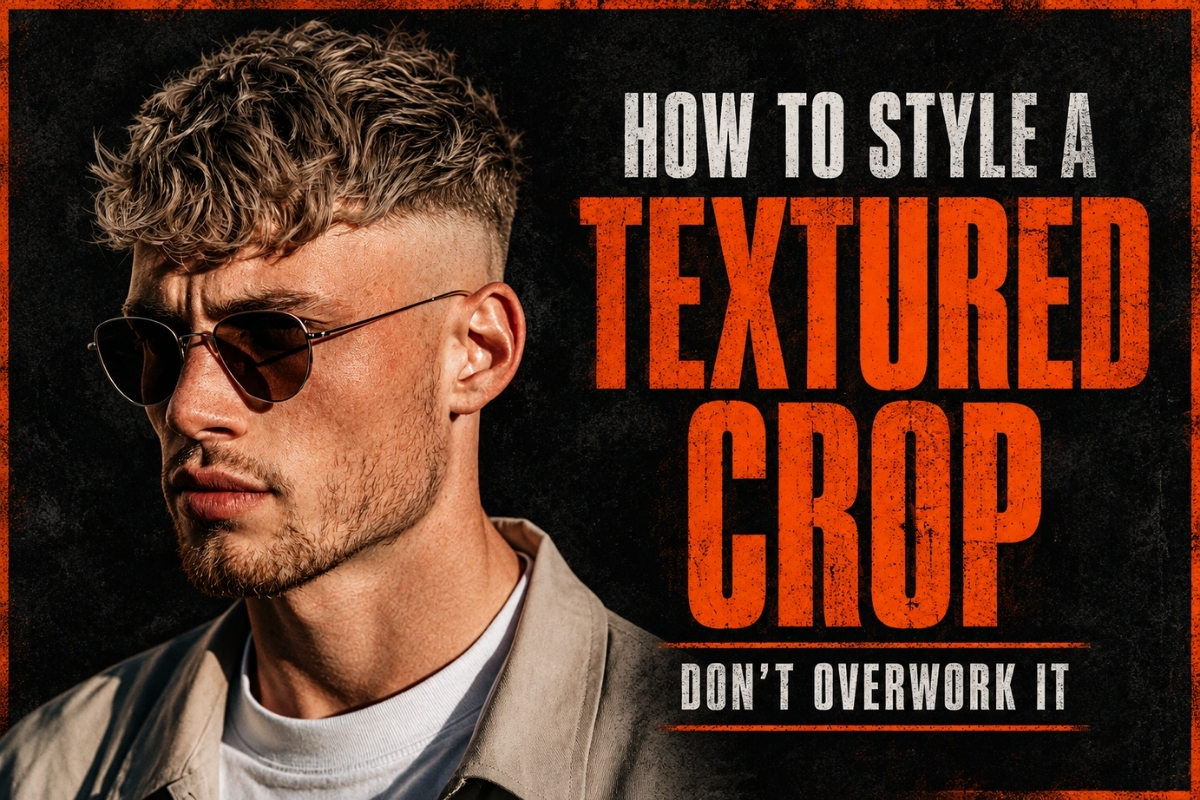
How to style a textured crop sounds simple until the top starts falling flat, the fringe won’t fall where you want it, or the texture disappears the moment you start messing with it.
This cut starts going wrong when you try to control too much of it. I’d say the more you try to make every section behave, the more likely you are to lose the broken-up finish that made the cut work in the first place.

In this article
How to Style a Textured Crop
For this routine, let the hair dry completely before you start. That gives you a clear view of how the top and fringe fall on their own.

Push the top roughly forward with your fingers first. Don’t start separating individual sections yet. Get the general direction right and see what the haircut already gives you.
I’d pay more attention to the fringe because this is where textured crops can look very different. If yours is choppy, let some pieces fall separately rather than trying to line everything up.
If you’ve got a blunter fringe, keep the overall shape of that line, but don’t feel like every hair has to match perfectly. You can still have some separation through the front.
I wouldn’t fight the way the fringe wants to fall either. If it naturally moves a little to one side, work with it rather than forcing it straight across every morning.
Now look at the top. If you’ve already got the separation you want, you may not need product. If the hair quickly falls back together or looks too flat, that’s when I’d bring in styling powder.
You can put a small amount of powder into your palm or apply it directly to dry hair. If you’ve never used styling powder before, I’d start with your palm and add more only if you need it.
Apply it carefully and avoid breathing in the loose powder.
Work it through the top with your fingers, then spend a little more time anywhere that keeps falling flat or sticking together. Separate a few sections and break up anything that looks like one solid block.
Don’t turn every section into a spike. You’re bringing out the texture in the haircut, not trying to create the whole thing with product.
Go back to the fringe last. Move the pieces that need it while keeping the overall shape you started with. Then look at the whole top rather than continuing to fiddle with individual hairs.
Still need more grip? Add a little more powder where you need it. I wouldn’t keep adding product just because every part of the top isn’t behaving exactly the same way.
Once you’ve got enough separation and the fringe looks right, stop. The haircut should still be doing most of the work.
When I’d Use Something Other Than Styling Powder
If styling powder gives you the result you want, stop there. If you’re adding more and still aren’t getting the shape or finish you want, I’d change direction rather than keep loading more into the hair.
That’s when I’d compare hair clay and hair paste. I wouldn’t pick between them from the name alone. Look at the actual hold and finish of the product and decide which gets you closer to what you want from the crop.
One hair clay can behave very differently from another, and the same goes for paste. Once you’ve found one product that works for the result you’re after, I wouldn’t make the routine any bigger without a good reason.
If Your Textured Crop Stops Looking Textured
Before you change products, think about when the texture disappeared.
If the crop was easy to separate when it was freshly cut but gets harder to style as it grows, I’d look at the length first. As the top gets heavier, those sections can start falling back together. If you’re spending longer every morning recreating something that took seconds a few weeks ago, I’d go for a trim before buying another product.
If the texture is there before you style it but starts disappearing once product goes in, look at how much you’re using next. Start with less and work it through the top rather than concentrating it in one area. If a smaller amount still pulls the hair together, I’d rethink the product rather than keep adding more.
A freshly cut crop that never had much separation is a different problem. Some of that separation has to come from the haircut itself.
Styling can bring it out, but it can’t fully rescue a top that’s been left too heavy. If you’re questioning the cut rather than the styling, see whether a different fringe or top length is closer to what you actually want.
Then look at what you’re doing with your hands. If you’re working everything back into one shape after adding product, you’re undoing the texture yourself. Keep the overall shape of the fringe, but let the top stay separated.
Beard Beasts Verdict: A Textured Crop Shouldn’t Look Overworked
How to style a textured crop comes down to bringing out what the haircut already gives you. Get the direction right first, then add product only where you need more grip, separation or lift.
For the finish we’ve styled here, styling powder is where I’d start. Once the top looks properly broken up and the fringe suits how it was cut, leave it alone. If you keep needing more product just to keep the top looking textured, I’d look at the cut or product choice before making the routine any bigger.