
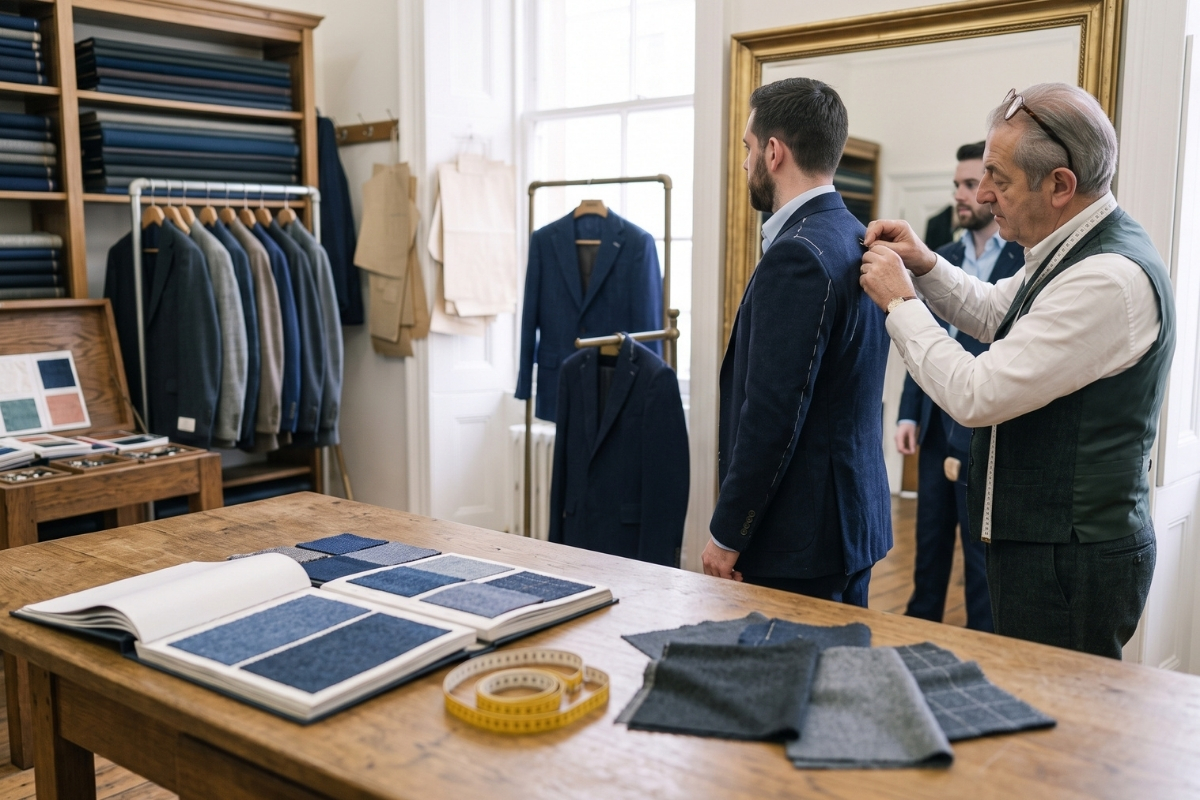
A first custom suit consultation can feel like a lot is happening at once. Fabric books come out, measurements are taken, and you may be asked about details you’ve never had to think about before.
You don’t need to walk in knowing exactly what you want. I think a good tailor should make the process clearer as you go, not make you feel as though you should already understand tailoring.
The useful part is knowing what deserves your attention and where you should expect the tailor to guide you.

In this article
What Should You Bring to a Custom Suit Consultation?
You don’t need to arrive with a folder full of suit research. If you have reference photos of a fit, color or overall look you like, bring them. They give the tailor something concrete to react to without you needing to know the tailoring terminology behind it.

Have a rough budget in mind and know where you expect to wear the suit most, for example weddings, work etc. I’d also ask before the appointment whether they want you to bring the shoes or shirt you plan to pair with it, particularly if those pieces are already decided.
Beyond that, keep it simple. You’re going to a consultation because the tailor is supposed to guide the technical decisions. You shouldn’t need to teach yourself tailoring before you walk through the door.
Your Consultation Should Start With How You’ll Actually Use the Suit
One of the first things a good tailor should understand is where this suit fits into your life. Something you plan to wear to the office several times a week has different demands from a suit bought mainly for weddings or special occasions.
Expect questions about how often you’ll wear it, the climate you’ll be in, how formal it needs to look and what is already in your wardrobe. If you travel frequently or tend to run warm, say so. Details like that can quickly rule out options that look good on a swatch but make little sense for you.
Be specific rather than giving the answer you think sounds right. If you want one suit that can handle work, dinners and the occasional wedding, tell them. If it’s mainly for one event, that matters too.
This conversation deserves more attention than pockets or lining colors at the start, and I’d be wary of a consultation that jumps straight to the fun details before covering it. Those choices can wait. The tailor needs to understand the situations the suit has to handle before helping you decide the details.
Don’t Choose Fabric Because It Sounds Expensive
Fabric is where a custom suit consultation can start to feel like a luxury sales pitch. You may be shown cloth from famous mills, higher Super numbers and fabrics that simply feel expensive in your hand. None of that automatically makes them the right choice for your suit.

A higher Super number means finer wool fibers. It isn’t a simple score telling you how good the finished suit will be or whether that material is right for you.
Take everything you discussed at the start of the consultation and use it here. If you spend most of the year in warm weather, ask how the weight and weave will feel in that climate.
If the suit will travel regularly, ask how the material handles creasing. And if you expect to use it often, I’d put everyday practicality ahead of choosing the most impressive fabric in the book.
That doesn’t make famous mills or finer cloth meaningless. I just wouldn’t let either one make the decision for you.
Ask the tailor why they are recommending a particular fabric and what you actually gain by spending more on it. If the answer makes sense for the suit you need, fine. If the main argument is that the material is more exclusive, I’d keep looking.
Measurements Are Only the Start of a Good Fit
The tape measure is only part of what matters here. Chest, waist, shoulder width and sleeve length give the tailor useful numbers, but they don’t tell the whole story about how a jacket will hang on your body.
Posture and proportions matter too. One shoulder may be slightly lower than the other, you may naturally lean forward, or your proportions may call for adjustments that measurements alone won’t reveal. That’s why I’d pay attention to whether the tailor is actually looking at how you stand rather than simply filling in a measurement sheet.
Don’t straighten your back, pull your stomach in or force your shoulders into what you think is better posture. Stand normally. The suit needs to work with the way you naturally hold yourself, not a position you can maintain for thirty seconds during the consultation.
That matters more than being impressed by how many measurements someone takes. A long measurement sheet means very little if nobody is paying attention to the body those numbers came from.
Don’t Let the Fun Details Distract You From the Important Ones
At some point, the consultation will move into the details: lapels, buttons, pockets, lining, trouser choices and other ways to make the suit your own.

Not every option deserves the same amount of attention. I’d spend more time on choices that change the overall look of the suit, such as lapel width or trouser shape, than on details that are mostly hidden once you’re wearing it.
The smaller touches still matter, though. If you already know you want a certain pocket style, lining or trouser detail, say so. If you don’t have a strong preference, I’d rather ask the tailor what suits the garment than choose something unusual simply because custom gives you the option.
Custom should mean getting the right choices for the suit, not trying to use every choice you’re offered.
Ask How the Suit Is Built and What Happens After the First Appointment
Before you place the order, ask how the suit is actually constructed. You may hear terms such as fused, half-canvas and full-canvas, but you’re not expected to know which one you want going in. What I’d want to know is what construction is included in the price, why the tailor recommends it for this suit and whether paying more would give you anything you need.
The process after the consultation matters just as much. Ask who handles the next fitting, how many fittings are normally included and what happens if the jacket or trousers still need adjusting. A first set of measurements isn’t the end of the job.
If you’re comparing the best custom suits in NYC, I’d look beyond fabric books and showroom photos. A shop’s real value shows up in how it handles this part of the process, not in how many swatches it can show you upfront.
Plenty of tailors can offer you choices. What matters is whether there’s a clear process for turning those choices and measurements into a suit that fits properly.
Before You Pay, Get the Full Cost and Timeline Clear
By the end of the consultation, you should know what you’re being charged for and roughly when the finished suit should be ready. I wouldn’t be satisfied with an attractive starting price that becomes vague once fabrics, construction and other choices are added.

Ask for the quoted total and what it includes. If a deposit is required, find out how much it is and when the balance is due.
Check whether alterations, fabric upgrades or rush production cost extra. One of the best questions you can ask is simple: what could make this price change after I place the order?
Get the timeline clear too. Ask whether the date you’re being given is for the next fitting or for the finished suit, because those aren’t the same thing. If you need it for a wedding or another fixed date, make that clear before you commit.
A realistic total and completion estimate beat a headline price or a rushed turnaround promise every time. I’d get both the quote and expected timeline in writing before paying the deposit.
Beard Beasts Verdict: You Don’t Need to Arrive Knowing Tailoring Jargon
You don’t need to know every fabric, construction method or lapel before your first custom suit consultation. You need to know what the suit is for, how you want it to look and feel, and roughly what you’re comfortable spending.
From there, I’d judge the tailor by how clearly they explain the choices and how well those choices connect back to what you need. You should understand why a particular cloth, fit or construction makes sense instead of feeling pushed toward the most expensive option or the longest list of extras.
For me, a good consultation should leave you clear on what you’re ordering and why. If you walk out more confused than when you walked in, the process hasn’t done its job.