
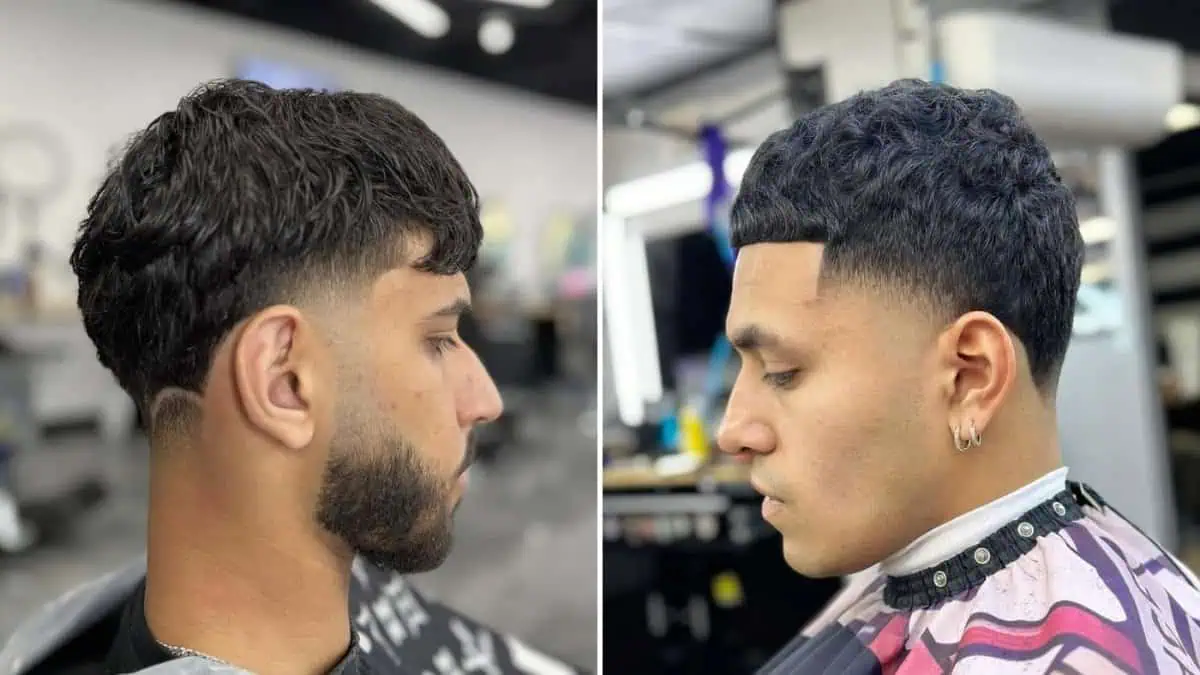
Choosing between a mid taper and a high taper won’t make or break a haircut. But it still decides how much of the side actually gets tidied up, so it’s worth getting right.
Both cuts tidy the sides, sideburns, and neckline, but they leave a slightly different finish. A mid taper keeps things softer around the temples. A high taper takes a bit more away and gives the sides a touch more definition.
That’s why I wouldn’t choose based on the name alone. The mid taper vs high taper question really comes down to your hair type, how much bulk you carry around the sides, and whether you want the taper to show.
If you want the sides to show a little more, I’d lean high taper.
But not everyone should go higher.
Here’s how to tell the difference between a mid taper and a high taper before asking for the wrong cut.

In this article
A Mid Taper Is Safer, Softer, and Easier to Live With

A mid taper does one job well: clean up the sides without opening them up too much.
That’s the main appeal.
It takes more off than a low taper, but it doesn’t push the clean-up as high as a high taper. You still get a tighter look around the sideburns, neckline, and lower sides, but the haircut keeps more softness around the temples.
That makes it easier to live with.
If your hair is fine at the sides, or you don’t want the taper to be the first thing people notice, a mid taper usually makes more sense, more on hair type further down.
It can also work better in professional settings because it gives the haircut a cleaner finish without making it look too aggressive.
The grow-out is a little more forgiving too, though it’s not a huge gap either way.
Because the taper doesn’t climb as high, it softens slightly sooner than a high taper does. It’s a modest difference, a few extra days of looking tidy at most, not a dramatic one.
For me, the mid taper is the safer bet.
It’s not the one I’d pick if you want the haircut to stand out more, but it’s a good choice when you want cleaner sides without making the taper the main feature.
A High Taper Makes the Haircut Look More Finished

Want the sides to show a bit more work? That’s the high taper’s whole reason for existing.
It pushes the taper higher around the sides, so the haircut looks tighter from the front and cleaner around the temples. You still get the same taper look, just with a bit more definition.
This works especially well when the hair on top has some texture or weight, more on exactly why further down.
That’s why a high taper often looks better than a mid taper on men with thick hair or curls.
It does more.
It makes the sides part of the haircut instead of just tidying them up.
The risk is taking it too high or too bare.
If the skin underneath shows easily, your sides are thin, or your face is already long with a lot of height on top, a high taper can look a bit more open than you wanted.
But when the hair can handle it, the high taper is usually the stronger choice.
It gives the haircut more presence without going as far as a full fade.
The High Taper Works Better When the Sides Carry Too Much Bulk

Here’s the thing most men actually need: not a new haircut on top, just the sides to stop puffing out.
That’s where a high taper starts to make more sense. If your hair grows wide around the temples, kicks out above the ears, or makes your head look wider from the front, a mid taper may not take enough away.
It can improve the haircut, but the heaviness can still be there.
A high taper opens up that area better.
It can make thick hair, curls, and waves look lighter without taking the whole side down like a fade. The top still has something to work with, but the sides stop fighting it.
That’s why I like it on haircuts with texture on top.
Crops, curls, waves, and messy tops usually look better when the side bulk isn’t dragging everything outward.
If the sides already fall close to the head, a mid taper can be enough.
But if the sides keep puffing out, growing wide, or making the haircut look bottom-heavy, I’d usually go higher.
Who Should Still Choose the Mid Taper?

I’d usually lean high taper. That doesn’t mean the mid taper is off the table.
Not every haircut needs to be pushed higher.
If the skin underneath shows easily, a mid taper is usually safer. A high taper can expose more of the side area, and if your hair is fine or light around the temples, that can make the haircut look thinner than you wanted.
A mid taper also makes sense if your face is longer.
If you already have height on top, pushing the taper too high can make the whole haircut feel stretched. Keeping the taper around the middle tightens the sides without making everything look too vertical.
It’s also the better choice if you want something less obvious.
Some men want the edges tightened, not the taper turned into the main feature. A mid taper gives you that. It tidies the sides, neckline, and sideburns without making the taper the first thing people notice.
Professional settings matter too.
If you need a haircut that looks smart without drawing attention to the sides, the mid taper is easier to trust.
For me, the mid taper is the one I’d choose when the hair needs tidying, but not a big change.
The high taper wins when you want the haircut to show more.
The mid taper wins when you want it to stay quieter.
The Beard Beasts Mid Taper vs High Taper Verdict
Quieter or sharper. That’s the whole mid taper vs high taper decision. I’d usually lean high taper when the sides could use a bit more definition.
A mid taper keeps the sides softer, and the grow-out is a touch more forgiving, safer too if the skin underneath shows easily or your hair is fine around the sides.
A high taper does more.
It opens up the sides, removes more bulk, and gives curls, waves, crops, and textured tops a slightly cleaner base to work from. That’s why I lean high taper more often than not.
It’s not for everyone.
If your face is long, your sides are thin, or you don’t want the taper to stand out, stay with the mid taper.
But if your hair can handle it, the high taper is the one I’d pick.
Choose a mid taper if you want safer and softer.
Choose a high taper if you want tighter, more open, and more noticeable.