
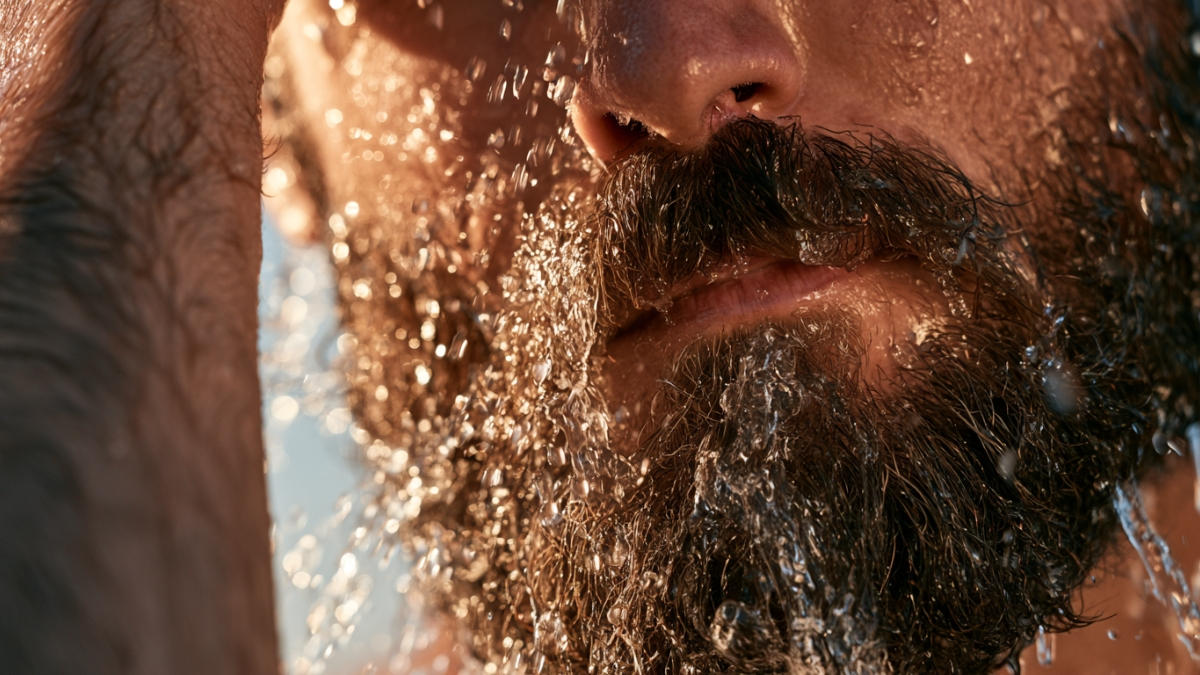
Knowing how to wash your beard sounds simple until it starts coming out of the shower rougher than it went in.
The problem usually isn’t that you’re failing to clean it. It’s that the routine is doing more than your beard actually needs.
For me, a good beard wash should remove sweat, oil and buildup without leaving your facial hair stripped afterward. The method is simple, but the small details make a bigger difference than most people expect.

In this article
How to Wash Your Beard Properly
Start by soaking your beard thoroughly with warm water. You want the hair wet all the way through, not just damp on the surface. If your beard is thick, use your fingers to open it up so the water gets underneath properly.

Use a small amount of beard wash and work it between your hands first. Then massage it through with your fingertips, starting close to your skin and working outward through your hair.
I’d spend a little more time around your chin, jaw and mustache because that’s where sweat, oil and styling product tend to build up the most.
Once everything has been worked through, rinse your beard thoroughly. Use your fingers to separate thicker areas as you go so the wash doesn’t stay trapped underneath.
Keep rinsing until the water runs clear and you can’t detect any product left behind. Residue can make your beard dry, heavy or irritated even when the wash itself isn’t the problem.
The part I’d avoid is scrubbing aggressively. You don’t need your fingernails, and you don’t need that squeaky feeling to know your beard is clean.
A proper wash should refresh your beard, not rough it up. Coming out of the shower feeling stripped usually means something in the routine is too aggressive.
The Part Most People Miss Is the Skin Underneath
The beard hair is only half of what you’re washing. Sweat, oil, dead skin and leftover product can all collect underneath, especially once your beard gets thick enough that you can’t easily see the skin.

This is where I’d slow down and use your fingertips properly. Work through your beard in small sections and make sure the wash reaches the skin rather than just sliding over the outside of the hair.
A dense beard can trap buildup surprisingly well around your chin and jaw. If those areas still feel greasy, itchy or uncomfortable after washing, the problem often isn’t that you need more cleanser. It’s that the cleanser never reached the area properly.
That matters because adding more wash can make your beard hair drier without fixing what’s happening underneath. I’d rather see you use less product and work it in properly than keep increasing the amount every time your beard doesn’t feel fresh.
I’d also avoid scratching at your skin with your nails. Your fingertips are enough to loosen buildup without leaving it sore afterward.
That’s the real difference between washing a beard and just washing the hair you can see.
How Often You Should Wash Depends on What Your Beard Goes Through
I wouldn’t follow the same washing routine for every beard.

If you work indoors, don’t sweat much and use very little product, you may only need a proper beard wash a few times a week. If you train regularly, work outside, live somewhere hot or use beard products every day, your beard is going to pick up more sweat, oil and buildup and will need washing more often, though going past once a day generally does more harm than good.
What matters is what’s actually happened to your beard. Heavy sweat, obvious product buildup, food around the mustache or a beard that has started to smell are all good reasons to wash it properly.
On lighter days, you may not need cleanser at all. A thorough rinse with water can be enough if you’re only trying to freshen your beard up rather than remove oil or product.
I’d be more careful with very dry beards. Washing too often can make that dryness worse, especially if you’re using too much cleanser each time or chasing that stripped feeling because you think it means the beard is cleaner.
The better rule is simple: wash when your beard actually needs cleaning, not because you’re trying to hit an exact number of days per week.
Where Most Beard Washing Goes Wrong
Most problems don’t come from washing your beard. They come from being too aggressive with it.

Water that’s too hot, too much beard wash and hard scrubbing can all make your beard hair rougher than it needs to be. I’d also avoid washing repeatedly just because the beard feels greasy. If product or oil is still hanging around after one proper wash, the answer is usually better technique, not another round of cleanser.
The cleanser itself matters too. A harsh shampoo can strip your beard much faster than a wash made for facial hair, especially if you’re using it several times a week. If your beard feels rough every time you wash it, I’d question the product before assuming your beard just runs dry.
Rinsing matters just as much. A little product left behind in a dense beard can make the skin underneath feel irritated and can weigh your hair down once it dries.
The other mistake I see is chasing that squeaky feeling. Your beard doesn’t need to feel stripped to be clean. If anything, I’d take that as a sign that you’ve gone too far.
The goal is removing sweat, oil and buildup, not punishing your beard to do it. If the wash leaves it rough every single time, I’d change the routine before blaming the beard itself.
Dry It Properly or You Can Undo the Wash
Once your beard is rinsed, get the excess water out without rubbing it hard with a towel.

A rough towel dry can turn your hair frizzy and tangled, especially once your beard has some length. Press the towel into the beard instead and let it absorb the water without dragging it back and forth through the hair.
I wouldn’t leave a thick beard wet either. The longer it stays saturated, the longer your skin underneath stays damp, and the beard can start feeling heavy and flat as it dries.
If you use a blow dryer, keep the heat low and keep it moving rather than holding it close to one spot. I’d rather use a little more time with lower heat than blast the beard on hot until it feels dry.
For longer beards, use your fingers or a wide-tooth comb while drying so your hair stays separated and doesn’t dry bunched together.
You don’t need to get every last bit of moisture out before moving on. Slightly damp is fine if you’re about to apply beard oil, but I wouldn’t leave your beard wet enough that water is still sitting close to your skin.
Drying is part of the wash, in my view, not something that happens afterward. If you wash your beard properly and then rough it up with a towel or overheat it with a dryer, you can undo a lot of the work you just did.
Beard Beasts Verdict
Knowing how to wash your beard properly is less about washing more and more about getting the routine right.
I’d rather see you use a small amount of beard wash properly than keep adding more product because your beard still feels greasy or heavy afterward. Most of the time, better technique fixes more than another wash does.
The other thing I’d judge the routine on is how your beard feels once it’s dry. If it comes out rough every single time, that’s not something I’d just accept as normal.
For me, a good beard wash should remove what needs removing without making your beard feel worse afterward. If you have to repair the damage every time you clean it, the routine is too aggressive.