
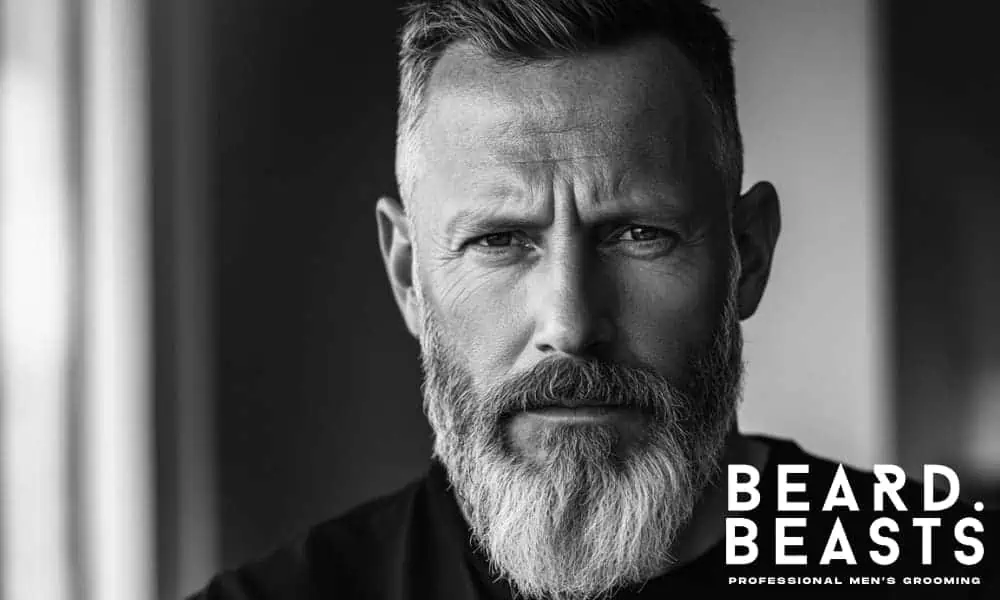
A beard can sharpen an older face or drag it down. There’s rarely a middle ground. The best beard styles for older men all do three things differently from the ones that fall flat: they trim with the jawline in mind, they work with grey hair instead of fighting it, and they let go of whatever shape worked twenty years ago.
None of that means going short or playing it safe. It means choosing a style that’s actually built for the face you have now.

In this article
Best Beard Styles for Older Men
These six work consistently well on older faces. Ordered roughly from least to most demanding, because that’s the axis that actually matters when you’re deciding what to commit to.
Heavy Stubble Beard

This means running a #2 guard over the face twice a week, which lands you at 5-6mm, then switching to a #1 along the neckline so you don’t look like you just forgot to shave. It’s the lowest-effort option here and arguably the most flattering one too, since stubble adds texture and a bit of shadow along the jaw without committing to real length.
What makes it work on an older face is what it doesn’t do. It doesn’t add weight, doesn’t need shaping, and doesn’t draw attention to itself. On thinning or patchy growth it can actually look better than a longer beard would, because there’s nowhere for the gaps to show. I’d recommend this to almost any man who isn’t sure a beard suits him anymore. It’s the easiest way to find out.
Short Boxed Beard

Clean, squared-off lines with length kept consistent across the cheeks and chin, usually somewhere around a #4 to #5 guard with the edges defined by hand. This is the most structured option on the list, and structure is exactly what an ageing jawline benefits from.
The square base does real work here. It gives the lower face a defined edge instead of letting everything soften and round off, which is the direction most faces drift as the years go on. I’d call this the safest recommendation for a man who wants a proper beard style rather than stubble but doesn’t want to think too hard about maintenance.
The Ducktail

A beard that tapers to a soft point at the chin rather than staying flat across the bottom. It’s a more refined shape than a full beard and one that suits a lot of older faces better than they’d expect.
The point at the chin draws the eye downward and gives definition to a jawline that’s lost some of its sharpness. It’s not as low-maintenance as stubble, but it’s considerably easier to keep looking sharp than a full beard, since the shape does most of the visual work for you.
Full Beard

Real length, real volume, no shortcuts. The full beard is the boldest option here, and it’s also the one most likely to go wrong if it’s left to grow without any shaping.
On an older face it can look commanding. It adds presence and gives the whole face more weight to balance against. But it needs upkeep that the shorter options don’t, and I’d be honest with anyone considering it: regular trims, daily oil, and a cheek line that doesn’t creep too high are non-negotiable. Skip any of that and a full beard stops looking intentional and starts looking neglected, which is a much worse outcome than just keeping it short.
The Verdi

Fuller through the cheeks, rounded rather than squared at the bottom, paired with a styled mustache. This is the most distinguished-looking option on the list and the one with the highest grooming demands to match.
Two separate routines are really running here, one for the beard and one for the mustache, and both need daily attention or the whole thing falls apart. Nobody mentions the practical downside either: eating soup or drinking coffee with a properly styled mustache is a genuine nuisance, and you’ll be wiping it down after most meals. Done properly though, it’s hard to beat for a man who wants something with real character rather than just a clean, generic shape.
The Van Dyke

A pointed goatee paired with a separate mustache, cheeks shaved clean rather than connected into the beard. It’s the most demanding style here in terms of precision, even though it has the least actual hair.
The lines have to be sharp because there’s so little beard to hide behind if they’re not. On the right face it looks properly sharp. On the wrong one, the gap between bare cheeks and a defined chin looks stark rather than stylish. This one is worth trying on a face shape that suits it, but it’s the style I’d recommend last on this list for an older man starting from scratch.
The Jawline Has to Be Built Into the Beard
Most beard guides talk about face shape and stop there. For older men, the jawline matters more than the face shape it belongs to.
Skin loses some of its tightness with age, and the jawline is usually the first place that shows. A beard that ignores this just grows over the change rather than working with it. A beard that’s shaped properly does the opposite, using length and line placement to put definition back where it’s quietly disappeared.
This is mostly about where the neckline falls. Too low and the beard blends into the neck, erasing the jaw entirely. Kept a little higher and tighter than it might have been in your twenties, the beard creates a visible line between jaw and neck again. It’s a small adjustment that makes a bigger difference here than almost anywhere else in this article.
Grey Beard Hair Does Not Behave Like Younger Beard Hair

Grey hair is coarser and drier than the hair it replaces, and most men don’t adjust their routine to account for that until something’s already gone wrong.
It holds less moisture, frizzes more easily, and can look wiry rather than full if it isn’t conditioned properly. A beard that looked soft and dense at thirty can look brittle and unruly at fifty with exactly the same trim, just because the hair itself has changed.
Regular hair conditioner won’t do much here. You need a heavy-duty beard balm with shea butter or beeswax in it to actually weigh those coarser grey strands down and keep them lying flat. It’s also worth knowing that a fuller grey beard tends to hold onto food and cigarette smells more than darker hair does, so a proper beard wash now and then matters more than it did at thirty.
The Beard You Had in Your 20s May Not Work Now
I see this constantly: a man who’s worn the same chin strap, or the same full beard, since the late nineties, still cutting it to the exact shape he landed on back then. His hairline has moved. His jawline has softened. The cheeks that used to fill in evenly now thin out in patches. None of that has changed the haircut he asks for.
This is the part nobody wants to hear, but it’s worth saying plainly: the beard that looked best on you a decade or two ago might not be the one that looks best on you today. Bone structure shifts subtly. Skin changes. Holding onto an old shape out of habit, rather than checking whether it still fits, is the most common mistake I see in older men’s grooming, and it’s an easy one to miss because nothing about it feels like a decision. It just feels like staying the same.
The fix isn’t dramatic. It’s usually a slightly shorter length, a tighter neckline, or a switch from a full beard to something like a ducktail or a boxed beard that asks less of cheek density. Small adjustments, made honestly, beat sticking with a shape that quietly stopped working years ago.
The Beard Beasts Verdict
These beard styles for older men should make your face look sharper, not heavier. Get the jawline definition right, treat grey hair with the balm it actually needs rather than whatever conditioner is already in the shower, and stay honest about whether your current style still fits the face you have now.
Of the six styles here, the short boxed beard is where I’d point most men first. It’s structured enough to define the jaw, forgiving enough to suit a range of densities, and low-maintenance enough that getting it right doesn’t take real effort. From there, adjust toward a ducktail if you want more refinement or stubble if you want less to manage.
The beard isn’t what’s ageing you. The one you’ve outgrown is.