
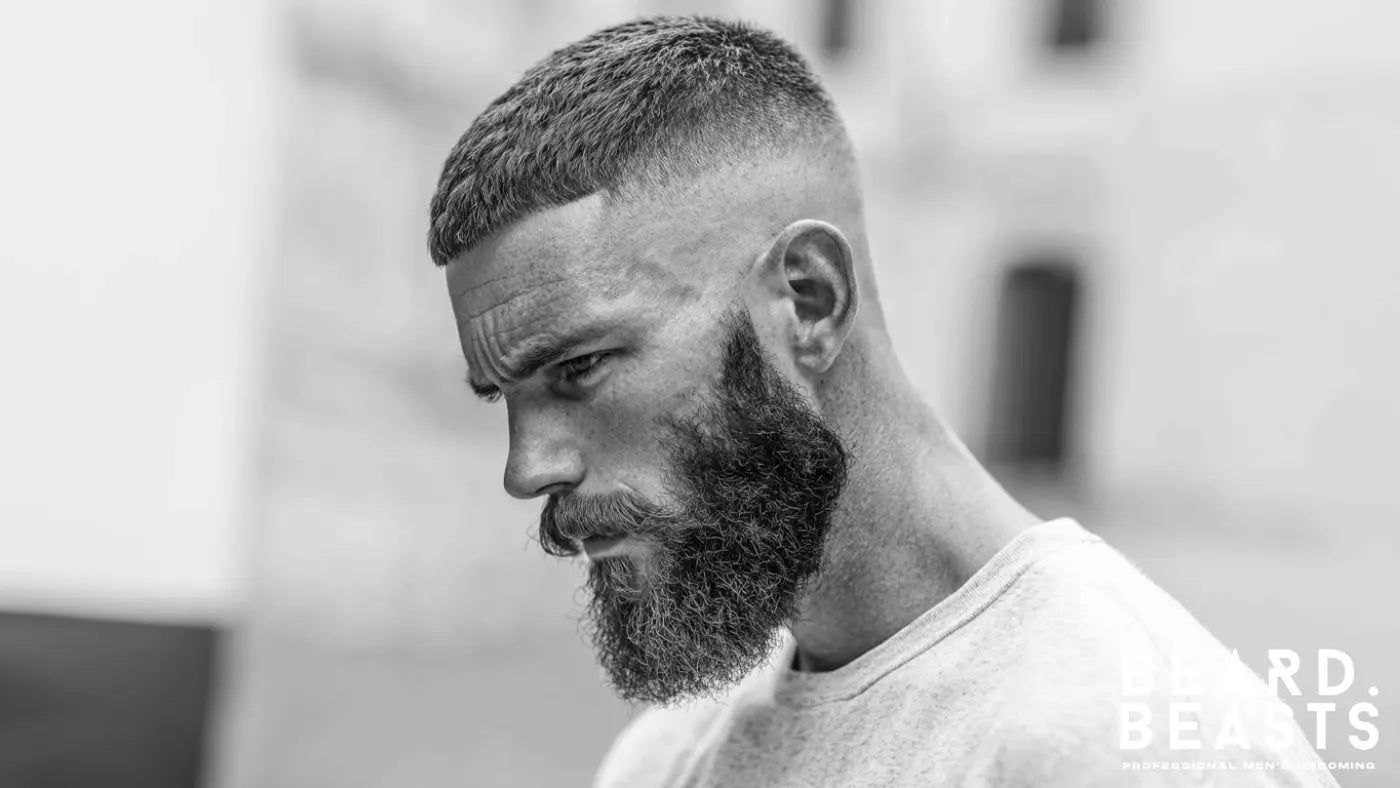
A heart-shaped face gives you one clear problem to solve. Too much width up top, not enough weight down below.
The forehead is broader. The face narrows as it drops. The chin comes to a point. Leave that shape alone and the whole face starts looking top-heavy, slightly sharp, and less balanced than it should. That is why beard shape matters more here than beard length.
This is where a lot of men go wrong. They grow whatever comes in best and assume more beard will fix the issue. It will not. If the shape is wrong, all you do is make the imbalance louder.
For a heart-shaped face, I think beard shape is less about style and more about correction. The best beard styles for a heart-shaped face add weight where the face is weakest, stay controlled where the face is already wide, and make the lower half look steadier and stronger.
That is the whole job.

In this article
The Rule That Matters Most

If you have a heart-shaped face, the chin needs help and the sides need restraint.
That is it.
The chin is the weakest structural point of the face. It lacks width and visual weight, so that is where the beard has to do the real work. More density at the bottom pulls attention downward, gives the lower face more presence, and stops the whole shape from tapering away too fast. If the beard stays too light there, the point of the chin keeps running the show.
The sides are different. Most heart-shaped faces already have enough width through the upper half. Let the cheeks and sideburns bulk out too much and you make that worse. The face gets broader where it is already broad, and the chin ends up looking even smaller by comparison.
So the logic is simple. Keep the sides tighter. Build the chin out properly. Do not just follow the shape you already have. Correct it.
The Best Beard Styles for a Heart-Shaped Face
These styles work because they all follow the same logic: control the top, reinforce the bottom.
The Full, Short Boxed Beard

For most men with a heart-shaped face, I would start here first.
A short boxed beard is the safest and strongest option because it replaces a narrow chin with structure. It adds mass around the lower jaw, gives the chin more support, and flattens the bottom edge so the face stops tapering so sharply. When it is shaped properly, the point of the chin largely disappears.
The details matter. The sides should stay short and tidy, while the chin and lower jaw carry more of the bulk. Squared corners matter too. If you round them off or let the beard narrow into a point, you bring the exact problem back into focus. This style works because it makes the lower half feel broader and steadier, not because it adds beard everywhere.
The Garibaldi

The Garibaldi works through fullness rather than precision. I would not call it the first choice for everyone, but it can work very well if you have enough growth to let the bottom build real weight.
What makes it useful on a heart-shaped face is the lower bulk. Once the beard gets enough length and fullness at the base, it starts countering the natural taper of the face.
The rounded finish also helps because it softens sharp angles instead of reinforcing them. A short Garibaldi usually does not do enough, though. It just looks like extra beard without enough structure to change the face properly.
Heavy Stubble

Heavy stubble is one of the smartest low-commitment options if the beard is not dense enough for something fuller or if you do not want the upkeep of a shaped beard.
At around 4 to 6 mm, heavy stubble can add shadow and depth along the jawline, which helps reduce the sharpness of a pointed chin without needing real beard length. It is doing the job through density and shadow rather than bulk.
The neckline matters a lot here. Keep it low enough to preserve thickness beneath the chin. Trim the neck or cheeks too high and the whole thing loses the lower-face support it was supposed to create.
The Extended Goatee

A standard pointed goatee is one of the worst choices for a heart-shaped face. An extended goatee is different.
Once the shape runs along the jawline and stops being just a little patch at the point of the chin, it starts adding horizontal balance. That is why this version works. It broadens the lower face without building too much through the cheeks, which is exactly the kind of correction this face shape needs.
I would still be careful with it. This one depends heavily on shape. The beard must stay detached from the sideburns so cheek width stays under control, and the length should sit at the chin and lower jaw, not build through the sides. Done properly, it gives you width without unnecessary heaviness.
The Beardstache

The beardstache works because it shifts attention around the face instead of piling all the weight into one area.
A strong mustache adds horizontal emphasis across the upper lip, while short, dense scruff underneath helps reinforce the lower face. That combination can work well on a heart-shaped face because it breaks up the narrow taper and adds some balance without needing a full beard.
This one is more conditional, though. I would only recommend it if the mustache is genuinely one of your better features. If the mustache is weak or patchy, the whole look loses what makes it useful. The beard underneath also needs to stay controlled. Too much cheek growth ruins the effect.
Beard Styles That Usually Make It Worse
Some beard styles do not just fail on a heart-shaped face. They push the shape further in the wrong direction.
- The classic pointed goatee: I would avoid this completely. The face already narrows toward the chin, so adding a beard shape that does the same thing just doubles down on the problem. Instead of adding weight, it sharpens the narrowest point.
- Mutton chops and heavy side growth: Anything that builds volume through the sideburns or upper cheeks usually makes the upper half look even wider. That leaves the chin looking smaller by comparison.
- The chin strap: A chin strap outlines the jaw, but it does not add any real weight to it. On a narrow lower face, that usually makes the structure look weaker, not stronger.
- High or overly sharp necklines: Cutting the neckline too high removes support from underneath the chin. That strips away the lower-face weight the beard was supposed to build.
Grooming and Maintenance: Sculpting the Shape

Getting the right beard style is only half the job. If the beard is shaped the wrong way, even a good style starts working against you.
The sides need regular control. Not stripped down to nothing, but kept shorter than the chin. That difference is what gives the lower face more authority. Let the cheeks grow too freely and the beard starts widening the wrong part of the face.
The chin needs protecting. That does not mean letting it get wild. It means not trimming away the exact area doing the work. A lot of men shape the beard too evenly and end up flattening the one section that was supposed to build weight.
Brushing matters too. If you keep brushing the beard straight down, it starts falling lengthwise and the face keeps its narrow taper. I would brush outward and slightly forward through the jaw instead. That helps create width rather than just extra drop.
The neckline matters more than most men think. Keep it just above the Adam’s apple, following the natural curve of the jaw rather than carving a harsh line too high. A beard needs a base if it is going to steady the lower face.
Consistency matters more than over-correction. Small, steady trims preserve the shape. Over-trimming usually ruins it.
How Beard Shape Changes a Heart-Shaped Face
This is the part men often underestimate. A beard does not just sit on a heart-shaped face. It changes how the face is read.
Add weight at the chin and the lower face looks broader. Keep the cheeks tight and the upper half stops dominating. Build a flatter lower edge and the chin stops reading like the narrow point everything collapses toward.
That is why the right beard can make the jaw look stronger without changing the actual bone structure. It is not magic. It is proportion.
When the shape is right, the face looks more square or softly oval instead of sharply tapered. That shift is what gives the whole look more presence.
A Few Straight Answers
These are the questions worth clearing up before you start shaping the beard the wrong way.
What beard style is best for a heart-shaped face?
For most men, I would say a short boxed beard is the strongest option. Heavy stubble and a properly shaped extended goatee can also work very well. All three help add weight to the lower face without making the upper half look broader.
Is a beard good for a heart-shaped face?
Yes, often very good. A heart-shaped face usually improves when the lower half gets more structure. The right beard can make the jaw look broader and the chin look less slight.
What is the best haircut for a man with a heart-shaped face?
Haircuts that avoid too much bulk at the temples usually work best. Controlled volume, moderate length, and a beard that adds jaw structure tend to work better than anything too tall or too wide through the upper half.
Is a heart-shaped face attractive for males?
Yes. It usually looks refined by default. The beard just decides whether it stays refined in a strong way or starts looking too narrow and top-heavy.
Does beard length matter more than beard shape?
No. Shape matters more. A badly shaped long beard will still work against the face. A well-shaped short beard usually does more.
The Beard Beasts Verdict
A heart-shaped face does not need more beard everywhere. It needs the right beard in the right place.
That is what most men miss.
If the sides get too full, the face gets broader where it is already broad. If the chin stays too light, the lower half never catches up. That is why the best beard styles for a heart-shaped face all do the same basic job. They keep the sides under control and put the real weight where the face needs it.
So my take is simple.
Build the chin. Restrain the cheeks. Stop choosing beard styles based on what grows fastest and start choosing them based on what actually improves the shape of your face. For most men, I would start with a short boxed beard and only move away from that if the growth pattern or upkeep makes another option smarter.
Get that right, and a heart-shaped face starts looking stronger, steadier, and better balanced.