
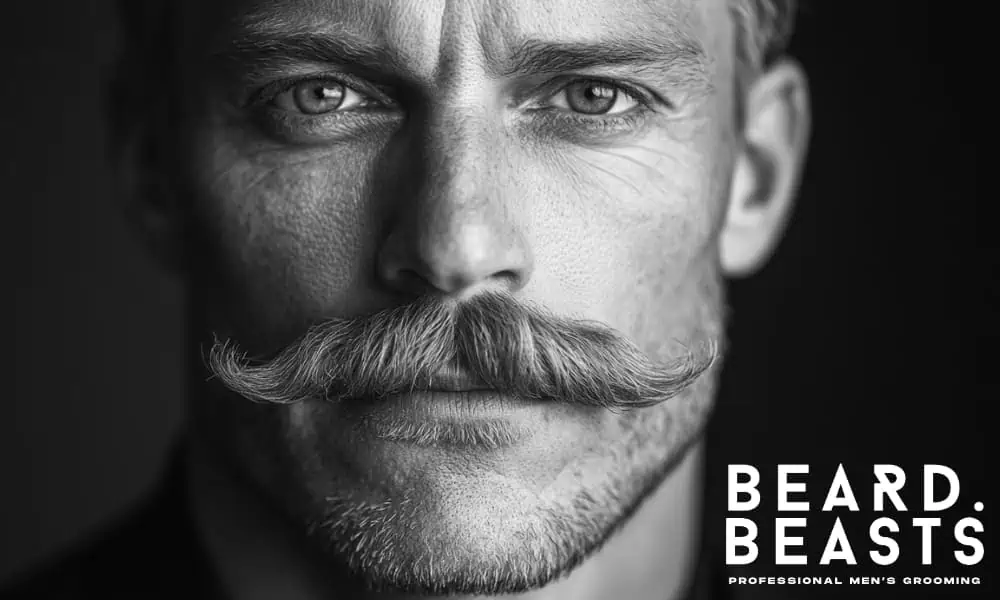
The most popular types of mustaches today do more than signal style—they define it. Whether bold or understated, the right mustache adds definition, character, and quiet confidence to your look.
This guide highlights the most popular mustache styles for men right now. You’ll learn what each one says, who it suits, and how to make it your own.
Whether you’re growing your first mustache or refining a signature look, start here. Smart grooming begins with knowing your options.
In this article
Explore the Most Popular Types of Mustaches
From bold to minimal, these are the standout styles that define modern masculinity.
Each of these mustache styles earns its place for a reason. Find the one that fits your face, your grooming habits, and your presence.
The Chevron Mustache

The Chevron Mustache is a power move—thick, structured, and built to dominate the upper lip. With its dense growth and clean edges, it brings weight and intention to the face without relying on theatrics.
It’s a style that doesn’t try to charm—it commands. The straight shape enhances jawlines and anchors the lower half of the face with a solid, masculine frame.
The Chevron suits men with oval, diamond, or square face shapes and naturally full growth. If you want impact without daily styling, this is the mustache that leads without asking for attention.
The Handlebar Mustache

The Handlebar is iconic—curved, expressive, and unapologetically styled. With its upward-sweeping ends and vintage flair, it turns a simple mustache into a deliberate statement.
This is facial hair with personality. It adds form to the face while softening sharp features, giving balance to angular jawlines or long face shapes.
The Handlebar suits men who want precision and presence in equal measure. It requires length, patience, and daily grooming—but rewards with a look that’s bold, cultivated, and instantly memorable.
The Horseshoe Mustache

The Horseshoe is blunt, aggressive, and built for impact. With vertical bars running down from the corners of the mouth, it’s impossible to ignore—and that’s the point.
This is not a subtle style. It adds length to the face and brings an unmistakable sense of toughness and rebellion.
The Horseshoe suits square or rectangular face shapes and favors thick, coarse growth. If you’re after something bold, loud, and full of attitude, this is your go-to.
The Pencil Mustache

The Pencil is controlled, deliberate, and sharp as a tailored suit. Sitting just above the lip in a clean, thin line, it’s a study in grooming discipline.
Its strength lies in precision. It adds definition to softer features and brings vintage elegance to modern faces.
Best for oval or heart-shaped faces, the Pencil requires consistent upkeep and crisp edges. It’s subtle, stylish, and made for men who appreciate restraint over excess.
The Parted Pencil Mustache

The Parted Pencil adds a twist of symmetry to the original. Split neatly down the center, it creates two narrow sections with a visible gap, enhancing facial structure with exacting lines.
This is precision taken to the next level. The parted design draws attention to the upper lip while sharpening the entire mid-face.
It suits narrow or symmetrical face shapes and works best on men with fine, straight beard hair. If you value detail and definition in your grooming, the Parted Pencil makes a quietly bold impression.
The Walrus Mustache

The Walrus is heavy, thick, and completely unapologetic. It drapes over the upper lip with a dense, natural fall that projects age-old masculinity.
There’s no shaping here—just raw growth and weight. It softens sharp features and adds bulk to narrow or elongated face shapes.
Best suited to men with thick facial hair and plenty of patience, the Walrus works best when grown long and left loose. It’s a mustache that says you lead on your own terms.
The Lampshade Mustache

The Lampshade is neat, structured, and squared off with purpose. Trimmed into a tight, boxy shape that aligns with the mouth, it offers definition without drama.
It’s a controlled style that sharpens the mouth area and adds symmetry to the lower face. Clean, tight lines give it a modern edge while nodding to classic roots.
This mustache works well on round or oval faces and suits men who prefer grooming that’s low-profile but high in polish. It’s precise, well-defined, and built for everyday wear.
The English Mustache

The English is lean, parted, and finely styled—elegance in facial hair form. It stretches outward from a clean center, often with a slight lift at the ends for refinement.
This is a style steeped in tradition, best worn with a sharp eye for grooming. It lengthens the face and emphasizes cheekbones without adding weight.
Ideal for men with narrow or angular face shapes, the English mustache demands control and detail. It’s a polished look for those who carry themselves with quiet precision.
The Beardstache

The Beardstache is rugged, modern, and intentionally uneven in contrast. It pairs a full, prominent mustache with a short, stubbled beard for a look that blends form with raw edge.
This is a style that works in opposites—thick above, clipped below. It adds weight to the upper lip while keeping the jawline defined and masculine.
Ideal for square or oval face shapes, the Beardstache suits men with strong facial features and solid growth. It’s bold, balanced, and proof that modern grooming isn’t about perfection—it’s about control.
These are the types of mustaches that shape modern style—each with its own balance of form and intent. The right choice sharpens your features and reflects exactly how you carry yourself.
Mastering Mustache Maintenance
Discipline over effort—that’s the difference between a mustache that holds up and one that fades fast.
A well-groomed mustache isn’t just about growth—it’s about discipline. These essential techniques will keep your style sharp, healthy, and controlled.

Keep It Clean, Always
Wash your mustache two to three times a week with a gentle beard wash or mild cleanser. This removes product buildup, sweat, and dead skin that can irritate the skin underneath.
Rinse thoroughly and pat dry—don’t scrub. Clean hair is easier to train, style, and maintain.
Condition the Hair and Skin
Use a beard oil or conditioning balm daily to soften the mustache and moisturize the skin beneath. This helps prevent dryness, flaking, and irritation as your mustache grows.
Even short styles benefit from hydration. A conditioned mustache looks healthier and holds its shape better.
Comb for Shape and Training
Comb your mustache daily using a fine-toothed beard comb or mustache-specific tool. This helps direct the hairs outward or downward, depending on the style you wear.
It also spreads natural oils evenly and keeps rogue hairs in check. Over time, consistent combing trains your mustache to grow in your preferred direction.
Trim with Control, Not Guesswork
Always trim your mustache when it’s dry—wet hair appears longer and will throw off your length. Start conservatively and cut less than you think you need.
Use beard scissors for fine detailing and a razor to shape the lines. Regular trimming keeps your style intentional, not overgrown.
Use Wax with Intention
A small amount of wax goes a long way, especially for structured styles like the Handlebar or English. Warm the wax between your fingers before applying it to the ends or edges.
Avoid overuse—it should control, not freeze. Light application gives your mustache hold without looking stiff or artificial.
Stay Consistent
Grooming isn’t about high effort—it’s about regular effort. A few minutes a day builds a mustache that holds its shape, stays healthy, and elevates your entire look.
Mastering these fundamentals turns routine grooming into lasting control. A sharp mustache doesn’t happen by chance—it’s built one consistent step at a time.
Avoid These Mustache Mistakes
Even the strongest mustache styles can fall short with the wrong habits. Avoid these common grooming missteps to keep your style sharp and intentional.

Trimming Too Soon
Rushing into trimming is one of the most common mistakes. Without enough growth to shape, you risk locking yourself into a weak outline that doesn’t suit your face or hair pattern.
Fighting Your Natural Growth
Not all mustaches grow the same, and forcing a shape that doesn’t suit your texture leads to daily struggle. Choosing a style that works with your natural density, direction, and coverage makes grooming far easier—and the results far better.
Neglecting the Area Around the Mustache
Sharp lines lose impact when the skin around them is untidy. Clean up the philtrum, upper lip, and corners of the mouth to frame your mustache properly and maintain contrast.
Using Too Much Product
Heavy wax or oil builds up fast and dulls your mustache’s definition. A small amount, applied with control, is enough to style without suffocating the hair.
Skipping Daily Care
Consistency matters more than effort. When you neglect combing, hydration, or cleanup, your mustache quickly goes from styled to sloppy.
Choosing a Style That Doesn’t Fit Your Lifestyle
Some styles require daily shaping, others don’t—ignoring that difference leads to frustration. Be honest about how much time you’re willing to commit and choose a style that fits your routine.
Failing to Adjust as You Grow
Your mustache won’t look the same at week four as it does at week twelve. Failing to reassess and refine your approach as it grows leads to styles that feel unbalanced or outdated.
Avoiding these mistakes isn’t about perfection—it’s about staying intentional. A well-groomed mustache is built through smart choices, not shortcuts.
Final Thoughts
The right mustache doesn’t just add detail—it adds presence. It sharpens your features, anchors your style, and signals control without saying a word.
The best types of mustaches combine shape, intention, and style—giving every man a way to lead with his look. The key is knowing what suits you—and committing to the care that keeps it sharp.
Whatever style you choose, make it deliberate. A well-groomed mustache isn’t just facial hair—it’s your signature.