
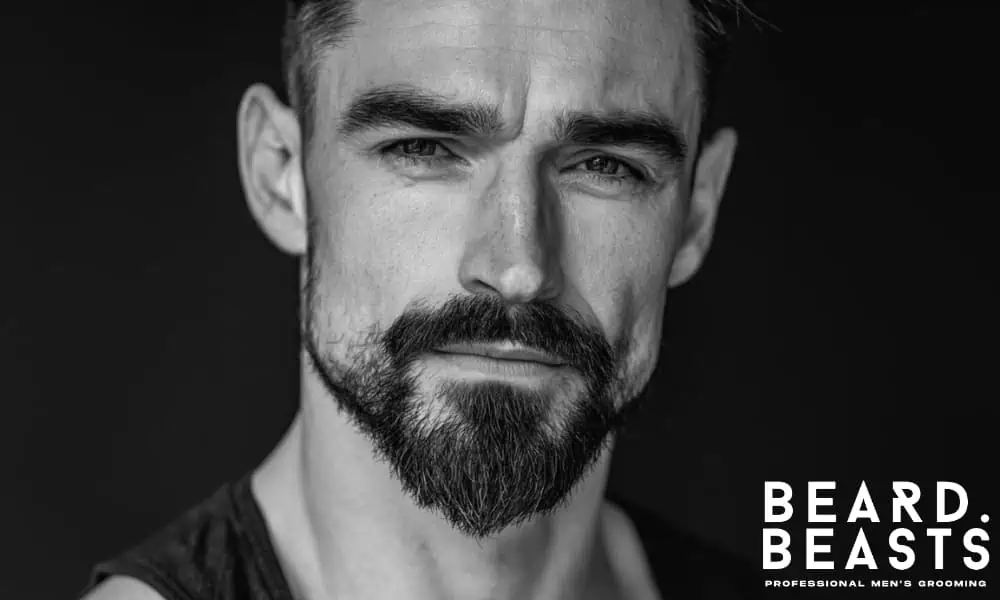
Patchy cheeks don’t ruin a beard. Bad choices do.
I’ve seen men spend eight weeks, twelve weeks, sometimes longer, waiting for cheek growth that clearly wasn’t going to carry the beard. The mustache gets heavier. The chin gets better. The sides still look scattered.
At that point, I’d stop waiting and look at what actually works. There are beard styles for patchy cheeks that don’t depend on the sides filling in at all.
A patchy beard usually starts looking better once you stop building around the weakest area. Work with whatever grows in strongest. That might be the mustache. It might be the chin. It might be the jaw. It might just be short growth across the whole face.
The cheeks don’t always need to be part of the plan.
Best Beard Styles for Patchy Cheeks
The styles below don’t need thick cheek growth to work. That’s the point.
Some keep everything short enough that gaps stop mattering. Some remove the cheeks completely. Some focus around the mouth. Some lean on the jaw and lower beard. I wouldn’t recommend every style on this list to every patchy beard I see, but these are the ones I’d put in front of someone before telling him to wait months for cheek growth that won’t show up.
Light or Heavy Stubble

This is the fix I give first, before any of the shaped styles below.
Short growth hides patchiness better than long growth does, and stubble is about as short as a beard gets while still counting as one. Light stubble sits around 2mm. Heavy stubble runs closer to 5mm to 6mm. Both keep the facial hair short enough that gaps in the cheeks blend into shadow instead of standing out.
I’d start at light stubble first. If the cheeks still show gaps at 2mm, heavier growth won’t fix that, it just makes the gaps more obvious next to thicker hair everywhere else on the face. Push to heavy stubble only once the cheeks fill in evenly at the lighter length.
Keep the stubble level across the whole face, cheeks included. Uneven stubble draws more attention to patchiness than a longer beard would, since there’s no length left to soften the transition between thick and thin areas.
This isn’t a long-term answer for a beard that wants to grow out eventually. It’s a starting point. Once the cheeks show where they actually stand at stubble length, the rest of the styles on this list stop being a guess.
Goatee and Detached Mustache

Weak connectors are where this style earns its keep. Even if the sides barely reach across, a clear break between mustache and chin can look like a decision instead of a beard that almost connects and doesn’t.
Take the cheeks short, anywhere from bare skin up to 2mm. Random stubble hanging around a goatee undoes the whole point of it. It just leaves the beard looking unfinished, like you couldn’t decide.
Watch the gap on both sides, not just one. If one nearly bridges and the other doesn’t, separate them evenly. Chasing a single stubborn connector usually drags the rest of the beard down with it.
Circle Beard

This one lives or dies on the mouth, not the cheeks. If the mustache and chin connect, even lightly, the style works because it never asked the sides for anything in the first place.
I keep it shorter than most men expect, around 4mm to 8mm. Push past that and thin connectors start looking stretched thin instead of full.
If both the mustache and chin are weak, skip this one. There’s not enough around the mouth to grow a solid circle beard.
Van Dyke

This works better than people expect when the mustache and chin are clearly the strongest parts of the face, and the cheeks clearly aren’t.
I don’t mind separation here. I usually prefer it. The mustache and chin can stand apart on their own, cheeks out of the picture entirely.
Where it goes wrong is the chin running long while the mustache stays thin. That tips the whole face bottom-heavy fast.
My test is simple: does the mustache hold its own next to the chin, or is the chin doing all the talking? If the mustache barely shows once the chin’s filled in, this isn’t the style. The chin can’t carry a Van Dyke by itself.
Balbo Beard

A Balbo puts more weight in the lower face than a basic goatee does, which is exactly why it suits patchy cheeks. The mustache stands apart, the lower beard runs off the chin and jaw, and the cheeks never need to bridge anything.
This works when growth runs well from the chin out toward the jaw corners. Thin that area out and the Balbo starts breaking into pieces instead of reading as one shape.
Clean up the cheeks every three to five days if the sides grow unevenly. Let patchy cheek hair creep back in and the whole reason the style worked disappears with it.
Anchor Beard

This one needs an actual chin, not an average one. A focal point the rest of the beard can build around.
If the chin grows darker and thicker than the cheeks ever will, start around 5mm to 10mm through it and let the mustache support rather than lead. Push the length further only if the bottom doesn’t go wispy on you.
Set a firm lower edge. Let it grow too low or too wide and the anchor shape disappears, leaving something that looks unfinished rather than intentional. I wouldn’t recommend this style to every man with a patchy beard, only the ones where the chin makes the call obvious on its own.
Beardstache

This is one of the better options on the list, and one of the first I’d try.
A lot of patchy beards follow the same pattern: decent mustache, decent chin stubble, uneven sides. Instead of fighting that pattern, the beardstache uses it. Keep the cheeks 2mm to 5mm and let the mustache run heavier and longer than the stubble.
Trim the stubble more often than the mustache. The moment the cheek growth drifts from short stubble into uneven short beard territory, the advantage this style has goes out the door.
Before telling someone to wait months on cheek growth that may never change, I’d try this first.
Chin Strap

I’m careful with this one. It follows the jaw and skips the upper cheek entirely, which sounds perfect for patchy growth, but it has literally zero tolerance for gaps. The strap needs to hold from the sideburns to the chin without a single break.
Any breaks along the jaw, skip it. And don’t go razor-thin either. That’s the detail that dates a chin strap back to the early 2000s boyband era. Make the strap wider so it carries more weight on the jaw and doesn’t look drawn on.
This sits at the bottom of my list on purpose. Heavy stubble, beardstache, Balbo, or a goatee-based style should be looked at first for most men.
Weak Cheeks Need a Decision, Not More Length
I don’t automatically tell men with patchy cheeks to grow longer. That advice gets repeated far too often for how little it actually helps.
Time works if the cheek growth is already there and just slow. But sparse sides after four to eight weeks usually just mean the stronger areas get heavier while the cheeks stay exactly where they started.
That’s when I’d make the call. Either the cheeks are part of the beard or they’re not. If they are, keep them shorter than the chin and blend them into the stronger growth around them. If they’re not, drop them all together and build around the mustache, chin, or jaw instead.
The worst option is the middle ground. Weak cheek growth left alone because you’re hoping it gets better later. Give it a fair test, then decide.
The Strongest Growth Should Lead the Style
I don’t like trimming the best-growing area down just to match the weakest one. That ruins more beards than patchy cheeks do.
Chin grows best, give the chin more responsibility. Mustache grows best, build around a beardstache or Van Dyke. Jaw outgrows the cheeks, a Balbo usually beats a full cheek beard that isn’t there yet.
After two weeks of growth, stand in daylight and look at which area has actually filled in solid, no visible skin underneath, versus which area still shows gaps. That’s the area the whole style should be built around.
A lot of men skip this step because they want fuller cheeks specifically. I understand the instinct. But the beard you want and the beard you can shape right now aren’t always the same.
I’d rather build around the part that already works than spend months waiting for the weakest area to catch up.
The Lines Matter More When the Cheeks Are Thin
Thin cheeks don’t leave enough hair to hide an uneven edge. On fuller growth, a stray hair or a slightly uneven line gets lost in the density around it. On thin cheeks, that same mistake sits there in the open with nothing around it to blend into.
That doesn’t mean the cheek line needs to be harsh. It means knowing exactly what to remove and stopping there. Clear the obvious strays, then stop.
Men keep lowering both cheek lines trying to make them match exactly. By the time they stop, they’ve taken off the few hairs that were making the beard look fuller in the first place.
The neckline is worth watching too, for a different reason. Neck growth doesn’t make up for weak cheeks, it just adds weight low on the face and pulls the eye downward instead of toward the beard itself. For most patchy cheek styles, I’d keep the lower neck short and let the chin or jaw carry the weight instead.
Sideburns get missed too. Heavy sideburns sitting above thin cheeks make the gap underneath look worse, not better. Taking the sideburn area shorter usually stops that drop into thin growth from happening so suddenly. That one adjustment can make the beard look chosen instead of rescued.
The Beard Beasts Verdict
Patchy cheeks don’t need pretending. They need a better choice.
If the sides won’t grow in thick, stop picking styles that depend on them. Use whatever shows first and holds up best instead.
Light or heavy stubble. Goatee and detached mustache. Circle beard. Van Dyke. Balbo. Anchor beard. Beardstache. Chin strap if the jaw line holds.
I’d rather see a smaller beard that fits the growth than a bigger one built on hope.
That’s the difference. A patchy beard can still work. It just has to be shaped around the beard that’s actually there.