
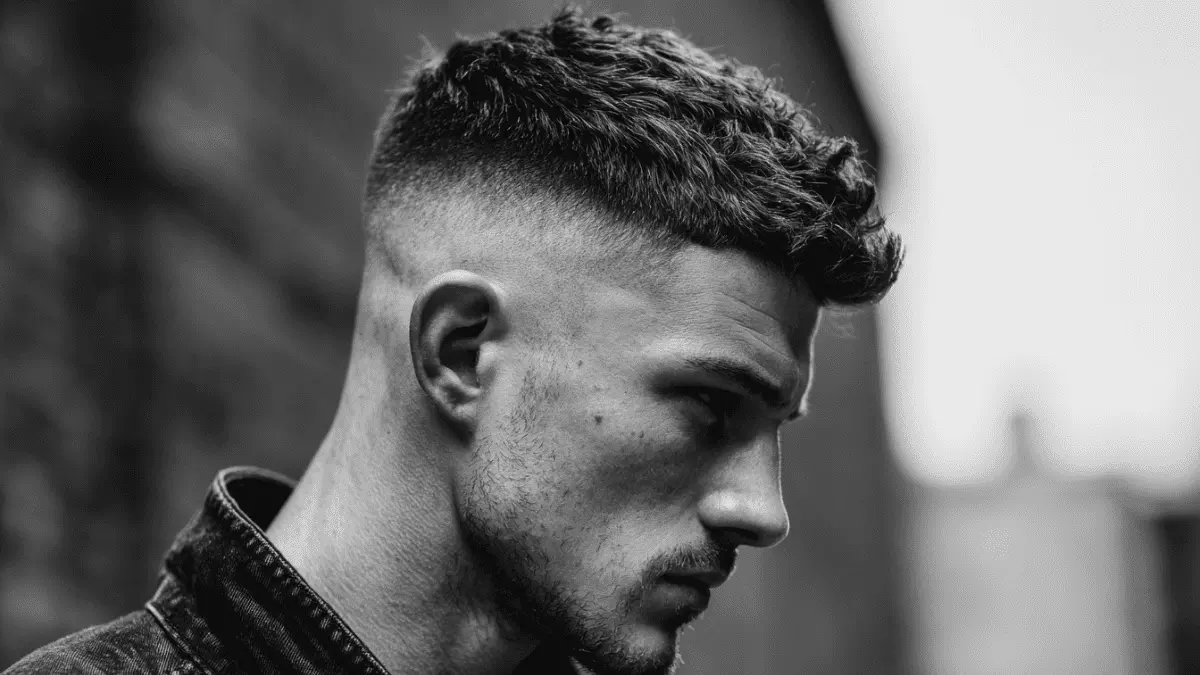
A high fade textured crop can be one of the best short hairstyles a man gets, but I’d never treat it as a safe choice. The sides come off high, usually close to the temples, so the front has to carry the haircut on its own. If the crop is too blunt or the fade is pushed higher than the head can handle, there’s nowhere for the mistake to hide.
That’s why this cut only works on the right man. It needs enough density through the front, a fringe that can actually be broken up, and someone willing to keep the fade trimmed every couple of weeks.

In this article
Best High Fade Textured Crop Styles for Men
These four cuts aren’t the same crop with different fade names attached.
The difference is how much fringe is left and how the fade moves around the head. I’d choose between them based on hair density, how much maintenance you’re willing to commit to, and how exposed you actually want the sides to feel.
Classic High Fade Textured Crop

This is the starting point for most men. The fade stays high but doesn’t have to go down to skin. I’d usually keep the bottom around a 0.5 or 1 guard if the goal is contrast without making the sides look bare. That still gives the crop a tighter feel while leaving enough shadow for the cut to grow out without looking rough within the first ten days.
The top needs real length to work with, around an inch to an inch and a half through the front, enough for the barber to cut into the crop and break the ends up properly.
This is the one I’d pick first if you like the idea of a high fade textured crop but don’t know yet whether a skin fade is too much.
High Skin Fade Textured Crop

This is the most dramatic version. The sides go down to skin, so the crop above becomes the entire focus. That works when the front has enough weight and the fade blends up cleanly rather than leaving a dark shelf under the top, that visible band where the fade stops and the crop starts too abruptly.
The maintenance is the real catch. A skin fade on a short crop starts losing its sharp look within ten to fourteen days, and by week three the sides have softened completely to lose the tightness that made it worth choosing. I’d only recommend this to someone actually happy with regular barber visits, not anyone who stretches trims to four or five weeks.
High Fade Crop with Heavy Fringe

The textured fringe is the entire reason to choose this version. Instead of keeping the front short and choppy, the barber leaves more weight so it pushes forward with real drop, which works well on thick or coarse hair since there’s enough density to hold together.
The danger is leaving it blunt. A heavy fringe still needs the ends cut into, or it turns into one thick block rather than something with movement. I’d ask specifically for weight through the fringe with broken ends, not a solid block styled forward. And I wouldn’t use this version to hide a weak hairline. Once it separates, gaps underneath show up faster than on a lighter crop.
High Drop Fade Textured Crop

This is the variation to pick when a straight high fade feels too square around the back of the head. The fade still starts high near the temple, but it drops lower behind the ear instead of running straight around, which can improve the profile from the side, especially on a head that’s flatter through the crown.
The drop shouldn’t fall too far, or it stops being a high fade and starts becoming something else entirely. The curve should follow behind the ear, not collapse down the back of the head.
High Fade vs Mid or Low Fade Crop
This is where most men should slow down before committing.
A high fade gives the most contrast because it removes side weight closest to the temple, which means the top has to be good enough to carry that much exposure. A crop that’s too short, blunt, or thin through the front doesn’t get helped by a high fade. It just gets shown off more clearly.
A mid fade is the version I’d actually recommend to most men. It still gives real contrast at the sides. It just leaves enough weight through the upper section that the top never looks stranded on its own, and you’re not stuck maintaining it on a skin-fade schedule every one or two weeks.
A low fade is the lowest maintenance option, keeping more hair around the temples and softening the overall severity. I’d recommend it if you have fine hair, softer features, or weaker density at the front.
The real mistake I see men make is choosing a high fade because it looked good on someone else. The height of a fade changes how much pressure lands on the top, and that’s the part most underestimate until they’re looking in the mirror.
The Top Is What Makes or Ruins the Cut
The fade gets most of the attention, but I’d judge this haircut from the front first. Plenty of high fades have fade work that’s technically fine, and then the textured crop undoes the whole thing, one flat piece pushed forward that turns the whole thing into a short fringe with a fade underneath rather than an actual textured crop.
A blunt fringe across the forehead makes the crop look boxed in. Too much thinning makes it look thin and weak instead of textured. The better approach keeps some weight and point-cuts through the ends, so the hair separates without looking hollow.
The crown matters just as much as the front. Leave too much bulk behind the fringe and the top starts swelling from the side, which kills the forward direction the whole cut depends on. The weight needs to move toward the front, not stack up behind it.
Product Should Break Up the Top, Not Weigh It Down
This isn’t a haircut for shine. The front needs to look dry, separated, and slightly rough, and pomade makes the hair clump together, which undoes the entire reason for choosing a textured crop in the first place.
For thick hair, matte clay gives enough grip to keep the front broken up and hold its shape through the day. Use less than feels necessary. If the product is visibly coating the hair instead of blending into it, you’ve used too much.
For finer hair, texture powder works better. It lifts from the root without dragging the fringe down, which matters most when there isn’t much natural density holding the top up on its own.
Sea salt spray can help before drying if the hair is too soft or flat, but it’s prep, not the main product. You want the texture the cut already gave you to show through, not texture you’re faking with product because the cut didn’t do its job. If a crop only looks textured because it’s loaded with product, the cut wasn’t done properly in the first place.
What to Tell Your Barber
Don’t just ask for a high fade textured crop and hope the barber reads your mind as to the details you want. Give three specifics: fade type, front length, and how broken you want the fringe.
For the sides, say whether you want the fade taken to skin or left with some shadow. Skin gives the strongest contrast. A higher guard keeps the sides less exposed and generally grows out better. The two aren’t interchangeable, so don’t leave it to the barber to decide which one you meant.
The most useful single line to say is this: keep it pushed forward, but break up the fringe so it doesn’t end up as one straight block. That tells a barber more than the word “textured” alone, since some barbers hear that word and reach straight for thinning shears rather than point-cutting the ends.
If your hair is thinner at the front, say so before the barber starts, so he or she can leave more support through the fringe rather than making it wispy. For the drop fade version specifically, say it plainly: keep the fade high at the front, but let it drop behind the ear. That single detail changes the entire back of the cut and isn’t something a barber should be left to guess at.
The Beard Beasts Verdict
A high fade textured crop isn’t something I’d recommend to every man who wants a short haircut. It works best when the front has enough density, the fringe is cut into properly rather than left blunt, and the fade height actually suits the head shape underneath it. Get that right and it has more impact than a safer crop with a lower fade ever will.
But the high fade also removes the safety net a lower fade provides. That’s exactly why it’s only worth going this high when the top can actually handle the exposure.
For most men, I’d start with the classic version before going anywhere near skin. Keep some shadow on the sides, see how the top behaves after the first week, then decide whether more contrast is worth it. If the hair is fine, thinning, or the trims stretch out too long between visits, a mid fade crop is the smarter choice.
The haircut isn’t complicated. It’s just unforgiving.