
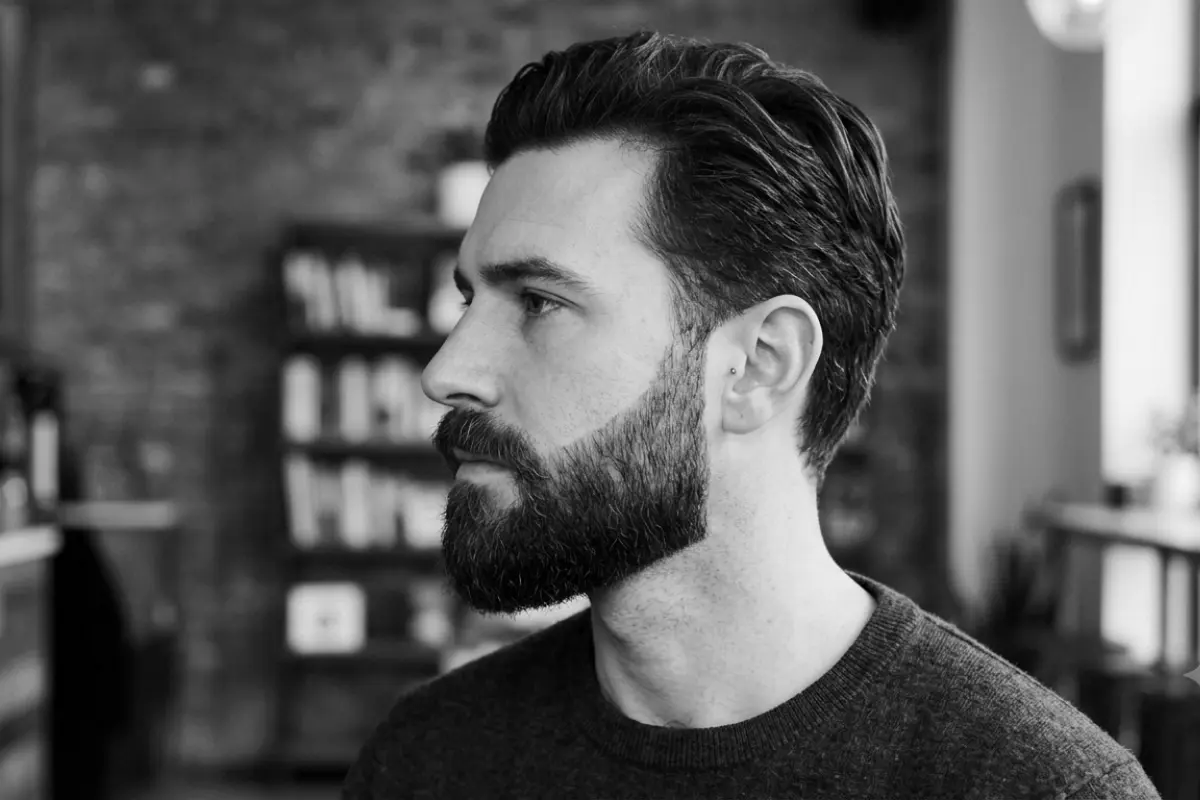
A medium boxed beard looks simple until the jaw starts getting too heavy.
That’s where this beard usually goes wrong. Men grow enough length to make it look fuller, then forget that a boxed beard still needs the cheeks, jaw and neckline kept in check.
I like the medium boxed beard when it’s handled properly. It gives more presence than a short boxed beard, but it shouldn’t drift into a big natural beard.
The trick is knowing which parts to keep tighter and which parts need more length. Get that right, and the beard strengthens the lower face. Get it wrong, and it turns into a square block of hair.

In this article
What a Medium Boxed Beard Actually Is

A medium boxed beard is a fuller beard that’s still managed through the cheeks, jaw and neckline. It isn’t long enough to be a full natural beard, but it carries more weight than a short beard ever will.
The important word in this style is boxed, meaning the beard has real structure rather than just length. The cheeks and the underside of the jaw both need a defined edge, but that definition should come from careful shaping, not from a razor-sharp line that looks like its been cut using a ruler.
The medium boxed beard works best with good cheek density and enough growth through the chin and jaw to carry the width. Thin cheeks tend to make the beard look bottom-heavy, since all the visible weight ends up around the chin and jaw instead of through the whole beard.
Once the lower beard gets too round, too wide, or too long under the jaw, it stops looking boxed and starts looking bulky instead.
Which Face Shapes Actually Suit This
A round or soft jawline gets the most out of a medium boxed beard, and it’s not close. The whole style is built around adding a defined edge that the face doesn’t already have, so a jaw that’s naturally soft benefits from exactly what the boxed shape is doing.
Longer or narrower faces need to be careful. Length under the chin adds even more length to a face shape that doesn’t need it, so I’d keep the chin section shorter than the guide above suggests and let the width through the cheeks and jaw do more of the work instead.
Square faces are the one I’d actually think twice about. A hard-edged boxed shape on a jaw that’s already angular can tip into looking heavier than intended, especially once the cheek line gets sharpened up. Softening that cheek line more than usual, and leaning into the natural curve of the jaw rather than fighting it with straight edges, keeps this from working against a face shape that’s already doing plenty on its own.
None of this rules a face shape out. It just changes how the beard should be shaped to actually suit it, rather than following the same guide regardless of what’s underneath.
The Jawline Has to Be Boxed, Not Bloated

The jaw is where a medium boxed beard wins or loses the whole look.
Keep the weight strongest through the chin and lower jaw. Don’t let it spread too far at the sides. That’s the mistake with this beard. Men grow enough length to make it look fuller, then leave the corners too wide and wonder why the beard makes the face look heavy.
A boxed beard should give the lower face a clear edge. It shouldn’t turn into a rounded block under the cheeks. If the beard is thick, I would suggest taking more bulk out behind the jaw and under the corners, while leaving enough through the chin to keep it looking solid.
The side view matters more than the front one here. A medium boxed beard can look completely fine head-on and still be wrong, since it’s the profile that actually shows whether the beard follows the jaw or hangs below it.
Keeping the outer jaw slightly tighter and letting the chin carry the length usually gives the beard more direction, without making the whole lower face look too wide. A rough guide: the width at the corners of the jaw shouldn’t extend much past where the ear meets the jawbone. Past that point, the beard starts adding width the face doesn’t need, regardless of how full the growth actually is.
How to Trim a Medium Boxed Beard Without Losing the Shape
Start longer than you think.
Most medium beards fall somewhere around 1.5 cm to 4 cm, or half an inch to an inch and a half. Past that and you’re closer to a full beard than a medium one, which works against the whole point of keeping this style boxed. Even within that range, a boxed beard should never be trimmed to one flat length. That’s how men lose the shape and end up with too much weight in the wrong places.
Step 1: Take down the bulk first. Cheeks and outer jaw with a slightly shorter guard than the chin, a touch more length left through the front so the chin still carries the shape. Don’t dig into the corners of the jaw too aggressively, take small passes, step back, and check both sides before taking more off. Once too much comes off there, the beard starts looking narrow instead of boxed.
Step 2: Balance the cheek line. This is part of the same pass, not a separate job. The logic is simple: only let the beard climb as high up the cheek as the growth actually supports. On strong, dense cheek growth, that means keeping the upper cheek line close to where it naturally grows, removing just the obvious stray hairs above it, rather than shaving it down low just to make the beard look tidy.
On patchier cheeks, the growth doesn’t support going that high, so bring the line down to where it’s actually solid and keep the edge soft rather than forcing a hard border through thin hair. Either way, the cheek line should look like it grew that way, not like it was drawn on with a ruler.
Step 3: Tidy the neckline last. Do it too early and you’re guessing where the line should go before the rest of the beard has its final shape. Once the cheeks and jaw are done, the neckline is easy to place correctly. Check it from the side before you finish, the beard should follow the jaw, not hang below it like a heavy shelf.
Bulk needs to come down slowly, the chin needs to stay supported, and perfect lines aren’t worth chasing until the beard’s overall balance actually looks right.
The Neckline Can’t Drop Too Low

Get the neckline wrong and this whole beard starts looking heavy fast, no matter how well the rest of it’s shaped. The same side-profile check that matters for the jaw applies here too: a low neckline can look fine from straight on and still be dragging the whole beard down once you check it from the side.
I wouldn’t place it right on the jaw, but I wouldn’t let it run too far down the neck either. Too high and the beard looks small from the side. Too low and the whole lower face starts looking dragged down.
A good starting point is usually just above the Adam’s apple, then curved up toward the corners of the jaw. The key is to remove neck growth without cutting into the beard itself, and to do it at medium length specifically, since the beard already carries enough weight that a dropped neckline spreads that weight straight into the neck and the boxed shape disappears with it.
Growing More Length Means Trimming More Carefully
A lot of men go wrong here on the same assumption: more length means less trimming. It’s the opposite. The longer a medium boxed beard gets, the more each area, cheeks, jaw, chin, under the jaw, needs its own attention, and the less forgiving the whole thing is if one section is left to do whatever it wants.
A quick way to check the result: run a hand along the jaw from ear to chin. Any spot where the length changes suddenly, rather than gradually, is usually where the trimming got inconsistent between areas. Smoothing that transition matters more than getting any single spot perfectly even.
The Beard Beasts Verdict
A medium boxed beard works when the beard has enough fullness to change the lower face without spilling into the neck.
I like this style because it can give the jaw more presence without turning into a big natural beard. But it only works when the cheek line, jaw and neckline are kept in check.
The biggest mistake is trimming the whole beard to one even length. That usually makes the cheeks puff out, the outer jaw look heavy, and the chin lose its lead. Keep the cheeks slightly tighter, leave a little more through the front, and keep the neckline high enough that the beard still follows the face rather than hanging off it.
If your cheek growth is weak, this beard can become bottom-heavy fast. If your beard is thick, it needs bulk removed before it turns too square.
For me, a medium boxed beard should give the jaw direction without taking over the whole face.