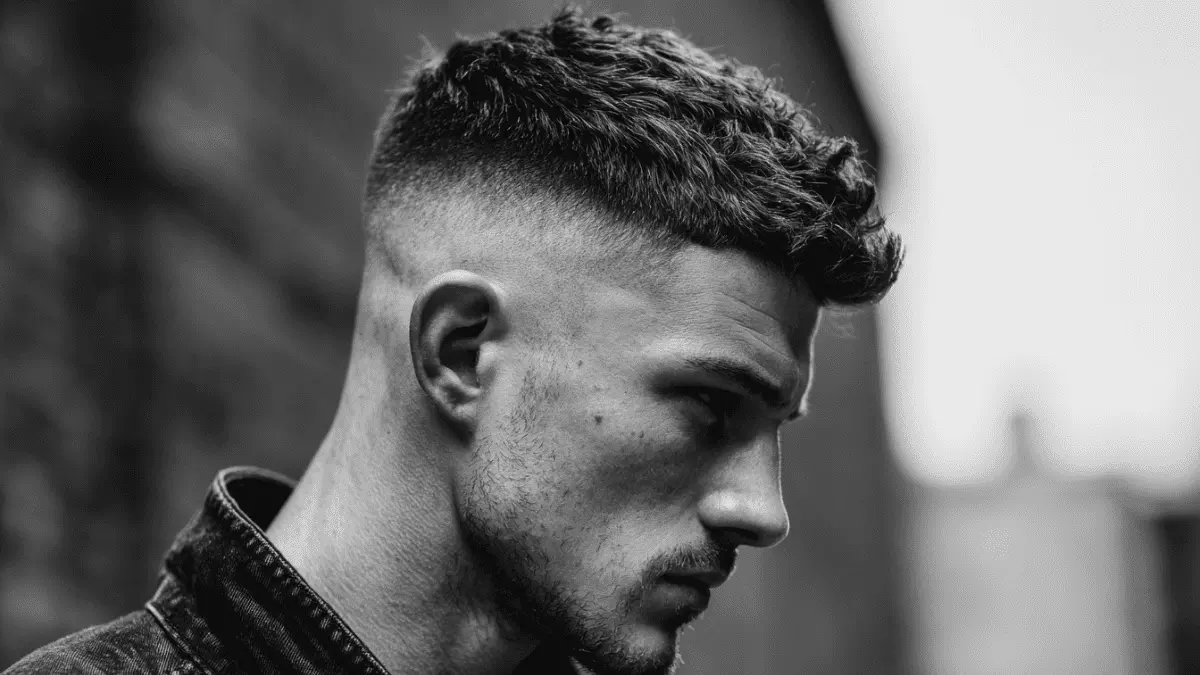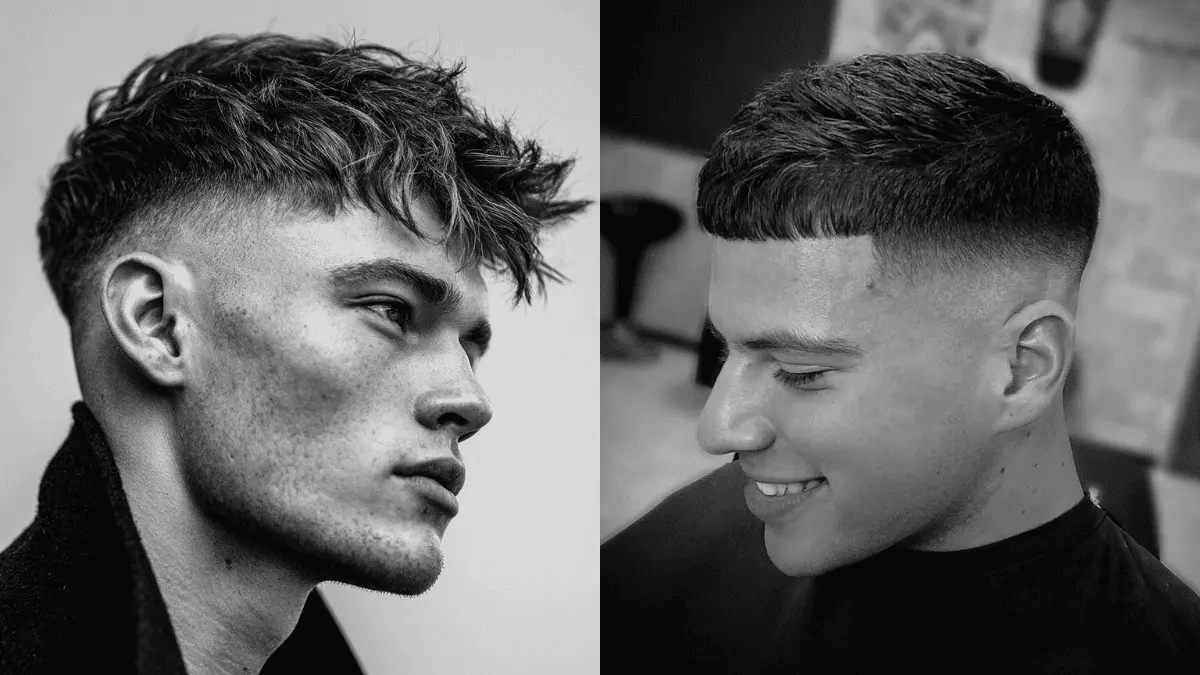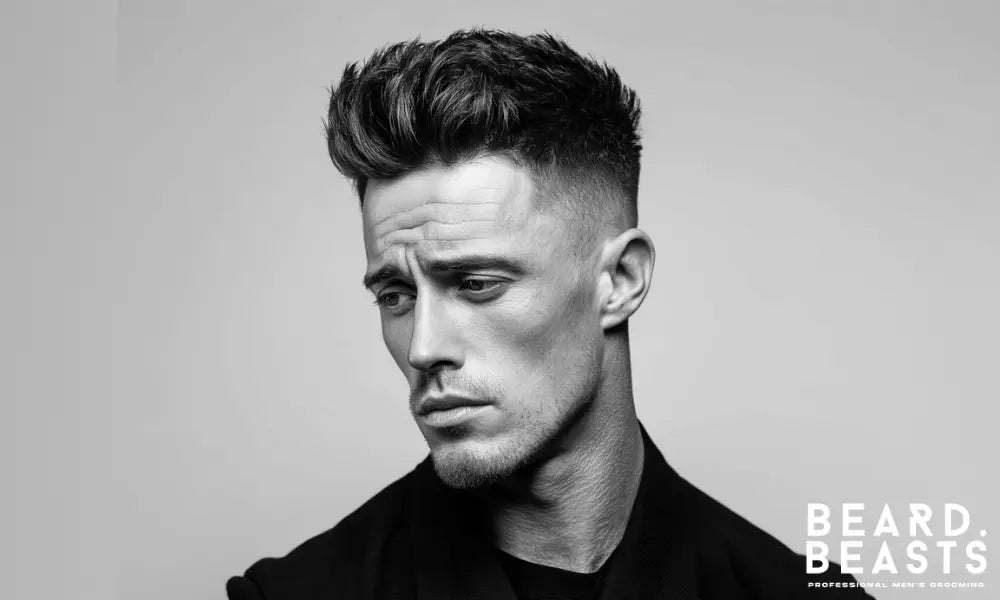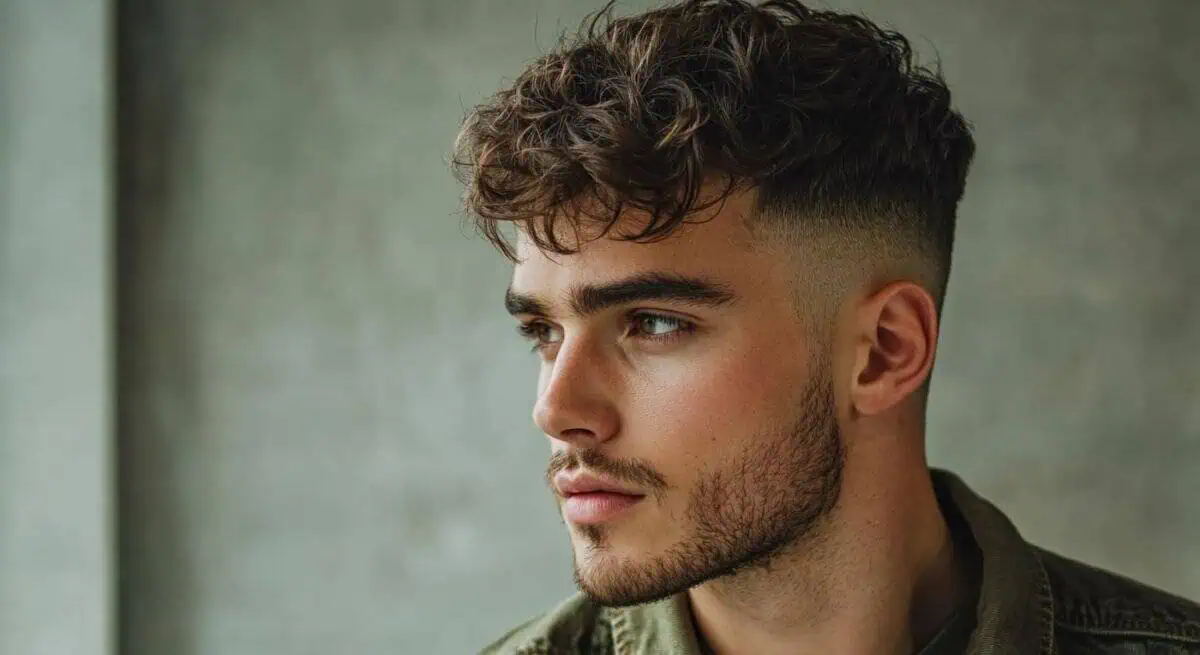
Short sides, long top haircuts can look genuinely sharp, but only when the longer hair is doing something. The contrast on its own won’t carry the cut.
That’s where a lot of men slip up. They ask for tight sides, leave plenty of length on top, and assume the difference between the two will do the rest. It won’t.
The top still needs a clear job. It can lift, sweep, curl, push back, fall forward or break apart with texture. What it can’t do is sit there as dead weight.
Here are the versions worth a look, where they make sense, and where I’d think twice before booking your barber.
The Short Sides, Long Top Cuts Worth Considering
These are the short sides, long top haircuts that still hold up. Some are easy to live with, some need proper styling, and a few only make sense if your hair type is right.
That’s the part most men miss. The cut in the photo means nothing if your hair can’t do what the style asks of it.
Pompadour

The pompadour lives on height at the front. The longer hair is lifted and pushed back while the shorter sides stop the whole thing turning bulky.
It’s at its best on straight or slightly wavy hair with the density to hold volume. On thick hair, I’d take weight out through the front before styling, or the pompadour ends up looking like a solid block instead of a hairstyle.
One thing to be clear about: this isn’t the cut for a man who wants to do nothing in the morning. It needs a blow dryer, product and some control. If that already sounds like too much, the textured quiff is the smarter move.
Textured Quiff

The textured quiff is usually the first one I’d recommend. You still get lift through the front, but the finish doesn’t have to look locked in place like a pomp.
The hair gets pushed up and back, then broken up so it reads as natural rather than overworked. That’s height without looking like you spent twenty minutes fighting it into shape.
It suits more men than the pompadour purely because it has room to move. Keep the lift sensible, use a matte product, and let the hair breathe a little. That’s where it looks its best.
Long Fringe With High Fade

A long fringe over a high fade makes the fringe the whole point. The faded sides give it more impact, so the length has to be cut with care.
It can sit forward, sweep across or break apart slightly, but it cannot hang as one thick slab over the forehead.
It looks strong on straight or wavy hair, especially when the fringe naturally wants to move. Just keep the weight in check, because once the length starts dragging down, the face can look smaller.
Curly Top Undercut

A curly top undercut comes alive when the curls have the length to form properly. The short sides clear out the bulk and let the curls up top become the main feature.
It’s one of the better short sides, long top options for curly hair because it works with the natural pattern instead of against it, keeping the character while pulling width out of the sides.
It’s at its best on curls with real density and bounce. The length still has to be shaped, mind: leave everything round and the cut starts spreading wider than it should.
Slicked Back Undercut

The slicked back undercut still has real strength, but the finish decides everything. The longer hair combs straight back while the sides stay short enough to tighten the profile.
It suits straight or slightly wavy hair that already wants to sit backward. When the hair fights forward instead, you’ll spend half your morning forcing it into place.
A little control looks good here; too much shine doesn’t. Keep the product balanced so the hair reads held rather than greasy.
Man Bun Undercut

The man bun undercut is one of the boldest of the bunch, because the gap between the long hair and the short sides is right there on show. The sides are cut short while the longer hair ties back.
It looks strong once the top’s long enough to tie neatly. Before that, it sits in an awkward in-between stage where the shape doesn’t quite make sense.
Don’t mistake it for a shortcut, either. The sides need regular trimming and the long hair still needs looking after. It’s not low effort, it’s long hair with a sharper frame around it.
Faux Hawk Fade

The faux hawk fade gives you some edge without committing to a full mohawk. The sides are faded and the longer section is worked upward through the centre.
It’s the safer choice if you like that lifted, more direct look but don’t want the haircut taking over everything else. Attitude, without going too far.
Keep a light hand with it, though. Heavy gel dates this cut fast, while a matte product gives a better finish because the hair still looks like hair.
Modern Mohawk Fade

The modern mohawk fade is anything but quiet. A longer strip runs down the centre while the sides are faded or cut right back.
It’s a cut for men who want to be noticed, and the centre section can be pushed up, broken apart or left more natural depending on the hair.
I’d only point you here if you’re comfortable with the attention. Want the same idea dialled down? The faux hawk fade is far easier to live with.
Messy Top With Short Sides
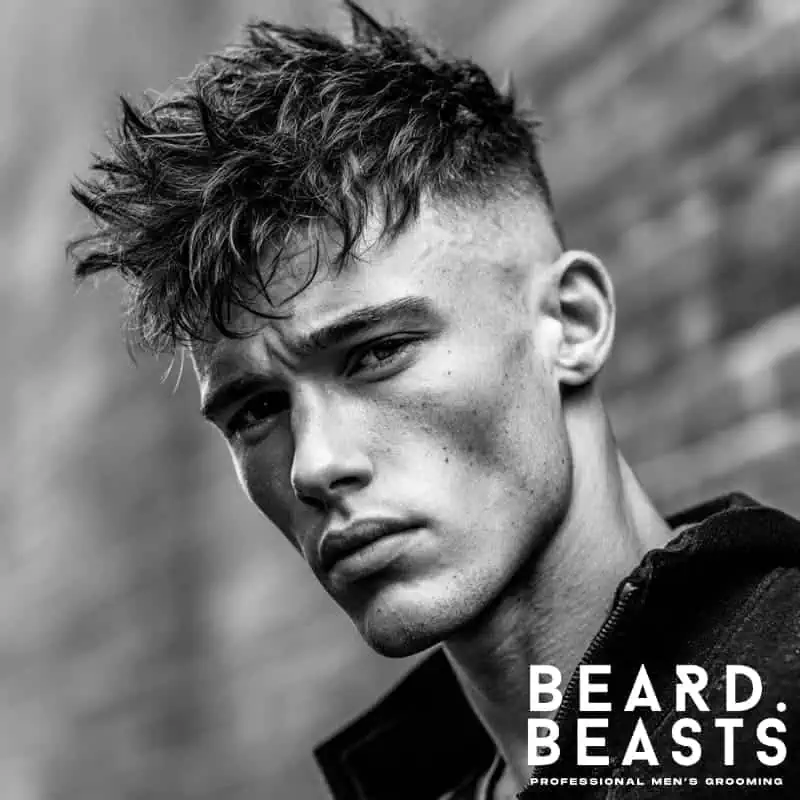
A messy top only works when the mess has actually been cut into the hair. It should never look like you just missed a couple of trims.
It’s a great shout for thick, wavy or slightly unruly hair, because the natural movement does half the work. The short sides stop the cut spreading while the longer section keeps that loose finish.
The whole thing turns on the weight removal. A good barber builds separation carefully rather than thinning the ends until they look weak, and done properly this is one of the easiest styles to keep looking natural.
Side Part With High Fade

The side part with a high fade gives a classic cut a more direct edge. The part gives the longer hair somewhere to go while the fade strips weight off the sides.
It’s one for the man who wants to look smarter without looking like he’s chasing a trend, and it’s happiest on straight or slightly wavy hair that combs into place without an argument.
Keep the part natural where you can. A hard cut-in part can make the whole haircut look stiff, so I’d rather keep the fade sharp and the part softer.
Spiky Top With Short Sides

A spiky top can absolutely work with a modern finish. The top wants lift and texture, not a row of hard spikes set in glue.
It suits thicker hair that naturally stands up, with the short sides keeping everything tight while the longer section brings the energy.
Skip the heavy gel here. It turns the hair crunchy and old-fashioned, whereas a matte clay or paste holds it without the style looking overdone.
Side Swept Fringe With Fade

The side swept fringe with a fade is softer than a quiff but still gives the cut direction. The longer front moves across the forehead while the faded sides stop it getting heavy.
It makes the most sense when your hair already falls to one side, and styled well it can balance a longer forehead without burying the face.
The front still has to move, though. Ask for some separation through the ends so it doesn’t read as one flat sheet of hair laid across the head.
Wavy Top With Mid Fade

A wavy top with a mid fade makes sense because the movement’s already built in. The length stays high enough for the wave to show while the mid fade keeps the sides from bulking out.
It’s one of the strongest options if you’d sooner work with your hair than fight it every morning, since the wave carries the style once the cut’s shaped right.
Keep the product light. Heavy wax drags the wave down and flattens the top, so a light cream, paste or sea salt spray usually does a better job.
Textured Crop With Faded Sides

The textured crop with faded sides is one of the lowest-effort cuts on the whole list. The hair is cut forward with broken-up texture while the sides stay tight.
Straight, thick or slightly wavy hair tends to take it best, and it gives the top character without asking much of you day to day.
It all comes down to the front. A blunt or heavy fringe makes the crop look harsh, so I prefer it broken up a touch: sharp, but not messy.
Disconnected Undercut

The disconnected undercut sets up a hard break between the long top and short sides. There’s little or no blending, so the contrast hits much harder.
It can look excellent, but it’s unforgiving. If the longer hair is flat, bulky or badly styled, the disconnect puts that on full display.
I’d only choose this if you want that strong contrast. If you’d rather have something easier to grow out or less severe, a faded undercut is the kinder option.
The Cuts I’d Recommend First
If someone asks me for short sides and a longer top with no clearer idea than that, I wouldn’t reach for the most dramatic option. I’d start with the haircut their hair can actually support.
For most men, that is the textured quiff. It gives height, shape and a bit of personality without the full commitment of a pompadour, which makes it the safest first recommendation.
The textured crop with faded sides is the easiest to manage. It’s short enough to behave but keeps enough length up top to avoid looking plain, so if someone wants a simple cut that still has bite, it’s usually the first one I mention.
Thick hair points me toward a messy top with short sides or that same textured crop, since thick hair carries more length but spreads wide fast unless the weight comes out in the right places. Wavy hair lands on the wavy top with a mid fade, because the movement’s already there and you’re not forcing anything. Curly hair does best with the curly top undercut, as long as the curls get shaped properly: cut it badly and it goes round, cut it well and it has real character with barely any styling.
Want something smarter? The side part with a high fade. Want to be noticed? The modern mohawk fade. Just don’t expect those two to suit the same man.
The riskiest pick is the disconnected undercut, which looks sharp but exposes lazy styling in a heartbeat. The most demanding to keep up are the pompadour, slicked back undercut, man bun undercut and modern mohawk fade.
The Ones To Be Careful With
Some of these look better in photos than they do across a normal week.
The pompadour sits top of that list. Styled, it’s excellent, but skip the blow dryer and product and it falls apart fast.
The long fringe can turn on you too. Let the front get too dense and it hides the face and drags everything down. A fringe wants movement, not just length.
The slicked back undercut needs a careful hand. A little control looks strong; overdo the shine and it tips into greasy or dated.
The man bun undercut comes with that awkward stage. Until the top’s long enough to tie cleanly, it can look unfinished. That’s fine if you’re patient, less fine if you want it looking good straight away.
The modern mohawk fade is the opposite of subtle. Great if you want the attention, wrong if you want something that blends in.
And the disconnected undercut is the least forgiving of all. It puts the long top and short sides right against each other with no soft transition, so if the top’s wrong, the whole cut’s wrong.
What Your Hair And Face Shape Change
This is the bit a saved photo can’t tell you.
Straight hair handles quiffs, pompadours, side parts, slick backs and crops, but it usually needs a hand. Without product or a blow dryer the longer section just sits flat.
Wavy hair starts ahead, because the movement’s already there. The only trick is not killing it with heavy bulk or too much product.
Curly hair needs the length to let the curl form. Go too short up top and the curl loses its character; leave it bulky and the cut goes round.
Thick hair needs weight taken out, though not thinned to death. The aim is bulk removed carefully so the hair moves instead of spreading wide.
Fine hair needs less length than most men assume. Too much on top collapses, especially with a thinning hairline or crown.
Face shape plays a part too, but there’s no need to overthink it. Round faces want height and tighter sides, long faces want less height and more balance through the front, square faces can take stronger shapes, and oval faces have the most freedom. Even then, your hair type decides more than your face shape does.
How Much Effort These Cuts Really Take
Be honest with yourself about this part.
The low-effort cuts are the textured crop, the wavy top with a mid fade, and the messy top with short sides when it’s cut properly. They still want some attention, just not a full routine every morning.
Medium effort covers the textured quiff, the side part with a high fade, the side swept fringe and the curly top undercut. Expect product, a bit of hand styling, and the odd reset during the day.
High effort is the pompadour, slicked back undercut, man bun undercut and modern mohawk fade. These look their best when you actually maintain them, so if you don’t want that on your plate, pick something easier.
Product helps, but it shouldn’t become the whole haircut. Matte clay suits texture, pomade suits slick backs and side parts as long as you go easy on the shine, and sea salt spray brings out waves. For height, a blow dryer often matters more than anything you put in afterward.
And if a style only works when the barber does it, treat that as a warning. A good cut should still make sense when you do it yourself.
The Beard Beasts Verdict
Short sides, long top haircuts work because of the contrast, but contrast on its own doesn’t make a good haircut. The longer hair has to earn its spot.
A quiff needs lift, a fringe needs movement, curls need shaping, a slick back needs control, a crop needs texture. Leave that longer section with no purpose and the cut starts looking heavy, awkward or half-finished.
So pick the version your hair can genuinely support, not the one that looks best in a photo. Done right, this style looks sharp, masculine and easy to manage. Done badly, it’s just short sides with a problem sitting on top.