
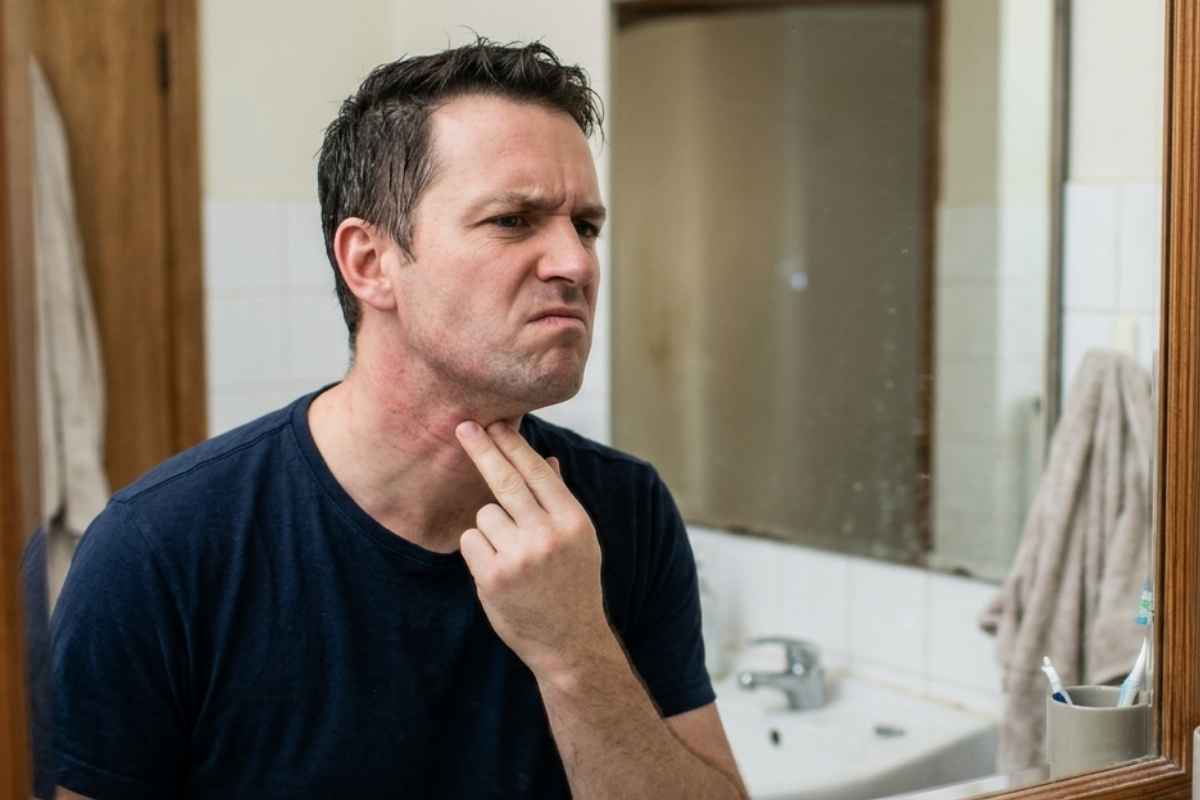
Razor burn on your neck turns a clean shave into hours of redness, heat, and stinging. Too many men just accept it. It happens every time they shave, so it must be normal, right?
Wrong. When your neck keeps burning after a shave, something in the routine’s broken.
It’s rarely the product. It’s rarely your skin being “too sensitive.” Before you blame either one, question the shave itself.

In this article
Your Neck Hair Doesn’t Grow One Way

Most men shave their neck like every hair points straight at the collar. It doesn’t. Not even close.
Growth changes direction several times between your jawline and the base of your neck. One patch points down. Another runs sideways. The hair around your Adam’s apple can curl a completely different way entirely. One downward pass follows the grain here, fights it there, same stroke, opposite results.
Sensitive skin gets blamed constantly. Sometimes fair. More often, the blade’s just hitting certain patches from the worst possible angle.
Grow the hair out a day or two. Run your fingertips across every section of your neck. Smooth one way, rough the other, that’s the direction fighting you. Check both sides separately. Neck patterns are almost never symmetrical.
Know the pattern? Shorten your strokes and adjust the razor as it changes. Stop treating your whole neck like one flat strip of skin, because it isn’t one.
Around the Adam’s apple, slow down. Small areas, not one big sweep. That’s exactly where rushing turns a decent shave into a red, burning mess.
Stop Chasing a Perfectly Smooth Neck

Razor burn on your neck usually starts the second you decide one stubborn patch deserves another pass.
Your neck is the worst place to chase glass-smooth. It curves. Hairs lie flat in weird directions. The awkward spots tempt you into pressing harder than you realize, and sure, you’ll clear a bit more stubble, but you’re also dragging a blade across skin you already shaved once.
Three or four passes over the same spot, then blame the razor when it turns red. Backwards. The first pass was never the problem. Everything after it was.
Keep the pressure light. Keep the strokes short. Need another attempt on a patch? Reapply cream first, always. Never scrape a bare razor across exposed skin just because you can still feel two or three stray hairs.
Stretching the neck tight helps you reach, sure, but overdo it and you’re cutting closer than relaxed skin can actually handle. Just enough tension to flatten a curve. Nothing more.
A freshly shaved neck with a bit of texture beats a flawless one that burns until lunchtime, every time.
Your Razor May Be Doing More Dragging Than Cutting

A razor can look perfectly fine long after the blade’s stopped cutting cleanly.
The decline is gradual. Slight catching. Missed hairs. More effort for a result that used to take none at all. Most men adjust without even noticing.
Replace the blade when the shave starts feeling harder, not when it becomes unbearable. By the time it’s obviously tugging, it’s been underperforming for shaves already.
More blades don’t mean a better shave, either. Every extra edge means more contact with your skin, and plenty of men tolerate that poorly. A safety razor or an electric shaver might leave a touch more texture, with a lot less irritation to show for it.
Judge a razor by how little work it demands from you. Stops cutting cleanly without a fight? Replace it.
Good Shaving Cream Can’t Help If It’s Already Disappeared

Shaving cream only protects you while there’s actually enough of it between the blade and your skin. Once it’s gone, so is the protection.
The trouble starts after the easy areas are done. Reach beneath the jaw or around the Adam’s apple and that original layer’s often dried out, pushed aside, or wiped clean by an earlier stroke. The razor goes back over skin with next to nothing left to cushion it.
Shave after a warm shower, or at least hold warm damp towel against your neck for a minute first. That doesn’t open your pores. Nothing does, pores don’t actually open or close. It just softens coarse hair so the blade works less.
Work the product into the growth. Don’t just paint it across the surface. A watery layer that turns transparent in seconds isn’t protecting anything, no matter what the bottle cost you.
Need another pass? Apply more cream first. Don’t trust the faint residue left behind after the razor’s already been through.
You should be able to see exactly where the neck’s still protected and where it’s already been shaved. No layer left means no blade allowed.
Burning Aftershave Isn’t Proof That It’s Working

A sting after shaving doesn’t mean the product’s working harder for you. It usually just means alcohol or fragrance landed on skin the razor already left vulnerable.
Aftershave doesn’t need to hurt. I’ve never bought that idea. Your neck just took a blade. Dumping a heavily scented formula on it doesn’t finish the job, it just adds more discomfort on top.
Rinse the leftover cream off with cool water. Neck still hot? Hold a cool, damp cloth against it for a few minutes, then use a plain, fragrance-free moisturizer, nothing else.
Leave the scrubs, acids, and exfoliants alone until things settle down. Freshly shaved skin doesn’t need another aggressive step disguised as aftercare.
Razor Burn Isn’t the Same as Razor Bumps

Razor burn on your neck shows up as a wide patch of redness, heat, and stinging right after you shave. Razor bumps show up later, individual raised spots where a cut hair curls back into the skin.
Men treat these as the same problem constantly. They’re not even close.
Razor burn means the neck got irritated during the shave, full stop. Leave it alone. Keep the aftercare plain. Give it time before the next blade touches it. Shaving over skin that’s still red almost never helps.
Razor bumps need patience too, but a different kind. Don’t squeeze them. Don’t dig for the hair. Don’t shave across the top hoping to release it. Picking just damages the skin and raises your infection risk.
Take recurring symptoms seriously, more seriously than one rough shave deserves. Pus, worsening pain, spreading redness, warmth, swelling? That’s a doctor’s job, not yours. Same goes for bumps that keep coming back, leave dark marks, or start to scar.
The distinction changes everything about how you respond. Calm the burn and fix the shave that caused it. With bumps, stop attacking the area and deal with the ingrown hair properly instead.
Beard Beasts Verdict
Razor burn on your neck usually isn’t proof your skin can’t handle shaving. It’s proof the shave’s asking too much of it.
Buy a new razor. Add another product. That’s the usual response to irritation, and it rarely fixes a routine that was already too aggressive to begin with.
A little texture isn’t a failed shave. A neck that stays red, hot, and sore for hours? That is.