
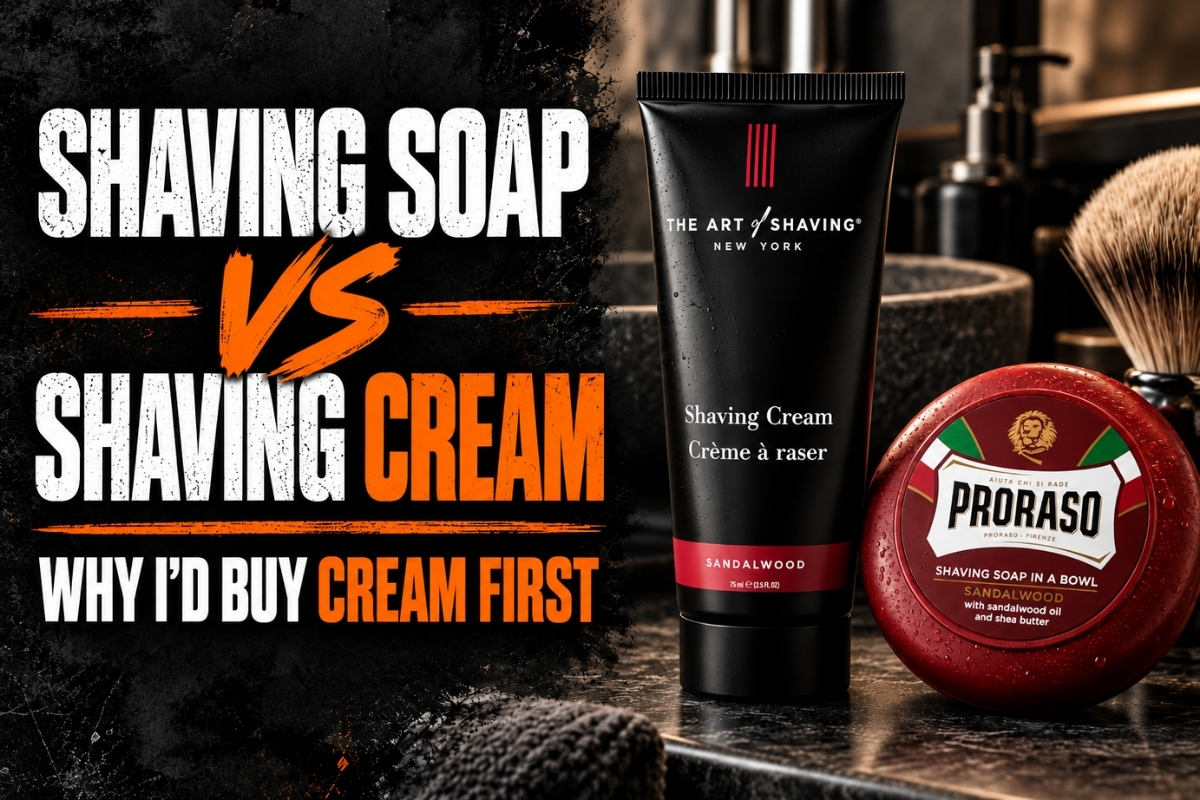
Shaving soap vs shaving cream sounds like an easy call. It isn’t. Both can give you an excellent shave, and the word on the product tells you less than you’d expect.
I’ve used both over the years, mainly The Art of Shaving cream and Proraso shaving soap. Each one has given me shaves I’ve been happy with, and the differences that matter come down to how each one fits your routine.
So I’m not starting from the idea that the traditional option must be better. I’m comparing the parts that change your shave, including the mistake I see most often with both, then telling you which one I’d buy first.
Shaving Soap vs Shaving Cream: What’s the Difference?
The main difference is how each product starts and how you prepare it for shaving.

Traditional shaving soap is firm, and it usually comes as a puck or in a tub. You load it by swirling a damp brush across the surface, then work water into the brush to build the lather.
Shaving cream starts out soft and comes in a tub or tube. Many creams lather well with a brush, and some formulas also work up fine with your hands.
Both have the same job: give the razor enough lubrication to glide over your skin and keep your facial hair soft enough to cut easily. The difference is how you prepare them, not how good the shave can be.
Which Gives Better Lather and Slickness?
Neither shaving soap nor shaving cream is automatically slicker. You can build a thick lather with either and still get poor glide if there isn’t enough water in it.

With soap, you add water gradually after loading the brush. Too little and the lather turns thick and pasty, even if there seems to be plenty of it.
When you get the water right, soap can produce an excellent lather. Proraso has given me a thick, creamy lather that’s ideal for shaving.
Cream starts closer to a usable consistency, but you can still miss. Too little water leaves it dry, and whipping it too long gives you airy foam that looks great but offers the razor very little glide.
A good cream doesn’t need much product either. With The Art of Shaving cream, a small amount is enough to work up a good lather, which is a big reason I rate it so highly

For me, the test is what happens when the blade touches skin. A good lather spreads easily, stays workable, and feels slick rather than dry or sticky. If the razor drags, it doesn’t matter how much foam you’ve built.
The Biggest Mistake With Shaving Soap and Shaving Cream
The most common mistake I see is the same with both: using too much product and not leaving the lather on long enough before you shave.

More product doesn’t mean a better shave. With a decent soap or cream, a small amount builds plenty of lather, and loading extra only means you burn through the product faster.
Time on your face matters more. Facial hair is coarse, and the lather needs a little time to soften it before the razor comes through.
If you lather up and start shaving straight away, the hair is still stiff. That’s when you get tugging, a rougher finish, and the temptation to press harder or go back over areas you’ve already shaved.
So use less than you think you need, and give the lather time to work before your first pass. That one change will often do more for your shave than switching from soap to cream or the other way around.
Shaving Cream Wins on Speed and Convenience
This is cream’s clearest advantage.
There’s no loading step, and it takes less work to get ready to shave. That’s why I’d point beginners, anyone short on time in the morning, and anyone who doesn’t want much of a learning curve toward shaving cream.
Shaving cream doesn’t make the softening step instant, though. Give the lather a little time on your beard before you start shaving, just as you would with soap.
Travel is more of a toss-up. A small tube of cream is easy to pack, while a hard shaving soap is less likely to make a mess if the lid comes loose. The downside is that you need to let the soap dry properly before packing it away.
None of this means cream shaves better. It’s simply quicker and easier to get ready to use.
Do You Need a Shaving Brush for Soap or Cream?
With soap, yes. The shaving brush is what lifts product off the hard surface and builds it into a lather with water, so treat it as part of the setup rather than an optional extra.
A brush also helps spread the lather evenly and work it into your facial hair. That pays off when you’re giving the lather time to soften your beard.
Cream is more forgiving. A brush helps, but if the formula supports it, your hands will do the job.
If you’re starting from scratch and don’t want to buy extra gear, that’s another point for cream.
Shaving Soap or Cream for Sensitive and Dry Skin?
Soap or cream doesn’t decide this one. The formula does.

If a soap or cream keeps leaving your face tight, itchy, or uncomfortable after you rinse, switching from one to the other may not help. You probably need a different formula.
Fragrance is worth watching if your skin reacts easily. A fragrance-free product takes added fragrance out of the equation, but it doesn’t guarantee the rest of the ingredients will suit you.
Scent is part of the appeal for a lot of men, me included. My favorite Art of Shaving cream is the sandalwood, but if fragrance tends to bother you, test any scented cream before committing to a full tub.
I’d also ignore the idea that “natural” means gentler. Essential oils and naturally derived fragrance can still irritate some skin.
Lather quality plays a part too. Better glide means less pressure and fewer passes over the same spot. If dryness is your main complaint, pay attention to how your face feels after rinsing rather than trusting claims that one format is more moisturizing.
Pick the product your skin tolerates, whatever the tub calls it.
Is Shaving Soap Cheaper Than Shaving Cream?
It can be over time, but a hard puck isn’t a guarantee of better value.
What matters is the price you paid, how fast you go through it, and whether you had to buy anything else to use it. Cream is easy to over-dispense, though you can waste soap too by overloading the brush.
In my experience, both last longer than most people expect when you use them properly. My Proraso soap lasted a very long time, and so does The Art of Shaving cream, because I only need a little per shave.

The Art of Shaving is priced at the premium end, while Proraso is far easier on the wallet. That gap narrows once you factor in how little cream you need per shave.
The brush also changes the upfront cost. If you don’t own one, soap usually means a second purchase, while many creams don’t.
So compare the whole setup, not the price on the container. For me, soap is the better value if you already own a brush and get a long run out of each puck. Cream makes more sense when you want the simplest start.
Shaving Soap vs Shaving Cream: Which Would I Buy?
For most men weighing shaving soap vs shaving cream, I’d buy cream first.
You can get an excellent shave with less setup, and you don’t give up any slickness by choosing a cream. It’s the easier place to start if what you want is a reliable everyday shave.
If you want a specific recommendation, The Art of Shaving’s sandalwood cream is my favorite. It’s high quality, the scent is excellent, and a tub lasts because you don’t need much.
I’d pick soap instead if I already had a brush, enjoyed traditional wet shaving, and wanted building the lather to be part of the ritual. In that case, the extra prep is the point, and Proraso is a great place to start.
Whichever you choose, use less product than you think and let the lather soften your beard before you pick up the razor. Cream is my first recommendation for most men, but soap is the better buy when you want the soap and brush routine itself, not because it’s slicker, gentler, or cheaper.