
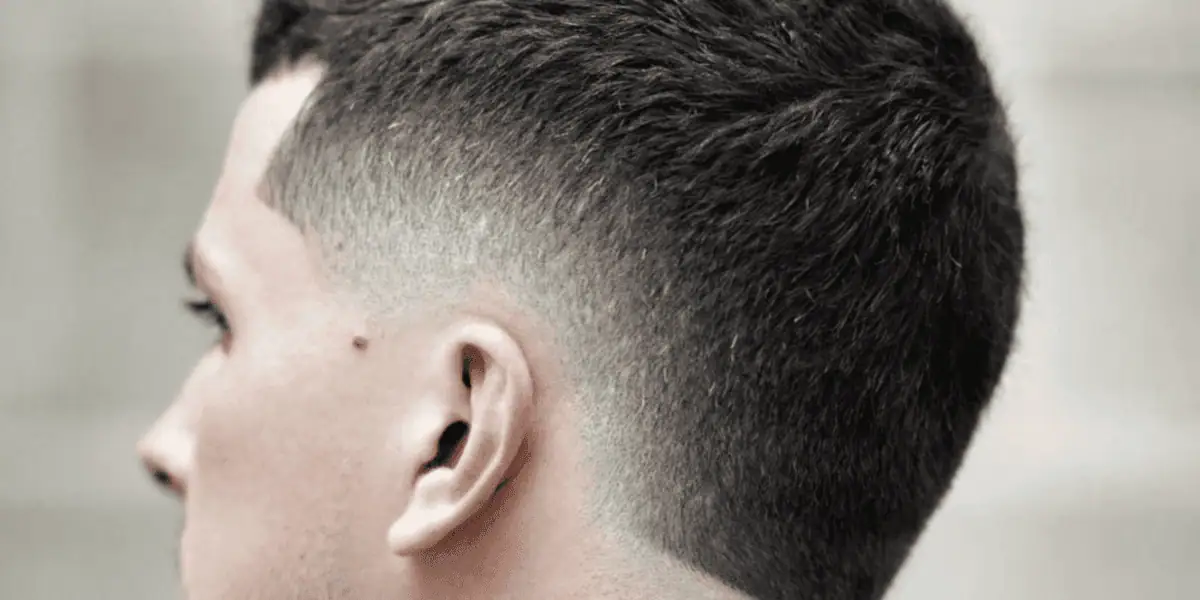
A burst fade can improve a haircut quickly, but only when the placement is right.
The curved fade around the ear is the whole point. It takes weight out of the side without flattening the top, which is why it works so well with curls, waves, textured crops, buzz cuts and mullets.
Get it wrong, though, and the haircut can turn awkward fast. Too high, and the side can look hollow. Too far back, and it starts reading like a different fade altogether.
That’s why I don’t rate every version the same. Some are easy wins. Some need the right hair, the right upkeep, and the right amount of restraint.

In this article
Burst Fade Haircuts I Actually Rate
Not every burst fade deserves the same attention.
Some are easy wins. Some look good for three days. Some only work if the hair above the fade can actually back it up.
Choose the version based on what your hair can handle, not just which photo hits hardest.
Low Burst Fade

This is the safest burst fade for most men.
The fade stays close to the ear, so you get the burst effect without exposing too much of the side. It gives the profile more direction, grows out better than the louder versions, and holds its shape for four to five weeks before it needs a proper refresh.
If you’re trying a burst fade for the first time, start here.
Mid Burst Fade

The mid burst fade is probably the best all-rounder.
It shows more of the curved fade than a low burst, but it still leaves enough support above it. That matters. Once the fade climbs too high, the side can start looking hollow, especially if the top isn’t strong enough.
I like the mid version because it gives the haircut some bite without turning the fade into the whole point. It works with crops, waves, curls, short textured tops and fuller styles.
If you want the burst fade to be noticeable but not extreme, this is the one to look at first.
Burst Taper Fade

A burst taper fade is the quieter version.
It tightens around the sideburn and ear without fading the whole side down. You still get that curved effect, but the finish is softer and easier to grow out.
I ‘d recommend this for men who want the ear area tightened, not stripped. It works well when the top is short, wavy, textured or fairly natural.
This isn’t the loudest burst fade, and that’s exactly why I rate it.
Skin Burst Fade

Skin changes everything.
Once the fade drops to skin, the blend has to be right. There is no softness to hide a bad transition through the burst area.
I believe the skin burst is better on thick hair, curls, strong waves and textured tops. The bare side gives the haircut contrast, while the top still has enough hair to balance it.
Fine or flat hair needs more care here. The fade can make the top look weaker than it actually is.
It also needs upkeep, typically a touch-up every ten to fourteen days. Around the ear specifically, a skin fade loses that fresh look faster than anywhere else on the head.
High Burst Fade

This is the one worth treating with caution.
A high burst fade can look good on thick hair with a fuller top, but it can also empty out the side too much. When the fade climbs too high, the haircut starts looking more hollow than strong.
I wouldn’t chase this just because the photo looks dramatic. If the top can’t back it up, a mid burst usually looks better.
Short Hair Burst Fade

Short hair gives the fade nowhere to hide.
That can be a good thing. A short crop or short textured top with a burst fade can look direct and easy to manage. The curved side gives the haircut more interest than a plain fade.
Keep some strength on top regardless. Short hair, bare sides and a high burst together can make the whole haircut look thinner than it needs to.
Burst Fade Buzz Cut

A burst fade buzz cut is simple but not boring.
The buzz gives you the easy routine, usually a number 2 or 3 guard on top. The burst gives the sides some direction. That small curve near the ear is enough to make the cut look less plain than a standard buzz at the same length.
Keep the burst low or mid here. The buzz is already short, so the fade doesn’t need to shout.
Burst Fade with Straight Hair

Straight hair is honest.
If the blend is good, the burst looks clear. If there is a dark patch, a jumpy transition or a heavy line through the fade, straight hair shows it immediately.
Keep some direction on top, even if the cut is short. Straight hair that just lies flat can make a tight burst fade look stiff. Fine straight hair specifically calls for something softer, since a high skin burst can make the top look weaker.
Burst Fade with Wavy Hair

Wavy hair usually works well with a burst fade.
The wave gives the top movement, while the fade clears bulk near the ear. That combination makes sense because the fade is doing a useful job, not just adding detail.
It works best with a textured top, a short crop or a loose forward finish. The wave should still show. Once it’s flattened down too much, you lose the best part of the pairing.
Burst Fade with Curly Hair

Curly hair is one of the best reasons to get a burst fade.
Curls naturally build width through the sides. A burst fade removes weight where it tends to get heavy while leaving the top to keep its curl and volume.
The mistake is cutting the curls too short just to show off the fade. Once the curl pattern disappears, the haircut loses what made it work in the first place.
The best curly burst fades let the curls lead and use the fade to tighten the side.
Burst Fade Afro

A burst fade can look excellent with Afro-textured hair when the proportions are right.
The fade clears around the ear while the top keeps height, fullness and natural texture. That’s the whole appeal.
The curved section has to feel connected to the top. Push it too far and the top can look separated. Leave too much through the side and the burst gets lost.
When the side, fade and top work together, this version has real presence.
Textured Burst Fade

This is one of the easiest burst fades to recommend.
A textured top gives the haircut movement. The burst keeps the sides tighter. Together, they work well on thick, wavy or slightly coarse hair.
It’s also easier to live with than a blowout or faux hawk because it doesn’t need to look perfect. A bit of separation on top, a tighter side, and the cut already has enough going on.
Burst Fade Faux Hawk

The faux hawk is a natural match for a burst fade.
The fade tightens around the ear while the middle keeps height. That pulls the haircut inward, which is exactly what a faux hawk needs.
I like it best when the top has texture rather than stiff spikes. Too frozen and it looks dated. Too soft and it loses the point.
Thick or wavy hair usually carries this version best.
Burst Fade French Crop

This is a good option if you want a burst fade without chasing height.
The French crop keeps the front short and forward. The burst fade tightens the side, so the haircut still has enough going on without needing a quiff, blowout or long top.
Personally, i like this for men who want something easier day to day. The fringe still needs enough density, though. If the front is too weak, the crop can lose its purpose.
Burst Fade Blowout

The blowout version isn’t for men who hate styling.
It can look great on thick hair because the fade clears the side and the top keeps height. But without heat, product or at least some morning shaping, it won’t look like the photo for long.
If you already style your hair, fine. If you want wash-and-go, choose a textured burst fade instead.
Burst Fade Comb Over

A burst fade comb over should give the hair direction, not hide a problem.
If the top still has decent density, this can work well. The comb over guides the hair, and the burst keeps the side from getting too heavy.
Keep the fade softer here. A harsh skin burst under a forced comb over can make the whole thing look like it’s trying too hard.
Burst Fade with Design

Designs are fun fresh, but they fade fast.
A burst fade already has a curved detail. Add a V cut, double V, hard line or heavy design and the haircut can get busy quickly.
Only go this route if you actually want the side or back to be the feature. For most men, a better fade beats extra lines.
Burst Fade with Beard

The beard connection matters more than the beard length.
A short beard is usually easier because it gives the lower face some weight without overpowering the fade. A full beard can work too, but only if the sideburn area blends properly.
If the fade and beard look like two separate styles, the whole look feels unfinished.
I like this pairing most when the beard is kept in check and the transition into the fade looks natural.
Burst Fade Mullet

The burst fade mullet isn’t a casual choice.
The burst tightens the sides, but the back still has to look intentional. If the back is weak, messy or badly connected to the top, it stops looking like a mullet and starts looking like a haircut that was never finished.
When it works, it has character. The curve around the ear suits the mullet because it separates the side without killing the length at the back.
But you have to own it. Keep the back maintained, keep the top connected, and don’t treat it like a normal fade with extra hair left behind.
The Burst Fades I’d Think Twice About
Some burst fades look sharp for the first day or two and start working against you within a week.
A high skin burst fade is the first one worth being careful with. On thick hair with a strong top, it can work. On fine, flat or very short hair, the side can look hollow because the bare curve pulls so much attention. The Skin Burst and High Burst entries above cover why in more detail.
Heavy designs are another one. A V cut, double V or hard line can look good fresh, but those details soften very quickly. Unless you want regular touch-ups, the extra lines usually age worse than the fade.
Over-styled versions need honesty too. Blowouts, quiffs and slicked-back tops can work with a burst fade, but only if you actually style your hair. Too much shine, too much height or too much product makes the haircut look forced.
The comb over is in the same category for me. If it’s guiding thick enough hair, fine. If it’s being used to hide thinning, the burst fade won’t save it.
These aren’t bad haircuts. They just ask more from your hair, your barber and your routine. If you want the burst fade to still look good after the first few days, don’t choose the loudest version just because it wins in one fresh photo.
Match the Burst Fade to Your Hair, Not the Photo
A burst fade can look completely different from one head of hair to the next, which is why choosing it from a photo alone rarely works. The same fade that looks strong on thick curls can look too harsh on fine straight hair. Your hair needs to actually support the version you’re picking.
If you’ve got straight hair, expect any mistake in the blend to show up fast, a dark patch, a heavy line above the ear, or a rushed transition is much harder to hide on straight hair than on any other texture.
If your hair is wavy, you’re in a good spot. Let the wave fall forward and do its own thing rather than asking for it to be pressed flat just to make the sides easier to blend.
Curly and Afro-textured hair can look excellent with a burst fade, since you’ve already got fullness on top. The fade clears the side while your natural texture keeps the rest of the haircut from looking empty.
If your hair is fine, plan around that rather than fighting it. A low burst, mid burst or burst taper usually makes more sense for you than a skin fade, since there’s less top density to carry that much contrast against bare skin.
Thick hair can handle the stronger versions, but that doesn’t mean anything goes. You still want the fade placed properly, with the area above it kept from getting too bulky.
The right burst fade for you is the one that makes your hair easier to manage day to day. If it only holds up on the day you get it cut, it’s probably not the right version.
The Best Products for a Burst Fade
A burst fade doesn’t need much product, but the little it does need matters.
For thick or coarse hair, a matte clay gives enough grip to hold shape without looking wet or heavy. Use a small amount, more than a pea-sized dab and you’re fighting the product rather than styling with it.
For fine hair, a lighter texture powder works better than clay, since it adds lift at the root without weighing the top down the way clay can on thinner hair.
For curly or textured hair, a lightweight curl cream or light-hold gel helps define the pattern without flattening it, which is exactly what you don’t want after choosing a burst fade specifically to show off the curl.
Whatever you use, keep it away from the fade itself. Product worked down into the sides makes the blend look patchy rather than sharp, and it draws attention to the exact area the burst fade is supposed to keep tight and simple.
The Beard Beasts Verdict
The best versions remove weight from around the ear, tighten the side, and still let the top do its job. Low and mid burst fades suit more men for exactly that reason, real effect without asking the haircut to feel overdone.
The louder versions need more honesty about what they cost you. Skin bursts, high bursts, designs, blowouts and mullets can all work, but they ask more from your hair, your barber and your routine than the quieter versions do. If the top is weak, the styling is lazy, or the fade is pushed too far, the cut starts working against itself.
Match the fade to your hair type rather than to whatever looked best in someone else’s photo, and don’t chase the tightest version if a lower one actually suits you better.
Done properly, a burst fade is one of the better fades a man can get. Just make sure the version you choose still looks good a week from now, not only on the day you first get it cut.
Frequently Asked Questions
What is a burst fade haircut?
A burst fade is a fade that curves around the ear rather than running in a straight line across the side of the head. That curve tightens the area around the ear specifically, while leaving enough hair above it to balance the rest of the cut.
What haircuts work best with a burst fade?
Textured crops, curly tops, wavy hair, faux hawks, French crops, buzz cuts, Afro-textured hair and mullets all pair well with a burst fade. The best match ultimately depends on how much hair you have on top and how much styling you’re willing to do.
Is a burst fade attractive?
Yes, when the placement is right. A good burst fade tightens the side and gives the haircut more direction, without flattening everything around it in the process.
How long does a burst fade stay looking good?
Most burst fades hold their best look for two to three weeks. Skin, bald and high burst fades lose that fresh finish faster than low or mid versions do.
Is a burst fade hard to maintain?
Maintenance depends entirely on the version. Low burst fades, mid burst fades and burst taper fades are easy to live with, while skin, high and design-heavy versions need more frequent touch-ups.
Does a burst fade work with straight hair?
Yes, though straight hair shows a poor blend faster than any other texture. The fade needs to be accurate, and the top usually needs some direction so the cut doesn’t end up looking stiff.
What should I ask my barber for?
Ask specifically for a burst fade that stays tight around the ear and doesn’t stretch too far back toward the rear of the head. Be clear about how high you want it, how much weight to leave above it, and whether it needs to blend into a beard.