
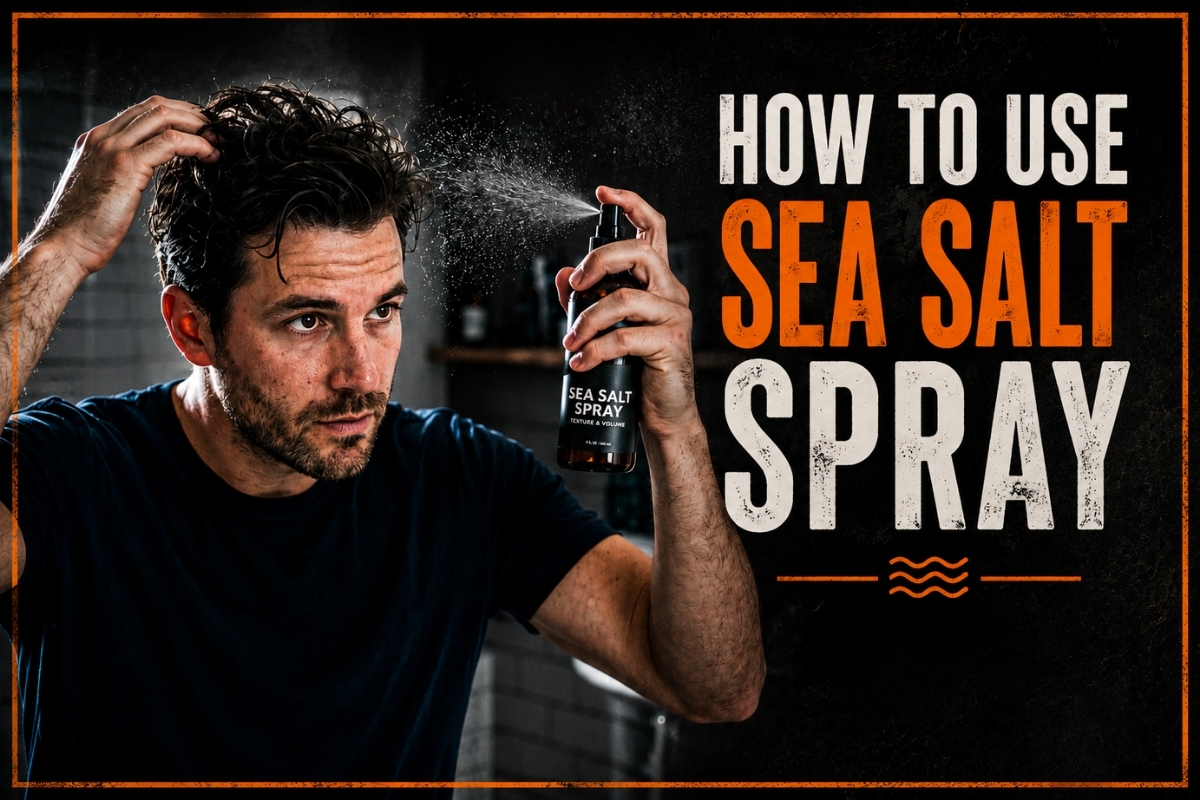
Sea salt spray sounds almost foolproof. A few sprays, work it through your hair and you should get more texture. That’s exactly why I think it’s so frustrating when your hair ends up flat, too rough or nothing like you expected.
If you’re trying to figure out how to use sea salt spray, the instructions on the bottle only tell you so much. A few small choices can make a much bigger difference than the directions suggest.

In this article
Damp Hair Gives You the Most Room to Work
For most people, I’d use sea salt spray on towel-dried hair. If your hair is still dripping wet, it becomes harder to judge how much product you’re actually using because you’re adding it to hair that’s already holding a lot of water.

You don’t need to get the dampness exactly right. If it’s no longer dripping but still feels damp, that’s a good place to start. Spray a small amount, work it through, then add more only if you need it.
Sea salt spray can work on dry hair too, but I’d treat that more as a touch-up. A little can bring some texture back later in the day, but if you’re styling from scratch, damp hair gives you more room to shape the result before it dries.
If you still need a spray, Slick Gorilla Sea Salt Spray is the one I’d look at for this routine. It’s designed to add grip and texture and can be used before blow-drying, so it fits naturally with the way I’d use sea salt spray.
Put the Spray Where You Want the Effect
You don’t need to spray every part of your hair evenly. Think about where you actually want more grip or texture before you start.

If you want more lift, spray closer to the roots rather than just misting the top of your hair. Lift sections with your fingers and spray underneath so the product reaches the hair you want to lift. You don’t need to soak the roots.
If the front of your hair keeps falling flat, concentrate more there. For extra lift through the crown, target that area instead. There’s little reason to keep spraying the sides if you’re already happy with how they fall.
With medium or longer hair, you may want more of the spray through the lengths. Work it through with your fingers so the product gets into the hair rather than staying wherever the mist first landed. That can make those sections easier to separate and shape once you start styling.
I wouldn’t automatically mist the whole head just because you’re using sea salt spray. Target the areas that need help, then leave the rest alone.
The Blow Dryer Does More Than the Bottle
This is where I think people often reach for more sea salt spray too soon. If your hair already has more grip but still isn’t falling the way you want, I’d look at how you’re drying it before adding more product.

If you like the way your hair naturally falls, air-drying can be enough. Use your hands to get it roughly where you want it while it’s still damp, then leave it alone rather than constantly moving it around as it dries.
A blow dryer makes more sense when you want extra lift or more control. Use your fingers or a brush to lift and guide the hair as you dry. Blasting air over the whole head and expecting the sea salt spray to create the style for you misses most of the point.
Wavy or curly hair needs a slightly different approach. Scrunch it into shape, then use a diffuser if you want to dry it without blowing the waves or curls apart. Keep the airflow gentle and avoid handling the hair too much once it starts to dry.
Sea salt spray gives you the grip, but much of the finished shape comes from what you do with the hair while you’re drying it.
Don’t Keep Spraying Because You Want More Hold
If your hair looks how you want it when you finish styling but starts losing its shape a few hours later, you may already have enough texture. The problem could simply be that the style needs more hold.

Some sea salt sprays hold better than others, but I wouldn’t keep adding more just to make the hairstyle last longer. Once the texture is already there, extra spray can leave you with more product in your hair without really solving the problem.
That’s when a separate styling product can make more sense. A paste or clay is worth considering if you want to keep plenty of texture, while a pomade may suit you better if you want something you can comb into a more controlled shape. The result still depends on the individual product, so I’d choose based on what you want your hair to do rather than the category name alone.
If you’re using sea salt spray before another styling product, get your hair roughly where you want it first. Then use the finishing product where you need the extra hold. If the texture already looks right, there’s no reason to keep reaching for the spray.
Rough, Stiff Hair Is Your Sign to Back Off
Sea salt spray is meant to give your hair more grip, so it may feel a little less soft once you’ve used it. That’s normal. What I’d watch for is the point where your fingers stop moving through the hair easily, sections start feeling stiff, or the hair feels noticeably drier than you wanted.

If that happens while you’re styling, stop adding product. Try loosening the hair with your fingers first.
If you’ve clearly overdone it, lightly re-wet the hair and work through it again. And if it still feels unpleasant, I’d rather wash it out and start again than keep layering more product over the top.
I wouldn’t get too hung up on a fixed number of sprays either. One bottle can give you a very fine mist while another puts out much more product with each press, and short or fine hair will usually need less than thick or longer hair.
Use the amount that makes your hair easier to shape without making it difficult to move. If you keep reaching the rough, stiff stage, use less next time rather than trying to make that amount work.
Verdict: Sea Salt Spray Should Make Styling Easier, Not Become the Style
If you want to know how to use sea salt spray, I’d keep the goal simple: use enough to give your hair more grip and texture, then let the way you shape and dry it do the rest.
The mistake is expecting the spray to solve everything. If the style needs more hold, use something made for that. If your hair is starting to feel rough or stiff, adding more spray is unlikely to improve it.
For me, sea salt spray works best when it makes the hair easier to style without becoming the main thing you notice about it.