

A beard bald spot looks like a growth problem. Sometimes it is. But assuming that straight away is how you end up trying fixes that were never going to help.
The usual advice is predictable: wait longer, use more oil, take supplements, try a growth treatment, or grow the surrounding hair over it. The problem is that those are very different answers to problems that can look surprisingly similar in the mirror.
Before trying to fix beard bald spots, I’d first work out what I’m actually looking at. My starting point is simple: Is hair actually missing? Has the area changed? Does the skin or the hair itself look different? Those three questions tell you far more than jumping straight to another growth product.
Work through these three checks before deciding you need a growth treatment.
It may be lower density rather than a truly bare patch.
Look at the length and shape of the beard before assuming you need regrowth.
Move to the timeline.
The important question is whether the area has always looked this way or whether hair appears to have been lost.
It may be part of your normal beard pattern.
Compare old photos at a similar beard length and think about working with your strongest growth.
Treat new hair loss differently.
A new or enlarging patch deserves more attention than a gap you have always had.
Start with the beard itself.
For a longstanding stable area, length, shape, and style may matter more than another product.
Move beyond grooming advice.
Redness, scaling, soreness, scarring, broken hairs, or a spreading patch are reasons to get the area assessed.

In this article
Beard Bald Spots vs Low Density: Are You Actually Missing Hair?
A beard can look like it has a bald spot even when hair is still growing there. The area may simply be less dense, with fewer, finer, or lighter hairs that leave more skin visible.
To check, move any longer hairs out of the way and look close to the skin in good light. If hairs are growing throughout the area but there are fewer of them than in the surrounding beard, you are probably looking at lower density rather than a completely bare patch. If part of the area has little or no hair coming through at all, that is a different situation.

This matters because the two can look surprisingly similar from a normal distance. A sparse cheek, for example, may show plenty of skin without actually being bald.
If hair is clearly growing through the area, I would not jump straight to regrowth products. A different beard length or shape may make the spot much less noticeable without changing the amount of hair there at all.
Has the Bald Spot Always Been There, or Is It New?
Your own old photos can be more useful here than another beard-growth article.
Find pictures where your beard was around the same length. A weak area that appears in the same place again and again is more consistent with your normal growth pattern. Hair that clearly used to fill an area and no longer does is a different situation.
Some men naturally grow strongly through the chin and mustache while staying thinner on the cheeks or where the mustache meets the beard. Facial hair can continue developing into adulthood, but I would not keep telling someone to “just wait” when the same gap has looked almost unchanged for years.
A new bald spot deserves more attention, especially when it appears fairly quickly or keeps getting bigger. That does not tell you what caused it, and it certainly does not let you diagnose yourself from the mirror. It does tell you that something has changed.
When a Beard Bald Spot Needs More Than Grooming Advice
Redness, scaling, itching, soreness, swelling, crusting, or scarring change the conversation. A new smooth patch that is getting larger does too.

Those signs do not point to one guaranteed cause, but they are good reasons to stop treating the problem like ordinary patchiness. Beard oil, vitamins, and a cleaner cheek line are not where I would start when the skin itself looks different or hair is disappearing from an area that previously grew normally.
Broken hairs can provide another clue. Lots of short hairs at uneven lengths may mean some hairs are snapping rather than the area simply growing less hair. Irritation and certain skin problems can cause beard breakage, so this is another situation where staring harder into the mirror will only get you so far.
Alopecia areata can affect the beard and cause localized patches of hair loss. Other skin and hair conditions can cause thinning, shedding, or breakage as well. You do not need to decide which one it is from an article. New hair loss, spreading patches, or obvious skin changes are where I would get the area assessed.
Can Beard Bald Spots Actually Grow Back?
Sometimes. But “grow back” only makes sense when hair was there to begin with.
An area that has always produced very little facial hair raises a different question: can it become denser? Beard oil, balm, massage, and shaving cannot create new follicles. Facial hair can continue changing into adulthood, but that does not mean every longstanding gap eventually fills in.
Hair that has genuinely been lost is different. Whether it returns depends on why it disappeared. Some causes may allow regrowth, particularly when the underlying problem can be treated, while others can be harder to reverse.
Beard oil and balm only help with the hair you already have, so I would not treat them as regrowth products. Supplements are only relevant when there is an actual deficiency to correct. Shaving is easier to rule out because it only cuts the hair at skin level. It does not change the follicle underneath or make the beard grow back thicker.
Topical minoxidil sits in a different category because it can affect hair growth. Beard use is off-label, and there is direct research showing increased facial hair growth, but the evidence is still much smaller than it is for scalp hair. Results vary, skin irritation and other side effects are possible, and I would not make it the first move for a new unexplained patch.
For a longstanding sparse area, I would usually ask a simpler question before chasing regrowth: would the beard actually look better at a different length or in a different shape?
How I’d Make a Beard Bald Spot Less Noticeable
Stand back from the mirror first. A beard does not need to be equally dense everywhere to look balanced, and trying to hide every bit of visible skin can lead you into worse decisions.

More length helps when the surrounding hairs naturally fall across a small gap. It starts working against you when you have to drag noticeably longer hairs sideways over the same spot every day. You may hide the gap from one angle while making the contrast between thick and thin areas more obvious from another.
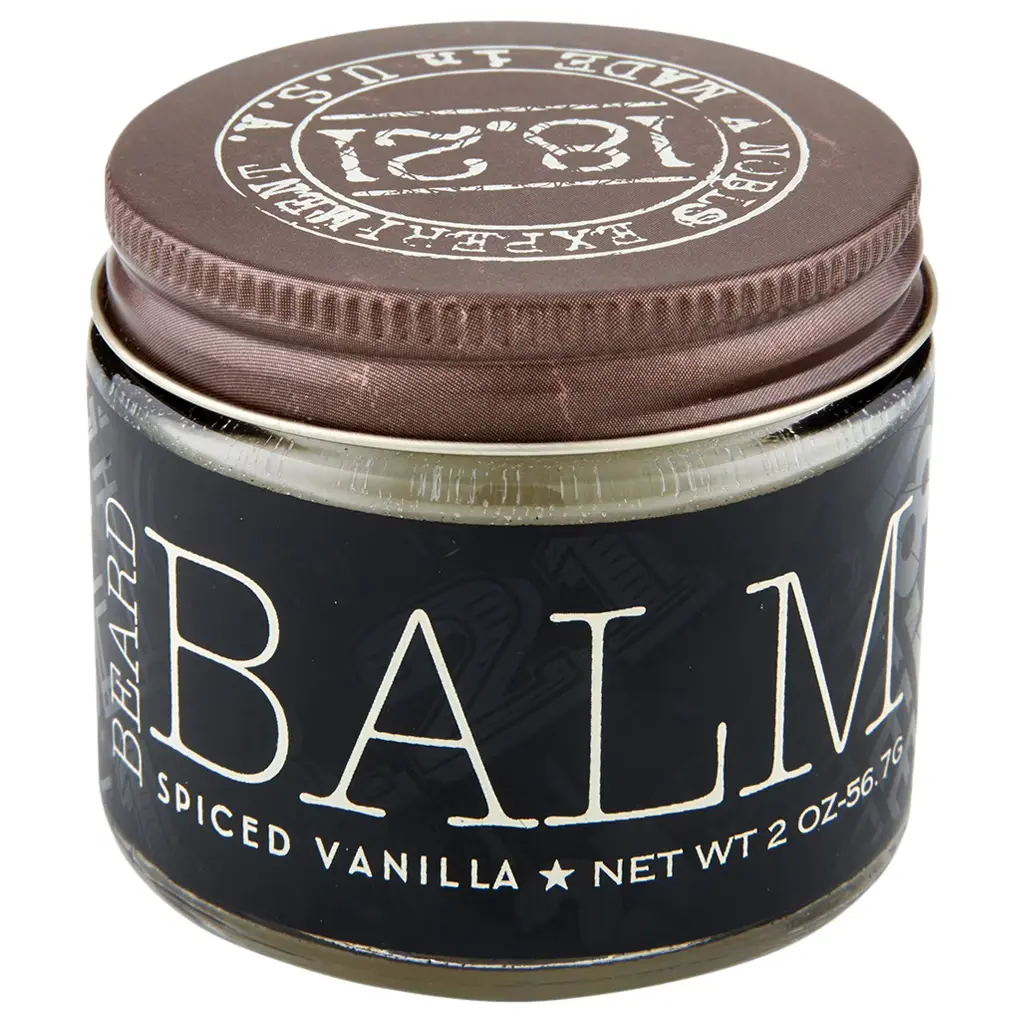
If you already have enough surrounding hair and just need a little control, a balm can help keep those hairs where you want them. I would not use it expecting the bald spot itself to grow in.
Going shorter can have the opposite effect. The fuller parts lose some bulk too, so the difference between strong and weak areas may become less noticeable. I would shorten gradually rather than taking a lot off at once and stop where the beard starts looking more even overall.

If changing the beard length is the better fix, this is where I’d use an adjustable trimmer. Start with a longer setting, check how the beard looks, then shorten it gradually if you need to.
Where the gap sits matters. Weak cheeks with strong growth through the chin and mustache may suit a style that relies less on cheek coverage. A natural gap between the mustache and beard does not necessarily need disguising either if both areas already look good on their own.
The cheek line is another place to be careful. Lowering a thin, untidy section slightly can improve the shape, but repeatedly taking the line lower can remove useful growth and make the beard look weaker.
My goal would not be to make the bald spot disappear at any cost. I’d choose the length and shape where it stops being the first thing you notice.
What I Would Do First
Start with one question: has the area always been weak, or has something changed?
A longstanding weak area is where I would start with the beard itself, as long as the skin looks normal and hair is still growing there. Before buying anything, try changing the length or shape. A shorter beard or a style that puts more attention on the areas where you grow best may make the gap much less noticeable without trying to change how the hair grows.
A new or clearly changing patch gets a different response. Getting larger, losing hair that used to be there, or developing changes in the skin are reasons to get it assessed before experimenting with growth products. When you are only unsure whether the patch is changing, a clear photo taken in similar lighting gives you something better than memory to compare against.
If you do decide to try a treatment, judge it by whether the hair itself changes, not just by whether the beard looks fuller after growing it longer or brushing surrounding hairs across the gap. Those are different outcomes, and confusing them can make a treatment seem more successful than it really is.
For a stable grooming problem, change one thing at a time. Altering the length, shape, styling, and products together makes it difficult to tell what actually helped.
If the issue is mainly how the beard looks, work with the growth you have. When hair appears to have been lost, find out why before chasing regrowth. And when the same area has always been sparse, I would rather build the beard around your strongest growth than keep trying to force one weak spot to match the rest.