
Most men picking between a mohawk and a faux hawk are really asking the wrong question.
They’re comparing photos, not thinking about what the cut will actually cost them in upkeep. A barber can make either one look sharp on the day. What happens after that depends entirely on which one you actually picked, and most men walk in without having thought it through.
Ask around and you’ll get the same vague answers. One’s “the full version,” the other’s “the safer version.” That’s not wrong exactly, but it skips past the part that actually matters: how much of your daily life you’re willing to hand over to a haircut. A mohawk asks a lot. A faux hawk asks less. Knowing which one you’re actually signing up for, before the clippers start, is the entire point of this article.

In this article
Mohawk vs Faux Hawk: The Real Difference Is Commitment
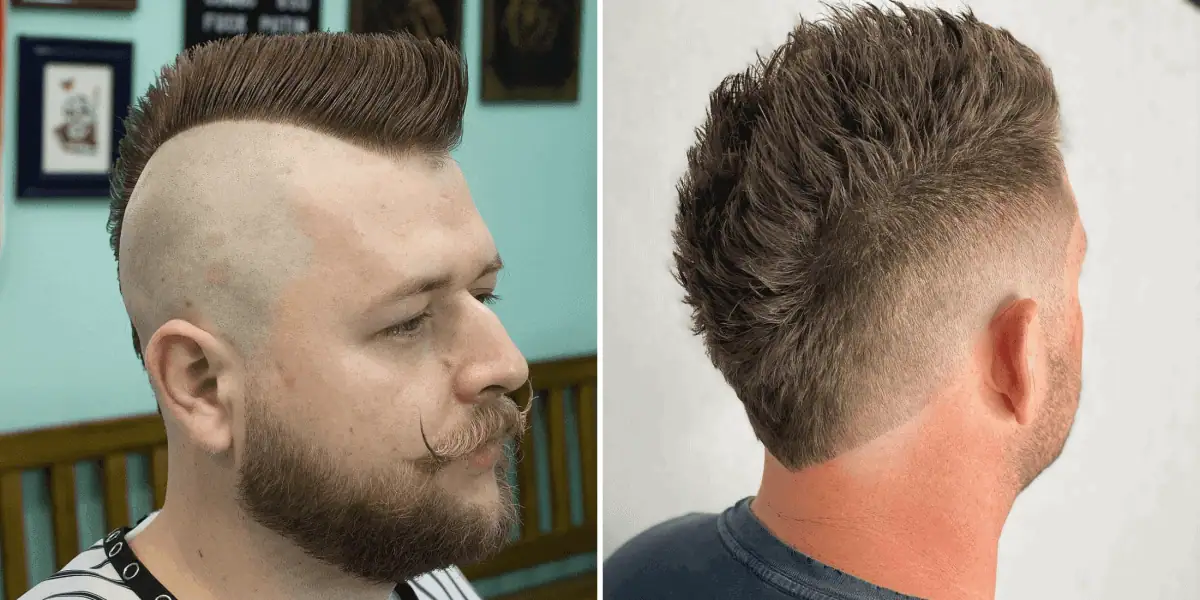
The difference between a mohawk and a faux hawk isn’t just how short the sides are.
It’s how much you’re willing to commit.
A mohawk changes the whole head. The sides are taken right down, and the strip through the middle becomes the main event. If that strip is too wide, too thin, too weak, or badly styled, there’s nowhere to hide.
That’s why a mohawk is harder to fake than men think.
A faux hawk pushes through the middle in a similar way, but it keeps more around the sides. They might be faded, tapered, or cut shorter, but they aren’t removed in the same way. You still have a normal men’s cut underneath the styling.
That’s the big difference.
A mohawk is the haircut. A faux hawk is more of a styling direction.
With a mohawk, the centre has to carry everything. The contrast is part of the point, so it needs density, upkeep, and proper styling.
With a faux hawk, you have more room to move. Push it up through the middle, style it messier, or tone it down entirely when you don’t want the style to shout.
That’s why I don’t like treating them as two small versions of the same thing.
If you want the cut to take over, go mohawk. If you want lift through the middle without shaving the whole thing into one strip, the faux hawk is usually easier to live with.
A Mohawk Has to Be Done Properly

A mohawk gives you very little room to hide mistakes.
If the sides aren’t short enough, the centre is too wide, or the top has no real plan, it stops looking intentional and starts looking like a bad haircut growing out.
The strip through the middle has to be judged properly. Too narrow and it can look thin, especially if your hair doesn’t have enough density. Too wide and it turns into a normal top with the sides taken off, which isn’t the same thing.
That width should suit your head, your hairline, and how much hair you can actually carry through the middle. Most mohawks work best somewhere around 2 to 3 inches wide, narrow enough to look intentional, wide enough to actually hold the styling. A random strip left behind after the sides are shaved is where mohawks usually start to fail.
The sides need contrast as well. If they’re only half-short, the cut can look unfinished. But once they’re taken right down, the centre has to do the work, so it needs enough weight and direction to hold the look.
I’d be careful with a mohawk if you only want a small change. This isn’t the cut I’d choose for a man who wants something slightly different. It’s for someone who wants the haircut noticed and is willing to keep it that way.
The middle doesn’t have to be spiked straight up, but it can’t just collapse either. It needs some direction, whether that means texture, lift, or a firmer finish.
A mohawk can look good, but it has to be fully backed. Half-doing it’s usually worse than not doing it at all.
Most Men Asking for a Mohawk Probably Want a Faux Hawk

A lot of men say they want a mohawk when they don’t really want one.
They want lift through the middle, a front that pushes up, tighter sides, and something with more bite than their usual cut.
That’s usually a faux hawk.
A faux hawk captures the feel of a mohawk without turning the centre strip into the entire haircut. The sides can be faded, tapered, or cut shorter, and you still have enough around it for the style to work even when it isn’t pushed up.
That matters. A faux hawk can be made louder when you want it to show, or toned down when you don’t. A mohawk doesn’t give you that same escape route.
This is why I think the faux hawk works better for most men. The attitude is there without forcing you into shaved sides, constant upkeep, and a centre strip that has to look right every single day.
It also works with more haircuts. Short textured tops, taper fades, mid fades, messy fronts, wavy hair, and medium-length styles can all lean into a faux hawk without looking like you’re trying too hard.
The one thing I’d avoid is making it too stiff. The old gelled-up faux hawk can look dated fast. The better version has lift through the middle, tighter sides, and enough movement so it still looks like a haircut, not a triangle of product.
If you like the idea of a mohawk but not the upkeep, exposed sides, or awkward grow-out, ask for a faux hawk first. For most men, that’s the cut they were picturing anyway.
Your Hair Type Changes the Choice
Hair type can make the mohawk vs faux hawk decision for you.
Thick hair can handle both, but it can get bulky fast. With a mohawk, the middle strip has to be judged properly. Too wide and it starts looking heavy. Too narrow and you lose the impact. A faux hawk usually gives thick hair more room because weight can be taken out without making the cut feel so exposed.
Fine hair is where I’d be careful. A proper mohawk needs enough density through the middle. If the hair is thin at the front or crown, shaving the sides down can make that weakness more obvious. A faux hawk is usually safer because you keep more hair around the top and can build lift without exposing as much.
Curly hair can work brilliantly with either, but the width matters. A curly mohawk needs enough fullness through the centre without spreading too wide. A curly faux hawk is often easier because the sides can be faded or tapered while the curl gives the middle its own lift.
Straight hair usually needs product. A mohawk can fall flat if the centre has no hold, and a faux hawk can look weak if the front doesn’t push up properly.
For me, this isn’t just about which cut you like more. It’s about which one your hair can support.
If your hair has enough density and you want the cut to stand out, a mohawk can work. If your hair needs more forgiveness, the faux hawk usually makes more sense.
The Grow-Out Is Where the Decision Shows
This is the part men forget when they choose from a photo.
A mohawk can look right on the day it’s cut, but it’s less forgiving once the sides start coming back. Most mohawks start losing their shape within ten to fourteen days, since bare sides show regrowth faster than anything else on the head. The centre strip is still there, the sides are filling in, and suddenly the whole thing lands between two places. It no longer looks fully committed, but it doesn’t look like a normal cut either.
That’s why a proper mohawk needs regular upkeep. You either keep the sides tight, or you accept that the next few weeks might look awkward.
A faux hawk is easier after day one. It grows out more like a fade, taper, crop, or textured cut. The sides get fuller, but the style doesn’t lose its point in the same way. You can still style the top forward, messy, pushed up, or toned down while it settles.
That matters if you don’t want to be back at the barber every couple of weeks.
For me, this is one of the biggest reasons most men should think twice before choosing a proper mohawk. You aren’t just choosing how it looks on day one. You’re choosing how much upkeep you’re willing to deal with after that.
If you’re happy keeping the sides tight, a mohawk can work. If you want more room between trims, the faux hawk is usually the better call.
Ask Yourself These Before You Book It
Before you ask for either one, run through a few honest questions first.
How often are you actually getting to the barber? A mohawk only holds its shape with sides kept tight, which usually means every couple of weeks without exception. If your schedule doesn’t allow for that, you already have your answer.
What does your hair actually have to offer? Thin through the front or crown, and a mohawk exposes that in a way a faux hawk simply doesn’t, since the faux hawk keeps more coverage around the top.
Are you doing this because you’re actually committed to the look, or because you’re bored on a random Tuesday? That distinction matters more than it sounds. Boredom fades in a week. A shaved-down mohawk doesn’t grow back that fast.
And be honest about your job, your environment, and how much attention you actually want. A mohawk isn’t subtle at any stage, wet, dry, fresh, or two weeks old. A faux hawk can be turned down whenever you actually need it to be.
The Beard Beasts Verdict
A mohawk and a faux hawk aren’t the same haircut with different side lengths.
The mohawk is the bigger move. It needs proper side contrast, enough density through the middle, regular upkeep, and a man who actually wants the cut noticed.
The faux hawk is easier for most men. You still get lift and bite through the middle, but the sides don’t have to be taken right down and the grow-out is usually less awkward.
For most men, I’d start with the faux hawk. It gives you enough of the mohawk idea without locking you into the full version.
But if you want the haircut to take over, and you’re willing to keep it that way, go mohawk.
Just don’t treat them like the same choice. One demands more from the haircut, the hair, and the upkeep. The other gives you more room to move.