
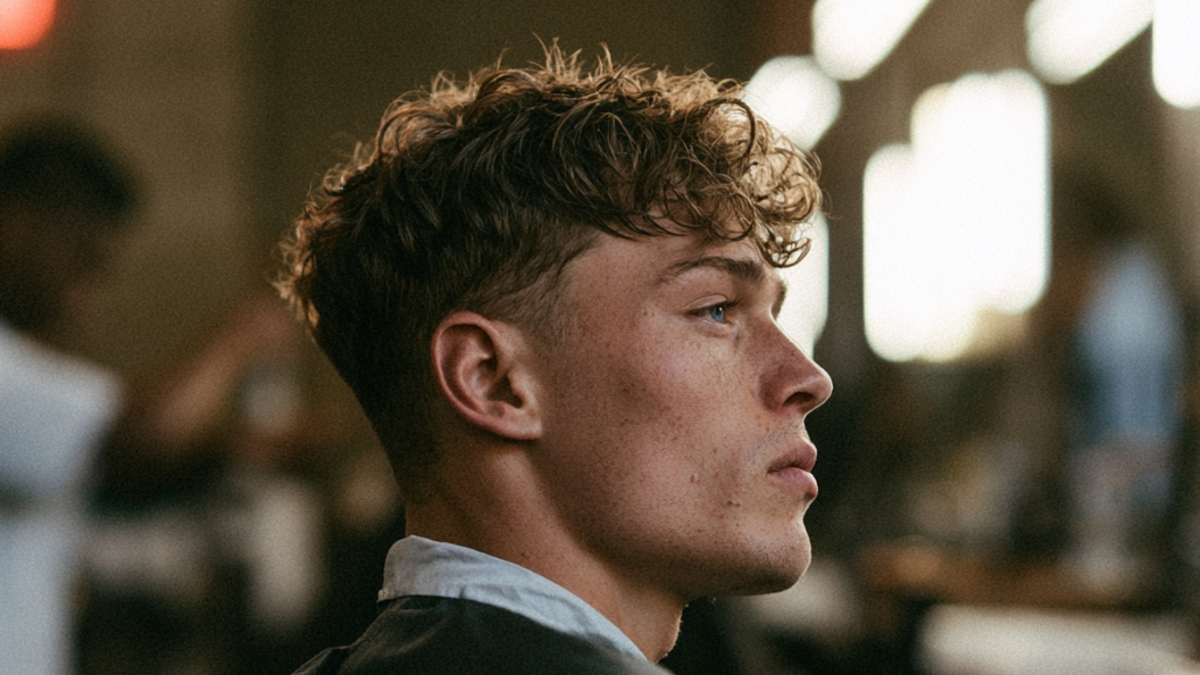
Texture isn’t a haircut. It’s a technique applied to almost any haircut, which is why “textured haircuts for men” as a search term covers everything from a crew cut to a shoulder-length shag. Asking a barber for “texture” without specifying the cut underneath it is like asking for “seasoning” without saying what you’re cooking.
The texture comes from how the hair is cut, point-cutting, slide-cutting, texturizing shears, each doing something different to the strand. The thirty-two styles below all use one or more of those techniques. What separates a good textured cut from a bad one is whether the technique matches your hair density and length.

In this article
Best Textured Haircuts for Men
Thirty-two versions below, covering short, medium, and long lengths. No particular order beyond what made sense to write next to what.
Textured Crop with Skin Fade

Point-cut ends on a short textured crop, sides taken to skin. The most requested textured cut in barbershops right now, and for good reason: it works on most face shapes and most hair types without much adjustment.
Ask for the fringe to be trimmed every three to four weeks even if the rest of your cut holds for longer, since fringe grows faster than anywhere else on your head.
Short Textured Quiff

Height at the front, texture through the crown, faded or tapered sides. A short textured quiff needs the texture, it isn’t optional.
Without point-cutting through the front section, a quiff at this length looks like short hair pushed up with product, which will collapse on you within an hour.
Textured Fringe

A fringe with texture worked through it rather than cut to a blunt line. Suits most lengths from short to medium.
Ask specifically for point-cutting through the fringe rather than a straight scissor cut across, since a blunt fringe edge is one of the more dated looks your barber can accidentally produce if you don’t mention texture explicitly.
Curly Textured Top

Natural curl already provides texture, so the cutting technique here is less about creating movement and more about controlling volume.
Over-texturizing curly hair removes density your curls need to hold their shape, and the result can look thin and frizzy rather than full and defined. Less cutting is usually the right call for you, not more.
Textured Crew Cut

Point-cutting through a crew cut top gives it separation a blunt crew cut simply can’t produce on its own.
I’d call this the most underrated entry on this list. Nobody asks for it specifically because it looks understated in photos, but it’s one of the most versatile cuts here if you work in a professional environment where a dramatic textured cut would stand out for the wrong reasons.
Spiky Textured Cut with High Fade

Short spikes held with a firm matte product, high fade for contrast. You’ll need at least three quarters of an inch of length to spike properly rather than stand up as short hair with product on it.
Short Messy Waves

Natural or product-assisted wave, styled loose. Salt spray on damp hair, air-dried. One of the lowest-effort entries on this list if your hair already has a wave pattern to work with.
Medium Length Textured Quiff

The same quiff shape as the short version but with an inch and a half or more on top.
You’ll need a stronger hold product to keep the extra length standing, and the texture has to be more aggressive through the cut or the added weight will collapse your shape by midday.
Textured Comb Over with Faded Sides

A defined side part with textured length combed across, fade beneath. The texture keeps your comb-over from looking too polished and formal, which is often the point of choosing texture over a fully slicked version in the first place.
Textured Side Part Fade

Similar to the comb over but with less product and a more relaxed direction to the part. Works well if you already have some natural texture, since the part doesn’t need to fight your hair’s tendency to move.
If you have very straight, fine hair without natural texture, this style tends to fall flat by midday regardless of how it’s cut, and a comb over with more product might be the more realistic choice for you.
Textured Slick Back with Faded Sides

Length pushed back with texture worked through so it doesn’t look glossy or wet. A textured slick back like this one only works with the right product.
A water-based matte product is the right choice here. Wax or oil-based products will fight the whole point of texture by adding shine the cut is designed to avoid.
Medium-Length Layered Textured Haircut

Layers through medium length hair, texturized ends. This is where texture starts doing real structural work rather than surface styling.
Skip the layers at this length and your hair gets heavier as it grows, with no shape change beyond length. Add them and the same hair moves.
Textured Medium Pompadour
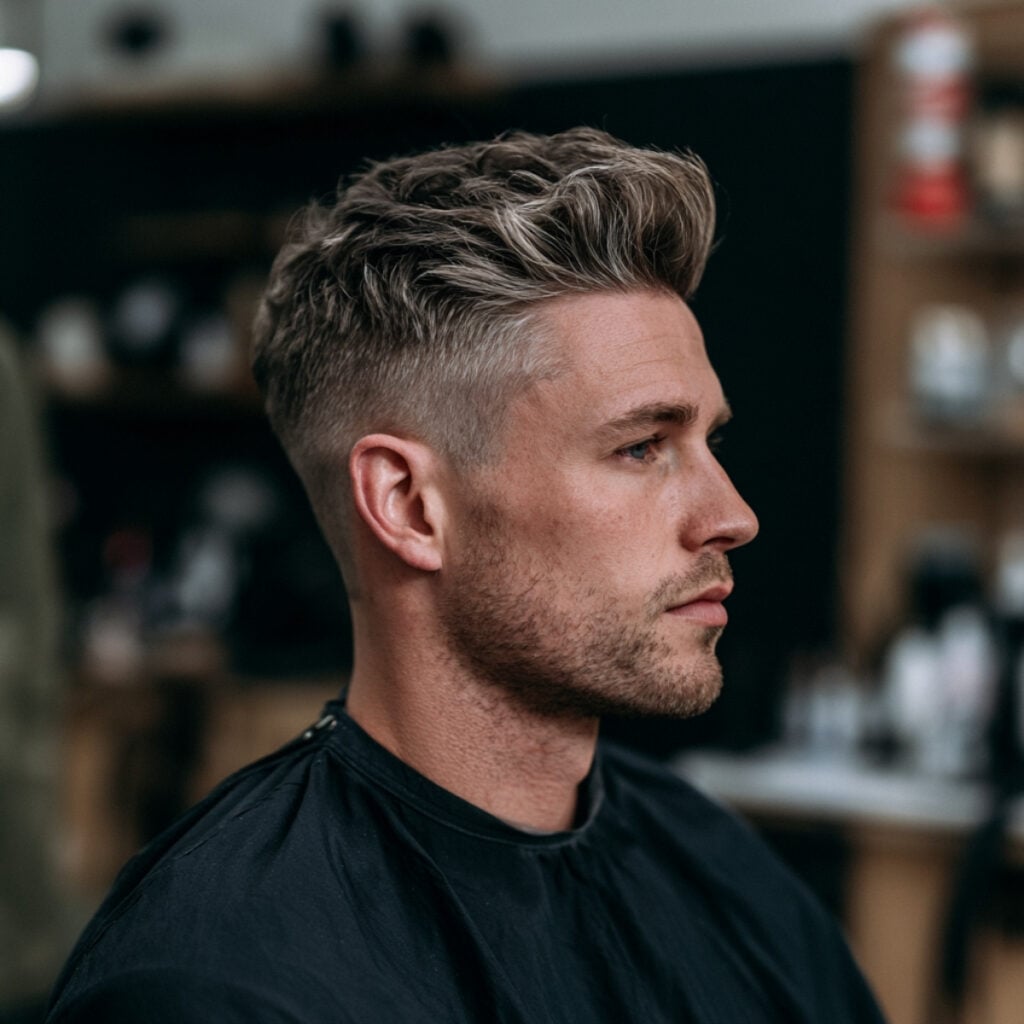
More length than a short textured quiff, more volume at the front, texture through the crown to support the height.
I’d say this is the pompadour most likely to go wrong on you, because the extra volume at this length needs real separation or it turns into a solid, bulky shape rather than a defined style. Point-cutting through the crown isn’t optional here.
Medium Textured Side Swept Hair

Hair directed to one side with texture cut through to give it natural-looking movement rather than a flat combed direction. This style works on a wider range of face shapes than a middle part, because the diagonal line the sweep creates is more forgiving.
Medium-Length Textured Shag

Heavy layering, choppy ends, intentionally uneven length distribution. One of the more technically demanding cuts on this list.
A barber who isn’t confident with shag cuts will produce chunks that don’t blend, and it’ll take you months of growing to fix.
Long Layered Waves

Layers through long wavy hair to prevent the weight from flattening your wave pattern.
Past shoulder length, the sheer weight of unlayered wavy hair pulls the wave pattern straighter and heavier the longer it grows. Layers are the only thing keeping your wave visible at that length, not an optional finishing touch.
Textured Curly Top with Skin Fade

The technique here is closer to the plain curly top than the plain skin fade crop: minimal thinning through the curl itself, and all the contrast comes from how hard the sides are taken down rather than from cutting into the top.
Ask for your curls to be left at full density and let the bare sides do the visual work.
Long Textured Flow

Length past the collar with texture through the mid-lengths and ends. This is close to what most men picture when they say they want flow. It’s grown, not styled, which is the detail most men miss.
Ask your barber to point-cut the ends rather than blunt-cutting them, since a blunt edge at this length looks like a deliberate style choice rather than natural growth, and undoes the whole point of a flow.
Long Textured Tousled Curls

Curls at full length, minimal cutting beyond basic shape. The texture is entirely natural here. Your main risk is dryness, since long curly hair has a harder time carrying natural oils down its full length than any other hair type does.
A leave-in conditioner or a light oil worked through your ends two or three times a week does more for this cut than any styling product.
Long Textured Slick Back

Length pushed straight back, texturized rather than glossy.
At this length your hair has enough weight to hold the direction on its own, so the texture is mostly about avoiding the wet-look finish rather than creating movement from scratch.
Textured Curtains

A center part with texture through both sides falling toward the face.
Cut this without any texturizing and the two sides will fall in a way that looks staged, almost too symmetrical to be real. Texture through the ends breaks that symmetry enough to look unplanned.
Textured Bro Flow

Where this differs from a straight flow is the wave. A bro flow keeps real movement and volume through the sides rather than a calm single direction, which is why it suits you if you already have some natural wave, and looks forced if your hair is dead straight.
Sea salt spray on damp hair does most of the work here, no heavy product needed.
Long Textured Shag

The full-length version of the medium shag, heavier layering, more dramatic length variation. I’d only get this from a barber who can show you previous long shag work specifically, not general long hair experience alone.
The layering technique for a proper shag at this length is a different skill entirely from cutting long layers for a flow or a curtain style, and a lot of barbers who are confident with one aren’t confident with the other.
Surfer-Inspired Long Textured Hair

Salt spray, air dry, don’t touch it while it dries. The texture is meant to look accidental. Ironically it usually isn’t.
A cut without proper layering underneath still needs the layering even if the finished look is meant to seem effortless.
Textured Man Bun with Loose Strands

A man bun gathered from textured, layered hair, with a few pieces left loose at the front or sides on purpose. The layering underneath is what gives your loose strands movement rather than having them hang flat.
Textured Faux Hawk Fade

The center section textured and lifted, sides faded. Less commitment than a full mohawk, since the sides here are faded rather than shaved to skin, and the center strip is narrower and lower than a mohawk’s ridge, so it grows out into an ordinary short cut rather than needing a full redesign.
Cut the center section blunt instead of textured and you’ll end up with a single dense ridge rather than a shaped strip, which is the main visual difference between this and a much bolder style you may not have wanted.
Textured Mullet Fade

Length at the back, texture through the top and sides, fade for contrast. I’d say the texture on top is doing more reputational work than any other element of this cut.
A blunt-cut mullet looks like the 1980s reference most men are trying to avoid. The same length with texture through the top and a modern fade looks like an intentional style choice instead.
Textured Mohawk

A strip of textured hair down the center, sides faded or shaved. Cut the center strip blunt and you’ll end up with a dense block sitting on top of your head rather than something with actual shape.
This is one cut where skipping texture doesn’t only look less polished, it changes what the style is.
Textured Crop with Burst Fade

The textured crop shape with a burst fade curving around the ear instead of running in a straight line. The curved fade suits the softness of a textured top better than a straight fade does, since neither element is fighting the other for a hard geometric line.
Disconnected Textured Undercut

A hard disconnect between long, textured top and very short or shaved sides, no gradual blend. The disconnection is the point.
The texture on top has to be strong enough to hold its own visual weight against the abrupt contrast at the sides, or your cut will look unfinished rather than intentional.
Textured Crop Drop Fade

The textured crop shape again, this time with the fade curving down and back behind the ear rather than sitting level.
It’s a subtler transition than a burst fade, and it tends to suit you better if you have thinner or finer hair, since a straight or hard-curved line can look severe against less density up top.
Textured Brush Back

Hair pushed straight up and back off the forehead with even lift across the whole top, not concentrated at the front like a quiff or pompadour. This is the one to ask for if you like the direction of a slick back but not the flat, glossy finish.
Use matte product only, worked through with your fingers rather than a comb, or the texture will disappear and it becomes a slick back with extra steps.
The Cut Has to Create the Texture First
Most men think texture comes from product. It starts at the cut, and no amount of styling afterward fixes a cut that skipped this step.
Point-cutting chips into the ends at an angle, softening blunt lines without removing much length. Slide-cutting runs the shears along the hair shaft to remove bulk, which works especially well if you have thick or coarse hair.
Texturizing shears remove density evenly across a section, which is useful in the right hands and overused as a shortcut in the wrong ones.
A barber who reaches for texturizing shears the instant you say “texture,” without asking about your hair type or the style you want, is taking the fast route rather than the right one. The technique should match your hair and the cut you’re after, not be applied because you mentioned the word “texture.”
Density Decides How Much Texture Your Hair Can Handle
Thick hair can absorb a lot of texturizing before it starts looking thin. Fine hair can’t.
Removing weight from thick, dense hair reveals texture that was already there, hidden under bulk. The same amount of thinning on fine hair removes density your hair didn’t have to spare in the first place, and the result looks sparse rather than textured.
I’d say this is the single most common mistake in textured haircuts: treating every hair type as if it can handle the same amount of removal.
If you have fine hair, less texturizing and more reliance on the cut’s shape and length distribution will get you a better result than aggressive thinning ever will.
The Wrong Product Makes Textured Hair Look Worse
Heavy hold or high-shine products undo texture almost immediately. The whole point of a texturized cut is separation and movement, and a product that glues everything into one shape removes both.
Matte clay, texture powder, or a light matte paste, worked through with your fingers rather than a comb, keeps the texture from your cut visible rather than smoothing it away.
Apply less than feels necessary. Most men over-apply because they’re used to products that need more volume to hold anything, and textured hair needs far less than that to look finished on you.
The Beard Beasts Verdict
A textured haircut isn’t defined by a specific length or shape. It’s defined by a cutting technique matched correctly to your hair density and applied to whatever style you want.
Get the technique right for your hair type before worrying about which of the thirty-two styles above looks best in a photo.
The same texturizing that makes your hair look full and separated could make someone else’s look thin and patchy, because the variable was never the style. It’s always the hair underneath it.
Textured Haircut FAQs
What’s the difference between a textured crop and a French crop?
The fringe. A French crop is cut blunt, straight across the forehead. A textured crop is point-cut, so the fringe breaks into pieces instead of holding one straight line.
Full comparison here if you want the details on which suits your hair.
What’s the difference between a fade and a taper on a textured cut?
A fade takes the sides down to skin at some point. A taper gets shorter toward the neckline and never reaches bare skin.
Either works under a textured top, but a fade gives you more contrast against the texture, and a taper gives you a softer, more gradual look.
Which textured cut is best for thick hair versus fine hair?
Thick hair can handle heavier texturizing since there’s density to spare, so crops, shags, and anything with real length on top tend to work well.
Fine hair does better with lighter texturizing and more reliance on the cut’s shape, since aggressive thinning leaves it looking sparse rather than textured. The Density section above goes into this in more detail.
How often does a textured cut need trimming?
Most short textured cuts hold their shape for three to four weeks before the fringe or top starts softening the definition. Medium and long textured cuts, shags, flows, curtains, stretch further, six to eight weeks, since growth doesn’t disrupt the shape the way it does on a short cut. Fringes move faster than the rest of the cut regardless of length, so that’s usually the first thing that needs attention.
How do you ask for a textured haircut?
Name the base cut first, crop, quiff, fringe, whatever it is, then say the word texture and be specific about how: point-cut, choppy, piecey. “Texture” alone leaves your barber guessing at technique. Bring a photo if you can, since it shows the fringe shape and the amount of separation better than words do.
Can any barber cut in texture, or does it need a specialist?
Most barbers can do basic texturizing, but the technique needs to match your hair type, and that’s where experience matters. A barber who reaches for texturizing shears on every head regardless of hair type is more likely to over-thin fine hair or under-texture thick hair.
Ask to see previous textured work on hair similar to yours before committing to anything more advanced, like a shag or a disconnected undercut.