
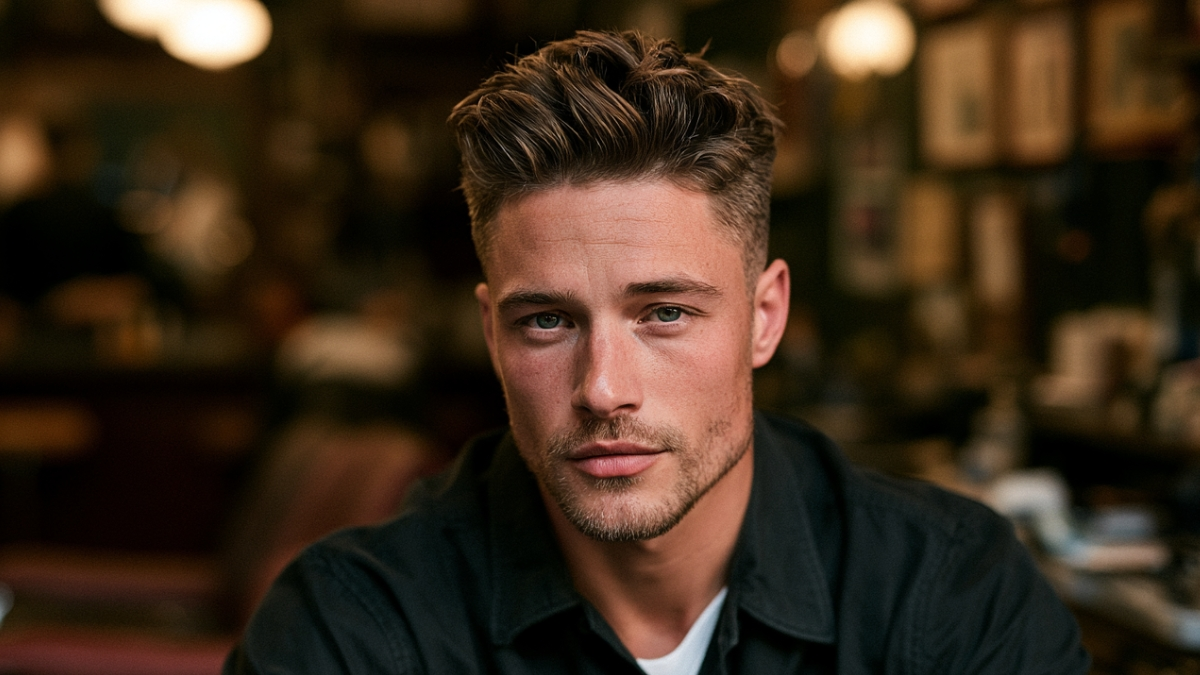
Most men with a short textured quiff are one bad product choice away from a stiff front wall of hair that hasn’t moved since 2009. The cut gets blamed. Usually it’s the finishing.
But sometimes it is the cut. A blunt front section cut to one uniform length will always clump together regardless of what you put in it. Point-cut ends at different lengths move independently and fall into a natural peak. That’s the whole difference between a quiff that looks like it happened and one that looks like someone tried too hard.

In this article
Short Textured Quiff Styles That Actually Work
Eight versions below, each paired with a different fade or hair type.
Short Textured Quiff

The base version. An inch to an inch and a half on top, point-cut through the front section so the ends are uneven and move separately, tapered or faded on the sides. No specific fade height, just enough length on top for the quiff to have somewhere to go.
The front section needs to be cut slightly longer than the crown for the quiff shape to hold. If the barber takes the top to one uniform length from front to back, the quiff will fall flat within an hour of styling. I’d specifically ask for the front to be left longer than the rest before the cut starts.
Low Fade Short Textured Quiff

A low fade starting just above the ear combined with a short textured quiff on top. The low fade is the most conservative option and the one that grows out most gracefully. Because more hair is retained on the sides, the quiff looks proportionate to the sides rather than appearing to float above bare skin.
High Fade Short Textured Quiff

The fade starts at or near the temple, leaving a high contrast between the short sides and the textured top. The quiff appears more dramatic at this fade height because the surrounding hair is removed and the front section has no competition.
I’d caution against this on round or wide faces. The high fade removes width at the sides but the quiff adds height above, which can create a top-heavy look that works against those face shapes rather than helping them.
Skin Fade Short Textured Quiff

Sides taken to skin, quiff standing on its own. This is the most demanding version on this list in terms of upkeep. The skin fade shows regrowth within ten days, and when the sides start growing back the contrast that makes this version work softens quickly.
For men who maintain on a weekly or biweekly schedule this is the sharpest-looking combination. For anyone else, a mid or low fade version lasts significantly longer between barber appointments.
Drop Fade Short Textured Quiff

A fade that curves down behind the ear rather than running horizontally. The drop gives the sides a more natural contour around the skull, and on wider or rounder head shapes it often looks better than a standard horizontal fade at the same height because it follows the skull’s curve.
Messy Short Textured Quiff

The same cut as the standard textured quiff but styled with less product and more intention around leaving pieces where they naturally fall. The distinction from the standard version is in the finishing, not the cut itself.
The quiff here shouldn’t look like it was tousled on purpose. It should look like it was barely touched and landed this way. That effect takes less product than most men use, not more.
Wavy Short Textured Quiff

A short textured quiff on naturally wavy hair. The wave adds texture and movement that a straight-haired version has to create with product, which is a genuine advantage. The quiff shape holds better through the day on wavy hair because the wave pattern helps the front section hold its direction rather than falling flat.
Curly Short Textured Quiff
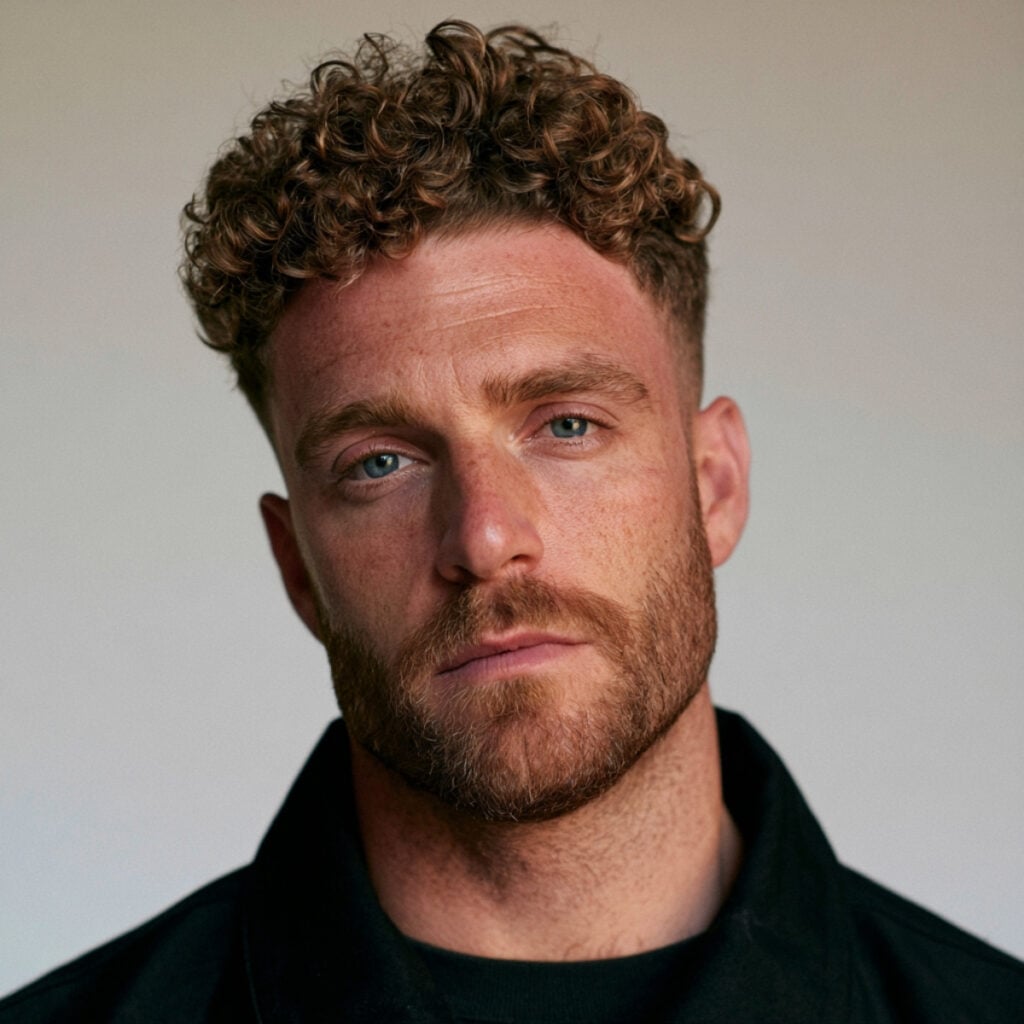
Tight or loose curls on top, textured quiff shape, faded sides. The curl gives the front section natural height and separation, which means the quiff shape can be achieved with almost no product at all.
The one adjustment: the barber needs to check the shape dry rather than wet. Curly hair shrinks significantly as it dries, so a quiff that looks proportionate wet can look exaggerated or too short dry. Always ask for a dry check before leaving.
Short Textured Quiff with Beard

A textured quiff paired with a beard at any length. The beard adds weight at the bottom of the face that keeps the quiff from making the whole look feel top-heavy. On longer or narrower faces this combination works particularly well because the quiff adds height and the beard adds width.
A short boxed beard or heavy stubble works best here. A full beard can overpower the quiff and make it look like the hair is competing with the beard for the face’s attention.
The Front Needs Lift, Not a Wall
Most quiff failures happen before product goes in. They happen at the cut.
A blunt-cut front section creates a wall of hair because every strand is the same length and they all fall together as one piece. No amount of product separates what was cut to be a single unit. Point-cutting through the front section, ideally with the barber working section by section rather than taking everything to one length, creates ends that fall at different heights and move independently. That’s where the texture in a textured quiff actually comes from.
The length matters too. The front should be left slightly longer than the crown. Most barbers, unless specifically asked, will cut the top to one uniform length or even taper it slightly shorter toward the front. The quiff needs the front section to have more length so the hair has somewhere to build upward when styled.
The Sides Decide Whether the Quiff Looks Built In or Forced
At the right fade height, a textured quiff looks like it belongs to the haircut. At the wrong height, it looks like a style that was imposed on a cut that wasn’t designed for it.
A fade that starts too high, above the temple on a man with a round face, adds height above a head that’s already wide. The quiff then exaggerates the height further and the whole proportion tips. A fade that starts too low barely creates enough contrast for the quiff to stand out against.
The rule I’d use: the fade height should create a visible line of contrast about two thirds of the way up the head. That leaves the lower third faded, the middle third as a transition, and the top third as the quiff’s canvas.
Product Should Break the Hair Up, Not Glue It Together
When the cut is right, the bathroom is where it can still go wrong.
Heavy hold products applied to damp hair create the wall the cut was designed to avoid. The weight of the product, combined with the moisture still in the hair, pulls the front section together into a solid shape that dries locked in place. The texture built into the cut disappears.
The right approach is a small amount of matte clay or paste applied to dry or near-dry hair, worked through the front section by running fingers upward and forward rather than pressing down. The upward direction is the technique most guides don’t mention. Pressing the product in from the sides or top drives the hair down. Running fingers upward from the roots lifts the section and separates the pieces as the product sets.
I’d start with less product than feels necessary. A dime-sized amount of matte clay on dry hair is usually enough for an inch to an inch and a half of length. More than that and the texture starts to look coated rather than natural.
The Beard Beasts Verdict
A short textured quiff works when three things are right: the front section is point-cut to different lengths so it can move, the fade height creates contrast that suits the face shape, and the product is matte, light, and applied to dry hair in an upward direction.
Get those three things right and the quiff looks like it happened on its own. Get any one of them wrong and it looks like someone tried.