
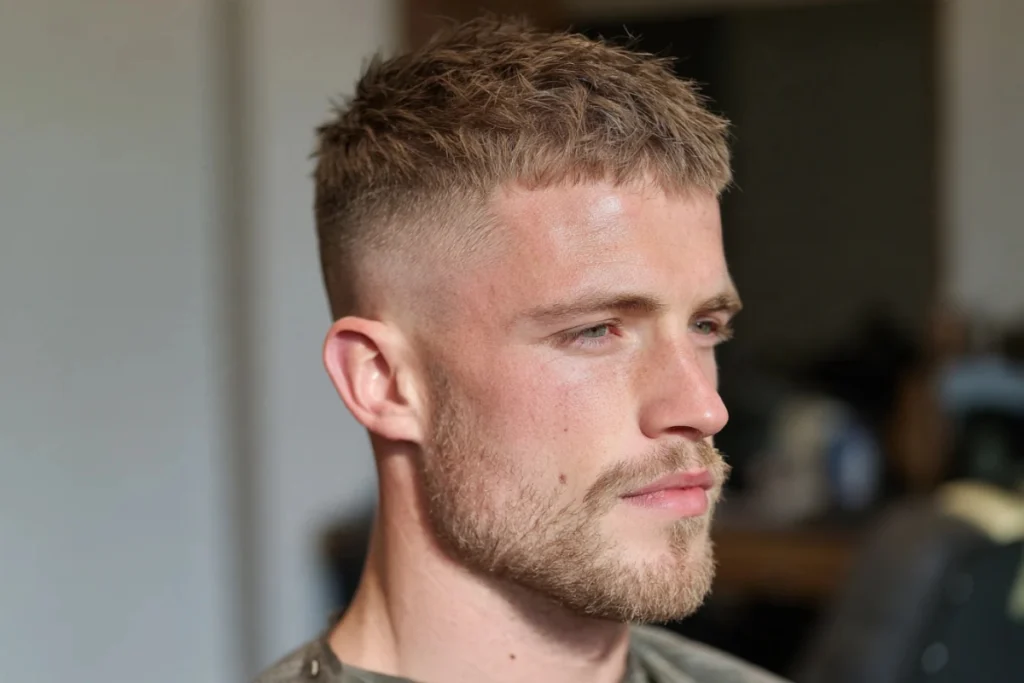
If you’re exploring types of fades for men, you’ve come to the right place. Fades are incredibly versatile, offering a clean and stylish look that works with any hair type. From subtle tapers to striking skin fades, there are many different types of fades to choose from, ensuring you find one that enhances your personal style.
This guide will break down the various types of fades for men, helping you understand each style and how to choose the perfect one for your face shape. We’ll also cover essential tips on maintaining your fade, so you always look sharp and well-groomed.
In this article
Types of Fades for Men
As we’ve seen, the fade haircut has evolved significantly from its military origins to become a modern staple.
Now, let’s explore the diverse range of fade styles available today, each offering a unique look to complement your face shape.
Skin Fade (Bald Fade)

A skin fade creates a dramatic look by blending your hair down to the skin, leaving no visible hair at the shortest point. This style offers the highest contrast, making it a bold, modern choice.
You can combine it with any haircut to achieve a sharp, clean appearance. The fade can begin high, mid, or low on the head, depending on your preference.
Low Fade

The low fade is a subtle option, starting just above the ears and gradually blending into longer hair on top. It offers a natural, neat look without being too dramatic. This fade adds structure to your haircut while remaining understated.
This makes it suitable for both professional and casual settings. The soft transition ensures a polished yet relaxed appearance.
Mid Fade

A mid fade begins around the temples, creating a balanced contrast between the top and sides. It provides more definition than a low fade but isn’t as bold as a high fade. This style adds a sharp, modern touch without being overly extreme.
It blends seamlessly with short to medium-length hairstyles, resulting in a clean and stylish finish.
High Fade

The high fade starts near the top of the head, leaving minimal to no hair on the sides. This style creates a striking contrast between the shaved areas and the longer hair on top, offering a bold and edgy look.
The sharp fade line makes it ideal for structured hairstyles. Due to its high contrast, frequent touch-ups are necessary to maintain its clean appearance.
Taper Fade

A taper fade gradually reduces hair length at the sideburns and neckline, while keeping more hair on the sides. It provides a subtle, natural transition rather than a dramatic contrast.
This fade is perfect for those who want a clean, polished look without exposing too much skin. It blends smoothly into the hairline, offering a refined, classic appearance.
Drop Fade

The drop fade curves downward behind the ears, following the natural shape of your head. This technique adds depth and dimension to a standard fade, creating a unique, sculpted look.
It works well with short to medium hairstyles, adding a stylish twist. The drop effect enhances the overall haircut by creating a rounded, structured appearance.
Burst Fade

A burst fade tapers the hair around the ear in a semi-circular shape, creating a “burst” effect. It leaves the hair longer at the back while keeping the sides sharp and clean.
This fade is often paired with mohawks or textured hairstyles for an edgy, distinctive finish. The circular transition sets it apart from standard fades, making it a trendy and stylish option.
Temple Fade (Temp Fade)

The temple fade focuses on the area around the temples, providing a sharp, clean transition. It’s a subtle fade that blends naturally into the rest of your hair. This style is often used to add extra definition to haircuts without significantly changing the overall look.
It can be paired with a beard for a seamless, polished appearance, enhancing any haircut with a small but effective detail.
Each fade style offers a different level of contrast, structure, and maintenance. Whether you’re looking for a low-maintenance classic fade or a bold, high-contrast style, there’s a fade that suits your preferences.
How to Choose the Right Fade for You
With so many types of fades for men available, finding the right one can seem daunting. However, a well-chosen fade can significantly enhance your features, adding balance and structure to your overall look.
Let’s explore how different fade styles complement various face shapes.
Face Shape & Fade Compatibility
The impact of a fade varies depending on your face shape. Here’s a guide to matching different types of fades with round, oval, square, and oblong faces:
Round Face
A round face has soft, equal proportions. The aim is to add definition and length.
Best Fades:
-
- High fade: Creates a sharp contrast, making the face appear longer.
-
- Drop fade: Adds shape and upward movement.
-
- Skin fade with volume on top: Elongates the face with an angular look.
Avoid: Low fades, as they can make the face appear rounder.
Oval Face
An oval face is balanced and suits most fade styles. The goal is to maintain this natural harmony.
Best Fades:
-
- Mid fade: Offers balanced proportions.
-
- Taper fade: Provides a subtle, clean look.
-
- Skin fade with a textured top: Adds a modern touch.
Avoid: Extremely high fades with excessive volume, which can elongate the head.
Square Face
A square face features a strong jawline and sharp angles. The right fade should enhance this masculine shape.
Best Fades:
-
- Low fade: Emphasizes the strong jawline.
-
- Temple fade: Adds definition around the hairline.
-
- Skin fade with a slicked-back top: Highlights the jawline.
Avoid: Softer fades that minimize the natural angles.
Oblong Face (Rectangular Face)
An oblong face is longer than it is wide. The goal is to avoid making the face appear longer.
Best Fades:
-
- Low to mid fade: Maintains balanced proportions.
-
- Drop fade: Adds width to the sides.
-
- Taper fade with a side part: Keeps the look refined.
Avoid: High fades with excessive volume, which can overextend the face.
Choosing the right fade is about achieving balance and enhancing your features. If you’re unsure, consult your barber and bring reference photos to illustrate your desired style.

How to Maintain Your Fade

All types of fades for men eventually grow out, losing their defined, tapered look. Proper upkeep ensures your fade stays fresh and structured.
How Often Should You Get a Trim?
The ideal trim schedule depends on your hair growth and desired sharpness. Shorter fades need more frequent upkeep.
-
- Skin Fades & High Fades: Every 1 to 2 weeks. These fades lose their sharp contrast quickly. Regular trims maintain precision.
-
- Mid Fades & Low Fades: Every 2 to 3 weeks. These fades maintain shape longer due to their gradual transition. Regular trims prevent an overgrown look.
-
- Taper Fades & Longer Blends: Every 3 to 4 weeks. These fades require less maintenance. A monthly touch-up keeps them polished.
For longer intervals between cuts, tidy edges at home with a trimmer or visit your barber for a quick clean-up.
Best Products to Keep Your Fade Looking Sharp
Styling products complement your fade. Choose products based on your desired look.
-
- Matte Clay: For textured, natural styles. Provides a dry, matte finish with light to medium hold. Ideal for casual looks.
-
- Styling Wax: For structured, defined styles. Offers a strong hold with flexibility. Works well for spiky styles and pompadours.
-
- Pomade: For sleek, polished styles. Offers a shiny, smooth finish for classic looks. Available in water-based (easy wash) or oil-based (long hold) formulas.
DIY vs. Professional Touch-Ups
At-home touch-ups can maintain your fade between barber visits, but not all types of fades are easy to replicate.
Best Fades for DIY:
-
- Taper fades: Simple to clean up with a trimmer.
-
- Low fades: Maintainable by trimming around ears and neckline.
-
- Shadow fades: These are variations of low fades, where the transition between hair lengths is very subtle, creating a “shadow” effect. This makes minor growth less noticeable and easier to manage at home.
Fades Best Left to a Barber:
-
- Skin fades: Precise blending is challenging.
-
- Drop fades & burst fades: Require advanced techniques.
-
- High fades: Mistakes are highly visible.
For DIY touch-ups, use quality clippers and a mirror. Otherwise, a barber visit ensures a sharp look.
Regular trims, proper styling products, and choosing between DIY and professional touch-ups keep your fade sharp. Adjust your maintenance schedule to your preferences. Consistent upkeep keeps your fade looking professional.
Conclusion
The fade haircut has solidified its place as a men’s grooming essential, offering both versatility and timeless style. With numerous types of fades for men available, you can easily find a style that enhances your look and complements your personality.
Whether you prefer a subtle low fade or a striking high fade, selecting a style that aligns with your preferences and lifestyle is key.
Maintaining a sharp fade requires consistent upkeep, the right styling products, and a skilled barber who understands how to blend different types of fades seamlessly. By following a proper maintenance routine, you can ensure your fade remains crisp and well-defined.
Use this guide as a reference to explore the various fade styles and discover the one that best suits you. With the right fade, you’ll achieve a sharp, modern look perfect for any occasion.