

First the hairline creeps back a little. Then the crown starts catching the bathroom light in a way it never used to. Before long, the haircut you’ve had for years looks thinner, weaker, and more tired than you remember.
That’s what gets most men. Not the hair loss on its own, but the way it changes the whole look. The old fringe stops falling properly. The parting gets wider. Product that used to help now makes the scalp show even more.
Hair loss doesn’t mean your style is finished. It does mean the old routine probably needs to go.

In this article
Map Your Loss Before You Act
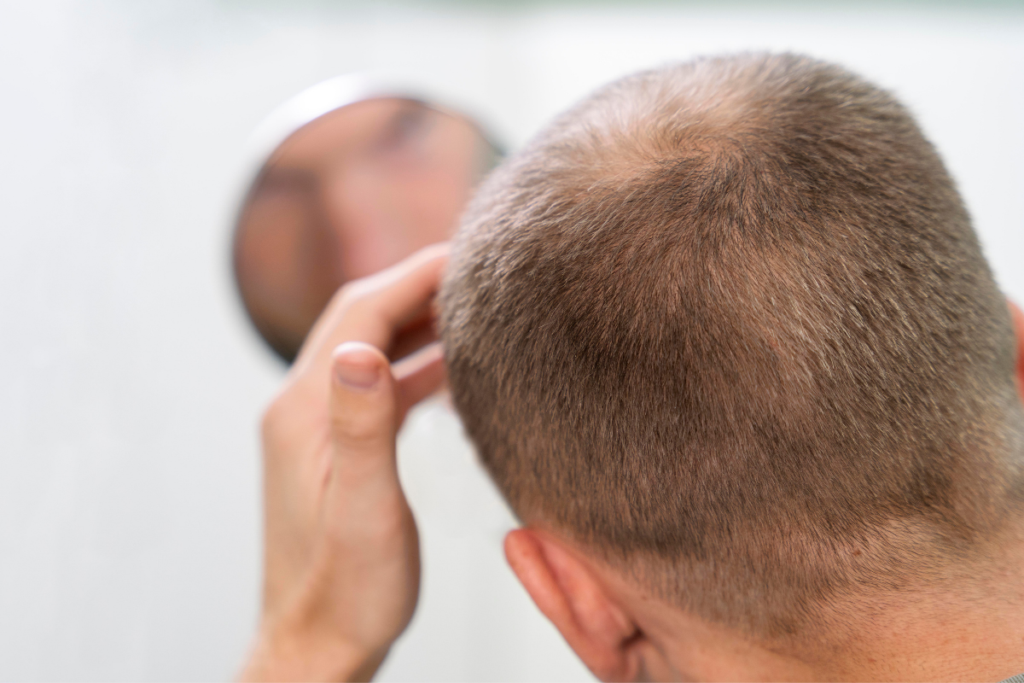
Before you change the cut, buy anything, or start wearing caps everywhere, look properly at what’s actually happening.
Is the hairline moving back at the temples? Is the crown opening up? Is the whole top losing density evenly, or is it patchy? Does the hair only look thin when wet, or is the scalp showing even when it’s dry? Has this been going on slowly for years, or did it come on suddenly?
Those details matter because a receding hairline is not the same problem as a thinning crown. Gradual male pattern loss is not the same as hair that starts falling out quickly and noticeably.
If baldness runs in the family and the loss has been slow, you probably already have a reasonable idea what’s happening. But be honest about the pattern rather than the reflection you’re used to seeing. Those aren’t always the same thing.
Kill the Denial: Drop the Old Routine
This is where thinning hair starts looking worse than it needs to.
A man sees the hair changing and keeps the same cut anyway. Same length. Same parting. Same fringe. Same wet product. Same hope that if he just pushes it forward, nobody will notice.
They notice.
Longer hair can be brutal once density drops. It clumps into thin strips, separates at the front, and opens little windows of scalp every time the wind catches it. A fringe that used to look full turns into oily, see-through strands hanging over the temples. A side part stops being a style choice and becomes a bright line across the head.
Thick, bulky sides next to a thinner top make things worse. The sides look heavy, the top looks weak, and the whole haircut starts working against you.
That doesn’t mean every man with thinning hair needs to shave his head. It means the haircut has to catch up with the hair. Less length, less weight, less shine, more texture. Trying to hide every thin area usually draws more attention to it. A shorter cut often looks better simply because it stops pretending.
Haircuts That Usually Work Better
The right cut depends on where the hair is thinning and how much density is left. A man with a receding hairline but a full crown has completely different options from a man whose crown has opened up but whose front is holding.
Treating them as the same problem is why so many men end up with a haircut that solves the wrong thing.

Short Textured Crop
Works well when the front is starting to thin but there’s still decent coverage across the top. The trick is keeping it short enough that the hair doesn’t collapse into clumps. A heavy fringe on thinning hair practically points at the temples. The top needs to be broken up, light, and easy to move through.
Keep the product matte. Anything with shine makes the scalp show faster.
Crew Cut
A strong middle ground if you’re not ready for a buzz cut. The top stays short, the sides are reduced, and the front has just enough length to give the haircut a direction without relying on coverage. It doesn’t need constant adjusting or checking, which is exactly why it suits early thinning. Easier to live with than a longer style you’re fighting every morning.
Buzz Cut
One of the best moves for stronger recession, crown thinning, or uneven density, and the reason is simple: it reduces contrast.
When hair is longer, thin areas stand out against thicker sections. When everything is cut short, the difference between thick and thin becomes far less obvious. The scalp doesn’t look like an accident. The haircut looks like a decision, and that distinction matters more than most men realise before they try it.
A buzz cut also pairs well with stubble or a short beard. Facial hair brings weight back to the face and stops the whole look from feeling too bare.
High and Tight
A good option when the sides are still thick but the top is starting to thin. Taking the sides in close stops the side hair from overpowering the thinner section above, and gives the cut a harder, more confident feel without needing much length on top.
The top can’t be left too heavy here. Once it gets past a certain length it starts fighting the hair loss again.
Shaved Head
For some men this is the best decision, not because they’ve given up, but because the hair was no longer doing anything useful.
There’s a point where styling becomes more stressful than helpful. The crown is too open. The hairline has moved back too far. The top only looks right from one angle. Wind becomes annoying. Photos become something you check before anyone else sees them.
At that stage a shaved head often looks better than thin coverage. Add a beard, keep the scalp in good condition, and the whole thing starts making more sense. Some men look better with less hair because the haircut finally matches the reality. That’s not a failure, it’s just honesty.
Switch to Matte, High-Texture Products
Step away from the high-shine wet gels. They glue remaining strands together and create little highways of exposed scalp. Heavy wax drags the hair down until it looks flat and separated.
Thinning hair needs dry grip, not shine.
A light matte clay, matte paste, texture powder, or salt spray can help the hair look thicker without making it heavy. Use less than you think you need. Thin hair doesn’t need a handful of product, it needs a small amount worked through carefully.
Hair fibres can help some men, especially around the crown, but they’re easy to overdo. Too much looks dusty and unconvincing. The colour has to match and the hair still needs enough density to hold them in place.
If a product makes your hair shiny, greasy, or stringy, you aren’t styling your hair. You’re just highlighting the gaps.
Treat the Cause, Not Just the Mirror
A better haircut changes how thinning hair looks today. Treatment is about what happens over the next year. Those are different conversations.
The two names most men come across are minoxidil and finasteride. Minoxidil is applied to the scalp. Finasteride is a prescription medication taken orally. Both are commonly used for male pattern hair loss. Neither should be treated as a casual grooming product you pick up without thinking.
Results vary. Side effects are possible. Consistency matters more than most men realise, and it can take months to judge whether anything is actually working.
If the loss is sudden, patchy, irritated, or happening quickly, see a doctor or dermatologist before trying anything.
The hair loss market is a circus. Miracle oils, mystery tablets, dramatic before-and-after photos, and men selling hope in small bottles. Some products may support the condition of the hair you have. Most won’t touch the real cause of male pattern loss. Don’t panic-buy your way through it.
If Surgery Is on the Radar, Think Long-Term
A hair transplant can be the right move. It can also be an expensive mistake if it’s rushed.
If surgery is something you’re considering, don’t just look at the headline price. Understand what the true FUE hair transplant cost actually covers: graft numbers, surgeon involvement, clinic standards, aftercare, and whether the hairline design will still make sense as you age.
Cheap work can become expensive to fix. Donor hair matters. Future loss matters. Hairline placement matters. A low hairline can look good at thirty and look wrong at fifty if the hair behind it keeps thinning. Bad transplant work can look worse than thinning hair because it’s unnatural and permanent.
Some men are strong candidates. Some need to stabilise their loss first. Some would be better served by a shorter cut or shaving it down and building their style around that instead.
There’s no shame in considering it. The mistake is treating it like a panic button.
Final Verdict
Hair loss doesn’t mean giving up on how you look. It means stopping the habit of treating your hair like nothing has changed.
For one man the answer is a short textured crop and matte clay. For another it’s a buzz cut and a beard. For someone else it’s treatment or a transplant after proper advice.
The weak move is holding onto a hairstyle that stopped working years ago and calling it loyalty. Drop the denial, cut it shorter, and get honest about what’s actually there. Everything else follows from that.