
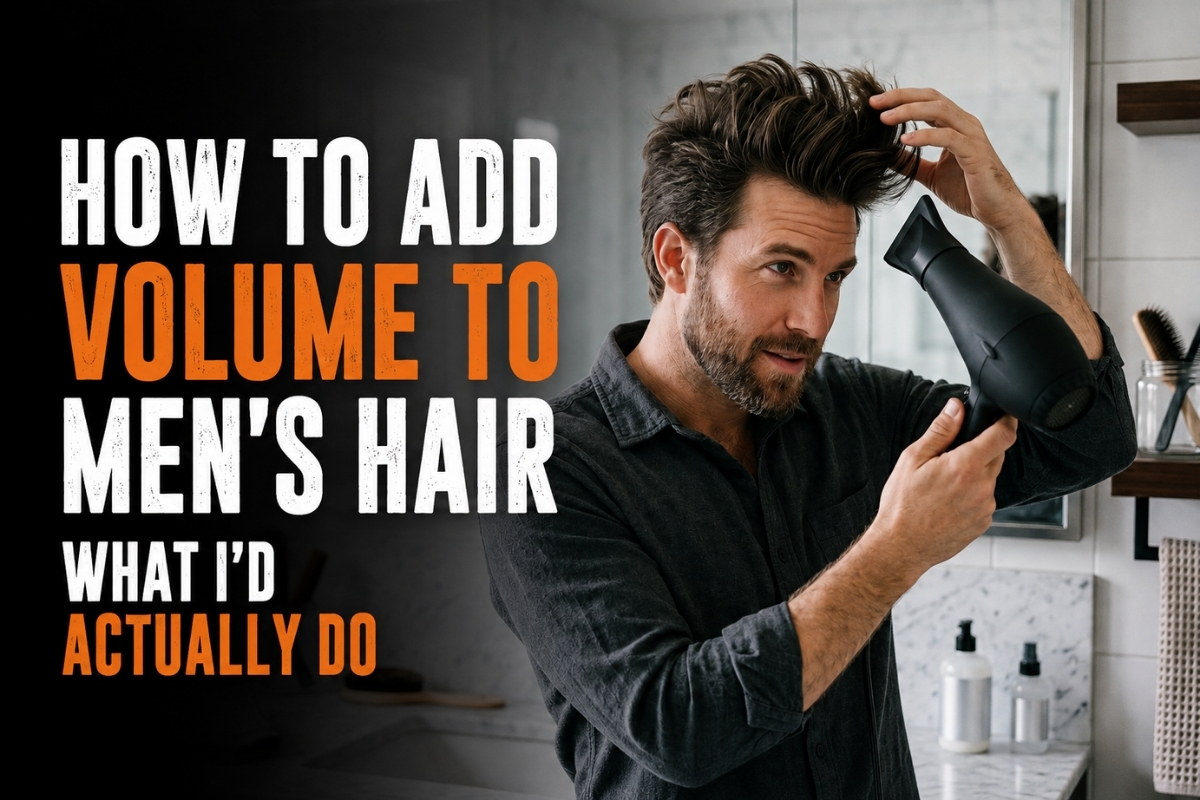
Flat hair can make a good haircut look completely underwhelming. You style the top, get some lift into it, then look again and it’s already starting to drop flat.
The obvious reaction is to add more product or try to push the hair even higher. But when that keeps happening, it’s worth asking whether you’re actually fixing the right problem.
If you want to know how to add volume to men’s hair, the first step is working out why your hair keeps falling flat in the first place. Get that wrong, and even a good styling product can end up doing very little.

In this article
What’s Actually Flattening Your Hair?
Some hair naturally takes more work to lift than others. Fine hair has a smaller diameter, so it can lack some of the body you get from thicker individual hairs. Very straight hair can look flatter for a different reason because it doesn’t have the bends that naturally give wavy or curly hair more lift and shape.

That doesn’t mean you’re stuck with flat hair. It just means you may need to work a little harder to create and keep the volume.
If your hair has some volume at first but quickly drops, look at what could be weighing it down. Oily roots, leftover styling product or a conditioner that is too rich for your hair can all make it harder to keep that lift.
If it still looks flat when it is freshly washed, I’d start looking at the haircut, the length and the way the roots are drying. Too much weight through the top, extra length or roots drying in their natural flat position can all make it harder to create volume.
How your hair dries matters more than many men realize. If the roots dry flat against the scalp, you have much less lift to work with before you even reach for a finishing product.
I’d use those clues to work out where the problem is before changing several things at once. Hair weighed down by oil or product needs a different fix from hair that is being dried flat or held back by the haircut.
How to Stop Products and Oil From Weighing Down Your Hair
When oil or leftover product is part of the problem, the washing routine is where I’d start.
Oily roots can make hairs sit closer together and flatter against the scalp. Leftover styling product can do the same, especially if you regularly use pomades, clays, creams or layer several products through the hair.
Conditioner can also make flat hair harder to style if you use more than your hair needs. You still want enough to keep the hair from feeling dry, but a rich formula or too much product can leave it feeling heavier and reduce the volume.
With longer hair, I’d keep most of the conditioner through the mid-lengths and ends rather than working it into the roots. With short hair, that’s harder to do, so using a lighter conditioner or simply less of it usually makes more sense.
The same idea applies to washing. You want to remove enough oil and buildup to stop the hair feeling heavy, but I wouldn’t go too far and strip everything out. Hair that feels dry and stripped isn’t easier to style, and removing more oil than necessary won’t guarantee better volume.
Shampoo choice depends on what you are actually trying to fix. If your normal shampoo and conditioner consistently leave the hair very soft and flat, lighter formulas may suit you better. If the problem is stubborn styling-product residue, a shampoo designed to remove buildup makes more sense than expecting a standard volumizing shampoo to solve it.
Blow-Drying Is Where I’d Create Most of the Volume
If you want noticeably more volume, this is where I’d put most of the effort.

Start with your hair still damp and use a blow dryer while lifting the roots with your fingers. Concentrate on getting the hair away from the scalp first rather than trying to perfect the finished style straight away.
I’d initially direct the airflow against the way the hair naturally falls. That helps stop the roots drying back into the same flat position they would take on their own.
Once you’ve created some lift at the roots, start guiding the hair toward the style you actually want. Simply making the hair bigger in every direction can give you volume, but not necessarily a shape that looks good.
Your fingers will be enough for many shorter cuts.
With more length on top, a brush can give you better control over individual sections. For something like a quiff, you can lift the front, hold it away from the scalp and dry it into position rather than trying to push the whole top upward at once.
You don’t need the hottest dryer setting either. Keep the dryer moving and use enough heat and airflow to shape the hair without concentrating it on the same area for too long.
By the time the hair is dry, most of the root lift and basic shape should already be there.
Use Styling Product to Keep the Volume, Not Create All of It
Products used before blow-drying and products used once the hair is dry have different jobs.

A lightweight mousse or root-lifting product can give the roots some extra support while you dry them. Sea salt spray makes more sense when you want added body, grip and texture through the top.
Both can help with volume, but that doesn’t mean you automatically need to use them together.
Once the hair is dry, I’d look at what the hairstyle is still missing. If the shape and lift are already where you want them, you may need very little else.
A hairstyle that looks good but tends to drop may only need some light hairspray to help hold the shape. A shorter textured style that still needs more control is where I’d be more inclined to use a lighter matte clay, concentrating it on the areas that actually need it.
Heavier pomades and richer creams suit different priorities. They can be useful when you want stronger control or more shine, but they wouldn’t be my first choices when keeping plenty of lift is the main goal.
Hair oil is different again. Its main value is conditioning and shine rather than styling hold, so it would be low on my list for hair that already has a tendency to fall flat.
The easiest way to judge how much styling product you need is to watch what happens to the hairstyle as you add it. Once each extra bit starts taking away the body you created, adding more is working against you.
Your Haircut Can Make Volume Easier or Harder
You can have a good styling routine and still struggle if the haircut itself is making volume harder to create.

Simply going shorter isn’t always the answer. You still need enough length to create the hairstyle you want, but where that length and weight sit through the top can make a big difference.
With thicker hair, some layering or carefully placed texture can remove unnecessary bulk and make certain sections easier to lift.
Fine hair needs more caution.
Aggressive thinning or texturizing can remove hair that was helping the top look fuller. If the hair is already fine, taking more and more weight out in the name of volume can leave it looking separated instead.
That is why I wouldn’t walk into a barber and simply ask for the hair to be “thinned out” or vaguely ask for more volume.
Explain what is actually happening when you style it. If the top keeps collapsing, tell the barber you want it to be easier to lift while keeping enough length for the hairstyle you normally go for. It also helps to explain where you want the height and which direction you usually style the top.
That gives the barber a much clearer idea of what you are trying to achieve than simply asking for “more volume.”
Fine or Thinning Hair: Don’t Chase Maximum Height
Fine hair and thinning hair need to be treated differently when deciding what good volume should look like.

Fine describes the diameter of the individual hairs. You can have very fine hair and still have plenty of it. Thinning means the density has reduced in an area, even if the individual hairs themselves are relatively thick.
With fine hair that still has good density, I’d usually create enough root lift to stop it lying flat and use texture to give the top more body. Pushing it as high as possible isn’t going to make it look fuller.
Once density starts reducing, scalp coverage becomes a bigger part of the decision.
Pulling thinning hair too far upward can separate it into obvious sections and reveal more scalp between them. Depending on where the thinning is, a more moderate amount of lift may give you better coverage and make the hairstyle look fuller overall.
The type of finish matters as well. Heavy or very wet-looking products can make hairs clump into larger groups, leaving wider gaps between them and making the scalp more noticeable.
That doesn’t mean thinning hair has to be styled flat. You can still use lift and texture, but I’d judge the result by how full the whole hairstyle looks rather than how much height you managed to create.
There is also a limit to what styling can do. It can improve the appearance of fullness, but it cannot increase the actual density of your hair.
Verdict: How I’d Add Volume to Men’s Hair
If my hair kept falling flat, I’d first work out where the volume is being lost rather than changing several things at once.
Hair that already feels heavy before styling would make me look at the washing and conditioning routine. If the roots never get much lift, I’d concentrate on the blow-dry. Hair that looks good until the finishing products go in points toward the amount or type of product instead.
That gives you a much better way to troubleshoot flat hair than assuming every problem needs stronger hold.
I’d also keep the end result in perspective, particularly with fine or thinning hair. More height only helps when it actually makes the hairstyle look fuller and improves the shape.
For me, the best result is enough lift to make the hair look fuller and give the style the shape I want, without having to overload it with product just to keep it there.