
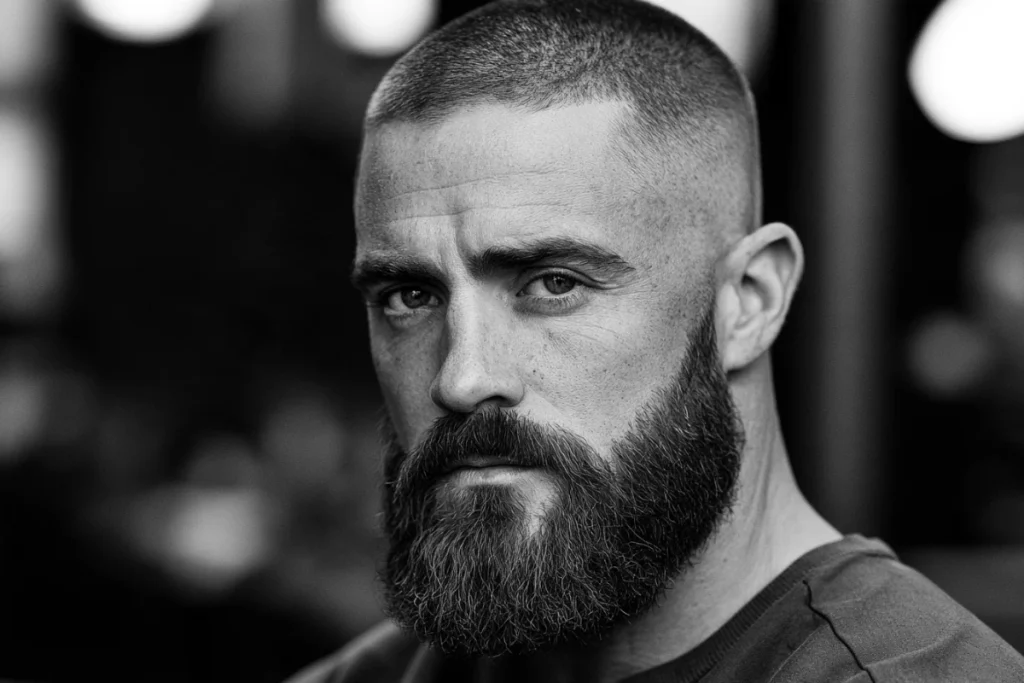
A bald fade buzz cut puts the barber’s work on full display.
With so little hair, you notice how smoothly the sides blend and how the cut looks from different angles. It’s easy to see the appeal when it’s done well. The interesting part is how much variety you get from such a short haircut, and which version you’d actually want for yourself.
In this article
What Is a Bald Fade Buzz Cut?
A bald fade buzz cut keeps the top short and blends the sides and back down to bare skin. Your barber works through progressively shorter lengths toward the bottom, creating a smooth transition between the buzzed hair and shaved area.
You’ll also hear it called a skin fade buzz cut. The names generally mean the same thing. Low, mid, and high describe how far up the sides the fade goes. Choose the top length separately.
Take a #2 buzz cut. Use that guard all over and you get the same length across your head. Keep the #2 on top and add a bald fade, and the shaved sides give it a noticeably different look.
Bald Fade Buzz Cut Styles
Low, mid, and high are your fade-height options. A line-up, waves, or a beard can work with any of them, so you can combine the ideas below.
Low Bald Fade Buzz Cut

A low bald fade keeps the shaved area close to your ears and neckline, leaving more hair higher up the sides. From the front, you still see hair around the sides of the buzz; the skin finish is concentrated lower down.
I’d choose this if you already like your buzz cut and want to sharpen up the areas around it. It’s also a good starting point when you’re trying a skin fade for the first time.
Mid Bald Fade Buzz Cut

A mid bald fade brings the shaved area farther up the sides, making the change from skin to hair more noticeable while retaining some hair around the upper sides. “Mid” isn’t an exact measurement, so agree on the height with your barber.
High Bald Fade Buzz Cut

With a high bald fade, much more of the sides is taken down to skin. The short hair left on top becomes the main feature, especially when it’s dark and dense enough to stand out against your scalp.
The contours of your head are also much more visible from the side and back. That close-shaved profile is part of the style, so judge a high fade from those angles as well as the front.
Bald Fade Buzz Cut With a Line-Up

A line-up gives the front hairline and temple corners a more defined shape. On a buzz cut, that detail gets noticed because there’s very little hair length competing with it.
A good line-up follows the hair you actually have. Where the front grows evenly, a defined line can make the whole cut look sharper. If squaring the corners would mean shaving back fuller areas to match a receding temple, I’d leave those corners more natural. Agree on the shape before your barber starts lining it up.
Bald Fade Buzz Cut With Waves

For Black men with waves, a low bald fade keeps more of the pattern visible around the sides. A higher fade leaves the waves concentrated toward the top. Choose the height with the whole pattern in mind, especially if you’ve been working on waves around your head.
With coily hair trained into waves, tell your barber you want to preserve the pattern before choosing a guard. Waves are commonly cut with the grain, following the direction the hair grows. Cutting against it can produce a different result with the same guard. The right length also depends on your curl pattern, so a number copied from a plain buzz cut isn’t enough.
Expect to keep up your usual brushing and wave-care routine.
Bald Fade Buzz Cut With a Beard

A full beard puts more of the visual weight around your chin and jaw, below the close-cut hair. Stubble gives you a closer finish across both your head and face. Either can work with a bald fade.
For a blended connection, your barber can gradually shorten the upper beard until it fades into the shaved skin, while leaving the lower beard fuller. Keeping a more defined line at the top of the sideburn creates a clearer separation instead.
If you already like your beard’s shape, ask for the sideburn blend specifically. You can keep the length, neckline, and cheek line you’re happy with. Our buzz cut and beard guide has more examples if you’re still choosing a beard style.
What Guard Length Should You Get on Top?
A few millimeters make a noticeable difference on a buzz cut. These are the common top lengths and what you can generally expect from each:
| Guard | Approximate length | How it looks |
|---|---|---|
| #1 | ⅛ inch / 3 mm | Very close, with more scalp showing through. |
| #2 | ¼ inch / 6 mm | A short buzz with more coverage than a #1. |
| #3 | ⅜ inch / 10 mm | A fuller-looking top, with more of your hair’s texture visible. |
| #4 | ½ inch / 13 mm | A longer buzz that leaves more room for curls and growth patterns to show. |
These measurements follow standard Wahl clipper guards. Guard systems, clipper settings, and cutting direction can affect the result, so treat the lengths as approximate.
Hair density changes how those lengths look. A #1 on someone with thick, dense hair can appear much fuller than the same cut on someone with finer strands or less hair. Use the table to choose a length, then judge the coverage against your own hair rather than someone else’s photo.
Between a #2 and #3, I’d start with the #3 if you’re undecided. Have a look at it before taking more off. Moving down a guard during the same cut lets you judge the difference on your own head.
A #1 is worth considering if you already know you like a very close finish. For options beyond a #4, our buzz cut lengths guide covers the longer lengths and how they compare.
Will a Bald Fade Buzz Cut Suit You?
A bald fade buzz cut is a good fit if you like your face and hairline fully visible. If you’ve got a receding hairline, the bigger question is whether you’re comfortable showing your temples. If you normally brush your hair back, you’ll already have a good idea of how that looks. But if you use a fringe to cover your temples, keeping a little more length at the front gives you more control over how much you show.
Thinning at the crown is a different decision. Shortening the fuller hair around it can make the difference less obvious, although the thinner patch may still show. Ask your barber to show you the crown before choosing the length. It’s easy to judge a haircut from the front and forget about the part you can’t see in the bathroom mirror.
Loose curls can disappear at buzz-cut lengths, while tighter coils may still show texture. If your curls are what you like most about your hair, I’d consider a bald fade with a longer top. You can have shaved sides without giving up all of that curl.
A low fade can still expose a scar close to your ear. Lowering the fade helps only when it actually leaves hair over the spot, which is why its location matters more than the name of the cut. Point out any scars or bumps you’d prefer to keep covered so your barber can judge how much length to leave there.
Tell your barber if close shaving has given you soreness or razor bumps before. Leaving a little hair at the bottom of the fade may be more comfortable than taking it fully to skin.
How to Ask Your Barber for a Bald Fade Buzz Cut
Give your barber the length you want on top, the fade height, and your preference for the front hairline. Be clear that you want the bottom of the fade taken down to skin.

For example:
“I’d like a #2 buzz cut on top with a mid bald fade on the sides and back. Take it down to skin at the bottom, blend it smoothly into the top, and keep my natural hairline.”
Change the guard number and fade height to match what you’ve chosen. If you want a line-up, say that instead of asking to keep the front natural.
Bring a side-view reference and point out what you like about it. You might want that fade with more length on top, or the same buzz without the squared hairline. Make those differences clear so your barber knows which parts to copy.
Agree on the top length before cutting starts. If your barber suggests changing it because of your density or growth pattern, ask what the result would look like.
How Often Does a Bald Fade Buzz Cut Need a Touch-Up?
For a freshly shaved finish, plan on touch-ups roughly every one to two weeks. Treat that as a starting point: your growth rate and how soon the regrowth bothers you will determine your own schedule.
As stubble comes through, it covers the exposed skin and changes the contrast with the hair above it. Your buzz might still be the length you like while the sides already look noticeably different.
You may spend almost no time styling the top, yet still want regular barber visits for the fade. A fade-only touch-up can refresh the sides while leaving the top alone. Check what’s included: tidying the neckline or refreshing a line-up is a different job from redoing the fade.
A line-up can also lose its definition as hair grows around the front and temple corners. Whether that bothers you enough for an extra appointment is your call. Between visits, keep your scalp clean and use a light moisturizer if the shaved areas feel dry.
For monthly haircuts, allow for the fade to grow out between appointments. Take a photo just after the cut and another before your next visit. Comparing them helps you decide whether you enjoy the softer version or would rather book an earlier touch-up.
Beard Beasts Verdict
For your first bald fade buzz cut, I’d choose a low fade with a #3 on top if your hair has fairly even coverage. Go with a #2 if you already prefer a closer buzz. Once you’ve had the cut for a while, you’ll have a better idea of what you’d change next time: the top length, the fade height, or how often you get it trimmed.