
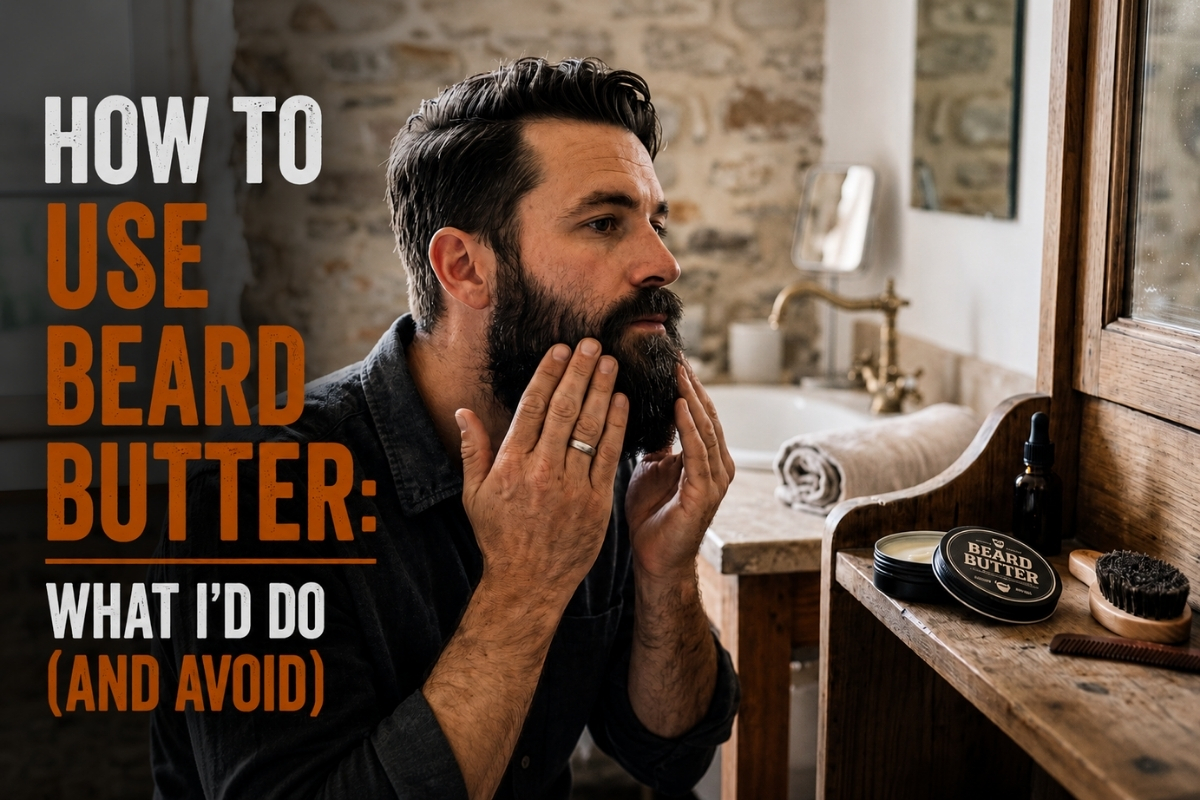
Beard butter looks simple enough. Scoop some out, work it through your beard and move on.
But it’s also one of those products that can feel great when you get it right and leave you wondering why you bothered when you don’t. I have used beard butter plenty of times, and there’s more to getting a good result from it than simply rubbing some through your beard.
If you’re trying to figure out how to use beard butter properly, there are a few things worth getting right before you decide whether it’s actually doing anything useful for your beard.

In this article
Know What Beard Butter Is Actually For
Beard butter makes the most sense when you want more conditioning from your beard, not stronger styling control.

Its main appeal is what it can do for beard hair that feels dry, coarse or rough. The oils and butters in the formula can also condition the skin underneath where the product reaches it, but that doesn’t mean every beard needs another product added to it.
Beard butters give less hold than a beard balm or beard wax, although formulas do vary. If keeping stray hairs in place or shaping the beard is the problem you’re trying to solve, choose a product made with more hold in mind rather than expecting butter to do both jobs.
Beard length doesn’t decide whether you need it either. A shorter beard that feels rough may benefit from extra conditioning, while a much longer beard that already feels good may not need butter at all.
I’d judge it by what the beard hair is actually missing. If it already feels soft and manageable with what you use, there’s no reason to add beard butter simply because it’s another option.
Start With Less Beard Butter Than You Think You Need
Beard butter is easy to overdo because a small amount can spread much farther than it first looks like it will. Start with less than you think you need, work it through properly, then judge the result before adding any more.

Beard length and density affect the amount, but the formula matters too. A softer, oilier butter can spread very differently from a thicker one, which is why I’d avoid rules telling every man to use a dime-sized, thumbnail-sized or other fixed amount.
Those measurements sound helpful because they are precise. In practice, they can be completely wrong for the beard and product in front of you.
Once the butter is distributed, pay attention to the result. If the beard feels conditioned without becoming noticeably greasy or heavy, you’re probably close to enough. Too much will weigh the hair down, make the beard look greasy, add more shine than you wanted or cause some of the hairs to clump together.
If only one area still needs more, deal with that area. There’s no reason to put another full amount through the entire beard because the ends or one rough patch need a little extra.
How I’d Apply Beard Butter
I prefer applying beard butter to a slightly damp beard rather than one that’s completely dry. I find it spreads through the hair more easily and feels less heavy once it’s worked through.

That doesn’t mean the beard should still be wet from the shower. If you’ve just washed it, towel off the excess water first. You want some dampness left in the hair, not water dripping from it.
Soften the butter between your palms until it spreads easily across your hands. From there, start underneath the beard and work it through the hair instead of wiping everything across the outside. Spread it through the lengths, then use what is left on your hands over the surface.
Some butter will naturally reach the skin as you work it through, especially with a shorter beard. There’s no need to force a thick butter down onto the skin underneath a full beard. If the skin is what needs the most attention, beard oil is the go-to.
Pay a little more attention to the parts of your beard that still feel dry or coarse instead of spreading the same amount everywhere. On a longer beard, that can mean working a little more through the ends, which often need more conditioning than the hair closer to your face.
Once the butter is worked through, use your fingers to check for areas you’ve missed. A beard comb or beard brush can help distribute it through a longer or denser beard, but get most of the product spread with your hands first rather than expecting the tool to move a lump of butter through the hair.
With a fuller beard, lift the hair and check underneath before you finish. It’s easy to get plenty of butter through the outside of the beard while missing some of the hair underneath, especially around the jaw and chin.
Don’t Automatically Layer Beard Butter Over Beard Oil
You can use beard oil and beard butter together, but that doesn’t mean you need both every time.

I look at beard oil as the more skin-focused part of the routine, while beard butter is more useful when the beard hair needs extra conditioning. There’s overlap because formulas differ and both can affect the hair and skin to some degree, so this isn’t a hard product-category rule.
The better question is whether one product is already doing enough. If beard oil has left both your skin and beard feeling good, putting butter straight over it may add little apart from more weight.
If the skin is comfortable but the beard hair still needs more conditioning, butter may be the better choice that day.
Using both makes sense when each product has a different job. Beard oil can focus more on the skin underneath, while beard butter adds extra conditioning through the beard hair. If you need both, that is when layering them becomes worthwhile.
If you use both, I’d apply the beard oil first so it can reach the skin underneath, then work the beard butter through the hair.
You don’t need to wait between the two. Just work the oil in properly before adding the butter.
The mistake is assuming beard oil and beard butter always have to be used as a pair. Decide whether you actually need both first, then worry about the order.
If you do use both, go lighter with each product. Using your normal amount of oil and then adding a full amount of butter can leave the beard feeling greasy or weighed down.
Beard Butter Stays In, but You Don’t Need It on a Fixed Schedule
Beard butter is a leave-in product. Once you’ve worked it through your beard, you don’t rinse it out. Leave it in until you next wash your beard.

There’s no set schedule for using beard butter. How often you need it depends on your beard, the product and what else you’re already using.
A longer, coarser or drier beard may need it more often, while another beard might only need it occasionally. If your beard still feels soft and conditioned from the last application, I wouldn’t add more just because it’s a new day.
The same applies at night. You can use beard butter before bed if that suits you, but nighttime doesn’t make another application necessary.
I’d judge it by how your beard feels. If the hair starts feeling dry, rough or harder to manage again, use a little more. If it already feels heavy or greasy, leave it alone.
Verdict: How to Use Beard Butter
Knowing how to use beard butter comes down to whether the product is actually improving your beard. If the hair feels softer and easier to manage without becoming greasy, heavy or clumped together, what you’re doing is working.
Damp hair is still my personal preference for applying it, though that’s not a rule. If dry works better for you, there’s nothing wrong with doing it that way.
Beard butter doesn’t need to become a mandatory step. Use it when your beard benefits from the extra conditioning, and don’t assume more butter, more products or more applications will give you a better result.