
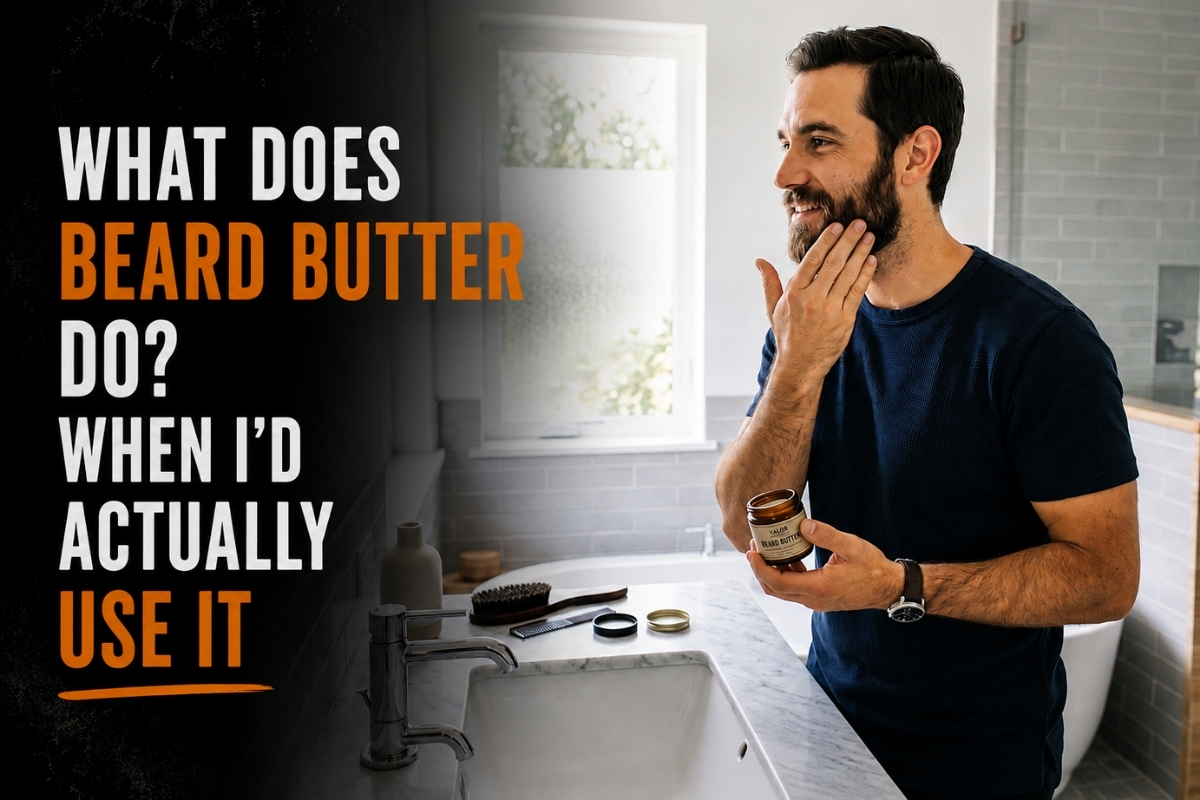
If you’ve ever searched “what does beard butter do?”, you’ve probably seen a long list of benefits that makes it sound essential for every beard.
I don’t think it is.
The real beard butter benefits depend on your beard, the formula and what you’re actually trying to improve. For the right beard, butter can make a noticeable difference. For another, it can simply become an extra product that adds very little.
That’s why I’d judge beard butter by how much softer, easier to manage and better-conditioned your beard actually feels, not by how many benefits a brand can fit on the label.

In this article
What Beard Butter Actually Does to Your Beard
Beard butter is mainly there to condition the beard hair. What I want from a good one is simple: a beard that feels softer, less rough and easier to manage.

Most beard butters combine plant butters with oils that help the hair feel smoother and reduce friction between the strands. That can make a noticeable difference when your beard feels coarse, wiry or difficult to comb through.
The effect is mainly about how the hair feels and behaves while the product is in it. Beard butter can make the strands feel more flexible, which can make brushing, combing and handling the beard easier.
What it does not do is permanently change the hair itself. If your beard is naturally coarse, curly or wiry, butter will not alter that structure. And if the ends are badly split or damaged, conditioning can make them feel better, but it cannot physically repair them.
I also would not expect beard butter to make your beard grow faster or become naturally thicker. It works on the hair you already have rather than changing the rate or density of beard growth.
You may get some light control too, especially from richer formulas or those containing wax. That can help with stray hairs, but I see it as a secondary benefit. If shaping and hold are what you really need, beard balm or beard wax makes more sense.
So for me, beard butter earns its place when it makes the beard hair itself feel better. Softer, easier to comb and more manageable is the result I am looking for, not stronger hold or promises of faster growth.
When Beard Butter Is Actually Worth Using
Beard butter makes the most sense when the beard hair itself feels dry, rough or difficult to manage. That tends to become more noticeable as the beard gets longer, because there is simply more hair that can start feeling coarse or wiry through the length.

I would look at it first when the skin underneath feels fine but the beard still feels rough. Beard oil can condition the hair to a point, but butter gives you a richer layer of conditioning when the hair itself needs more attention.
Beard butter can be especially useful after washing if your beard tends to feel rough, stiff or harder to comb once it dries. If that keeps happening, the hair may need more conditioning than beard oil alone is giving it.
Another reason I would choose butter is when I want more conditioning without much styling hold. Beard balm can soften the beard too, but if I am not trying to shape it or keep stray hairs in place, I do not necessarily need the extra wax.
That does not mean every beard needs butter. If your beard is short, already feels soft and is easy to manage, you may notice very little difference from adding another product. The same applies if beard oil is already doing enough for both the skin and the hair.
And I would not keep adding more just because the beard still feels a little rough. Too much butter can leave it heavy or greasy. The right amount should make the beard feel better and easier to manage, not like it is carrying a layer of product.

If your beard feels dry, rough or wiry and oil alone isn’t giving the hair enough conditioning, Detroit Grooming Co. Beard Butter is the one I’d look at for richer conditioning through the beard.
What About the Skin Under Your Beard?
Beard butter can help the skin underneath, but I wouldn’t make that the main reason to use it.
Many formulas contain oils and butters that can soften the skin and help with that dry, tight feeling you sometimes get underneath facial hair. How much benefit you get depends on the formula and, importantly, whether you’re actually getting the product onto the skin.

As your beard gets longer or denser, it becomes harder to get beard butter all the way down to the skin. A thicker formula can stay mostly on the beard hair unless you deliberately work a small amount through to the roots.
I’d also separate ordinary dryness from persistent irritation. Butter may make dry skin feel more comfortable, but I wouldn’t expect it to solve recurring itching, obvious redness, heavy flaking or bumps simply because you apply more of it.
If those problems continue despite sensible beard care, adding another layer of butter isn’t the answer. That’s a different situation from a beard that simply feels rough while the skin underneath feels fine.
Beard Butter vs Oil vs Balm: What I’d Choose
I’d choose between beard oil, butter and balm based on what is actually causing the problem, because they overlap but they aren’t interchangeable.

If the skin underneath your beard feels dry or uncomfortable, beard oil is still my first choice. Its main job is supporting the skin, with some conditioning benefit for the beard hair as well.
If oil is the better fit for what you’re trying to fix, Jack Black Beard Oil is the one I’d point you toward here.
Beard butter makes more sense when the beard hair itself feels rough, dry or wiry and you want more conditioning through the length. It’s richer than oil, but without the stronger shaping effect you normally get from balm.
Balm is the one I’d move toward when control starts to matter as much as conditioning. The wax in many balms gives you more help keeping stray hairs in place and holding the beard into shape.
There’s plenty of overlap between the three, so I wouldn’t treat this as a strict rule. A rich oil can soften the beard well, a butter can offer some control, and a soft balm may feel closer to butter than you expect.
But if I had to simplify the choice, I’d think of it this way: oil for the skin, butter for the beard hair, balm when you also need more control.
Verdict: What Does Beard Butter Do?
Beard butter’s main job is conditioning the beard hair itself. The biggest beard butter benefits are softer-feeling hair, less roughness and a beard that’s easier to manage without the stronger hold you’d expect from balm.
I’d look at beard butter most seriously once the beard has enough length for dryness, wiriness or roughness through the hair to become noticeable. If your beard is already short, soft and easy to manage, you may not get much from adding another product.
It can help the skin underneath too, but that’s a secondary benefit rather than the reason to reach for it. If dry skin is the bigger problem, beard oil makes more sense as the starting point.
So if you’re asking what does beard butter do, I’d sum it up like this: beard butter softens and conditions beard hair, improves manageability and can add light control depending on the formula. That’s where it’s actually worth having in the routine.