
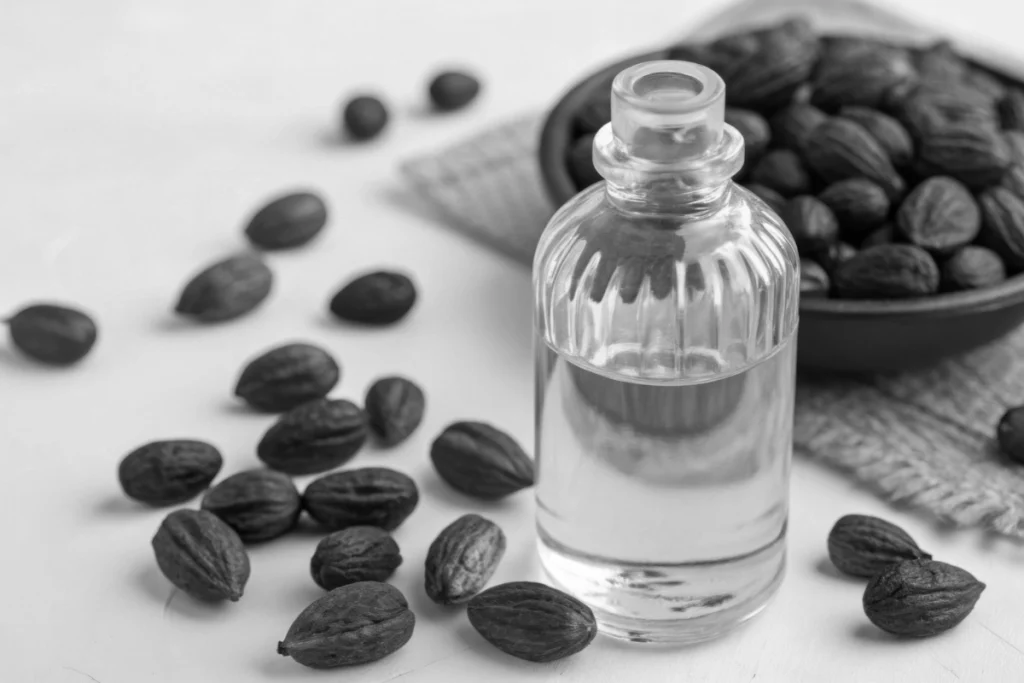
If you’ve been looking into jojoba oil for beard care, you’ve probably seen it recommended for just about everything. Rough facial hair, dry skin, even patchy cheeks. That’s a lot to promise from one ingredient.
You’ll find jojoba in plenty of beard oils, and some of the praise is deserved. But I’d want more than a fancy list of benefits before spending money on another bottle. Whether it’s worth using depends on what you’re trying to fix in the first place.
In this article
What Jojoba Oil Actually Does for Your Beard
Jojoba is technically a liquid wax rather than a typical plant oil. It’s made up largely of wax esters, which are also found in your skin’s natural oils. On beard hair, it leaves a light coating that helps reduce friction. It can also slow moisture loss from the skin underneath.
Dry Skin Under Your Beard
When you’ve got a thick beard, it’s easy to concentrate on the hair and forget about the skin underneath. That skin still needs looking after, especially if it feels dry or tight after washing.
Jojoba oil is easy to work through with your fingertips, right down to the skin. It can help slow moisture loss, which is useful if your skin often feels tight or uncomfortable after washing.
If your skin feels tight every time you wash your beard, check what you’re washing it with. A harsh beard wash or washing too frequently can make dryness worse. I’d sort that out before adding more oil, especially if the problem keeps coming back.
Rough, Wiry Beard Hair
Naturally coarse beard hair is always going to be coarse. Jojoba won’t change the thickness of the strands or straighten out your curls.

Jojoba can make coarse beard hair feel softer and easier to manage. It helps reduce friction between the hairs, so brushing or combing doesn’t feel like such a struggle, especially when your beard gets longer.
You’ll probably still have a few stubborn facial hairs sticking out, especially around the sides or underneath your chin. That’s a styling problem rather than a conditioning problem. A beard balm or wax will do more to keep those hairs under control.
How to Use Jojoba Oil on Your Beard
You really don’t need much. For a short beard, I’d start with two or three drops of jojoba oil. A longer, thicker beard may need more, but there’s no magic number. You can always add another drop if you need it.

Here’s how I’d apply it:
- Start with a clean beard. You don’t need to shampoo every time. If you’ve just washed or rinsed it, give it a quick towel dry. Slightly damp is fine.
- Rub the oil between your palms. Get some onto your fingers as well. Pouring it straight onto your beard makes it harder to spread evenly.
- Get down to the skin. Work your fingertips through the hair around your chin and jaw. If dry skin is bothering you, this is the part you don’t want to miss.
- Work through the rest of your beard. Use what’s left on your hands to coat the hair, paying a little more attention to any rough areas.
- Give it a comb or brush. This helps spread the oil through your beard and gets everything back into shape.
You can use jojoba on a completely dry beard, too. Applying it when the hair is slightly damp just makes a small amount easier to spread.
As for how often, once a day is a reasonable starting point if your beard regularly feels dry. Some men won’t need it that frequently. Pay attention to how the hair feels after applying it. If it still looks greasy hours later, cut back on the amount.
Dry Skin Is Not the Same as Beard Dandruff
Finding flakes in your beard doesn’t automatically mean you need more jojoba oil. Take a look at the skin underneath before changing your routine.
Small, dry flakes and tight-feeling skin after washing can be signs of ordinary dryness. Try using a gentler beard wash and moisturizing the skin underneath. If things improve, dryness may have been part of the problem.
If the flaking keeps coming back alongside itching or redness, you could be dealing with something other than dry skin. One possible cause is seborrheic dermatitis, a common skin condition linked to inflammation and a reaction to naturally occurring yeast. It can cause greasy or yellowish flakes around your mustache, chin and nose.
You can’t diagnose the cause from the flakes alone. Jojoba might make the area feel more comfortable, but it isn’t a treatment for seborrheic dermatitis. The irritation can carry on even when the beard itself feels fine.
Medicated products containing ketoconazole can help with this condition. Check that anything you use is suitable for your face and follow the directions. If the skin is painful, badly inflamed or isn’t improving, see a dermatologist.
Our guide on how to get rid of beard dandruff goes through the different causes and treatment options.
Is Jojoba Oil Safe for Acne-Prone or Sensitive Skin?
Jojoba gets called non-comedogenic all over the internet. That means it’s considered unlikely to clog pores, but those ratings aren’t a guarantee that your skin won’t break out.

A rating for an individual ingredient doesn’t necessarily tell you how a finished product will behave on your face.
Already getting pimples underneath your beard? I’d think twice about adding jojoba. The American Academy of Dermatology recommends beard conditioner rather than beard oil for acne-prone skin. A non-comedogenic rinse-out beard conditioner may be a better option if your skin is giving you trouble.
Pure jojoba has no added fragrance, which makes it worth considering if your skin reacts badly to scented products. But even plain jojoba can cause irritation in some people. With a blended beard oil, you’ve also got the fragrance, essential oils and other ingredients to think about.
If grooming products tend to irritate your skin, try a little jojoba on a small patch first. Give your skin time to react before rubbing it through your whole beard.
New breakouts, redness or itching after using jojoba are good reasons to stop. You can try another conditioning product rather than putting up with irritated skin.
Does Jojoba Oil Help Beard Growth?
Beard growth starts in the follicles beneath your skin, and there’s no good evidence that jojoba makes those follicles produce hair faster or fills in patchy cheeks. Rubbing more oil into your face won’t change that.
There is a different problem worth considering when you’re trying to grow a longer beard. Hair can snag and break as you comb it, particularly when it’s rough and tangled. That can make your beard seem stuck at the same length even though new growth is coming through.
Keeping the facial hair conditioned may help reduce some of that damage. If less hair breaks off, you might keep more of the length you’ve grown without your beard actually growing any faster.
I’d be skeptical of any beard growth oil that promises to wake up inactive follicles or fill gaps based on jojoba alone. Those claims need proper evidence, not just a list of conditioning ingredients on the bottle.
Pure Jojoba or a Blended Beard Oil?

You don’t need a bottle labeled “beard oil” to use jojoba on your beard. Plain, 100% jojoba oil works on its own, and you can often get more for your money by buying it without the fancy packaging.
Check the ingredient list for Simmondsia Chinensis (Jojoba) Seed Oil. That should be the only ingredient in a pure jojoba product. Choose one intended for cosmetic use, and there’s no need to dilute it before applying it to your beard. PURA D’OR Organic Jojoba Oil is one option worth looking at.
Blended beard oils have their place. Products such as Honest Amish Classic Beard Oil combine several carrier oils to condition facial hair. Some blends spread more easily, while others leave a richer coating on the hair. That’s worth considering if you find plain jojoba too light or don’t particularly like how it feels.
Pay attention to what’s actually in the bottle rather than what’s written across the front. A product advertised as containing jojoba might have several other oils listed before it. If you’re buying specifically for jojoba, that ingredient list is worth checking.
You’ll also see jojoba advertised as organic or cold-pressed. Organic is about how the ingredient was grown and produced under certain standards, while cold-pressed tells you how the oil was extracted. Neither label guarantees better results on your beard.
Price is worth comparing properly, too. Check the cost per ounce rather than assuming the smaller bottle is cheaper. A blend might still be worth paying more for if you prefer its texture or fragrance, but there’s little reason to spend extra on ingredients you don’t particularly need.
Jojoba Oil vs. Argan Oil for Beards
Argan is a traditional plant oil made mostly of triglycerides, while jojoba contains mostly wax esters. They’re different ingredients, but that doesn’t tell you which will feel better on your beard.

You might notice one spreads more easily, feels lighter or leaves less shine than the other. The amount you apply and the particular product you’re using can make just as much difference, so I wouldn’t assume argan oil will always feel heavier or jojoba will always absorb better.
The easiest way to compare them is to try each on different days, using similar small amounts and the same washing routine. Give the oil time to settle before judging the result. One might feel good when you first apply it but leave more shine than you want a few hours later. The other may feel comfortable all day.
There’s no convincing beard-specific evidence that one consistently outperforms the other. For normal-to-dry skin, either can be a great conditioning option.
Already using argan and happy with it? Keep it. If you’re not getting the results you want, trying jojoba makes sense, particularly if you prefer a simple, single-ingredient product. I’d make that decision based on how your beard and skin respond, not which oil happens to be getting more attention.