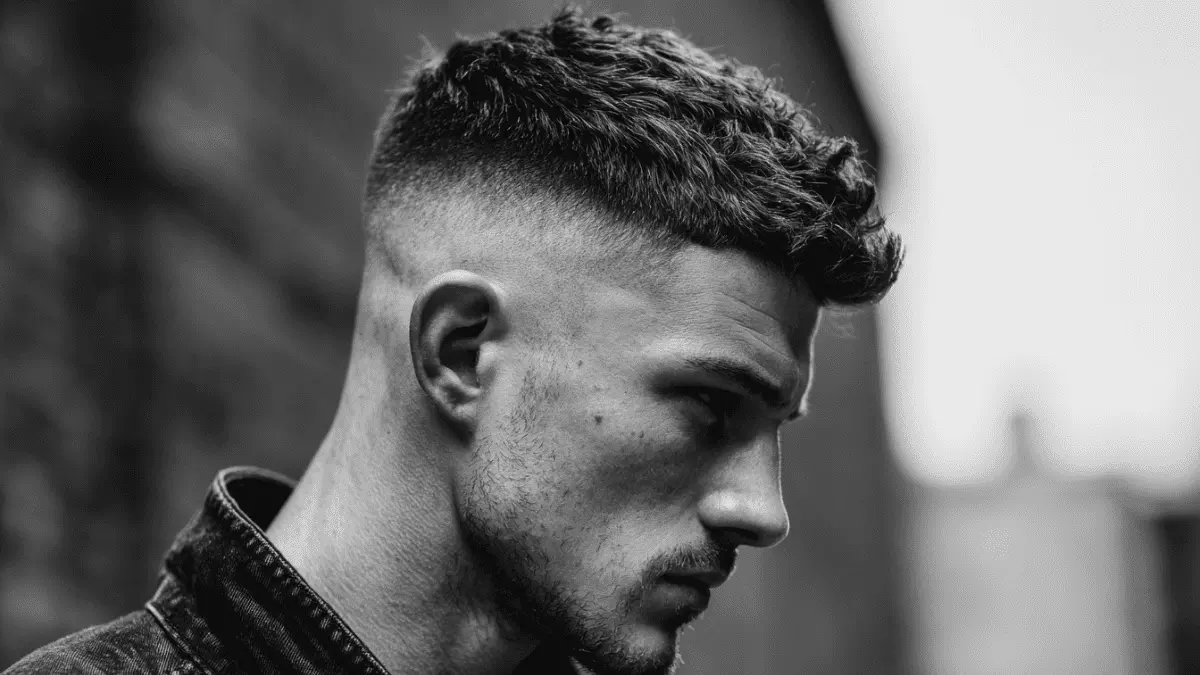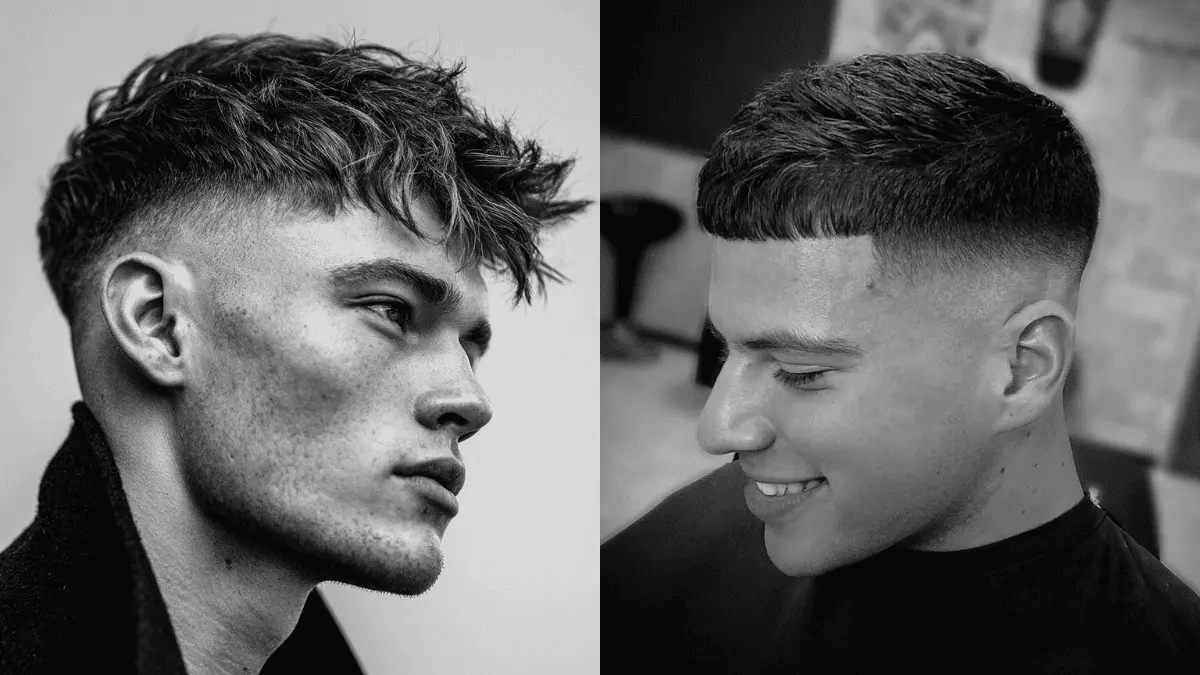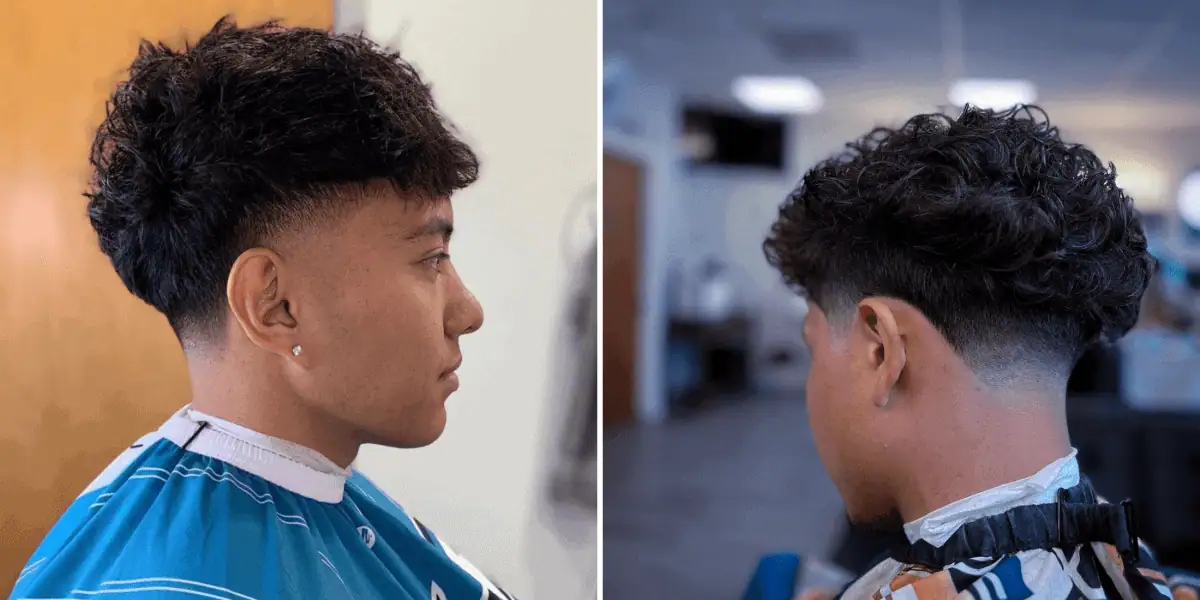
The difference between a low taper vs mid taper looks small until the cut is actually on your head.
Most men think they are choosing between two versions of the same haircut. They are not.
A low taper tidies the haircut.
A mid taper changes it.
That is why this choice matters. Pick from a photo without thinking about your own hair, face shape, and routine, and the result can feel off fast.
The Simple Difference Between A Low Taper And Mid Taper

A low taper sits lower on the head, usually just above the ear, blending into the sideburn and neckline area.
A mid taper starts higher. Usually around the temple area or mid-way up the side of the head.
That higher starting point changes the haircut quickly.
With a low taper, most of the side length stays in place. The edges look neater, but the haircut keeps a softer, more natural feel.
With a mid taper, more of the side is reduced. The haircut looks tighter from the front, the top stands out more, and the sides do not look as heavy.
I would not treat this as a tiny detail.
If the haircut already works and just needs tidying, I would usually stay low. If the sides are making the haircut look heavy, I would start thinking about a mid taper.
That decision matters more than the name of the cut.
What A Low Taper Actually Does

A low taper is the quieter option.
It tidies the sideburns, softens the neckline area, and gives the haircut a neater finish without changing too much through the sides. It does not take over the style on top.
That is its strength.
Low tapers work well on side parts, brushed-back styles, short textured tops, longer fringe styles, and medium-length cuts. The top stays as the main feature. The taper just tightens the edges.
I like a low taper when the haircut already has a good shape.
If the top already sits well and the sides are not causing problems, there is no need to push the fade higher. A good low taper can sharpen the haircut without making it feel overdone.
It also grows out better.
Because the fade starts lower, regrowth is less obvious. You can usually get more time between trims before the sides starts looking untidy.
But a low taper has limits.
If your hair is thick around the temples or the sides bulk up quickly after a trim, a low taper may not do enough. It can tidy the bottom of the haircut while leaving the real issue higher up.
You hear this a lot:
“The taper looked good for two days, then the sides went again.”
That is not always bad barbering. Sometimes the taper was just too low for the hair.
What A Mid Taper Actually Does

A mid taper is not just a low taper pushed up slightly.
It changes the haircut more.
Because it starts higher, it removes more weight from the side of the head. The sides look tighter, more direct, and more noticeable from the front and side.
This is where a mid taper earns its place.
Thick hair, curly hair, coarse hair, and hair that grows outwards around the temples often suit a mid taper better. The taper gets into the bulk earlier instead of only tidying the lower edges.
I would go mid when the sides are the problem.
If a haircut keeps looking too round or too heavy through the sides, a low taper can be too soft. It tidies the bottom, but it does not always deal with the area causing the problem.
A mid taper does more of the work.
It also helps stronger styles sit better. Textured crops, quiffs, pompadours, curly tops, and short fringe cuts often benefit from the sides being taken in higher. The top works better because the sides are not fighting it.
But a mid taper is less forgiving.
On a longer face, I would be careful with a mid taper if the top has height. It can stretch the whole look. With finer hair, I would also avoid taking the taper too high because the sides can start looking thin.
And if you are not used to seeing more skin around the temples, it can feel like a bigger change than expected.
I would not move every taper higher just because a man wants the haircut sharper.
Sometimes sharper is better.
Sometimes it just means too much has been taken away.
What I Would Look At Before Choosing Either
I would not choose between a low taper and a mid taper by looking at the fade first.
I would look at the sides.
If the sides stay close to the head, a low taper often works. You can tidy the edges without taking the fade higher than it needs to go.
If the sides puff out, I would usually recommend a mid. The issue is not just around the ear. It is higher up, around the temple area, where the hair starts adding width.
Then I would look at the face.
On longer faces, I would be careful with a mid taper, especially if the top has height. It can stretch the whole look.
On rounder faces, a mid taper can help if the sides are adding too much width.
On square faces, it often works well because it suits stronger features.
Hair type matters too.
Fine straight hair usually needs more caution. Take the taper too high and the sides can start looking thin.
Thick, curly, or coarse hair can often handle a mid taper better because those hair types build width quickly.
This is why I do not like choosing tapers from photos alone.
A low taper on fine straight hair and a low taper on thick curly hair are not the same haircut in real life.
Before choosing, I would ask one simple thing:
Do the sides need tidying, or do they need taking in?
That answer usually tells me where the taper should sit.
The Mistakes That Make Tapers Look Wrong
The first mistake is asking for a mid taper when you actually want a low taper.
It happens all the time. A man sees a sharp haircut online, asks for the same thing, then realises the fade sits higher than he expected. Suddenly the haircut feels too exposed around the sides.
The second mistake is choosing a low taper when the sides clearly need more taken out.
If your hair builds too much width around the temples, a low taper may look neat at the bottom and still feel unfinished higher up. The taper itself might be fine. It just is not doing enough for that hair type.
The third mistake is going too high on a long face.
A higher taper with too much height on top can make the face look even longer. Men with longer faces can still have a mid taper, but the top needs to be kept under control.
The fourth mistake is ignoring hair density.
Fine hair and thick hair do not respond the same way. Fine hair can look weaker if too much is taken from the sides. Thick hair can look bulky if not enough is removed.
The fifth mistake is thinking every taper needs to be dramatic.
It does not.
Sometimes the best taper is the one that quietly improves the haircut. Not every man needs a strong fade, heavy contrast, or skin showing high at the sides.
A taper should fit the haircut. It should not be added just because it is trending.
Final Verdict: Low Taper vs Mid Taper
The low taper vs mid taper decision comes down to how much work the sides need.
A low taper is the safer choice when the haircut already works. It tidies the edges, grows out better, and keeps the cut calmer.
A mid taper is the better choice when the sides are doing too much. It takes more weight from the sides, helps with bulky hair, and gives the haircut more shape from the side.
My advice is simple.
If you are unsure, start with a low taper. It gives you a neater haircut without taking the sides too high. If the haircut still feels too heavy after a week or two, go mid next time.
If you already know your sides are thick, curly, coarse, or hard to control, do not expect a low taper to fix everything.
Go mid.
Choose the taper that works with your hair, not the one that looked best on someone else.