
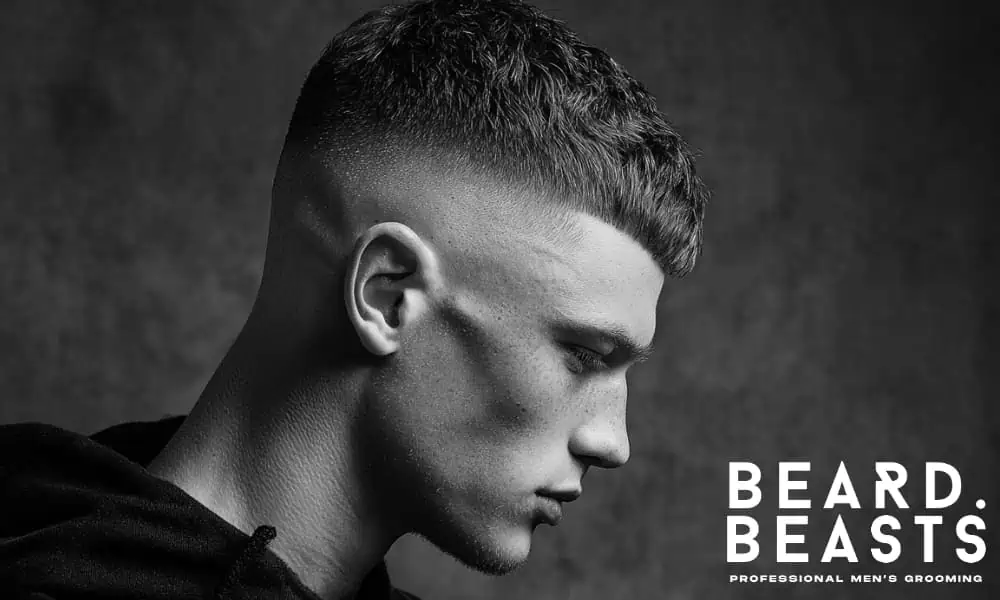
There is no haircut that exposes shortcuts faster than a skin fade textured crop. Take the sides to zero and suddenly everything matters. The fringe. The texture. The fade. The density. The upkeep.
Nothing gets hidden.
That is why this style looks so strong when it is done properly, and why it can unravel so fast when it is not.A skin fade textured crop is not the forgiving version of a crop.It is not the cut for men who hate trims, hate styling, or want something that quietly grows out on its own.
This cut is more demanding than that.
It gives you stronger contrast, a tighter outline, and more presence than most modern short haircuts. It also asks more of your barber, more of your hair, and more of you once you leave the chair. That is the trade.

In this article
Why This Cut Hits So Hard
The reason is simple. Skin changes everything.
The moment the fade drops all the way to bare skin, the top starts looking heavier by comparison. The fringe stands out more. The texture shows up harder. The whole haircut feels cleaner, tighter, and more precise, which is exactly why this version stands out within the wider textured crop haircut family.
That is the appeal.
A softer crop can carry a bit of looseness. A skin fade textured crop cannot. The sides are too exposed for that. If the top is weak, you will see it. If the fringe sits badly, you will see it. If the fade is rushed, you will definitely see it.
That is what makes this cut so good when it lands.
It tightens the face visually. It can make the jaw look firmer. It gives the whole haircut more edge. It also punishes lazy cutting and lazy upkeep much faster than a low fade or taper ever will.
Skin Fade Textured Crop Variations That Actually Matter
There are not endless meaningful versions of this cut. There are just a few changes that really affect how it looks and how easy it is to live with.
Classic skin fade textured crop

This is the baseline. Skin at the sides and back, textured top, a balanced fringe, and a straightforward forward shape.
If you want the skin fade effect without pushing the haircut too far, this is the smartest place to start. Still bold. Still sharp. Just not overdone.
Low skin fade textured crop

The skin exposure stays lower around the temples and neckline, so the contrast feels a touch more controlled.
You still get the clean perimeter and the bare base, but it usually grows out a little better than higher versions. For a lot of men, this is the more sensible real-world option.
High skin fade textured crop

This is where the cut gets more aggressive.
The fade starts higher, removes more side bulk, and makes the top look denser by comparison. If your hair is thick and the top is cut properly, it can look excellent. If not, this version exposes weakness quickly.
Curly skin fade textured crop

Curly hair changes the whole behaviour of the cut. The texture is already there, so the skin fade just pushes the contrast even harder.
When the hair is in good condition, this variation looks tight and sharp. When they are dry or frizzy, it starts looking unfinished very quickly. This is not the version to get lazy with.
Wavy skin fade textured crop

Waves usually sit in a very good middle ground. Enough movement to stop the haircut feeling too rigid, but not so much that it becomes awkward to control.
This can be one of the best-looking versions because it has shape without feeling stiff. It just needs enough length on top for the wave to do something useful.
Drop skin fade textured crop

The fade dips behind the ear instead of staying more level through the side.
That small change gives the cut more flow through the profile. Good option if you want the sharpness of a skin fade without the whole thing feeling too flat.
Skin burst fade textured crop

This wraps the fade more tightly around the ear and gives the haircut a rounder finish.
It has more personality, but it will not suit as many men. I would only go here if you genuinely want more style in the fade itself, not if you just want the cleanest version of the cut.
Skin fade textured crop with a heavy fringe

This keeps more weight at the front while stripping the sides all the way back.
It can look very strong if the front density is there. If the front is weak, it starts drawing attention to exactly the wrong area. This version only works when the hair can actually support it.
Who It Suits and Who Should Leave It Alone
This is the part most men should think about before they ever sit in the chair.
A skin fade textured crop suits men who like clean lines, regular upkeep, and strong contrast. It works best when the top still has enough density to stand against the exposed sides, and when the man wearing it actually wants a haircut with some edge to it.
It also suits men who are realistic about maintenance. If you are the kind of man who books the next trim before leaving the barber, this cut makes sense.
Who should leave it alone?
Men who hate frequent trims. Men who want soft grow-out. Men whose top density is already too weak for this much exposure. Men who want a haircut that still looks fresh three weeks later without much effort.
I would also be careful with this cut if your top is thinner than you want to admit and you are hoping the fade somehow distracts from it. Sometimes it helps. Sometimes it just makes the contrast worse.
This is not a haircut for men who want forgiveness.
The Mistake Most Men Make With It
They focus too much on the fade and not enough on the top.
That is the mistake.
A lot of men hear “skin fade” and think that is the whole haircut. It is not. The fade gets the attention, but the top decides whether the cut actually works. Weak texture, bad weight through the fringe, too much bulk, not enough movement, all of that gets exposed harder once the sides go to zero.
This is why some skin fade textured crops look excellent and others just look like a sharp fade with a problem sitting on top of it.
The second mistake is chasing maximum contrast without the density to support it. I get why men do it. They think harsher sides will automatically make the top look thicker. Sometimes they do. Sometimes they just expose how little support the top actually has.
This cut needs honesty more than confidence.
How to Ask Your Barber for a Skin Fade Textured Crop
Do not walk in and just say “textured crop.” That is how you leave with something safer than what you actually wanted.
Be clear.
Ask for a skin fade taken right down to zero on the sides and back. Say whether you want it low, mid, or high because that changes the entire attitude of the cut. Do not leave the fade height floating.
Then be just as clear about the top. You want scissors on top for texture, not a clipped-down top that just sits there. Tell the barber how you want the fringe to behave too. Short and choppy. Slightly heavier. More broken. Less blunt.
If you leave the front undefined, the cut usually suffers for it.
This is one of those haircuts where vague instructions almost always produce average results.
Skin Fade Textured Crop Maintenance: What Most Men Underestimate
The photos never show you week two.
Week one looks great. The fade is clean. The outline is tight. The contrast is exactly where it should be.
Then the regrowth starts.
By week two, the shadow is already building back in. By week three, most skin fade textured crops look overdue unless the barber cut was exceptional and the hair grows unusually clean. That is just the reality of taking the sides to skin.
If you are serious about this haircut, trims every two weeks are realistic. Stretch it further and the whole thing starts softening. The neckline matters too.Once that lower edge gets fuzzy or uneven, the haircut starts losing its shape fast.
I think this is the part most men underestimate. They like the day-one version. They do not always like what it takes to keep it there.
Sharp haircuts are only low-maintenance in photos.
A Few Straight Answers
If you are still weighing it up, these are the questions worth clearing up before you get it.
How often should you trim a skin fade textured crop?
Every two weeks if you want it looking tight. A skin fade fills in fast, and once the regrowth starts, the crispness goes with it.
Does a skin fade textured crop suit thinning hair?
Sometimes, but only if the thinning is minor and the top still has enough texture to hold up visually. Strong contrast can help in some cases, but it can also make weak density more obvious.
Can you grow a skin fade textured crop into another crop style?
Yes, but there is an awkward stage while the fade fills in and starts becoming more like a low or mid fade. It is manageable, just not especially graceful if you do nothing with it.
Is a skin fade textured crop higher maintenance than a taper fade?
Yes, by a long way. A taper keeps shadow at the base, so regrowth feels softer. A skin fade starts at bare skin, so every bit of growth shows faster.
Does a skin fade textured crop suit round faces?
It can, especially if there is some height and breakup on top. Tight sides can help slim the face visually. A flat, heavy fringe usually works against that.
The Beard Beasts Verdict
The skin fade textured crop is not subtle.
It is sharp, exposed, and demanding. That is what makes it look so good when everything is right. It is also what makes it unravel so quickly when the barbering is lazy, the top is weak, or the upkeep slips.
I think this is one of the best-looking modern crop haircuts a man can wear, but only when he actually understands what he is signing up for.
If you like regular trims, clean lines, and a haircut that looks like it means something, this is a strong choice. If you want softness, flexibility, and room to get lazy, go lower, softer, and less exposed.
There is no shame in choosing the version you can actually maintain.
That is usually the smarter cut anyway.