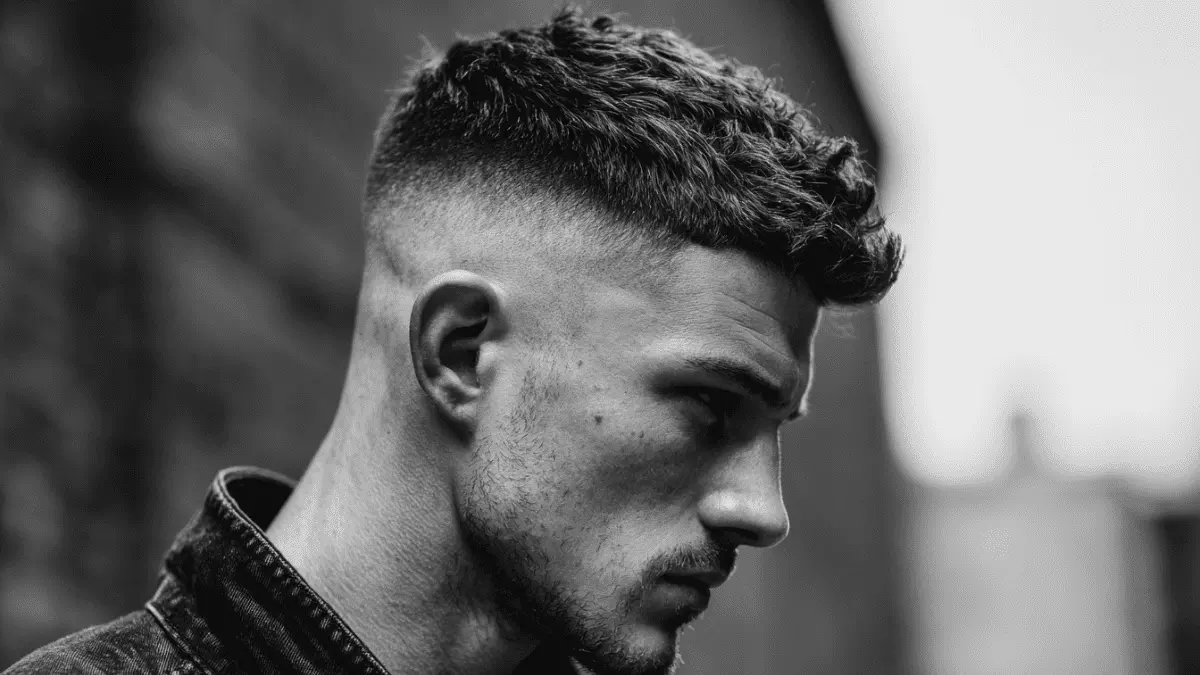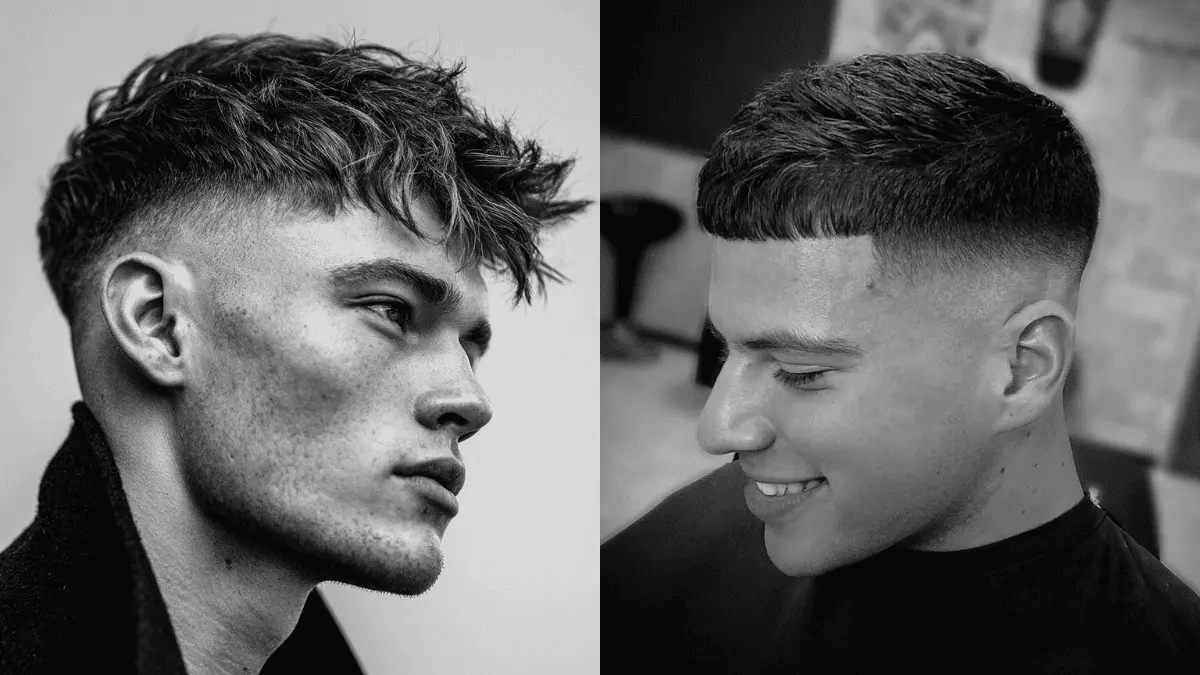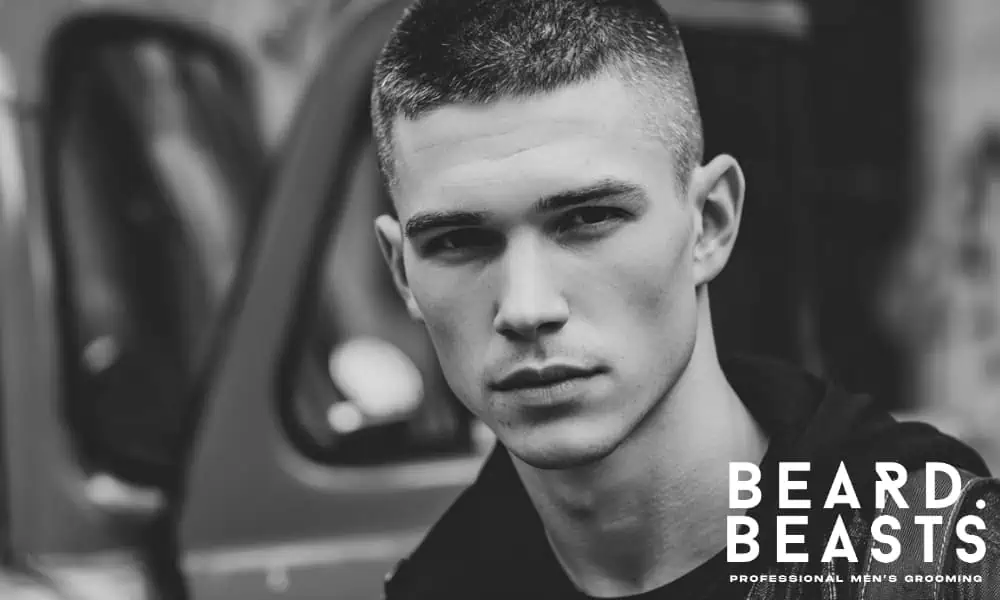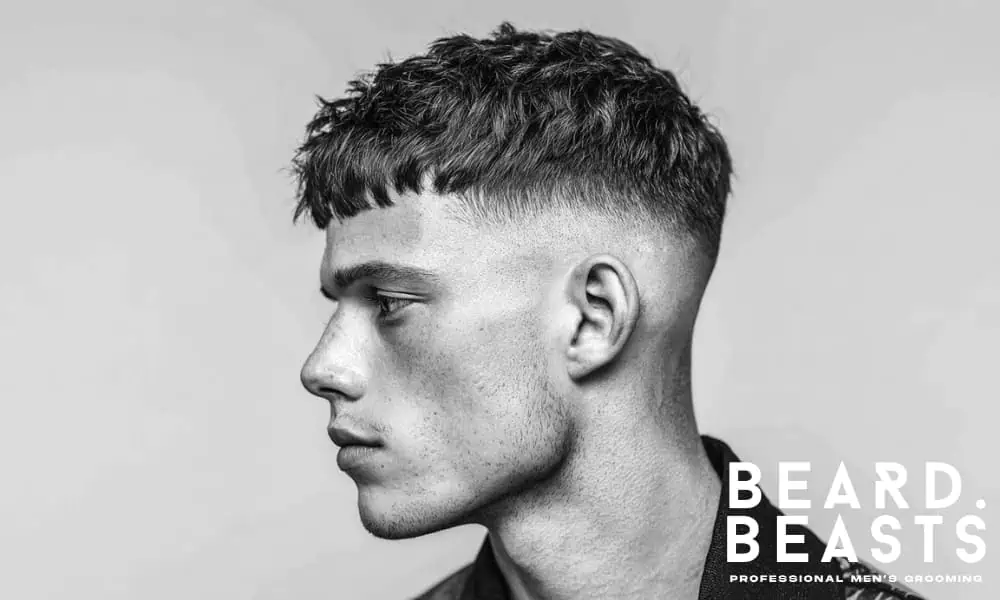
The skin fade textured fringe is built on contrast. Skin-tight sides. A fringe pushed forward with grit, breakup, and enough movement to stop it feeling stiff. It is not a quiet haircut, and it is definitely not one that disappears into the background.
That is exactly why it works.
When this cut is fresh, it looks sharp, controlled, and modern without trying too hard. Let the fade soften too much or let the fringe sit flat, though, and the whole thing starts looking like you missed the point, not just the barber.
This is not a haircut for men who want something they can ignore for a month. It is a haircut for men who like strong contrast and are willing to keep it that way.
Quick Picks – Which Skin Fade Textured Fringe Suits You?
Not all skin fades hit the same. Pick the version that works with your hair, your schedule, and how much contrast you can actually maintain.
- Best for Thick Hair → High Skin Fade Textured Fringe
- Best for Low Maintenance → Mid Skin Fade Textured Fringe
- Best for Curls → Curly Skin Fade Textured Fringe
- Best for Bold Contrast → Disconnected Skin Fade Textured Fringe
- Best for Shorter Length → Short Textured Fringe with Skin Fade
What Makes It Different
A skin fade textured fringe takes the sides all the way down to skin. No guard left behind. No soft shadow sitting there to calm things down. That means the top has to carry the whole haircut.
That is the point.
The fringe is doing the real work here. It has to bring shape, movement, and texture. If the top is weak, flat, or badly styled, the shaved sides do not save it. They expose it. Fast.
That is also why this style falls off quicker than softer fades. The contrast is so sharp on day one that even a little regrowth changes the whole feel of it. By week three, it is already a different haircut unless you stay on top of it.
If you want something forgiving, this is not it. If you want to compare it with softer or lower-contrast options, have a look at our guide to textured fringe styles.
The Best Skin Fade Textured Fringe Variations
There is not just one version of this style, and men get that wrong all the time. They ask for a skin fade textured fringe like it is one fixed thing, then act surprised when the result feels too aggressive, too flat, or just wrong for their hair.
The fade position matters. The fringe length matters. The texture matters even more than men think.
Here are the versions that are actually worth considering.
High Skin Fade Textured Fringe

This is one of the sharpest versions you can get. The fade climbs high, strips the sides quickly, and leaves the fringe fully exposed.
It works best on thick hair with real density. That is non-negotiable. If the top is not strong enough, this cut stops looking sharp and starts looking thin. I would only recommend this to men who actually want hard contrast and are willing to keep it fresh.
Messy Skin Fade Textured Fringe

This one keeps the sides brutally clean while the fringe looks looser and more broken up. The top has that rougher, more relaxed finish, but it still has to look styled that way on purpose.
A good messy version looks like texture. A bad one just looks unfinished. This works best for men with straight or slightly wavy hair who do not mind spending a few minutes styling it properly.
Mid Skin Fade Textured Fringe

This is probably the easiest version to recommend. It still gives you contrast, still looks sharp, but does not hit quite as hard as the high version.
For most men, this is the better starting point. It keeps the edge without making the haircut feel too severe. If a man wants a skin fade textured fringe but does not want it screaming every time he turns his head, this is usually the smarter call.
Low Skin Fade Textured Fringe

The low skin fade keeps the skin-tight work lower around the ears and neckline while leaving a bit more weight above it. That makes the whole style feel more controlled and less severe.
I think this works well for men easing into stronger fades for the first time. You still get the contrast, but it does not feel as ruthless as the higher versions.
Curly Skin Fade Textured Fringe

This can look excellent when the curls are dense and healthy. The shaved sides make the texture on top stand out harder and usually give the whole cut more shape.
If the curls are weak, patchy, or inconsistent, the skin fade exposes that immediately. This is one of those haircuts that either looks brilliant or completely unforgiving. There is not much middle ground.
Tapered Skin Fade Textured Fringe

This is a slightly softer take on the same idea. You still get skin lower down, but the blend feels less brutal and the whole cut sits a bit easier.
It is a good option if you want sharpness without the haircut feeling too aggressive. Still needs upkeep, though. Men hear “tapered” and start acting like that means low maintenance. It does not.
Short Textured Fringe with Skin Fade

This version keeps the fringe tighter and more compact. Less length, less fuss, less chance of it collapsing into a flat mess halfway through the day.
I like this one for men who want the skin fade look but do not want a long fringe sitting on their forehead every morning. It is still sharp, still current, just easier to control.
Skin Fade with Long Textured Fringe

This is the louder version. More fringe. More movement. More obvious contrast between the top and the shaved sides.
It needs thick hair. Proper thick hair. Fine hair will always struggle here and end up looking stringy instead of sharp. If the hair cannot support the extra length, forcing it is just a bad decision with product on top.
Cropped Textured Fringe with High Skin Fade

A cropped, jagged fringe paired with a high skin fade gives you a very hard, modern shape. It feels cleaner than the longer versions, but still has enough texture to stop it feeling blunt.
This works particularly well on oval and angular faces. On rounder faces, it needs control or the top can start working against you.
Drop Skin Fade with Textured Fringe

The drop fade curves behind the ear instead of running straight across. That sounds like a small thing. It is not. It changes the profile more than men expect.
This is a smart option if your head shape benefits from a bit more contour at the back. But the top still has to be textured properly. If the fringe is plain, the cut loses its edge very quickly.
Disconnected Skin Fade Textured Fringe

This is the hardest version of the lot. The sides are stripped right back and the break between the top and the fade is more obvious, with less softness holding it together.
When it works, it hits hard. When it does not, it looks forced. I would only point men here if they actually want bold contrast and have the hair to support it. This is not the version for half-measures.
Is It Actually Right for You?
This is where men need to stop liking the photo and start being honest.
The skin fade textured fringe is sharp, but it is not forgiving. It rewards thick hair, regular upkeep, and a man who is actually willing to stay on top of it. If the hair is too thin, the styling is lazy, or the trims get pushed too far apart, the haircut gives you nothing back.
Thick hair is the best fit. Straight hair can work well too, but it needs some body. Very fine, flat hair usually struggles because the shaved sides make the top look weaker. Curly hair can look excellent, but only if the curl pattern is dense enough to hold shape and not just sit there looking inconsistent.
Face shape matters too. Oval and angular faces usually carry this cut best. Tight sides and a forward fringe add edge without throwing the proportions off. Rounder faces need more control. Too much width or lift through the front can make the whole head look broader, which is usually not what you want.
Then there is the part men always underestimate.
Maintenance.
This is not a haircut for men who want to do nothing. The fade softens quickly. The top needs some styling most mornings. Once the fringe stops looking shaped, the whole haircut loses what made it strong in the first place.
If you do not have a few focused minutes and regular barber visits in your routine, I would not pretend this is the right fit.
How I’d Style It
This cut lives or dies on the finish. The haircut gives you the framework, but the styling is what makes it look sharp instead of half-finished.
Start with damp hair, not soaking wet hair. Blow dry the fringe forward with medium heat, using your fingers to lift slightly at the roots. That is where the shape gets built. Not with product. With heat and direction.
Then use a hair clay or paste. This cut wants grit, not shine. Start with a small amount, warm it up properly, and work it in from the roots through the ends. After that, break the fringe up with your fingers so it does not sit like one heavy block.
You want separation.
Not one flat slab across the forehead.
Then stop.
That is where a lot of men ruin it. They keep touching it. Keep adding product. Keep trying to improve it after it already looked right. Most of the time, they just make it heavier. Shape it, leave it alone, and let the cut do its job.
How Often It Needs Trimming
More often than most men want to hear.
A skin fade textured fringe depends on fresh contrast. Once the sides start filling back in, the edge softens and the whole haircut loses its impact. The top can usually stretch a little longer. The fade cannot.
Every two weeks is about right for most men. If your hair grows fast, you may want it tightened even sooner. Leave it for a month and you are already drifting into a softer, less convincing version of the same cut.
That is the reality of this style. Strong haircut. Short shelf life.
A Few Straight Answers
If you are still weighing it up, these are the points worth clearing up first.
Is it high maintenance?
Yes. This cut needs regular trims and a bit of styling. Let the fade go soft or let the top sit flat and the whole thing drops off quickly.
Does it work on thin hair?
Sometimes, but only if there is enough density on top to create texture. If the hair is too fine or sparse, the shaved sides can make that more obvious rather than less.
How long does it take to grow out?
The fade starts softening within two to three weeks. Growing it into something completely different takes longer, and there will usually be a few awkward stages in between.
What do I tell my barber?
Ask for a skin fade on the sides and back, taken right down, with a textured fringe left forward on top. Be clear that you want separation and movement, not a flat blunt line.
Is it professional?
That depends on the version. A low or mid skin fade with controlled texture can look sharp and put together. A more disconnected or aggressive version leans bolder and will not suit every workplace.
The Beard Beasts Verdict
The skin fade textured fringe is not built for low effort.
It is sharp, high contrast, and completely unforgiving once it starts growing out. When it is done well, though, it hits hard. Clean sides. Strong texture. A fringe that actually looks like it belongs there instead of just sitting on the forehead.
That is the appeal.
But this cut rewards density and discipline. If the hair is thin, patchy, or the trims keep getting delayed, it shows fast. This is not the haircut to choose if you want something you can forget about.
So my take is simple.
If you have the hair for it and you are willing to maintain it, the skin fade textured fringe is one of the sharpest modern haircuts you can get. If you do not, choose something softer and stop pretending this one will somehow carry itself.