
Beard rules are funny because nobody actually hands you a list when you start growing one. You normally learn them by making the same mistakes every other bearded guy has already made.
Some are genuinely useful, while others exist because sooner or later you will probably use too much product, trim a hair you should have left alone, or tell a barber to “just tidy it up” and immediately regret how vague that sounded.
Most of these mistakes are harmless once. Keep repeating them, though, and you can end up with a beard that is drier, shorter, greasier, or just more annoying than it was before.
So these are the beard rules I’d actually follow. Nothing complicated, just the stuff that can save you from unnecessary grooming mistakes and the occasional bathroom disaster.

In this article
Rule #1: Stop Touching Your Beard All Day
Once your beard gets a bit longer, you’ll probably start touching it without even realizing. Thinking? Stroke the beard. Watching TV? Pull the chin hair. Standing in front of the fridge wondering why you opened it? Apparently that needs beard stroking too.

Touching it occasionally is fine. Constantly tugging, twisting, and picking at the same hairs is where it gets stupid. You can pull hairs out, rough them up, and spend half the day fiddling with an area that looked perfectly normal before you started.
The difficult part is that you often do it without noticing. Reading, driving, sitting at the computer, or watching television can all turn into an extended beard inspection conducted entirely with your fingers.
If you keep catching yourself pulling at the same section, leave it alone for a while. Your beard does not need checking every five minutes to make sure it is still there.
Rule #2: Wash the Beard, but Don’t Attack It
Your beard needs washing. It does not need to be scrubbed like you are trying to get barbecue sauce out of a carpet.
Work the beard wash through the hair and down to the skin underneath, then rinse it properly. Scrubbing harder does not unlock some secret second level of cleanliness.
Pay attention if the beard regularly feels rough, stiff, or worse after you wash it. The wash may be too harsh for you, you may be washing more often than your beard needs, or you may simply be far too enthusiastic about the whole process.
Hot water can also make the beard feel rougher, so comfortably warm water is enough.
You want the beard clean, not boiled.
Beard Wash Pick
Jack Black Beard Wash

If your current wash regularly leaves your beard feeling rough or stripped, Jack Black Beard Wash is the one I’d look at before trying to fix the problem by piling on more product afterward.
Rule #3: Beard Oil Goes on the Skin Too
Beard oil is not meant to sit on the outside of your beard looking shiny while the skin underneath wonders what it did wrong.
Work it through the beard and down toward the skin, especially when that skin feels dry or uncomfortable. The beard hair will pick some up along the way, but caring for the skin underneath is one of the main reasons I recommend beard oil.
Work the oil through the beard and give it a little time to settle before adding more.
And if your skin feels comfortable and your beard does not seem to need extra oil, you do not have to use it simply because beard oil exists.
Rule #4: More Product Does Not Mean a Better Beard
Owning beard oil, butter, balm, conditioner, and three different brushes does not mean they all need to be involved every morning.
Use products because your beard actually needs what they do. Oil is mainly for the skin underneath, conditioner helps soften the beard hair after washing, butter adds leave-in conditioning, and balm makes more sense when you want some hold and control.
This is how it usually happens. The beard feels a little dry, so on goes the oil. Then butter because apparently we are committed now. Then balm because one hair near the jaw has decided not to cooperate.
Ten minutes later, you have built a seven-layer grooming lasagna and the original hair is still sticking out.
Pick the product that matches the problem. Your beard does not get bonus points for using everything in the cupboard.
Which Product Makes Sense?
Conditioner, Butter, or Balm?
If Your Beard Hair Feels Dry
Suavecito Beard Conditioner
If the beard hair itself feels dry or rough after washing, I’d start with conditioner rather than piling on more styling product.
If It Gets Dry Between Washes
Detroit Grooming Co. Beard Butter
If your beard needs more conditioning between washes but you are not looking for much hold, beard butter makes more sense.
If It Feels Fine but Still Sticks Out
18.21 Man Made Beard Balm
If your beard already feels good but needs more control over flyaways and shape, I’d choose balm rather than adding more conditioning.
As an Amazon Associate, Beard Beasts may earn from qualifying purchases.
Rule #5: Don’t Trim Every Hair That Sticks Out
Not every hair sitting outside the rest of your beard is a trimming emergency.
Curly and coarse beard hairs can bend outward before curling back into the beard, and the way individual hairs sit can change after washing, sleeping, brushing, or a humid day. Seeing one hair poking out once does not tell you much.
Brush or comb the beard into place first and give the hairs a chance to settle. Then step back from the mirror before deciding anything needs trimming. If you are close enough to inspect individual hairs like evidence at a crime scene, you are probably looking too hard.
If the same hair keeps sticking out after you have brushed and shaped the beard, then it may be worth trimming. If it behaves once the beard is groomed, leave it alone. It has already proved it can cooperate.
The overall beard is what people see. Nobody sensible is grading it one hair at a time.
Rule #6: Never Make a Big Beard Decision on a Bad Beard Day
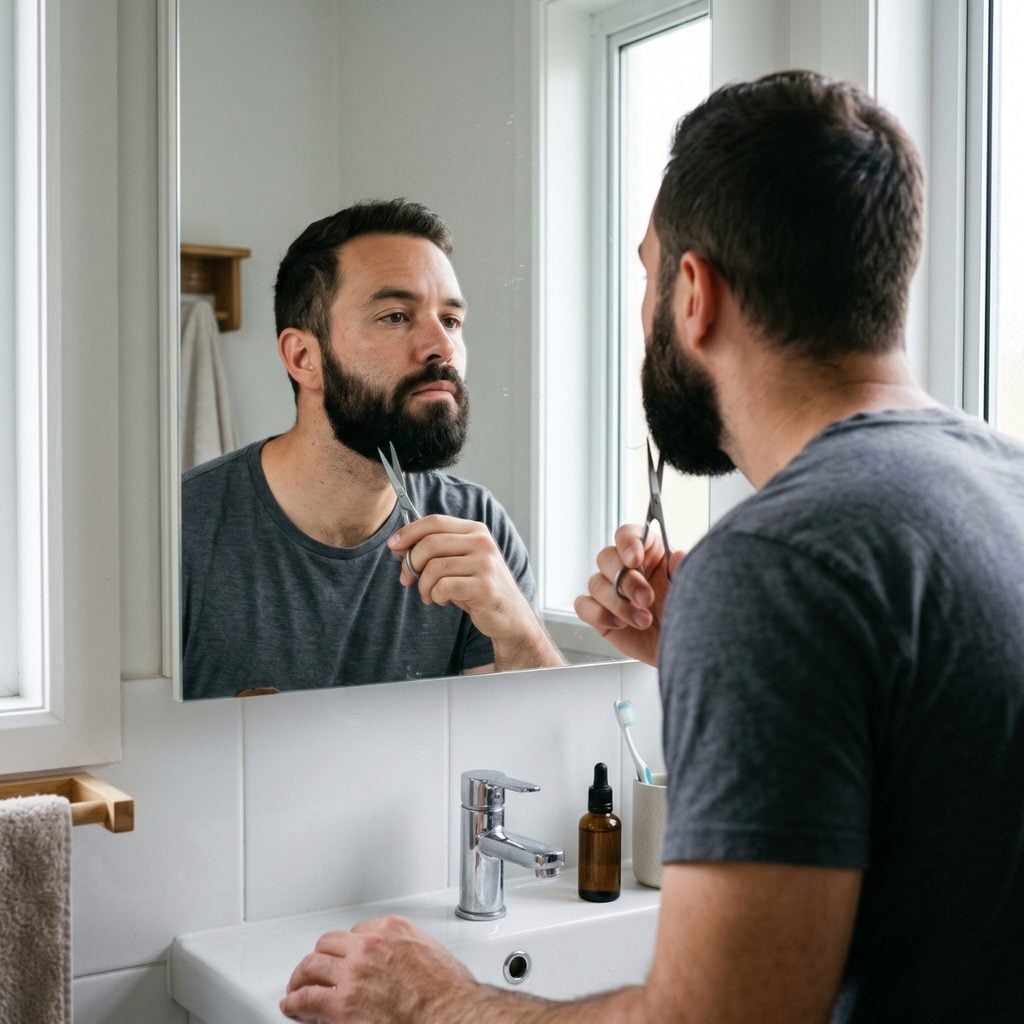
Every beard has bad days. You wake up, one side looks flatter than the other, the chin hair has developed its own plan, and suddenly taking a large chunk of it off feels completely reasonable.
That is usually the worst time to make the decision.
Brush it, wash it if it needs it, and give the beard some time to settle. Something that looks terrible when you first get up can look completely normal once you have gone through your usual routine.
The dangerous part is standing in front of the mirror while annoyed. “I’ll just take a little off” has caused a lot of work for the other side of the beard.
If you genuinely want it shorter, make it shorter. Just make that decision because you want a shorter beard, not because Tuesday morning offended you.
Rule #7: Know What You Want Before the Barber Starts Cutting
“Just tidy it up a bit” sounds harmless until the cape comes off and months of growth are lying on the floor.
Be specific before the clippers start. Tell the barber if you want to keep the length on the chin, reduce some bulk at the sides, leave the cheek line alone, or change the neckline. The parts you care about are much easier to protect when you actually mention them.
And when someone says, “I’m just going to take a little weight out of here,” make sure you both have roughly the same idea of what “a little” means. One man’s small cleanup is another man’s unexpected short beard.
There is nothing awkward about showing a reference photo or explaining what you do not want cut. Over-explaining before the trim is much better than waiting for the missing hair to grow back afterward.
Once the hair is on the floor, the consultation is over.

Rule #8: Don’t Put the Neckline Under Your Chin
A beard neckline should sit on your neck, not halfway up under your jaw like the beard is being evicted from the bottom of your face.
Take it too high and the beard can look smaller from the side, particularly once you start growing more length. You end up with plenty of hair on the chin and very little underneath supporting the shape.
I would keep the neckline low enough that the beard still has some fullness below the jaw, then remove the obvious neck growth beneath it. Where that line looks best depends on your beard and face, so I would not trust one exact measurement like every beard was built from the same blueprint.
If the neckline has somehow crept all the way onto the underside of your jaw, stop. Your beard needs a neckline, not a chinstrap.

Rule #9: Work With Your Natural Beard Texture
If your beard is curly, coarse, wavy, or generally determined to do its own thing, you are not going to bully it into becoming somebody else’s beard.
You can brush it, use balm, add some heat when it helps, and improve the overall shape. Trying to make every individual hair lie completely flat is a different job, and usually an unnecessary one.
Comparing your beard with somebody whose facial hair grows completely differently does not help much either. His might drop almost straight down while yours starts curling sideways before you have finished getting dressed.
Your beard is not doing anything wrong because it has texture.
Get the shape where you want it, deal with the hairs that genuinely cause problems, and allow the rest of the beard to look like the beard you actually grow.
Rule #10: If You Use Heat, Don’t Try to Cook the Beard Straight
Heat can make a curly, coarse, or puffy beard much easier to shape. That does not mean turning the tool up to maximum and trying to scare the beard straight.
With a blow dryer, keep it moving rather than blasting the same area for too long. Brush or comb as you dry and use the heat to help guide the beard into shape.
A heated beard brush can be useful on longer beards as well. Follow the instructions for the specific tool, including whether your beard needs to be completely dry before you use it.
Once the overall shape is where you want it, stop rather than keep heating the hair just because a little curl remains.
Heated Beard Brush Pick
Aberlite EDC Premium Beard Straightener Brush

If a normal brush is not giving a longer, curly, or puffy beard enough control, the Aberlite EDC is the heated beard brush I’d look at next. I’d use it to improve the overall shape rather than trying to straighten every bit of natural texture.
Rule #11: Give the Beard Time Before Deciding You Can’t Grow One
Very early growth is not enough evidence to declare your beard a failure.
A new beard can look uneven because some areas grow thicker than others, while nearby hairs may not be long enough yet to cover the thinner spots. More length can make those areas look fuller, but if a patch barely grows hair, waiting longer is not going to make new follicles suddenly clock in for work.
The awkward stage is where a lot of guys lose patience. One cheek looks weaker, the mustache has not quite joined the rest, and the razor starts looking like the sensible option.
Give the beard enough time to show you what you are actually working with before deciding whether you like it.
Extra length may give you a fuller-looking shape. It may also confirm that a particular area simply grows more sparsely. Either answer is more useful than deciding the beard cannot work before it has had much chance to grow.
Do not hold a funeral for the beard while it is still getting started.
Rule #12: Keep Food Out of It
A bigger beard changes the way you eat certain things. Nobody tells you this when you start growing one, but eventually a burger becomes less of a meal and more of a coordination exercise.
Sauce, crumbs, melted cheese, and anything involving a runny egg can end up somewhere in the beard if you are not paying attention.
You do not need to eat like you are handling explosives. Slow down a little with messy food, use a napkin, and check around the mustache when you are finished. A longer mustache can also be moved slightly away from the mouth before you start eating.
And if somebody tells you there is food in your beard, thank them. They have just done you a favor that everyone else at the table apparently decided not to.

The Beard Rules That Matter Most
Of all the beard rules in this list, the one I’d remember is not to keep fixing something that no longer needs fixing.
Your beard feels a little rough, so you add another product. Something looks uneven, so you keep messing with it. Before long, you are still standing in the bathroom and somehow your beard has more problems than when you started.
Good beard care should solve problems you actually have. It should not leave you constantly looking for something else to wash, condition, straighten, trim, or cover in product.
Your beard has its own texture, density, growth pattern, and collection of hairs that occasionally refuse to cooperate. Some of that needs attention. Some of it is simply what your beard looks like.
And when the beard feels good, the skin underneath is comfortable, and you are happy with the shape, there is one part of beard grooming that takes surprisingly long to learn.
Leave it alone.