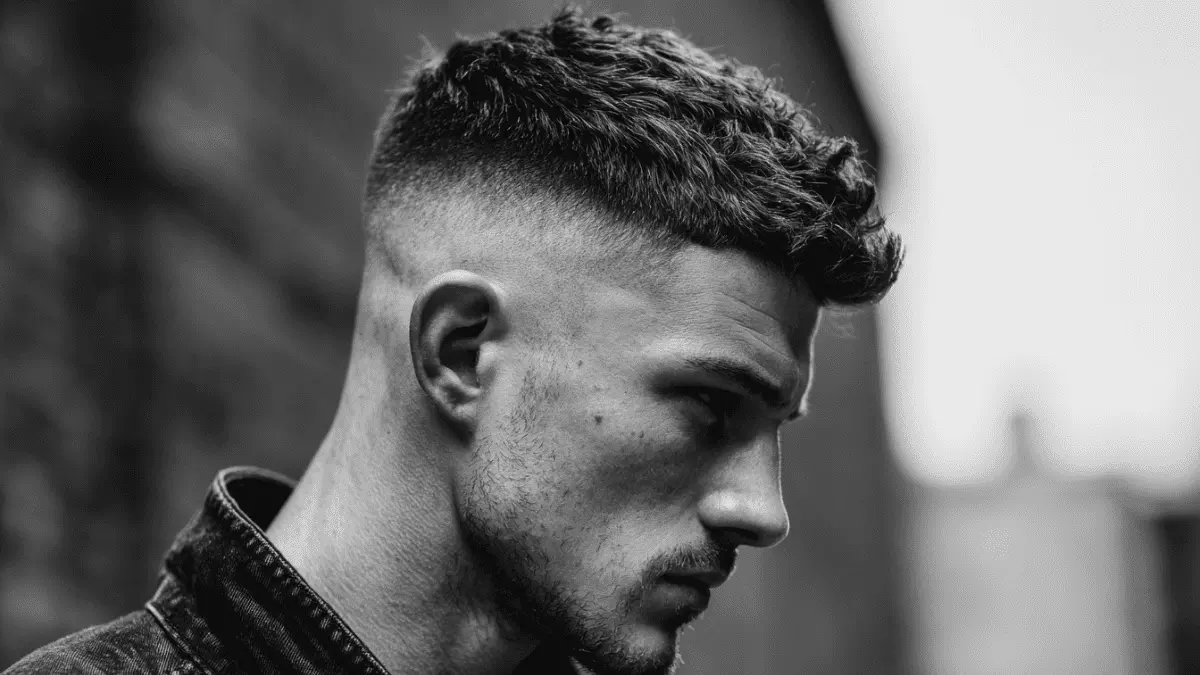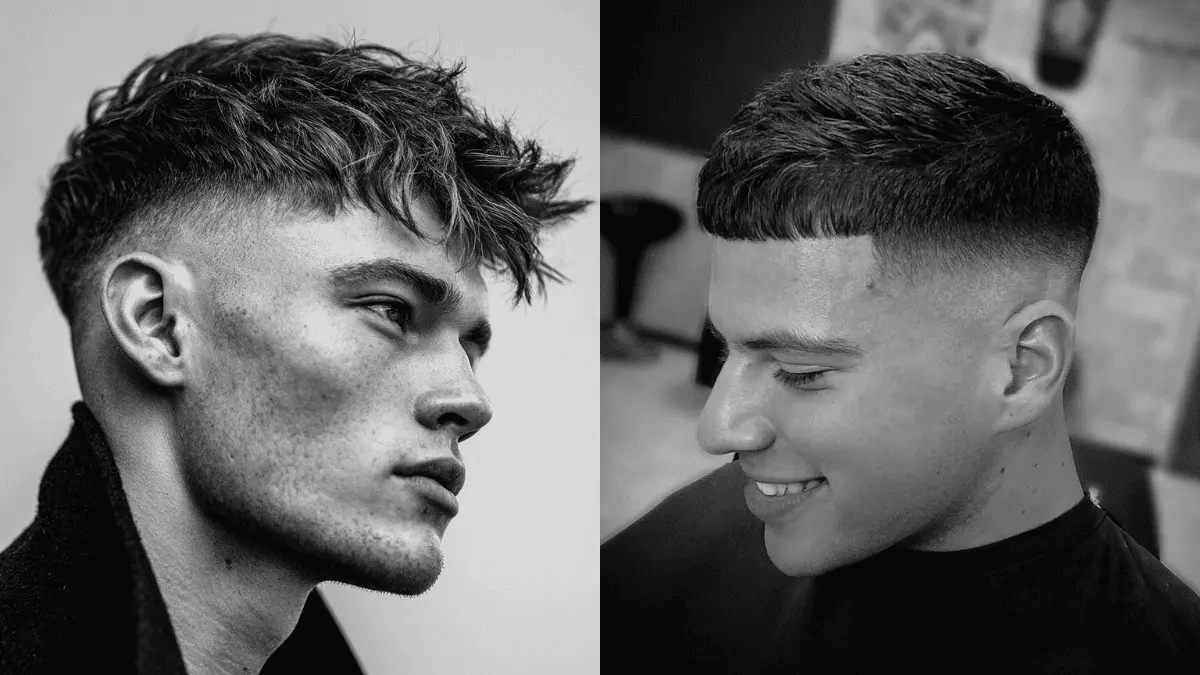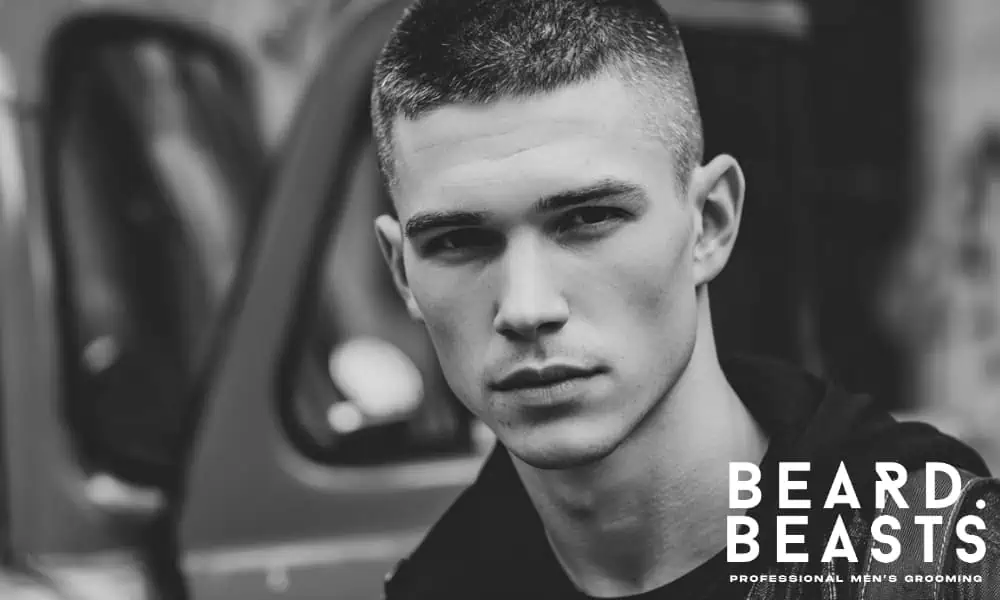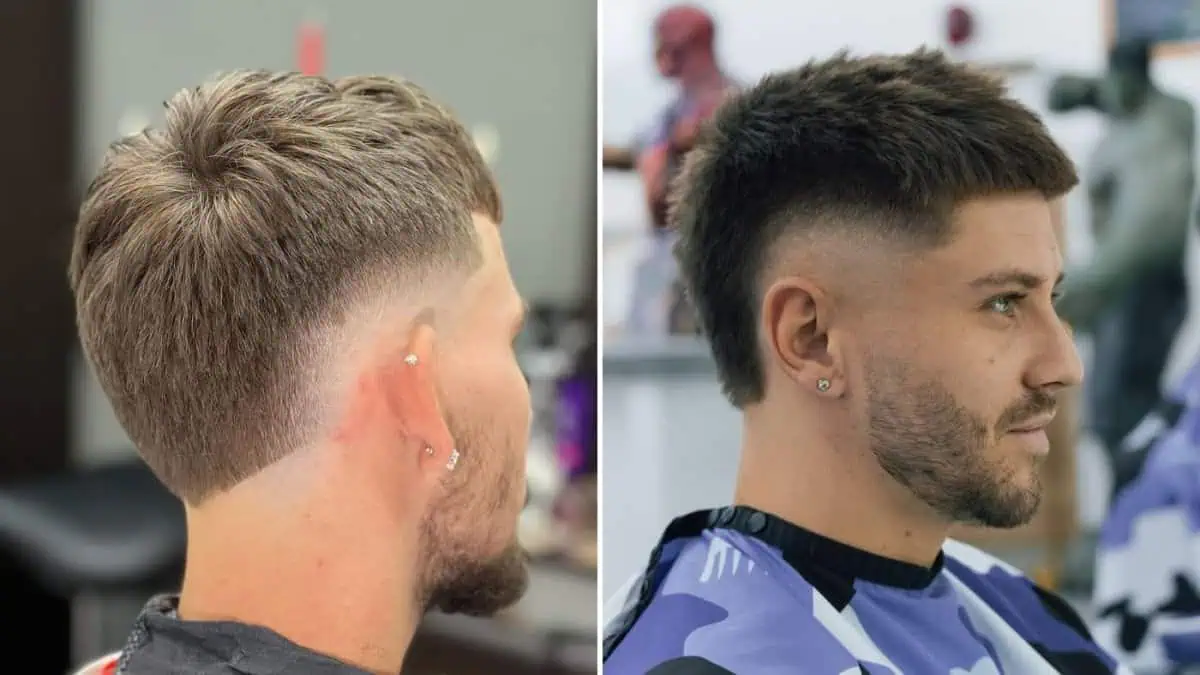
A bald burst fade is not the fade you choose when you want to blend in.
It drops down to skin, wraps around the ear, and creates a hard contrast between the sides and whatever you keep on top. When the shape is right, it looks sharp. When it is off, you notice it straight away.
That is the thing with this fade. It does not give the barber much room to hide rushed work. The skin section makes harsh lines, patchy blending, and awkward placement easy to spot.
I like this cut when the top has enough weight to balance the sides. Curls, texture, a buzzed top, a mullet, or a shaped beard can all work with it. What does not work is treating the burst like a normal fade and hoping the shape sorts itself out.
A bald burst fade should look tight around the ear, not carved out like an afterthought.
Bald Burst Fade Haircuts That Actually Work
Not every bald burst fade gives the same result.
Some are easier to pull off. Some need thicker hair. Some need enough length or texture on top to balance the sides. And some only work if the barber really understands how to place the fade.
Here are the versions that make the most sense.
Safer Versions
These are the best starting points if you want the bald burst fade without making the haircut too aggressive.
Classic Bald Burst Fade

The classic bald burst fade keeps the idea simple: skin around the ear, a rounded fade shape, and enough hair on top to stop the cut looking bare.
This is usually the safest version because it does not push the fade too high or make the top fight too hard for attention. You still get the burst effect, but it feels more balanced than the louder versions.
It works best with short to medium hair on top. Too much length and the sides can look detached. Too little length and the cut can start looking like a tight buzz with a bald patch shaped around the ear.
If you are trying this fade for the first time, this is the version I would trust before going higher, sharper, or adding designs.
Low Bald Burst Fade

A low bald burst fade keeps the skin section lower, which makes the cut easier to live with.
You still get the curved fade around the ear, but the contrast does not climb as far up the head. That helps if you want the burst shape without making the whole haircut too loud.
This version works well with thick, wavy, or slightly textured hair on top. It is also a good choice if you want the fade to sharpen the haircut without making the sides the main event.
The placement still matters. If the burst sits too low and the blend is weak, it can look like a normal low fade that got confused near the ear.
Bald Buzz Burst Fade

The bald buzz burst fade strips the haircut back, but it still has more character than a plain buzz cut.
The top stays short, usually with a buzzed length, while the sides drop to skin around the ear. There is not much styling involved, so the shape of the fade has to carry the look.
This version is good if you want a short haircut with more bite from the side. The burst stops the buzz looking too flat, especially if your head shape can handle short hair.
I would not take the top too close unless you want a very severe finish. A little length on top helps separate the buzz from the bald fade, even if the difference is subtle.
Bolder Versions
These are not subtle cuts. They work when the placement is right and the man wearing them actually wants the fade to stand out.
High Bald Burst Fade

A high bald burst fade pushes the burst higher up the head.
That gives the cut more impact, but it also makes the haircut easier to mess up. If the barber takes it too high, the shape can start drifting into mohawk territory even when that was not the plan.
This version works best when the top has enough length, curl, or texture to hold its own. On very fine hair, the contrast can be too strong because the top may not have enough density.
I would be careful with this one on rounder head shapes. A high burst can look sharp, but if it opens the sides too much, the head can look wider than it should.
A softer high burst done properly is better than an aggressive one that climbs too far.
Bald Burst Fade With Design

A bald burst fade with a design is a statement cut. There is no hiding that.
The design works best when it follows the shape of the fade. A simple line, curve, or small detail usually looks stronger than packing too much into the side of the head.
The base fade still has to be good. A design will not rescue a weak blend. It will just pull more attention toward the problem.
This version also grows out quickly. If you choose a design, accept that it needs regular touch-ups or it loses its edge fast.
Bald Burst Fade With Mullet

The bald burst fade with a mullet can look excellent, but the top, sides, and back have to connect.
The burst tightens the sides while the back keeps length. That contrast is the whole point. Done well, the cut has attitude. Done badly, it looks like two different haircuts stuck together.
Thicker hair usually handles this version best. You need enough density through the back for the mullet to look like part of the haircut, not just extra hair left behind.
I would not push the burst too high here unless you want the cut to lean into a mohawk-mullet feel. A lower burst often gives the back more room to make sense.
Texture And Beard Versions
These versions work because the fade is not carrying the haircut alone. The top, curls, or beard help balance the skin section.
Textured Bald Burst Fade

A textured bald burst fade works when the top has enough separation to stand up against the skin fade.
The sides stay tight while the top looks rougher and less fixed. That contrast can work very well on thick or slightly wavy hair.
This is not the cut for heavy shine or stiff product. You want matte texture, light separation, and enough natural movement so the top does not look like a hard block above a bald fade.
If the top is too flat, the fade takes over. If the top is too messy, the haircut loses balance. The best version sits in the middle.
Bald Burst Fade With Curly Hair

Curly hair can suit a bald burst fade really well because the top already has volume.
The tight sides make the curls look bigger, and the burst gives the haircut a stronger shape from the side. On the right curl pattern, this can be one of the best versions of the cut.
The barber still has to respect the curls. Take too much off the top and the contrast disappears. Leave too much bulk and the haircut can look top-heavy.
A light curl cream or mousse can help, but do not drown the curls. The fade is already doing plenty. The top should look shaped, not overloaded.
Bald Burst Fade With Beard

A bald burst fade with a beard can look strong because the beard gives the haircut something to land into.
The fade wraps around the ear, then the beard adds weight through the jaw. That can work especially well if the top is short, curly, or textured.
The sideburn area matters here. If the fade stops awkwardly before the beard starts, the side of the face can look broken up. A good barber will taper that connection so the haircut and beard feel like they belong together.
This version suits men who already keep their beard shaped. If the fade is tight and the beard is wild, the two start fighting each other.
Why The Shape Around The Ear Matters
The burst shape is what separates this cut from a normal fade.
A regular fade usually moves up the sides in a more standard way. A burst fade wraps around the ear and leaves more length toward the back. When it drops to skin, that shape becomes much more obvious.
This is where the haircut either works or fails.
If the placement goes too high, the cut can start looking like a mohawk by accident. If it stays too low, the burst effect gets lost. If the blend around the ear is patchy, the skin makes every mistake show.
The top matters too. A bald burst fade needs something above it to balance the bare sides. That can be curls, a textured crop, a buzzed top, a mullet, or a beard. If the top is too weak, flat, or thin, the fade can look bigger than the haircut itself.
In the chair, I would be watching the area around the ear before anything else. The shape has to suit the head, not just follow a trend.
Who Should Be Careful With A Bald Burst Fade
A bald burst fade can suit a lot of men, but it is not the safest fade for everyone.
Rounder faces need care. The wrong placement can make the sides look too open, which can add width instead of sharpening the face. A lower burst or more length on top usually works better than pushing the fade high.
Fine hair can be tricky too. If the top does not have enough density, the bald sides may create too much contrast. The cut can start looking thin rather than sharp.
Very straight hair can work, but it needs shape on top. If everything lies flat, the fade becomes the main feature and the haircut can feel unbalanced.
Curly and wavy hair often handle the burst better because the top has natural body. Thick hair can also work well, as long as the sides are faded properly and the top is not left too bulky.
I would also be cautious if you want something subtle. A bald burst fade is not the quiet version of a fade. The skin around the ear makes the cut noticeable from the side, even when the top is simple.
The Mistake That Makes This Fade Look Bad
The biggest mistake is bad placement.
A burst fade is not just a skin fade thrown around the ear. The shape has to be planned. It needs to sit high enough to create the burst effect, but not so high that it turns into an accidental mohawk.
The second mistake is a rushed blend. With a bald fade, harsh transitions are easy to see. If the move from skin to hair is rough, the whole side of the haircut suffers.
Another problem is leaving too much bulk above the fade. The skin section looks tight, but the hair above it puffs out, and the side profile starts looking uneven.
Designs can make things worse if the base fade is weak. A shaved line on a poor burst fade just points at the problem.
This is why I would not choose this cut with a barber who cannot blend tightly around the ear. The burst shape is the haircut. If that part is wrong, the rest of the cut cannot save it.
How To Style It Without Making The Top Fight The Fade
The top should support the fade, not compete with it.
For short textured hair, matte clay or paste usually works best. Use a small amount and keep the finish natural. Heavy shine can make the top look greasy next to bald sides.
For wavy hair, sea salt spray can help bring out separation without making the hair stiff. Spray lightly, work it through the mid-lengths, and let the hair settle instead of forcing every piece into place.
Curly hair needs moisture and shape. A light curl cream or mousse can help keep the curls from going fuzzy while still letting them sit naturally. Too much product makes the top look heavy, which does not suit a bald fade.
For buzzed tops, you barely need product. The focus is the fade itself. Keep the length even, keep the sides fresh, and do not let the buzz grow into fuzzy half-length if you want the cut to stay sharp.
The main rule is simple: do not overload the top. A bald burst fade already has plenty going on around the sides. If the top is greasy, stiff, or too bulky, the haircut starts looking overworked.
Frequently Asked Questions
What is a bald burst fade?
A bald burst fade is a skin fade that wraps around the ear in a rounded burst shape. The hair fades down to skin around the sides while usually leaving more length toward the back.
Is a bald burst fade the same as a skin fade?
Not exactly. A bald burst fade is a type of skin fade, but the shape is different. Instead of fading evenly up the sides, it curves around the ear and creates a rounded burst effect.
How long does a bald burst fade last?
A bald burst fade looks sharpest for about one to two weeks. Because the fade drops down to skin, regrowth shows quickly around the ear.
Does a bald burst fade work with curly hair?
Yes, curly hair can work very well with a bald burst fade. The tight sides create contrast while the curls give the top volume and shape.
Is a bald burst fade good with a beard?
Yes, it can look strong with a beard if the sideburn area is blended properly. The fade should connect into the beard instead of stopping awkwardly around the ear.
What is the difference between a burst fade and a regular fade?
A regular fade usually blends up the sides in a standard shape. A burst fade curves around the ear and often leaves more length toward the back, which gives it a rounder side profile.
The Beard Beasts Verdict
A bald burst fade is not a soft haircut.
It is sharp, exposed, and obvious from the side. That is what makes it work, but it is also what makes it easy to mess up.
The burst around the ear has to be cut properly. The blend has to be tight. The top needs enough weight, curl, or texture to balance the bare sides.
Get those things right and the bald burst fade looks strong without needing much else. Get them wrong and it looks like a mistake wrapped around the ear.
If you want a fade that stands out, this is a strong choice. Just make sure the barber knows how to cut the burst, not just shave the sides.