When men compare the undercut vs fade, they are usually not asking for a haircut definition. They are trying to work out which one will actually suit them once they leave the barbershop.
That is the part that matters.
Both haircuts can look sharp. Both can work well. But they do not give off the same impression, and they definitely do not ask for the same kind of upkeep. One is built on contrast. The other is built on transition. One feels bolder straight away. The other usually looks sharper in real life.
A lot of men get this wrong because they focus on the photo and ignore the routine. Then they end up with a cut that looks good on day one and starts falling apart by day nine.
So if you are stuck between an undercut and a fade, this is what actually matters.
What an Undercut Really Is

An undercut is built around contrast. The top stays noticeably longer while the sides and back are cut short enough to create a clear break.
That break is the whole point.
There is no soft blend doing the work for you. The top stands apart from the sides, and that is why the undercut looks stronger, sharper, and more obvious straight away. If you like slick backs, pomps, messy texture, or any style that puts attention on the top, the undercut gives you the right base for it.
That said, the undercut is not subtle. It asks the hair on top to actually do something. If the top is lifeless, thinning badly, or never styled, the contrast starts working against you instead of for you.
What a Fade Really Is

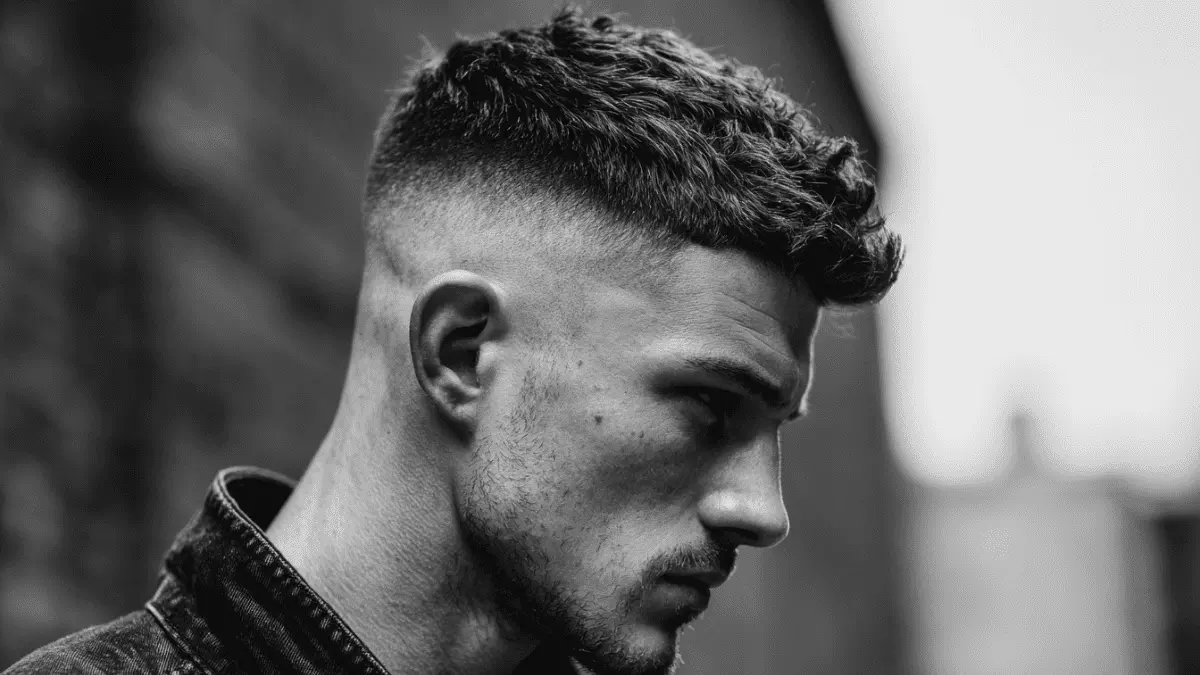
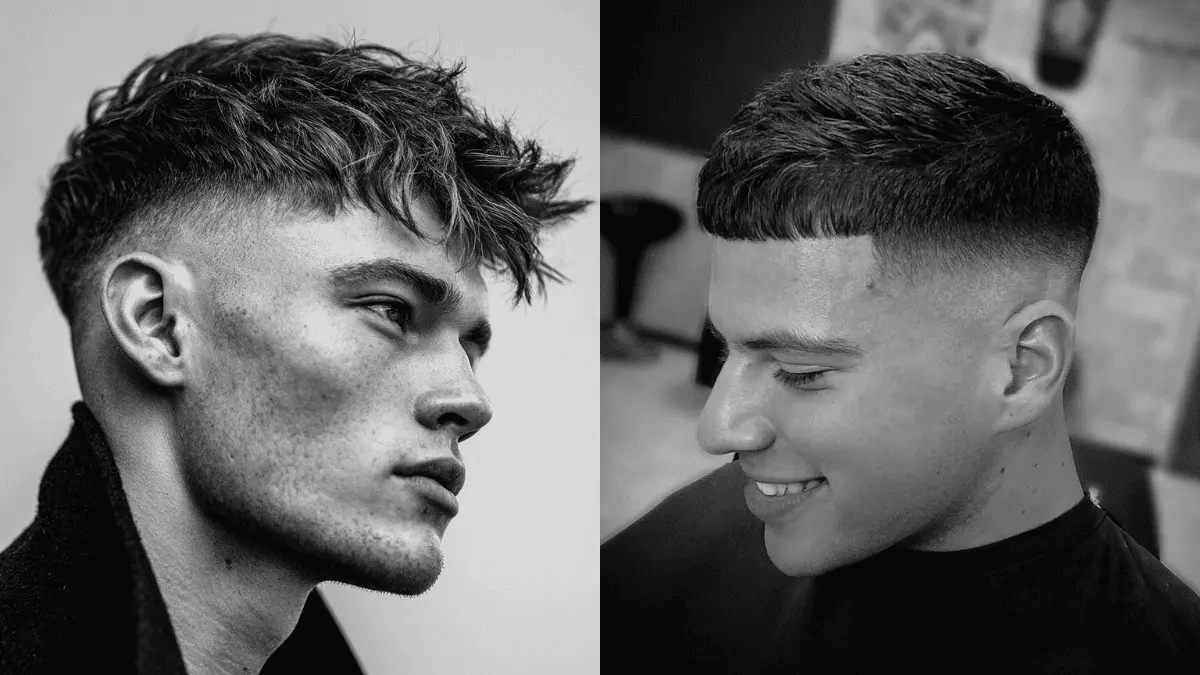
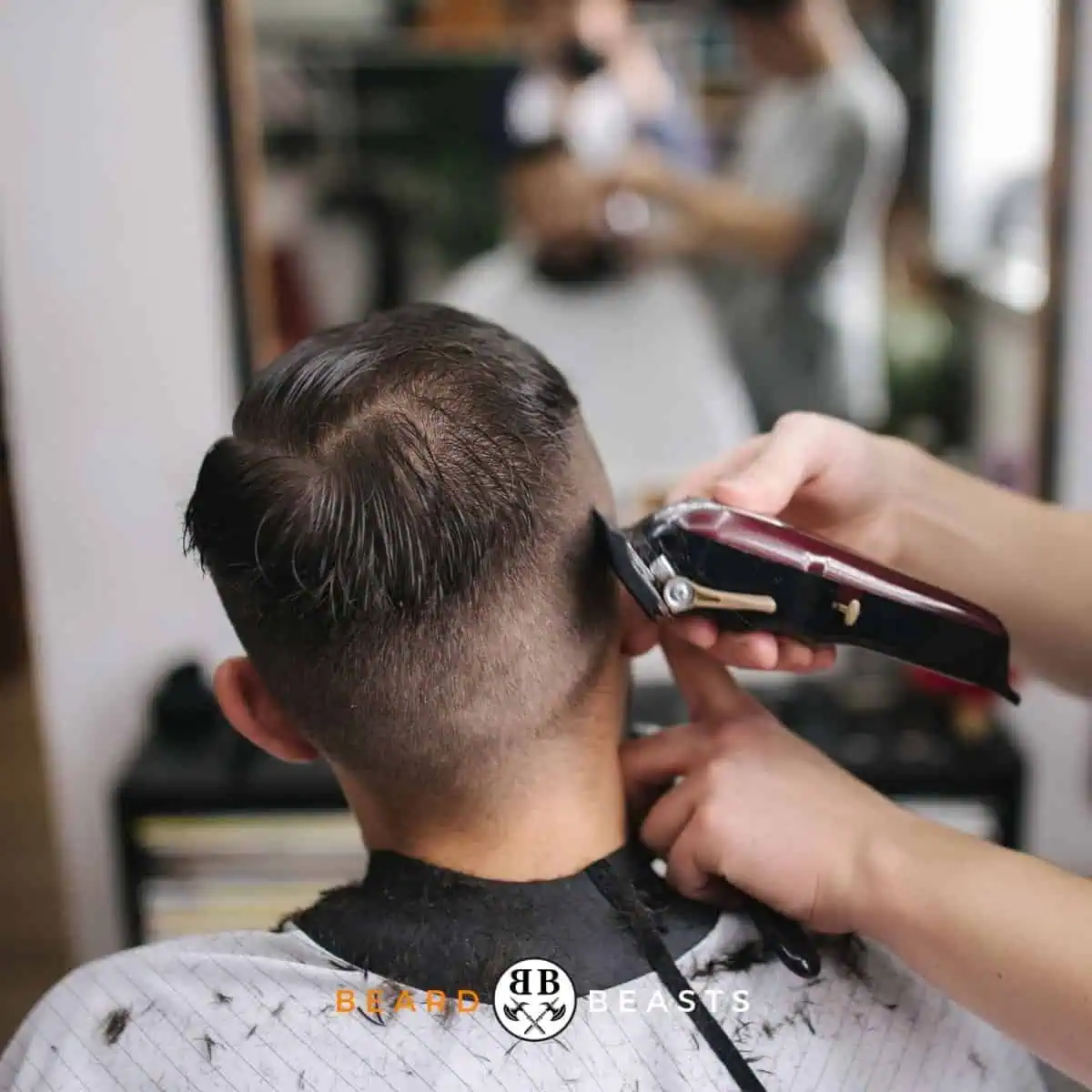
A fade is about transition. The hair tapers from longer at the top down into shorter sides and back, usually with a low, mid, or high starting point depending on how sharp you want it to look.
That is why fades usually look sharper and more put together in real life.
A fade does not rely on one dramatic disconnect. It creates shape by blending the haircut properly, which is why it works with so many different tops. Textured crop, curls, crew cut, slick back, short quiff. A fade can support all of them without demanding one specific look.
That is also why I think more men suit a fade than an undercut. It is more adaptable, easier to balance, and harder to get wrong if the barber actually knows what he is doing.
Undercut vs Fade: The Real Difference in Daily Life

This is where the two cuts stop sounding similar.
An undercut gives you more contrast and more attitude, but it usually asks more from you. The top needs styling more often. Product matters more. The difference between sharp and unsettled shows up faster if you cannot be bothered that morning.
A fade is different. It usually needs less styling on a day-to-day basis, but it does need more frequent barber visits if you want it looking crisp. Once the fade line starts growing out, the sharpness drops quickly. So it is lower effort in the mirror, but not always lower upkeep overall.
That is the trade-off.
If you like styling your hair and want more visual impact, the undercut makes sense. If you want something cleaner, more flexible, and easier to live with, the fade usually wins.
Which One Suits You Better
This is where a lot of men should be more honest.
The undercut works best when the hair on top has enough strength to justify the contrast. Thick hair, decent density, some natural body, and a face shape that can handle stronger edges all help. Round and oval faces often benefit because the height and contrast can sharpen everything up.
But not every man needs that much separation.
A fade is more forgiving. It works across more face shapes because the blend can be adjusted. Low fade if you want something quieter. Mid fade if you want more shape. High fade if you want stronger contrast without going full undercut. That flexibility is why it suits more men and more hair types.
It also handles fine or medium hair better in a lot of cases. A fade can make the haircut feel sharper without demanding too much from the top. The undercut, on the other hand, can make weak density look even weaker if the contrast is too strong.
So if your hair is thick and you actually want presence, an undercut makes sense.
If your hair is more average, your style is more practical, or you just want the safer call, a fade is usually the smarter move.
Which One I Would Choose, and When

If the question is undercut vs fade in general, I would usually lean fade for most men.
Not because it is boring. Because it is more adaptable, more forgiving, and easier to make work across different face shapes, hair types, and routines. A good fade can still look sharp without feeling like it is trying too hard. That matters.
I would choose an undercut when a man genuinely wants stronger contrast and knows he will style the top properly. It suits men who want the haircut to make more of a statement and do not mind the extra attention that comes with it.
I would choose a fade when the goal is cleaner structure, less daily styling drama, and a haircut that still looks right even when life is busy.
That is the real split.
Undercut if you want more edge.
Fade if you want more flexibility.
A Few Straight Answers
If you are still weighing it up, these are the questions that usually matter most.
Which is better for daily styling, an undercut or a fade?
The fade is usually easier day to day. The undercut gives you more to work with, but it also asks for more styling if you want it looking right.
Does an undercut or fade suit all face shapes?
A fade suits more face shapes overall because the blend can be adjusted. An undercut is stronger and more specific, so it tends to suit men who actually benefit from more contrast and height.
What is easier to maintain, an undercut or a fade?
A fade usually needs more regular barber visits. An undercut can sometimes stretch longer between cuts, but it usually takes more effort in the mirror to keep the top looking right.
Can you combine a fade with an undercut?
Yes, and plenty of men do. A faded undercut gives you some of the contrast of an undercut with a softer transition through the sides. It is a good middle ground if you want something sharper than a standard fade but less abrupt than a disconnected undercut.
Which looks more professional, undercut or fade?
Usually the fade. It tends to look cleaner and less forceful in more settings. A tidy undercut can still work, but it has more attitude to it, and that reads differently.
The Beard Beasts Verdict
Undercut vs fade is not really a battle between good and bad. It is a choice between two very different kinds of sharp.
The undercut is stronger, bolder, and more obvious. It works when the top has enough presence to carry the contrast and when you are willing to actually style it. If that sounds like you, it can look excellent.
The fade is more adaptable, more forgiving, and usually easier to recommend. It works with more hair types, more face shapes, and more routines. For most men, that makes it the smarter choice.
So my view is simple.
If you want a haircut that pushes more contrast and edge, go undercut.
If you want a haircut that still looks sharp without making your life harder than it needs to be, go fade.