
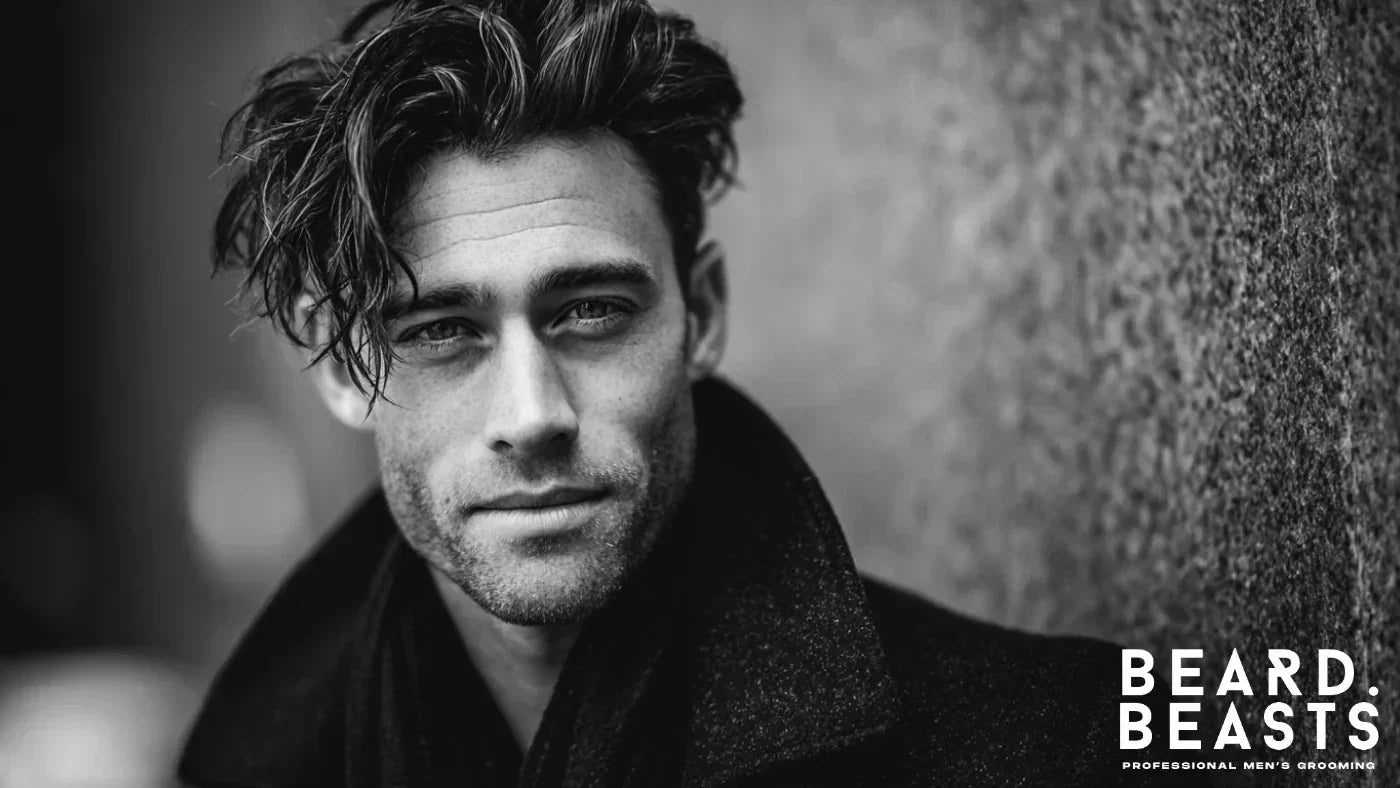
Most men blame the wrong thing when a layered haircut stops working. They blame the length, the product, the way they slept on it. Nine times out of ten the real issue is weight, and weight is what layers are supposed to fix.
Get it right and layering removes bulk where it’s causing problems while leaving it where it’s actually helping. Get it wrong, and thick hair turns into a mushroom cloud the second it dries while fine hair just lies there with nothing holding it up.

In this article
Short Layered Haircuts for Men
Short hair needs layers more than people assume, mostly to stop dense hair pushing outward into a shape nobody asked for.
Short Textured Crop

The textured crop is built on weight taken out with point-cutting right at the tips, so the ends stay light and separated instead of falling as one dense block. It’s close to the standard modern short cut now, and for good reason. It suits almost every face shape and most hair types, and the texture itself does most of the work, so there’s very little styling required to keep it looking right.
Textured Crew Cut

A classic crew cut with movement worked into the top rather than a flat, uniform length. Without the layers it’s just a block of hair lying flat against the head. With them it has some life to it, without losing the tidiness that makes a crew cut a crew cut in the first place.
Layered Ivy League

Longer on top than a standard crew, parted and layered to add height. It’s a smarter, more put-together version of the textured crop, and I’d point most professional men here over the rougher textured options.
Short Spiky Layers

Layers cut specifically to support height with product, usually with a slightly longer top than the other short cuts on this list. It needs more daily effort than anything else in this section. Skip a day of styling and it just looks like short hair that’s lost its purpose.
Burst Fade Mohawk

A strip of longer, layered hair down the centre with a fade that bursts around the ear rather than running in a straight line. Bold, and not for every workplace. Without the layering on top, that centre strip would just be a dense ridge rather than something with any shape to it.
High Fade with Layered Top

Severe sides paired with enough length on top to create real contrast. A high fade with longer, unlayered hair on top can look heavy and disconnected from the sides. Layered, the top moves and the whole cut feels like one decision instead of two.
Layered French Crop

A fringe-forward crop, length kept short and layered through to avoid the blocky look a French crop can get without any shaping. One of the more forgiving short cuts for thicker hair specifically.
Medium Layered Haircuts for Men
This is the length where layering matters most clearly, since it’s exactly where unmanaged weight starts working against you.
Modern Layered Mullet

Length at the back, shorter and layered through the top and sides. Without layering on top, a modern mullet looks like two separate haircuts stitched together rather than one cut that happens to have length at the back.
Messy Medium Layers

Heavy layering throughout, slide-cut through the mid-lengths to remove bulk and styled to look undone rather than precise. This only works because of what’s underneath it. Take the layers out and messy hair just looks unbrushed instead of styled.
Medium-Length Textured Crop

The short textured crop’s longer cousin, with more length on top to layer and more movement as a result. Suits wavy and thick hair particularly well.
Brushed Back Layers

Layers cut to support a brushed-back finish without the stiffness a fully slicked style needs. Without them the brushed-back shape collapses into a flat sheet by midday, especially the second any humidity gets to it.
Medium Wavy Layers

Layering that works with a natural wave pattern rather than against it. I’d argue this is one of the most underrated combinations on the whole list. Wavy hair already wants to separate. Layers just give it the structure to do that consistently instead of randomly.
Layered Quiff

Height at the front held up by layering through the crown, tapered or faded at the sides. The layers are doing real structural work here. Without them, a quiff at medium length tends to look heavy at the front and flat everywhere else. Worth knowing that hair clay will lock this shape in place, but if you run a hand through it mid-conversation you’ll break the bond and end up with a flat patch that won’t reset until you wash and redo it.
Side-Swept Medium Layers

A side part with layering that lets the hair fall in one direction rather than fighting a centre-grown pattern. Works well on most hair types and most face shapes, which is rare for a style this specific.
Layered Slick Back

Length pushed straight back, with layers removing the bulk that would otherwise make a slicked back style at this length look thick rather than sleek.
Long Layered Haircuts for Men
Past the shoulders, layering stops being optional. This is the length where the wrong cut turns into a genuine maintenance problem rather than just a styling inconvenience.
Long Flowing Layers

Layering through the mid-lengths and ends, built to create movement at full length. This is what most men picture when they imagine long hair at its best, and the layers are the entire reason it looks like that instead of like a solid curtain.
Layered Man Bun

Layers through the top and crown specifically, so the hair gathered into the man bun has shape rather than just bulk. A bun built from unlayered hair tends to look like a single dense lump rather than an intentional style.
Long Wavy Layers

Layering that lets a natural wave separate and move at full length instead of clumping under its own weight. The heavier the hair, the more this matters.
Layered Shoulder-Length Hair

The awkward in-between length handled properly. Layers here remove the bulk that makes shoulder-length hair flip out at the ends, which is the thing that stops this length from looking simply overgrown.
Surfer-Inspired Long Layers

Heavier layering paired with salt spray texture, built for hair that’s meant to look like it dried in the wind rather than under a hairdryer. Works best on naturally wavy hair, though a layer cut can fake the effect on straighter hair too. The first humid day will undo a heavily blow-dried version of this in minutes. Hair that’s actually layered to do this naturally holds up far better.
Layered Half-Up Style

Layers through the crown and sides, so the half left down still has shape and the half tied up doesn’t pull everything flat. A half-up style on unlayered hair usually just looks like hair with a knot in it.
Shaggy Layered Cut

The heaviest layering on this entire list, intentionally uneven, built for maximum texture. High maintenance to keep looking intentional rather than just messy, and not for everyone, but on the right hair type it’s one of the most distinctive styles at this length.
Bad Layers Make Thick Hair Puff and Fine Hair Collapse
The same mistake produces two completely different problems depending on what you started with, and that’s worth understanding before you book a cut.
Thick hair with bad layering puffs out. Take weight from the wrong places, usually the bulk near the scalp, and the hair has nowhere to go but outward. Dry it the way most men dry their hair, towel rough then a quick comb, and it can end up looking like a mushroom cloud on top of the head, especially at medium and long lengths where there’s more hair to misbehave.
Fine hair does the opposite. Strip too much weight from hair that didn’t have much density to begin with and it collapses, going flat and stringy instead of full. The cut that was meant to add movement ends up removing the only thing holding any shape together.
The fix in both cases is the same: removing weight from specific areas rather than everywhere at once. The skill is in knowing which areas, and that’s almost entirely down to the barber rather than the haircut you ask for.
The Barber Should Remove Weight, Not Thin Everything Out
There’s a real difference between layering and thinning, and plenty of men walk out without knowing which one they just got.
Slide-cutting and point-cutting are the two techniques that actually create proper layering. Slide-cutting works the shears along the length of the hair to remove bulk and create flow, particularly on thick or coarse hair. Point-cutting chips into the ends at an angle to soften a hard line without losing length.
Thinning shears can do good work too, but they’re often used as a shortcut, run evenly across a section without much thought for where the weight is actually causing problems, rather than applied with the judgement slide or point cutting demands.
There’s also the parietal ridge to consider, the bony transition zone where the top of the head curves down into the sides, roughly three finger-widths above the ear. Hair right at that corner tends to grow out and stick up faster than anywhere else on the head, so a barber who isn’t paying attention to it leaves you with corners that flare like handles within a couple of weeks. A good cut accounts for that ridge specifically rather than just running the same length over the whole top.
A barber who reaches for thinning shears the moment you mention wanting less bulk is taking the easy route rather than the right one. I’d rather book a longer appointment and get proper layering than have my hair thinned out evenly in fifteen minutes.
Layers Should Grow Out Better, Not Fall Apart Faster
A well-cut layered haircut still looks intentional six weeks later. A bad one falls apart within two.
The difference comes down to where the cut lengths land relative to each other. Good layering builds in a gradual transition, so as the hair grows the lines between sections soften rather than creating new, awkward steps. Bad layering creates harsh, even breaks that grow out into visible shelves, especially obvious at the point where one layer ends and the next begins, and especially obvious right along that parietal ridge if it wasn’t handled properly the first time.
This is the actual test for whether a layer cut was any good. Don’t judge it the day you leave. Judge it a month later. If it’s still moving the way it did on day one, the barber understood what they were doing. If it’s grown into a mess of disconnected lengths, they didn’t.
The Beard Beasts Verdict
Layering isn’t a finishing touch added to a haircut. For a layered haircut at any length past the shortest cuts on this list, it’s the thing that decides whether the whole style actually works.
Most men think the choice that matters is the style name or the guard number. It isn’t. Two men can ask for the exact same cut and walk out looking completely different, because the actual decision was always how the weight came out, not what it was called going in.
If you take one thing from this whole list, take this: judge a layered haircut by how it grows, not just by how it looks on day one. A cut that still moves the same way six weeks later was done properly. One that needs a redo in three was never really finished.