
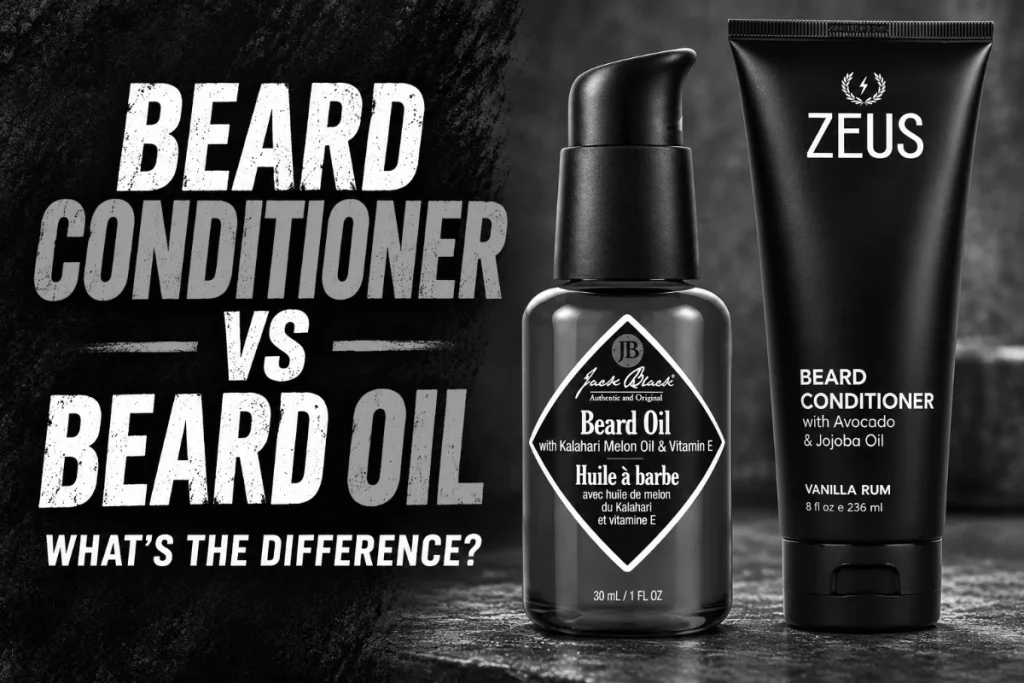
Beard conditioner or beard oil? Both promise a softer beard, and plenty of grooming advice will tell you to use both. But I’d think twice before spending money on two products when one might do the job perfectly well.
Maybe your beard feels rough after washing, or the skin underneath keeps getting dry. You want something that actually helps, not another bottle taking up space in the bathroom.
In this article
Beard Conditioner vs. Beard Oil: What’s the Difference?
Beard conditioner is something you rinse out. Beard oil is something you leave in. Both can make facial hair feel softer, but they work differently.

You use beard conditioner after washing. Work it through the wet hair, leave it on for the time recommended on the bottle, then rinse it out. Conditioner helps soften your beard and reduce tangles, so you’re not yanking at knots every time you run a comb through it.
Beard oil stays in your beard. A few drops worked through the hair and down toward the skin can soften rough hairs, add a little shine, and help with dryness underneath.
Some beard oils feel light and barely leave a trace. Others feel heavier and can leave your beard greasy, especially if you use too much.
And just because you rinse out conditioner doesn’t mean everything goes down the drain. Some conditioning ingredients remain on the hair, helping it feel smoother and reducing tangles after you’ve finished washing.
Just don’t expect either product to make your beard grow faster or thicker.
Which Is Better for Your Beard: Conditioner or Oil?
I’d make the decision based on what happens after you’ve washed and dried your beard. If you’re fighting your comb every morning, conditioner would be my first choice.

Coarse, thick beard hair can be a pain to manage, particularly once it gets some length. The hairs catch on each other, and trying to force a beard comb through them isn’t much fun.
A good rinse-out conditioner can make that job easier. Your beard might still feel naturally wiry, but you should notice less pulling and snagging. ZEUS Beard Conditioner would be my pick if you’re looking for one.
Dry skin is a different matter. Beard oil makes more sense here, especially if your skin gets dry easily. It can soften the hair as well, so a guy with a short beard that rarely tangles but leaves his skin feeling tight might get more use from oil than conditioner. Jack Black Beard Oil would be my recommendation.
If you’re prone to acne or breakouts, be careful with beard oil. Some formulas may contribute to clogged pores or irritate sensitive skin.
If you just want to soften the hair, I’d try a rinse-out conditioner first. That way, you’re not adding more oil to your skin. It won’t treat acne, though. That’s a separate problem.
I’d look past beard length, too. A short beard can be surprisingly scratchy, while a much longer beard might already be easy to manage. How your hair grows, how coarse it is, and the condition of your skin all matter more than simply measuring your beard.
You might even find you don’t need either product. If everything feels comfortable, your beard combs through without a fight, and you’re happy with how it looks, I’d save your money.
Can You Use Beard Conditioner and Beard Oil Together?
Yes, you can use both. You just need to know which goes on first.

Start by washing your beard with a dedicated beard wash. Work the conditioner through your wet beard, leave it on for however long the bottle recommends, then rinse it out thoroughly. Gently towel-dry your beard until it’s damp rather than dripping wet.
Now you can apply your beard oil. Rub a small amount between your palms before working it through the hair with your fingertips. If you’ve got a thick beard and want the oil to reach the skin underneath, make sure you’re getting past the outer hairs rather than just covering the surface.
Your beard might feel much softer after conditioner, but the skin underneath could still be dry. That’s when I’d consider a little beard oil.
Start with a small amount and spread it evenly. You can always add more if needed.
If the hairs start clumping together or your hands come away oily every time you touch your beard, you’ve probably overdone it. Try less next time rather than putting up with a greasy finish.
How Often Should You Use Beard Conditioner and Beard Oil?
Forget the idea that beard conditioner and beard oil need to be used every single day. They’re different products, and there’s no reason their schedules have to match.
Conditioner fits into your washing routine. Using it after every wash might make sense if your beard tends to feel rough afterward.
You might find you can skip conditioner on some wash days without any trouble. What matters is how your beard feels once it’s dry and whether you can comb through it without pulling at knots.
You can use beard oil between washes. Maybe the skin under your beard feels uncomfortable one morning, or perhaps it stays comfortable for days without another application. There’s no particular benefit in adding more oil just because it’s part of your morning routine, especially if there’s still some left from the previous application.
Things change when your beard gets dirtier than usual. Spending the day somewhere dusty, sweating heavily, or using beard balm and wax regularly can mean you need to wash more often. And if those extra washes start leaving your beard rough, you may find yourself reaching for conditioner more frequently.
I’d change one part of your routine at a time rather than experimenting with everything at once. Keep your washing schedule the same while adjusting your conditioner, for example. If your beard gets worse, you’ll know which change to undo.
Why Isn’t Your Beard Conditioner or Beard Oil Working?
You can follow every instruction on the bottle and still get a disappointing result. Maybe your beard tangles again as soon as it dries, or a little oil leaves it feeling heavy for hours. They’re two different problems.
A conditioner doesn’t have to make naturally wiry hair feel like the hair on your head to be useful. See how easily your comb gets through afterward.
Less pulling and fewer stubborn knots are good signs. If nothing changes, the formula may not suit your hair, or the conditioner might not be reaching the thicker areas properly.
Sometimes your beard feels greasy or heavy after conditioning. That can happen when you’ve used too much product or haven’t rinsed thoroughly. Try cutting back a little and giving your beard a proper rinse.
Rough ends that keep catching on your comb are another matter. Check for split or damaged hairs, because conditioner can make those ends easier to manage without permanently repairing them. A trim may be more useful.
I’d also look at your beard wash. Hair that feels like straw every time you step out of the shower could be reacting to the cleanser or how frequently you’re washing. A gentler beard wash or spacing out your washes might help more than adding another conditioning treatment.
Even a little beard oil can leave your beard greasy if the formula is too heavy for your hair. I’d try a lighter blend rather than keep messing around with the amount of something that never feels quite right.
If beard oil causes stinging, redness, or breakouts, stop using it. Fragrance and certain other ingredients can irritate sensitive skin, and carrying on with a product that’s causing problems won’t do you any favors.
If the skin under your beard keeps itching, turning red, or flaking, don’t ignore it. It could be a skin condition rather than ordinary dryness. I’d get it checked by a dermatologist instead of spending more money trying different grooming products.