
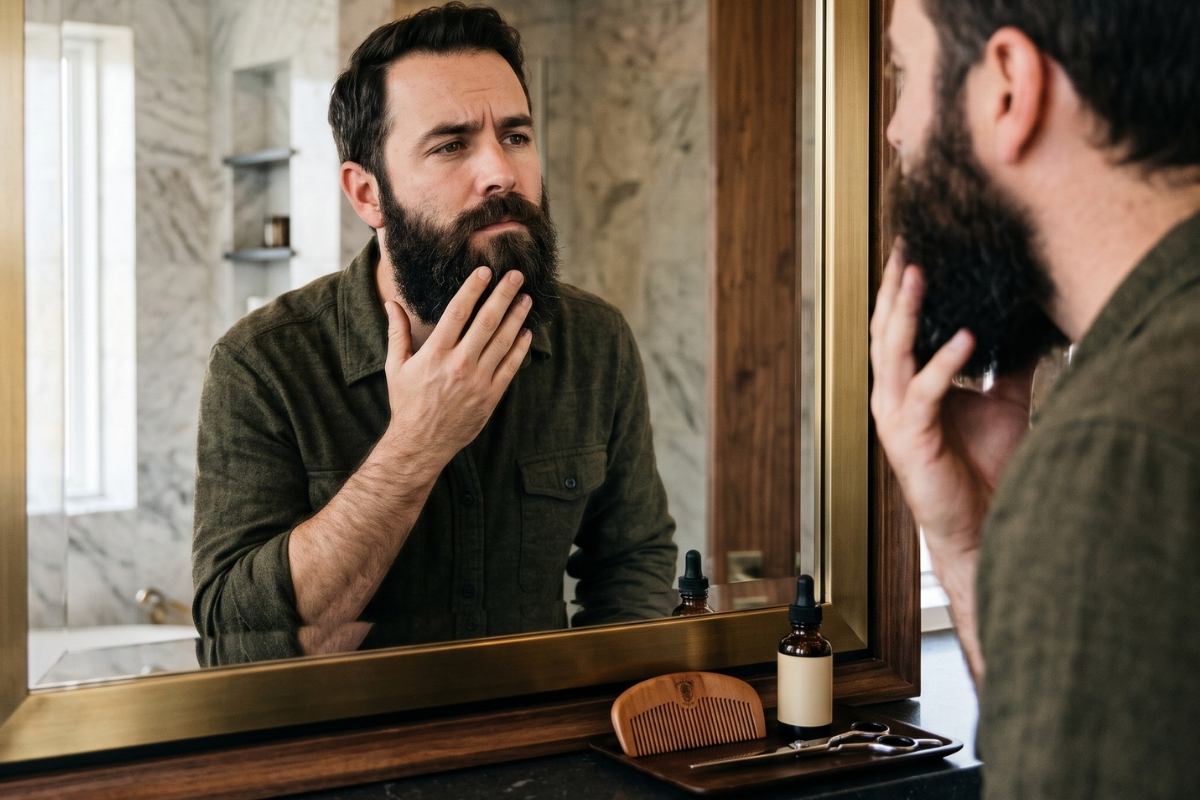
A beard can look good one day and be frustrating the next. One side sticks out, the bottom suddenly looks heavier, the comb catches where it didn’t before, and you start wondering what needs fixing.
That’s where bad grooming decisions can creep in. When you have oil, balm, combs, brushes and scissors within reach, it’s easy to start doing something simply because the beard looks a little off.
The beard grooming tips worth knowing are the ones that help you make better calls before you start changing things. I don’t think you need more steps. You need to know which ones actually deserve a place in your routine.

In this article
Look at What Your Beard Needs Before You Touch It
The easiest way to overcomplicate beard grooming is to do the same thing every morning without checking what your beard actually needs.

Some days it might feel dry. Other days it’s simply flattened from sleep, tangled or falling awkwardly on one side. That doesn’t mean it needs washing, more beard oil, another layer of balm and a quick trim before you leave the house.
I’d look at the problem first. If the beard feels dirty or greasy, washing makes sense. If the hair feels dry, conditioning deserves more attention.
If your comb keeps catching, deal with the tangles instead of trying to cover them with more product. And if the beard already feels soft but looks untidy, you’re probably dealing with control rather than dryness.
The same applies to trimming. A few beard hairs sticking out don’t automatically mean the shape has gone. If the beard still looks good as a whole, I’d leave the scissors alone rather than slowly cutting into it every time something refuses to behave.
My rule is simple: figure out what actually needs attention, then do only what solves that problem.
Detangle From the Ends Instead of Fighting From the Top
When the comb hits real resistance halfway through your beard, pulling harder is exactly what I’d avoid. You’re only putting more tension into the same knot and the hairs caught inside it.

For a longer beard, start at the ends and work upward a little at a time. Loosen the lower tangles first, then move higher once the comb can pass through that section without much resistance. Starting near the top and dragging straight down can tighten several smaller snags into a much harder section to work through.
Pay attention when the comb catches. Stop, back it out and loosen the section with your fingers before trying again. You should be working a knot apart, not trying to overpower it.
A wide-tooth comb usually makes more sense for the first pass through a dense or longer beard because it gives the hair more room to pass between the teeth. Once the beard is properly detangled, a finer comb or brush can be useful for arranging the hair and getting the shape where you want it.
The important distinction is simple: detangling and styling are two different jobs. Get the knots out with as little pulling as possible first. Worry about the final shape after that.
Know Whether You’re Conditioning or Styling
It’s easy to waste product when you expect conditioning and styling to do the same job.

Start with how the beard feels. If the hair is dry or rough even after you’ve worked out the tangles, that’s where conditioning comes in. Beard oil, conditioner and beard butter can all play a part here depending on the product, with the aim of making the hair softer and easier to handle.
Then look at what the beard is doing. If it already feels good but keeps losing the shape you want, adding more oil is probably solving the wrong problem. Beard balm can give you some conditioning with extra control, while beard wax makes more sense when you need real hold.
That’s the distinction I’d keep in mind when choosing what to use. If the hair itself feels rough, think conditioning. If it feels fine but needs more control, think styling. You don’t need to pile products on until something eventually works.
And you definitely don’t need the whole shelf every time you groom. Give each product a job and use it when that job needs doing.
Let Your Beard Settle Before You Decide It Needs Trimming
A beard can look very different when you’ve just woken up, just washed it or spent several minutes moving it around in front of the mirror. None of those is a good time to decide the shape needs fixing.

Before you reach for the scissors, get the beard dry, detangled and back to how it normally falls. Water can make the hairs clump differently, sleep can flatten one side, and combing can temporarily push sections in directions they wouldn’t normally stay.
I think this is where a lot of unnecessary trimming starts. You notice one awkward area, cut it back, then spot another because you’re still judging the beard halfway through grooming. It’s very easy to take off more than you intended that way.
Step back from the mirror as well. When you’re looking at the beard from inches away, every stray hair feels important. From a normal viewing distance, many of those little imperfections disappear into the overall shape.
If the beard still looks off once everything has settled back to normal, then trimming makes sense. Judge the finished beard before you start trying to correct it.
Trim the Shape, Not Every Hair That Sticks Out
Once you know the beard actually needs trimming, judge the overall shape rather than hunting for individual hairs to cut.

A few strays are normal, especially on a fuller beard. The problem with constantly snipping whatever happens to stick out that morning is that you can gradually thin certain areas without ever making a conscious decision to change the beard itself.
I’d focus on anything that clearly changes the overall shape. Maybe one side has built up more bulk, the bottom has become uneven, or a section is pushing noticeably farther out than everything around it.
Those are worth correcting. Three stubborn hairs aren’t.
Be careful about pulling a hair straight before cutting it too. Beard hair often has natural curl or bend, so a hair that looks too long while stretched can spring back much shorter once you let it go. Trim it where it naturally falls instead.
That’s the difference between maintaining a beard and endlessly picking at it. Keep the overall shape where you want it, and let the small imperfections be hair.
Treat the Oldest Part of a Long Beard Differently
Once your beard gets longer, the ends deserve different care from the newer hair closer to your face. They are the oldest part of each strand and have already been through far more washing, drying, grooming and everyday friction.

The ends of a long beard aren’t automatically damaged just because they’re older. They’ve simply had more opportunities to become rough, snag more easily or feel harder to manage, so I’d pay attention to how the lower lengths compare with the rest of the beard.
If the upper beard already feels good but the bottom feels rough, don’t automatically use more product everywhere. Work your rinse-out conditioner, beard oil or butter through the lower lengths and ends instead. Sometimes the problem isn’t how much product you’re using, but where it’s ending up.
This matters more as you add length because there’s more older hair to preserve. Keeping those lower lengths conditioned and manageable becomes part of keeping the beard you spent months growing.
That’s the shift I’d make with a longer beard: don’t just use more because there’s more hair. Pay closer attention to the part that has been around the longest.
Verdict: The Best Beard Grooming Tips Come Down to Good Judgment
The best beard grooming tips aren’t about adding another step to your morning. They are about knowing what actually needs fixing and using the least amount of grooming needed to deal with it.
That doesn’t mean doing less just for the sake of it. It means knowing when a beard truly needs more attention and when constantly brushing, trimming or adding product is only creating more work.
If I had to reduce it to one rule, it would be this: every product, tool and trim should have a reason to be there. If you can’t say what problem it’s solving, you probably don’t need it.