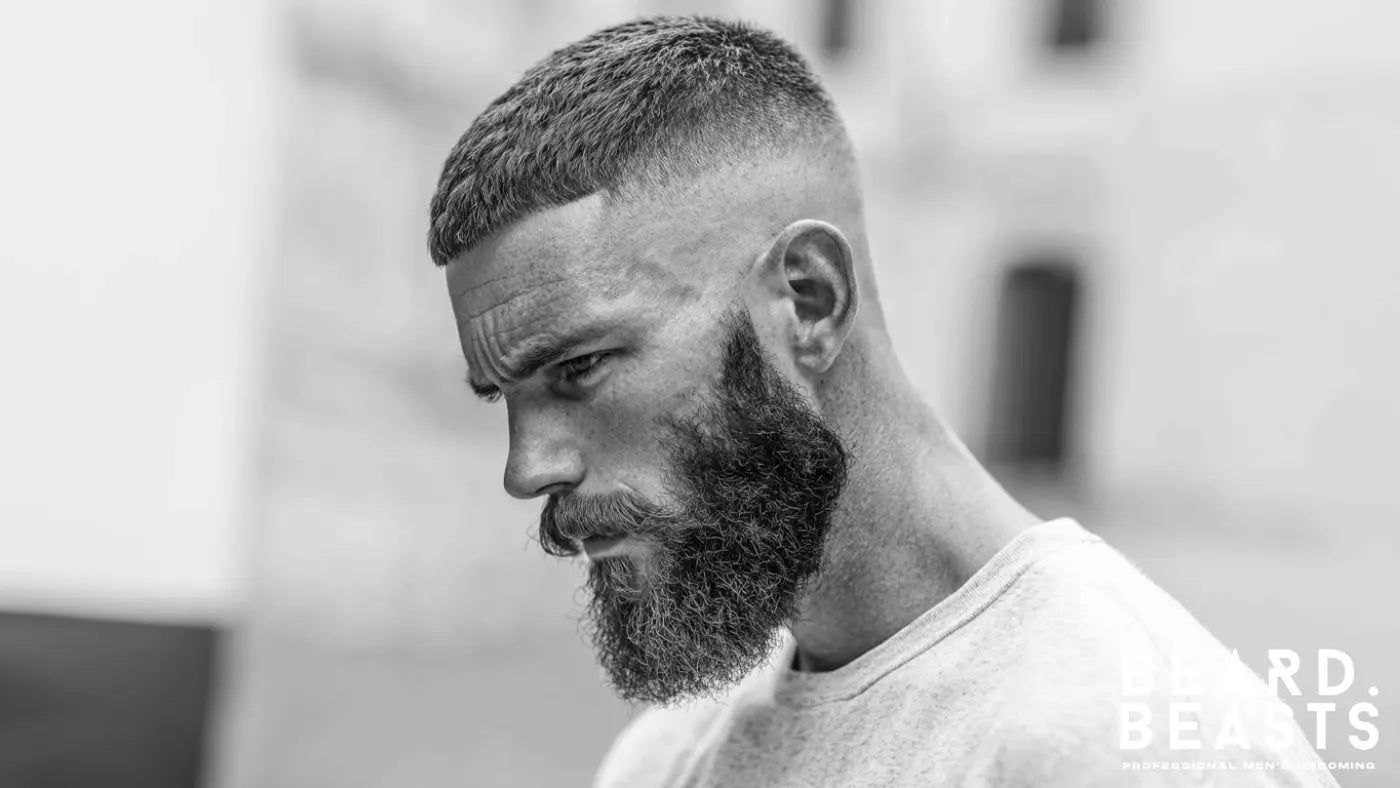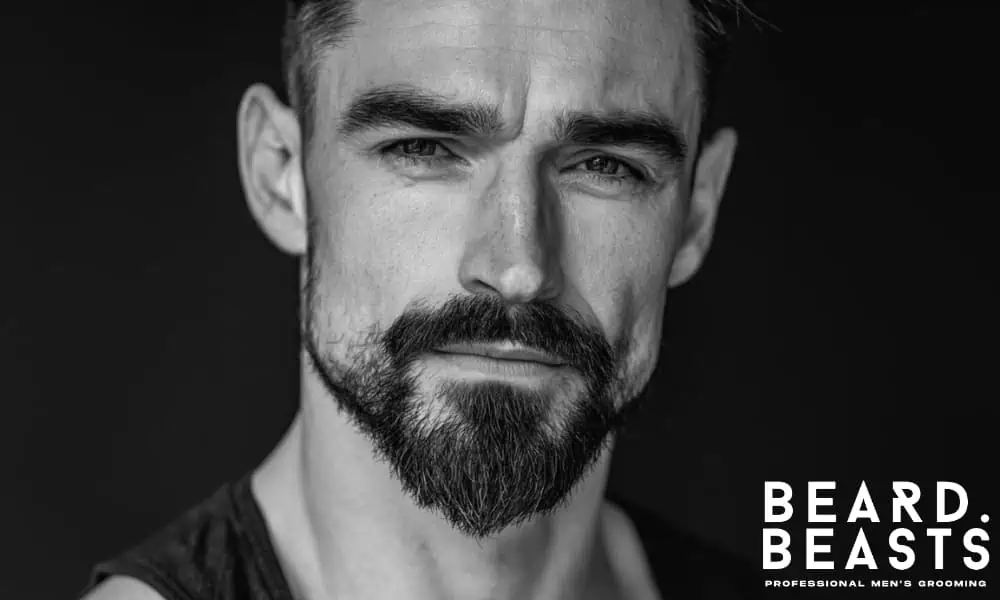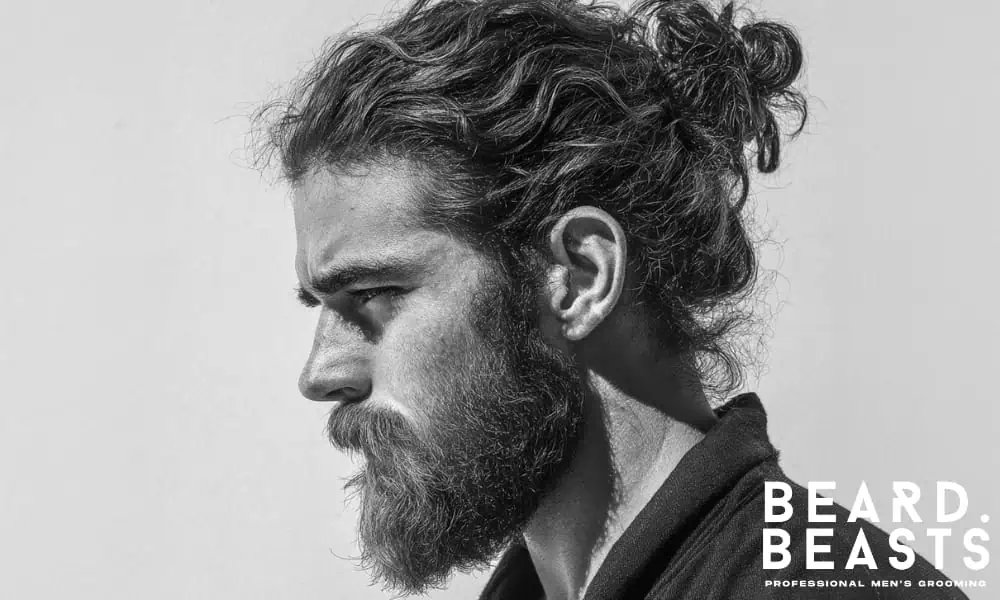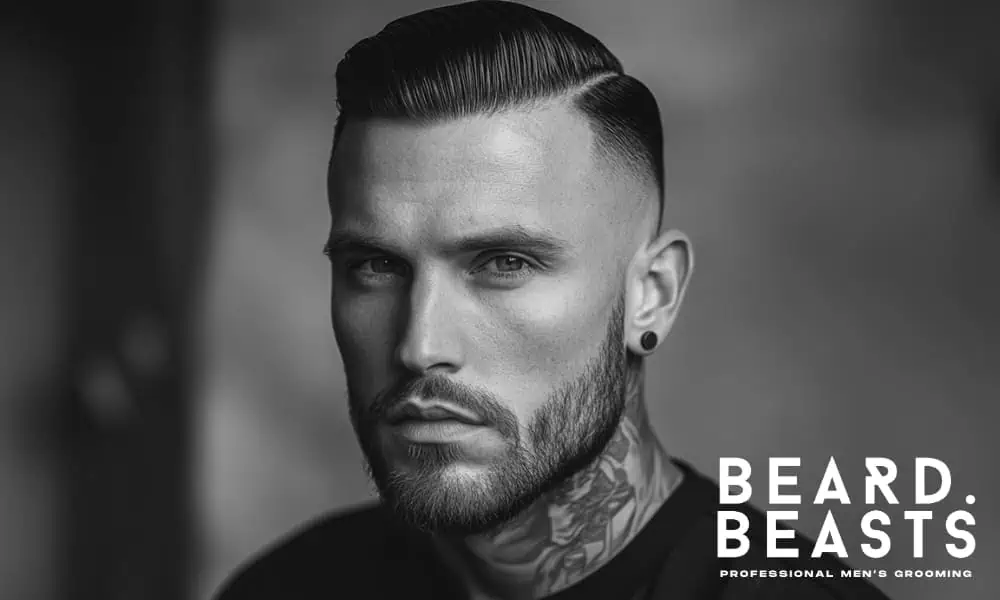
An oblong face is long and narrow, with a forehead, cheekbones, and jaw that are roughly the same width and a chin that extends the face further than the width can balance. The beard’s job on a face like this is simple to describe and easy to get wrong: add width, not length.
Most beard styles do the opposite. They grow downward, they taper at the chin, and they make a long face look longer. Getting it right means understanding which styles break that pattern.
The 8 Styles That Actually Work (And How They Change Your Proportions)
Every one of these is working against the vertical, not with it.
The Stubble Beard

Stubble is underrated for oblong faces and I’d argue it’s one of the best options on this list. At 3-5mm it adds texture and definition across the jaw and cheeks without adding any significant length below the chin. The face stays its natural length, the bone structure gets emphasis, and nothing is being pushed further down.
Keep it even across the cheeks and jaw, and keep the neckline clean. At this length the neckline does most of the shaping work since there isn’t enough length to do anything more with the stubble itself.
It’s also the most forgiving length to correct if you get something wrong. A bad boxed beard at 15mm takes weeks to fix. Get the stubble wrong and a week later you’re starting fresh.
The Beardstache

Honestly one of the most underused combinations for oblong faces, and I’m not sure why. A heavier mustache with short, low-density stubble across the cheeks and jaw. The mustache interrupts the vertical drop of the face and pulls the eye sideways along the upper lip, which is exactly the kind of horizontal break an oblong face is missing.
Not every face can carry a strong beardstache. But on a long face, the proportions actually work in its favour rather than against it.
The Chin Strap with a Mustache

Let’s be honest: a chin strap on its own is a disaster for an oblong face. It hugs the jawline, traces the chin, and drags your face straight down into an elongated point. But pair it with a thick, heavy mustache and the dynamic shifts. The solid horizontal block of the mustache cuts across the upper lip and acts as a visual brake, balancing out the sharp vertical lines of the strap. It’s a high-maintenance combination that requires absolute precision. Let it get sloppy or drop too low and the balance is ruined.
The Short Boxed Beard

The short boxed beard is probably where most men with oblong faces should start. It keeps the length controlled, the shape squared off at the bottom rather than tapered, and the sides full enough to add width across the jaw.
The square base of a boxed beard is doing something important. By flattening the bottom of the beard rather than letting it point downward, it stops the chin from visually extending the face further. I’d keep it at around 10-15mm and resist the temptation to let it grow longer just because it looks good at one stage.
The Balbo Beard

Here’s the thing about the Balbo that most men miss. The shaved gap between the mustache and the chin patch isn’t just an aesthetic choice, it’s doing something structural. It breaks the vertical line of the face into two separate features, adding width in different zones rather than one continuous beard pulling the eye downward.
The chin section is kept full but short, the mustache holds as a distinct horizontal feature above it. More maintenance than most of the other styles on this list, but for an oblong face it’s one of the more intelligent options if you’re willing to put the work in.
The Corporate Beard

Clean, short, defined. Usually 5-10mm with sharp lines at the cheek and neck. The key is keeping the bulk on the cheeks identical to the length on the chin, so the weight stays spread across the whole face rather than dropping downward. The biggest trap is taking the cheek lines too low in pursuit of a clean look. The moment you do that, you strip away the mid-face width and instantly extend the jawline. Keep those lines natural, use a uniform guard across the whole face, and let the sides do the heavy lifting.
The Verdi Beard

The Verdi asks more of you than anything else on this list. A fuller beard, kept at medium length and rounded at the bottom, paired with a mustache that’s groomed separately and curls or curves at the ends. Two distinct grooming routines running in parallel.
On an oblong face it’s worth it. The rounded base stops the chin adding a sharp downward point, and the styled mustache adds a horizontal feature that draws the eye across the face rather than down it. If you’ve got the patience for this one, I’d back it as the best option on the page.
The Full Beard Trimmed for Width

A full beard can absolutely work on an oblong face, but only if it’s trimmed with the face shape in mind. Most men grow a full beard and let it take whatever shape it wants, which on an oblong face usually means more length at the chin than anywhere else.
Trimmed for width means keeping the chin shorter than the sides, letting the cheeks fill out fully without cutting them back, and checking the profile as well as the front. I’d add this to the mirror check every time you trim: look from the side, not just head on. The front view flatters most beards. The side view tells you the truth.
Do Not Let the Chin Become the Beard
This is the mistake I see most often on oblong faces. The beard grows out, the chin section gets longer, and instead of trimming it back the man chasing a fuller look lets it run. Within a few weeks the whole beard is just chin.
If you’re growing length, grow it at the sides and keep the chin trimmed back to match or run shorter than the cheek and jaw hair. That single adjustment changes everything about how the beard shapes the face.
Some guys find this counterintuitive because most beard photos and references show longer chins. Those references are usually shot on rounder or square faces where the chin length is doing different work. On an oblong face, the reference points don’t apply the same way.
A useful check: take a photo of yourself straight on, then turn to the side and take another. The front view hides a lot. The side view shows immediately whether the chin is running away from the rest of the beard.
The Sides Need to Do Some of the Work
The cheeks are the most important part of the beard on an oblong face. More important than the chin length, more important than the neckline. Hair kept at a reasonable length across the cheekbones, rather than tapered back or trimmed close, is what creates the impression of width. A beard that’s full at the chin and thin at the sides often makes things worse, narrowing the midface while lengthening the lower face.
Width doesn’t come from letting the beard grow wherever it wants. It comes from actively keeping the sides full while managing everything else around them.
The Neckline Cannot Be Allowed to Drop
A low neckline adds length below the jaw where an oblong face already has too much of it. The neckline on an oblong face should be kept higher than most men are comfortable with, close to the jaw rather than dropping toward the collar.
It feels like you’re cutting the beard short. You’re not. You’re stopping the beard from visually extending the chin downward onto the neck, which is what a dropped neckline does. From the front the beard still looks full. From the side and at conversational distance, the jaw looks defined rather than merged with the neck.
A tight neckline is one of those things that takes a couple of attempts to get right and then becomes obvious once you see the difference. Keep it higher than your instinct tells you.
The Beard Beasts Verdict
Most men with oblong faces never quite crack their beard because they’re copying references that weren’t shot on their face shape. The styles that look good on a round or square face grow downward. On an oblong face, that’s the exact wrong direction.
Full cheeks, a restrained chin, and a neckline kept close to the jaw. Those three things are the brief for every beard on this page. Get them right and the face looks balanced. Get them wrong and the beard is doing the opposite of what you needed it to do.
Look in the mirror right now. If your beard is thin on the sides and running past your chin, hit the reset. Keep your cheeks full, keep your chin short, and push that neckline up higher than your instinct tells you to.
If you want a foolproof starting point, grab your trimmer and shape a short boxed beard at 12mm. It’s the easiest baseline to get right, it shows you immediate results, and it teaches you exactly how to build width instead of chasing empty length. Everything else on this list builds from that exact same logic.