Most men come in asking for one or the other like they’re picking between two sizes of the same haircut. They’re not.
A low fade keeps things calm and easy to grow out. A drop fade changes more: the shape behind the ear, the way the back sits, the whole side profile.
Before I pick up the clippers I’m looking at three things: how your sides grow, how much hair you’ve actually got on top, and what the back of your head is doing.
The haircut you asked for at the door comes after that.
If you’re stuck, I’ll point you at a low fade nine times out of ten. It sharpens the haircut without taking it over. But when the hair can carry it, a drop fade gives you something a low fade can’t: a stronger shape down the side.
It’s Not Really About Height

People think the only difference is how high the fade goes. It isn’t.
A low fade stays low all the way round. It starts near the ear and the neckline and blends up without climbing far.
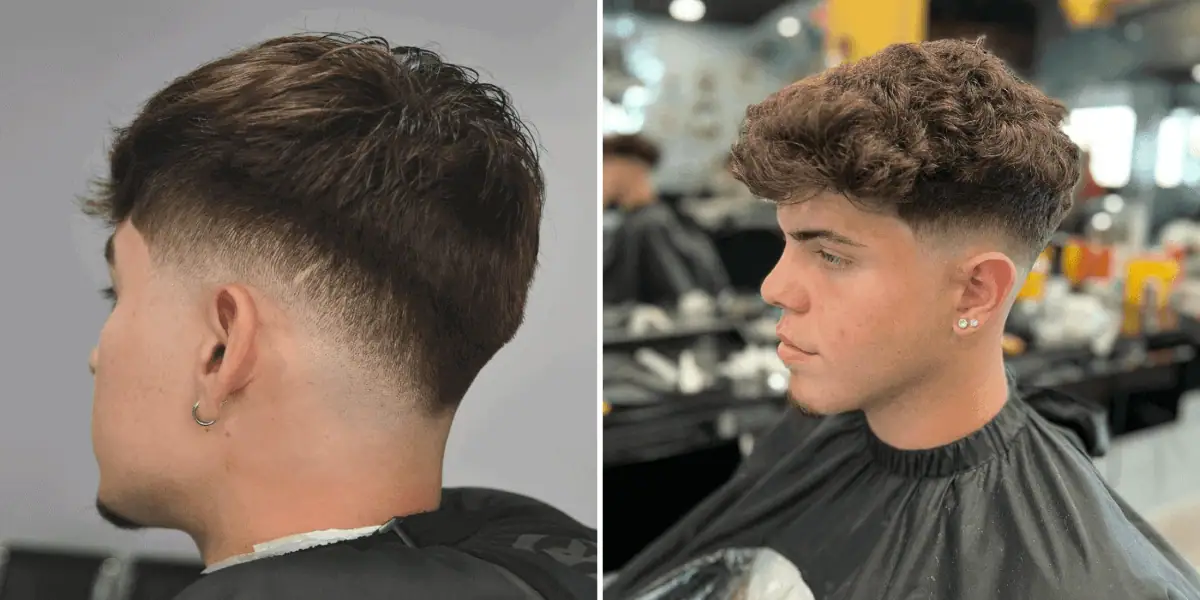
A drop fade sits low too, but it does not stay level. It dips behind the ear and follows the curve of your head. That dip is the whole point. It’s where the haircut starts doing something different.
Think of a low fade as a sharper edge under the style on top. It tidies the bottom and gets out of the way.
A drop fade doesn’t just tidy. It shifts the balance. That curve round the side and back can make the exact same haircut look sharper, fuller, more aggressive.
Which is great, as long as the rest of the cut can keep up.
If you’ve got weight, curl or natural lift on top, a drop fade pushes the whole thing up a level. If the top’s flat or on the thin side, I’ll keep the fade softer. Otherwise the sides end up louder than everything above them, and that’s never the look you were after.
That’s the bit most men miss.
A low fade backs up the haircut. A drop fade becomes part of it.
You’re Probably Judging It From the Wrong Angle

Most men size up a fade from the front.
It’s the least useful angle there is.
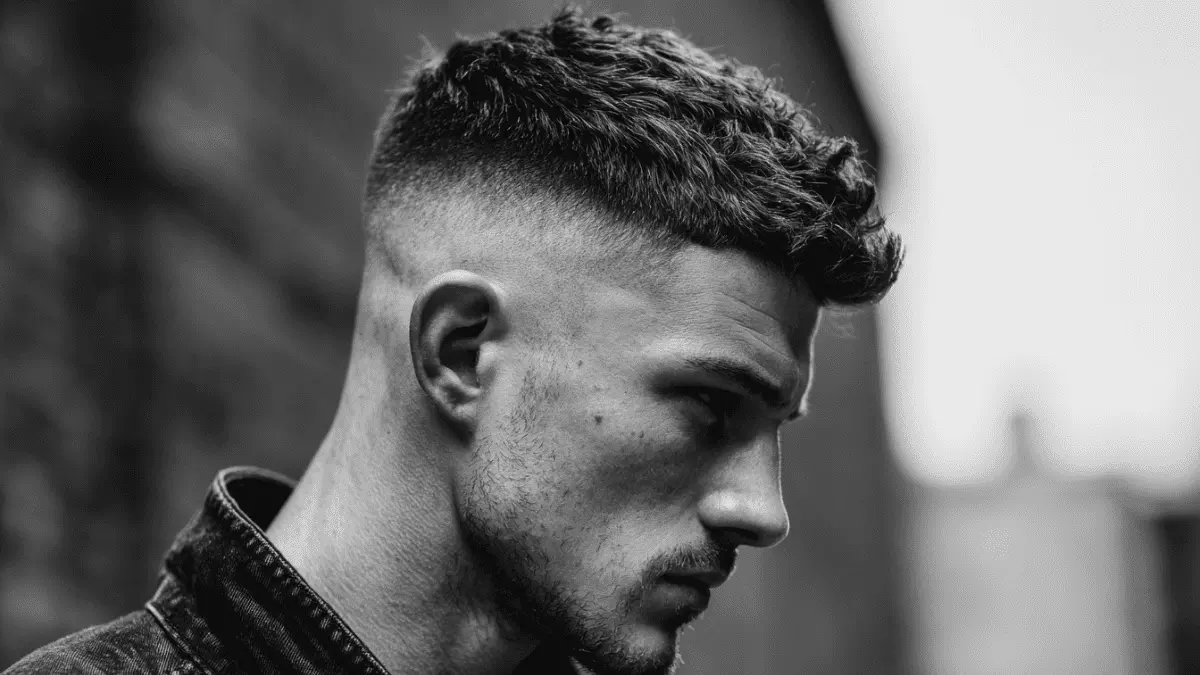
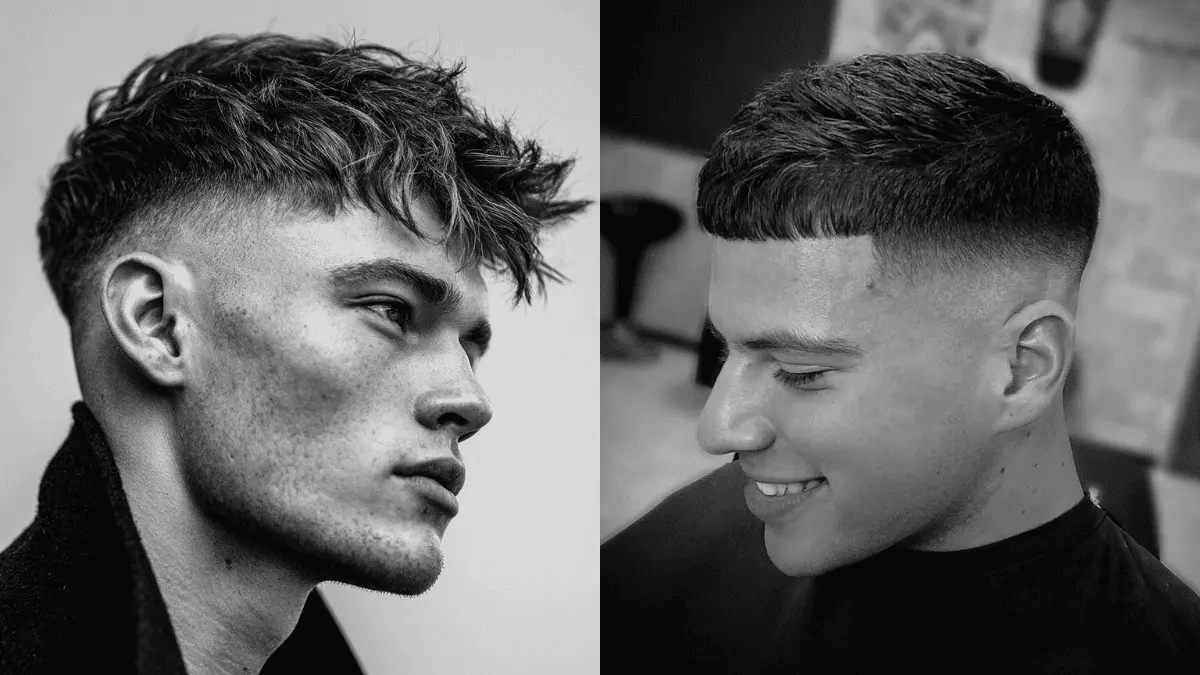
Straight on, a low fade and a drop fade can look almost identical. The difference lives in the side and the back. A low fade keeps the bottom neat without messing with the back much. It blends in quietly and grows out soft.
A drop fade turns that curve behind the ear into a feature.
With a bit of texture or volume on top, that curve gives the cut real character from the side. That’s exactly why drop fades photograph so well at an angle.
But here’s the catch nobody mentions: the grow-out is a different story.
Once a drop fade starts filling back in, that shape behind the ear gets muddy. If you like your fade looking crisp, you’ll clock it sooner than you would with a low fade.
That doesn’t make it a bad cut. It just means it suits a man who’s happy to come back and keep on top of it.
I’ll also have a proper look at the back of your head before I commit. Flat back? A drop fade can actually help it read stronger from the side. Fine or sparse on top? Then I’m careful with heavy contrast.
That call matters far more than whatever the cut happens to be called.
Why I Reach for the Low Fade First
The low fade gets written off too quickly.
People hear “low” and assume “basic.” I don’t buy it.
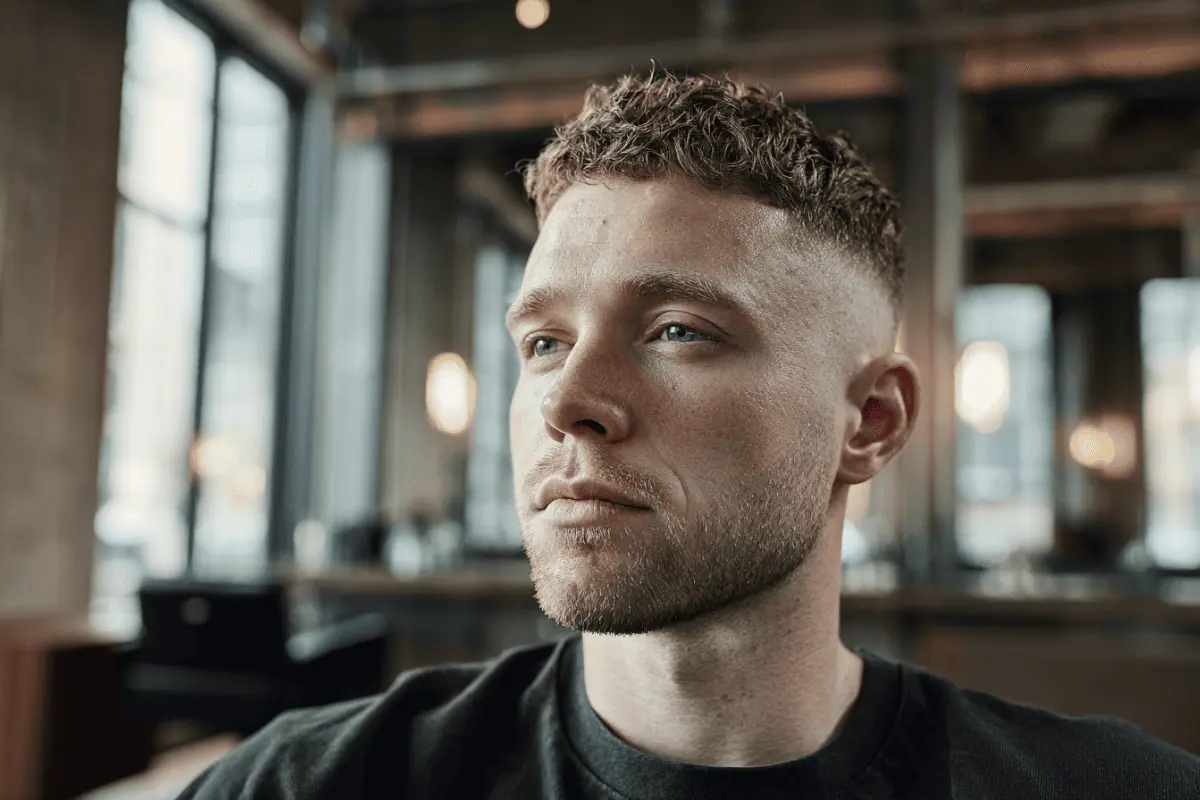
A good low fade is one of the safest bets in a barber shop. It sharpens the haircut without taking over, and it works with almost everything: side parts, buzz cuts, short crops, slick backs, longer textured tops, and classic barbered styles.
The top stays in charge. The fade just pulls the bottom in tight.
That’s why I rate it for anyone who needs one fade to work everywhere. It can sit under a casual crop, a sharper side part, or a simple short haircut without looking out of place.
It’s usually the smarter shout for fine hair, too. If there isn’t much density up top, too much contrast on the sides only makes it look thinner. A low fade gives you a sharp finish without that contrast being the first thing anyone notices.
Same goes for a longer face. If your face already has length, a high fade with too much height on top can stretch it further. A low fade keeps the proportions sensible.
And if your sides grow outwards, the answer isn’t always to go higher with the fade.
More often it’s to keep it low and take the weight out properly above it. That’s where a low fade surprises people. It doesn’t have to look plain at all. It just has to be cut with a bit of control through the sides.
When the Drop Fade Earns Its Place
A drop fade earns its keep when the haircut wants more out of the side and back.
Thick hair, curls, waves, heavy texture on top. All of it works well with a drop. The fade strips weight off the lower sides and gives the shape somewhere to go.
On the right head, that curve behind the ear finishes the haircut off. It stops the sides looking too wide and lets the top stand up without you having to take the fade sky-high.
That’s why drops sit so well under textured crops, curly tops, faux hawks, quiffs and sharper short styles. If your sides puff out round the temples or ears, a drop fade pulls that bulk in and stops the haircut looking wide through the sides.
It’s also the one to ask for if you want the fade noticed.
Plenty of men do, and there’s nothing wrong with that. If you like sharp cuts, regular trims and a strong side profile, the drop makes sense.
What I would not do is force a strong drop fade onto every haircut.
If the top’s weak, flat or thinning, the fade takes over. Sides looking worked-on, top not holding its end up, and the whole thing feeling off.
And I’d never pick one just because it looked good on someone else. I want to see whether you’ve got the density, whether there’s enough length on top to play with, and whether your head shape actually suits that curve.
When those line up, a drop fade looks superb.
Where Both Fades Go Wrong
A low fade usually goes wrong when it climbs too high.
The moment it does, it stops being a low fade. You lose that subtle finish and the cut ends up harsher than it ever needed to be.
The other classic is leaving too much bulk above the fade, which happens a lot with thick hair. The fade itself can be spot on, but the hair above it still puffs out round the temples.
Tight at the bottom, bulky in the middle, and nowhere near as sharp as it should be.
That’s weight control, not a bad fade choice.
With a drop fade, the usual mistake is asking for one when what you actually wanted was a sharper low fade. Different requests entirely. A sharper low fade still keeps things fairly quiet. A drop changes the side and back properly, and if you weren’t ready for that, it feels like the fade’s doing too much.
Skin fades trip people up as well.
They can look great, but they’re not always the answer. If your hair’s very dark, very fine, or thinning on top, all that skin on the sides creates harsh contrast. Sometimes a softer fade just works better with the hair you’ve actually got.
Then there’s the photo.
Bring one in. I want to see it. But a photo’s a direction, not an instruction. The man in it might have thicker hair, denser sides, a different head shape, a stronger top. We can aim for it, but I still have to adapt it to you.
And the back, always the back.
Especially with a drop. Get the curve behind the ear wrong and the cut won’t sit right no matter how good the front looks.
That’s where a barber earns his money: not by putting the same fade on every head, but by knowing how much contrast yours can take.
So, Which One?
If you want the easy answer, go low fade.
It suits more men, grows out better, works under more styles, and gives you a sharper finish without changing the character of the cut. That’s where I’d start almost anyone who’s unsure.
If you want more contrast, more curve through the side and back, and a fade that plays a real part in the haircut, go drop fade.
It’s at its best when the top has enough about it to balance the sharper fade, and it suits a man who likes a strong profile and doesn’t mind coming back more often.
Neither one’s automatically better. They’re just not the same decision.
Stuck between them? Start with the low fade. If it feels too quiet, go for the drop next time.
That’s the honest way to find out which one actually suits your hair.