
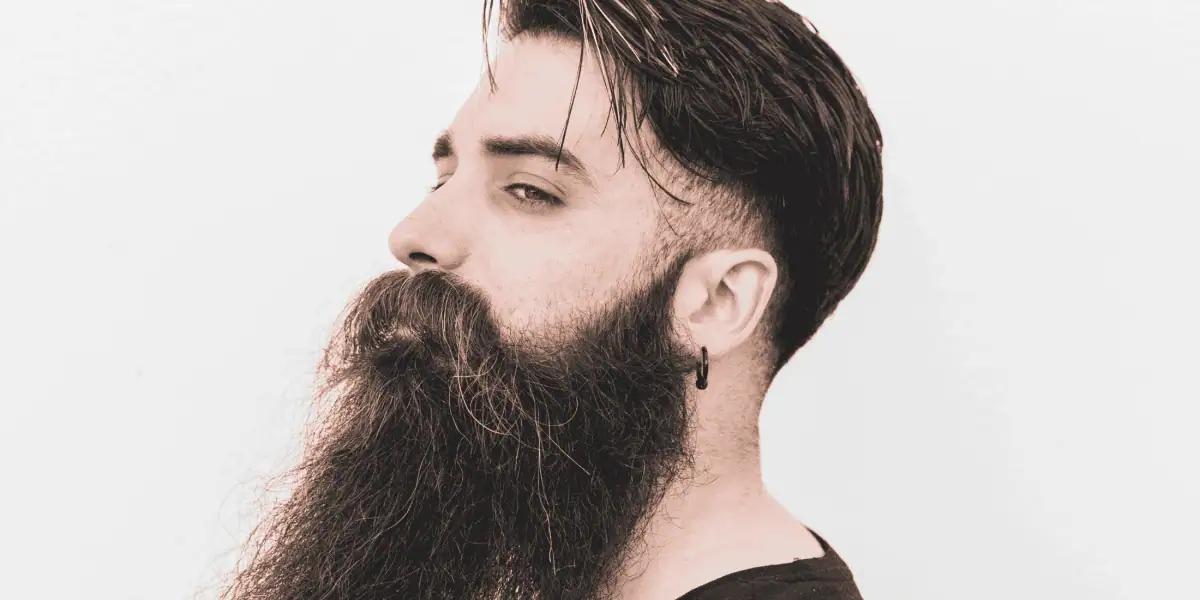
Low fade haircuts are popular for a simple reason: they don’t try too hard. They sharpen the haircut without making the fade the loudest thing on your head.
A low fade tightens the lower sides and keeps the area around the ears neater, without climbing too far up the head. That is why it works with everything from crops and buzz cuts to curls, slick backs, longer tops and full beards.
One thing to get straight first, though: the fade is not the whole haircut. And that’s the trap. Men ask for a low fade, then wonder why the result does not match the photo. Usually, the fade was fine. The top was wrong, the sides were left bulky, or the cut was simply wrong for their hair.
A low fade earns its keep when it improves the haircut without becoming the only thing you notice. That’s why it suits more men than almost any other fade.

In this article
Best Low Fade Haircuts for Men
The best low fade haircuts aren’t one fade with different styling on top. Some handle thick hair better, some are built for curls, some need daily product, and some win because they’re easy to live with.
Here are the versions worth knowing.
Classic Low Fade
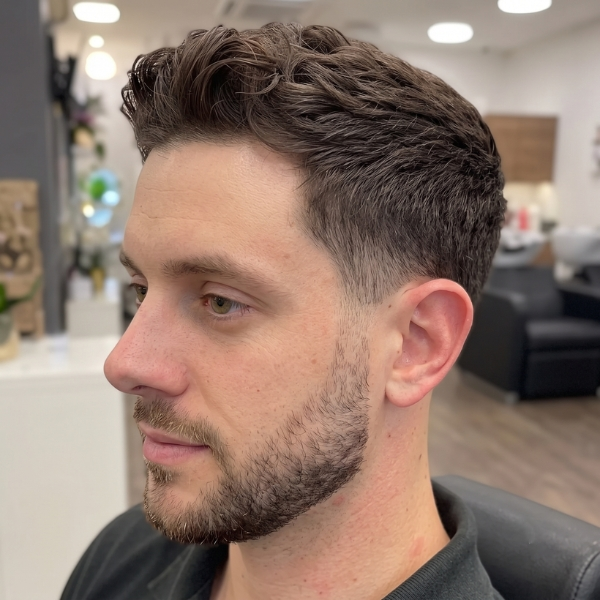
The classic low fade is where most men should start. The fade stays low around the ears and lower sides while the top keeps things simple. Nothing about it feels extreme, and that’s the whole appeal.
It works under crops, crew cuts, side parts and simple textured tops, sharpening the finish without making the fade the main event.
The thing to watch is weight above the fade. The bottom can look tidy while the temples are left heavy, and that’s when the cut looks unfinished from the side. That temple area matters more than it gets credit for.
It’s the safe, sharp place to start when you want a neater haircut without going aggressive.
Low Skin Fade

The low skin fade is the stronger version. It drops to bare skin at the lowest point for more contrast, but because it stays low it never shifts the balance of the whole cut.
I like it when the top has enough weight to balance the skin fade. A textured crop, short fringe, buzz cut or messy top can all work, but the proportions have to be right.
The catch is upkeep. Skin fades grow out fast, and after a week or two the lower sides soften, especially around the ears and sideburns.
Worth it if you want a stronger fade but you’re keeping the sides low.
Low Fade Buzz Cut

A low fade buzz cut is one of the better ways to stop a buzz cut looking basic. A single length buzz exposes plenty: head shape, density, scalp contrast and uneven growth all show fast. A low fade underneath adds detail around the lower sides and stops the cut looking too round.
Keep the top at a #2, #3 or #4 depending on the coverage you want, and let the fade do its work below. That’s the difference between a barbered style and a quick clipper job at the bathroom sink.
A good shout if you want short hair that still looks like someone thought about it.
Low Fade for Thick Hair

Thick hair can make a low fade look superb, but only if the barber handles the weight properly. When it grows out through the sides, it widens the head fast. A low fade pulls bulk out of the lower sides while leaving enough above so it doesn’t look stripped.
The real work happens above the fade. Leave that area heavy and the bottom looks tight while the upper sides still puff out. That’s a weight problem, not a fade problem.
I’d never judge thick hair on guard length alone. I want to see how it grows at the temples, how much it pushes out, and whether the top has the length to balance the sides.
This is the cut for dense hair that grows outwards rather than lying flat.
Low Taper Fade

The low taper fade is softer than a low skin fade, and for a lot of men that’s the better call. It mainly tightens the sideburns, lower sides and neck without taking much off higher up, so the haircut looks neater without changing the whole feel of the cut.
It grows out more gracefully too, and feels less dramatic day to day. That makes it a smart pick if you work somewhere formal or just don’t want harsh contrast through the sides.
Go for this when you want the haircut sharpened without the fade announcing itself.
Low Fade Comb Over

The low fade comb over looks great as long as it isn’t overdone. The old mistake was a top that was stiff, shiny and over the top, which dated it fast. The modern version keeps a neat sweep on top with sides tight enough to feel current.
Ask for enough length to part and move the hair across naturally, and let the low fade hold the sides in check. A light clay, cream or paste beats heavy product every time. You want hold, not a helmet.
This one’s for the guy who wants a smarter look with modern sides.
Long Top Low Taper Fade

A long top with a low taper fade buys you styling options without letting the sides run wild. Brush it back, part it, add texture or let it fall, while the taper keeps the sideburns, lower sides and neck tidy.
The risk is leaving it all long. A long top, full sides and no weight removed isn’t a style, it’s just hair that’s been left to grow. This cut lives or dies on balance.
Built for longer hair up top with the sides held in check.
Textured Top Low Fade

The textured top low fade is one of the best modern versions when it’s cut properly. The fade tightens the sides while the top is cut with enough texture to stop it sitting flat. It works especially well on straight, thick or slightly wavy hair.
Texture has to be cut in with care, though. Go hard with thinning shears and the hair turns weak and stringy. Leave it heavy and it collapses forward or sits like a block.
A matte clay or paste is usually all you need, and start with less than you think. Short textured hair overloads fast.
Reach for this if you want a low fade with more life through the top.
Low Fade Pompadour

The low fade pompadour is a bigger haircut, so it asks more of you. The sides stay tight, but the top needs height, direction and control. If you can’t stand a blow dryer and product, this isn’t the one for you.
Done well, the low fade stops the sides competing with the height on top, so the cut looks big where it should and tight where it needs to be. Done badly, it goes stiff, bulky or forced.
Only worth it if you want real volume and you’ll put in the styling.
Low Fade with Full Beard

A low fade with a full beard can look strong, but the sideburn blend has to be right. If the fade stops dead above a heavy beard, the hair and beard read as two separate decisions. Blend the lower sides down into the beard and the whole look joins up.
This is where a barber’s judgement shows, because hair and beard need assessing together rather than as two jobs. Keep the beard in shape, too. A fresh fade next to an untidy beard drags the whole look down.
The right choice when the beard is part of the whole look, not an afterthought.
Low Fade with Curly Hair

A low fade works beautifully with curly hair because it tidies the sides without stripping character out of the top. The usual error is letting the fade climb the head, or thinning the curls out. Curls need length to show their pattern, and stripping out the length leaves the top detached from the sides.
Ask for the fade to stay low and the top to be shaped around how your curls actually sit. That matters far more than copying a photo of someone with a different curl type. A curl cream or light leave-in helps if your hair dries out or frizzes.
Ideal if you want your curls visible while the sides stay tight.
Low Fade Faux Hawk

The low fade faux hawk can look sharp, but it turns awkward fast when the top is pushed too far. The centre needs length and texture for direction, and the sides need to stay tight enough to support it.
Let the top run long and it looks forced. Push the sides up and you’re closer to a mohawk than you probably wanted.
A low fade keeps it from looking too extreme, adding edge without pushing it into full mohawk territory. Keep the top textured rather than stiff, because once it stands up like a hard ridge it loses the point.
Sharper than a plain crop, without tipping into a mohawk.
Wavy Low Fade

A wavy low fade works best when you let the waves do some of the work. The fade keeps the lower sides neat while the top holds enough length for the natural bend to show. Cut it short and the waves vanish. Leave it long with no shape and it falls badly.
It’s a great option if you want movement without a demanding morning routine. A little sea salt spray or matte cream brings the wave out without weighing the hair down.
Made for natural waves you want to keep while the sides stay tight.
Low Fade Slick Back

The low fade slick back is a strong cut when the hair type lines up. You need enough length on top to brush back and enough density that it doesn’t collapse. Very fine hair tends to fall flat, and very thick hair often needs weight removed so it doesn’t puff out at the front and sides.
The low fade keeps the sides neat and stops the slick back looking old-fashioned. It works best when the top still looks like hair, not plastic. Heavy on shine and it reads greasy, heavy on hold and it reads rigid.
Pick this for a classic brushed back style with tighter sides.
Messy Top Low Fade

The messy top low fade only works when the mess has been cut into the hair. Ask for “messy” without that, and you walk out with hair that has no direction. A proper messy top has structure underneath it.
The fade keeps the sides tight while the top carries the texture and shape. Heavy at the front and it drops. Thin it out and it looks weak. Pile on product and it clumps.
I like this cut when it looks loose but not lazy. It suits men who want a relaxed top, as long as the cut still has some direction.
A Good Fade Can’t Save a Bad Top
A low fade should improve the haircut above it. That sounds obvious, yet it’s where most bad low fades begin. A barber can blend the lower sides perfectly and the cut can still look wrong if the top doesn’t suit the man.
I see it most with reference photos. Someone brings in a picture of thick dark hair, but his own is finer, lighter, straighter or thinner through the crown. The fade in the photo might be spot on, but it was never going to sit the same on a different head.
Photos still help. They just belong at the start of the conversation, not in place of the barber’s judgement.
A good low fade gets adjusted to the man in front of the barber. Thick hair may need more weight through the sides, curls may want more softness above the fade, fine hair often needs calmer contrast. So I never treat a low fade as one fixed haircut. It’s a tool. Used well it lifts the cut. Used lazily it’s just another fade.
Low Fade vs Low Taper vs Low Skin Fade
These three get mixed up constantly, so here it is plainly.
A low fade blends the lower sides shorter while keeping the transition low on the head. It can go very short, though it doesn’t have to drop all the way to skin.
A low taper is the softest of the three. It focuses around the sideburns and neck rather than fading a larger section of the sides, which makes it the one for a subtle finish that grows out easily.
A low skin fade is the strongest. It takes the lowest point down to bare skin for maximum contrast, and it grows out the fastest.
There’s no automatic winner. Want subtle? Go low taper. Want contrast? Go low skin fade. Want something in between? Ask for a low fade and be clear about how short you want the bottom taken. The trouble starts when a man asks for one and shows a photo of another.
Before You Pick a Low Fade, Look at Your Hair Type
Your hair type should decide the version you go for.
Thick hair can usually take a stronger low fade, as long as the weight above it is controlled. Otherwise the lower sides end up tight while the upper sides keep puffing out.
Fine hair needs more care. A harsh fade can make the top look thinner by comparison, especially without much density at the front or crown. A low taper or softer low fade tends to serve it better.
Straight hair shows the shape of the cut clearly. That’s good, but it also means sloppy blending has nowhere to hide. Wavy hair often suits a low fade well, since the sides stay controlled while the top keeps its movement.
Curly hair needs enough length on top for the curl pattern to read. Lift the sides up or crop the top short and the cut looks detached.
Thinning hair depends on where the thinning sits. If the crown or hairline is already weak, a sharp skin fade only makes the contrast louder, so a softer fade is often the smarter move.
This is exactly why I don’t like choosing haircuts straight off a photo. The cut has to work on your hair, not on the man in the image.
How to Ask for a Low Fade Without Getting the Wrong Cut
Don’t walk in and just say “low fade.” It leaves too much room for interpretation.
Tell your barber how short you want the lowest part: down to skin, very short, or just tapered? That one detail changes the entire finish.
Then explain what you want on top. A low fade with a crop is a different haircut from a low fade with a slick back, curls or a comb over.
Use photos, but use the right ones. A single front shot isn’t enough. Show the front, side and back if you can, and prioritise the side view. With a fade, that’s the angle that shows how low it sits and how it joins the top.
Be honest about your routine, too. If regular barber visits aren’t happening, skip the sharpest skin fade. If you hate styling, avoid the pompadour and slick back. If your hair grows thick at the sides, say so. It all changes how the cut should be handled.
The Mistakes That Make a Low Fade Look Bad
Climbing too high is the first one. Once the fade goes past low, it stops reading as a low fade, and the cut can come out harsher than you planned, especially on round faces or thick hair.
Leaving bulk above the fade is the second, and it happens constantly. The bottom looks tight, the upper sides push out, and from the side the whole thing looks unbalanced.
Choosing skin when a taper would suit you better is another. A skin fade looks strong fresh, but it grows out quickly, shows scalp contrast, and can make fine hair on top look thinner.
Ignoring the top is a big one. A fade can be technically flawless and the cut can still fall short. With no shape, no texture, excess length or the wrong product, the fade won’t rescue it.
The last one is copying a photo without checking your own hair type. A low fade on thick dark hair won’t translate to fine light hair. The reference photo is a starting point. Your hair makes the final call.
Frequently Asked Questions
What is a low fade haircut?
A low fade haircut keeps the fade low around the ears and lower sides. The hair gradually shortens towards the bottom while more length stays higher up the sides and on top.
Is a low fade better than a high fade?
A low fade is better if you want a more subtle haircut that keeps the sides from going too high. A high fade gives more contrast and a stronger look, though it can also come across harsher.
What is the difference between a low fade and a low taper?
A low taper is usually softer and focuses around the sideburns and neck. A low fade normally blends a larger section of the lower sides and creates more contrast.
Does a low fade suit thick hair?
Yes, a low fade can suit thick hair very well. It pulls bulk out of the lower sides, though the barber still has to control the weight above the fade.
Does a low fade work with curly hair?
Yes, as long as the top is left long enough for the curl pattern to show. Keep the fade low so the haircut doesn’t look detached from the top.
How often should I get a low fade trimmed?
A low skin fade usually needs a trim every two weeks to stay sharp. A softer low fade or low taper can often stretch closer to three.
Is a low fade good for thinning hair?
It can be, depending on where the thinning is. If the top is very thin, a strong skin fade makes the contrast more obvious, so a softer low fade may be the better option.
The Beard Beasts Verdict
The low fade is one of the best fades for men because it knows its place. It sharpens the lower sides, works with most hair types, and gives the haircut above it a stronger shape. It can be subtle, strong, short, textured, curly, classic or beard-friendly depending on how it’s cut.
I wouldn’t choose it blindly, though. The right low fade depends on your hair density, face shape, beard, styling routine and how often you’re willing to sit for a trim.
For most men, a low fade is the right fade to start with. Just make sure it’s there for a reason. The best low fades don’t shout. They quietly make the whole haircut look better.