
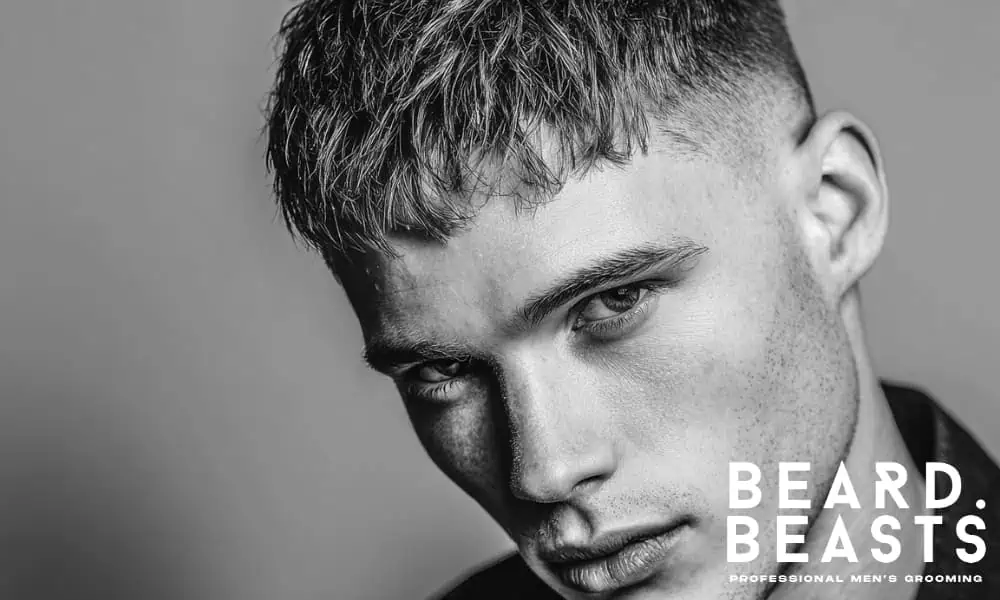
The short textured fringe is one of the sharpest modern haircuts a man can choose right now. It keeps the top tight, pushes texture forward, and strips away unnecessary bulk so your hair looks structured instead of padded and overbuilt.
What makes it stand out in 2026 isn’t just the fringe itself, but the flexibility underneath. Pair it with a fade for contrast, a taper for subtlety, or keep it clean for professional settings. Done right, it delivers movement, shape, and just enough edge without turning your head into a daily battle.
For a full breakdown of every variation, see our complete guide to textured fringe haircuts, covering everything from short and structured to longer, more expressive styles.

In this article
Quick Picks – Best Short Textured Fringe Variations
Here’s where the short textured fringe hits hardest depending on your hair type and tolerance for maintenance.
-
Best for Thick Hair →
High Fade Short Textured Fringe -
Best for Straight Hair →
Classic Short Textured Fringe -
Best for Low Maintenance →
Low Taper Short Fringe -
Best for Bold Contrast →
Skin Fade Short Fringe -
Best for Wavy Hair →
Textured Fringe with Drop Fade
Best Short Textured Fringe Haircuts (With Fade & Taper Options)
Below are the strongest short textured fringe haircuts trending right now, from subtle tapers to aggressive skin fades. Each variation changes contrast, maintenance level, and overall shape, so choosing the right one matters.
Classic Short Textured Fringe

This is the foundation. Short, layered top pushed forward with a lightly broken fringe that sits just above the brows. No aggressive fade. No drama. Just clean structure and balanced texture.
It keeps bulk low, drives movement through the front, and you can take it into the office without raising eyebrows.
Best for: Straight or slightly wavy hair that holds shape naturally.
Maintenance level: Moderate. Trim every 3 to 4 weeks to keep the fringe sharp.
Short Textured Fringe with Low Fade

The low fade keeps things subtle. It tightens the edges around the ears and neckline without forcing heavy contrast into the sides. The top stays textured and forward, but the overall shape feels balanced and intentional.
This is the version for guys who want modern without looking like they’re chasing trends.
Best for: Office environments or men easing into shorter sides.
Maintenance level: Low to moderate. The fade grows out cleanly.
Short Textured Fringe with High Fade

This one strips away weight fast. The high fade removes bulk from thick hair and makes the textured top stand out harder. Strong contrast. Clean silhouette.
If your hair is dense and starts to puff at the sides, this is your fix before it turns into a blocky mess.
Best for: Thick hair that needs control.
Maintenance level: Higher. Expect barber visits every 2 weeks.
Short Textured Fringe with Skin Fade

Skin on the sides. Texture up top. It’s sharp, aggressive, and unapologetically modern. The fringe looks heavier because the sides are taken down to nothing.
It grows out quickly though. That crisp edge fades fast and the contrast softens sooner than you think.
Best for: Bold contrast and strong jawlines.
Maintenance level: High. You’ll need regular clean-ups to keep it tight.
Short Textured Fringe with Drop Fade

The drop fade curves behind the ear instead of running straight across. That subtle arc improves the side profile and keeps the outline intentional rather than flat.
Paired with a short textured fringe, it creates flow instead of a squared-off shape.
Best for: Wavy hair and men who want a shaped side profile.
Maintenance level: Moderate. The fade needs upkeep, but it grows out smoother than a skin fade.
Short Textured Fringe with Burst Fade

The burst fade curves tightly around the ear, creating a rounded transition that pushes attention back toward the fringe. It keeps the sides tight without climbing too high, which makes the top look fuller and more aggressive.
This version adds personality without going full experimental. The shape frames the fringe and sharpens the outline without flattening the profile.
Best for: Thick hair and men who want a modern, slightly rebellious edge.
Maintenance level: Moderate to high. The curved fade needs regular clean-ups to keep its shape tight.
Short Textured Fringe with Mid Fade

Sitting between low and high, the mid fade delivers visible contrast without going extreme. It sharpens the sides while keeping enough density above for balance.
It’s the middle ground that actually works without feeling watered down.
Best for: Most face shapes. Especially oval and square.
Maintenance level: Moderate. Three-week trims keep it looking sharp.
Short Textured Fringe with Taper

A taper is cleaner and more conservative than a fade. The sides gradually shorten around the neckline and sideburns while keeping fullness above.
If you want texture without looking like you just stepped out of a streetwear shoot, this is your move.
Best for: Professional settings and first-time fringe guys.
Maintenance level: Low. Tapers grow out naturally without harsh lines.
Short Textured Fringe with Beard

Now we’re talking balance. The short textured fringe keeps the top tight and structured, while the beard adds grit and weight to the lower half of your face.
The key is contrast. If the beard style is rugged and hefty, keep the sides crisp so the weight doesn’t drag your whole head downward.
Best for: Men who can grow solid facial hair without patchiness.
Maintenance level: Moderate to high. You’re managing both mane and beard now.
Short Textured Fringe with Mullet

Yes, it works. When done properly.
The short textured fringe keeps the front controlled and sharp, while length at the back adds contrast and attitude. The key is keeping the fringe tight and structured so the mullet doesn’t turn into shaggy chaos.
This is not subtle. It’s deliberate. And it needs confidence.
Best for: Wavy or thicker hair and men comfortable with bold styling.
Maintenance level: Moderate. The fringe needs regular trims, and the back requires shaping to avoid looking unkempt.
The short textured fringe isn’t one haircut. It’s a framework. Get the variation right and it works with your hair instead of fighting it.
If you’re exploring other fringe haircut styles beyond short and structured versions, see our full guide to fringe haircuts for men.
Who Should Choose a Short Textured Fringe?
Some haircuts look sharp on Instagram and average in real life. The short textured fringe performs when your hair type supports it and you’re willing to style it properly. Get that balance right and it looks intentional. Get it wrong and it just looks like messy short hair sitting on your forehead.
Thick hair is where this cut earns its keep. Removing weight through layering and tightening the sides with a fade or taper stops bulk before it turns into puff. The fringe sits forward with structure instead of stacking upward like a padded block.
Fine or slightly thinning hair can benefit too, but only if you keep the fringe short. Broken layers create separation and make the top appear fuller. Grow it too long and flatness shows fast, especially under bright light.
Straight hair holds shape easily. Wavy hair often looks even better because natural bend adds built-in grit. The key is controlling length so it doesn’t drag heavy across the forehead or collapse by midday.
In professional settings, choose a low fade or taper and keep the fringe neat. Texture should look deliberate, not chaotic or accidental.
If your hair supports texture and you’re willing to spend two minutes styling, this is one of the smartest modern cuts you can choose.
How to Style a Short Textured Fringe (Step-by-Step)
This cut only looks effortless when it’s styled with intent. Leave it alone and it falls flat, separates poorly, and loses that sharp forward shape that makes the cut work.
Start With Damp Hair
The foundation of a sharp short textured fringe begins before product ever touches your hair, which means starting with the right level of moisture and direction.
- Towel dry until the hair is slightly damp, not dripping
- Comb or rake forward to set the fringe direction
- Avoid applying styling product to soaking strands
- Keep the crown controlled so excess weight doesn’t build at the back
Blow Dry Forward
Blow drying is what actually shapes the fringe into place and gives it the structure that separates a sharp cut from something that looks unfinished.
- Use medium heat with controlled airflow
- Push the hair forward using your fingers or a vent brush
- Add slight root lift if you want subtle height
- Keep the movement natural, not stiff or overworked
If the direction isn’t locked in here, no amount of product will rescue it later.
Apply Matte Clay
Matte clay is the engine of this style because it adds grit, separation, and hold without turning the fringe into a shiny helmet.
- Start with a pea-sized amount and warm it fully between your palms
- Work the product from back to front for even distribution
- Focus on the fringe last for precise shaping
- Pinch and twist small sections to carve texture
Add Texture (Optional)
If your hair is very straight or lacks natural movement, adding controlled grit before styling can noticeably improve how the fringe holds throughout the day.
- Lightly mist sea salt spray onto damp hair
- Focus on the roots rather than the ends
- Avoid oversaturating, which can dry the hair out
- Scrunch lightly to enhance separation before blow drying
The short textured fringe rewards precision. A few steps, the right product, and controlled airflow turn a simple cut into something sharp, structured, and built to last past lunchtime.
Best Products for Short Textured Fringe
The cut gives you structure. The product gives you hold.
Use the wrong one and your fringe turns greasy, stiff, or flat by noon. Use the right one and it keeps its shape with natural movement instead of collapsing into fuzz.
Here’s what actually works.
Matte Clay
If you buy one product, make it this.
Matte clay provides grip without shine, which is exactly what a short textured fringe needs. It builds separation and structure while keeping the finish natural instead of glossy or sticky.
- Strong hold without stiffness
- Keeps the fringe sharp all day
- Adds thickness to fine hair
- Best for most hair types
If you’re unsure which to choose, see our guide to the Best Hair Clays.
Texture Paste
Hair paste is lighter and more flexible than clay. It’s ideal if you want movement over heavy hold.
It won’t feel as hefty or rugged, but it’s easier to restyle throughout the day without locking everything into place.
- Medium hold
- More natural flow
- Easier to wash out
- Good for straight or fine hair
Sea Salt Spray
Sea salt spray isn’t a replacement for clay. It’s the base layer.
It adds grit before blow drying, especially useful for flat or lifeless hair that struggles to hold shape on its own.
- Adds volume at the roots
- Improves separation
- Reduces the need for excess product later
- Best applied to damp hair
Check our breakdown of the Best Sea Salt Sprays if you need one that adds texture without drying your mane into straw.
The short textured fringe doesn’t need a bathroom shelf full of product. It needs one strong core styler and, if necessary, something to add grit underneath. Keep it simple. Keep it disciplined.
Short Textured Fringe vs Textured Crop
These two get confused constantly.
From a distance, they look similar. Short on the sides. Texture on top. But the structure differs, and that difference changes how the cut frames your face.
Here’s how they actually compare.
| Feature | Short Textured Fringe | Textured Crop |
|---|---|---|
| Fringe Style | Forward with visible movement | Blunter, often heavier at the front |
| Texture | Broken, separated, slightly messy | More uniform and compact |
| Overall Shape | Softer front with more flow | Squarer, tighter silhouette |
| Styling Effort | Moderate | Low to moderate |
| Best For | Movement and modern edge | Clean, controlled structure |
The short textured fringe leans into separation and motion. The fringe should look broken and slightly rugged, not blunt or boxed off.
The textured crop, on the other hand, is tighter and more structured. The fringe is usually shorter, cut straighter across, and the overall shape feels more contained.
If you want sharper movement and more personality, go fringe.
If you want something cleaner and lower risk, the crop is the safer option.
Pick based on attitude as much as hair type.
Short Textured Fringe FAQs
Is a short textured fringe high maintenance?
It’s not high maintenance, but it’s not lazy either.
You’ll need two to three minutes of styling each morning and a trim every 3 to 4 weeks to keep the fringe tight. Skip both and it loses shape quickly and starts to sit flat.
Does it work on thin hair?
Yes, if it’s cut properly.
Short, layered texture creates the illusion of thickness, and keeping the sides tight makes the top appear fuller by contrast. Just don’t grow it long trying to fake density. That’s when flatness and patchiness show up under natural light.
How often should I trim it?
Every 3 to 4 weeks is the sweet spot.
If you’re running a skin fade, closer to 2 to 3 weeks. The fringe itself grows forward quickly, and once it drops toward the brows, it starts to lose that crisp edge.
What do I tell my barber?
Be specific.
Ask for a short textured fringe with layered texture on top and a defined forward direction. Then specify your fade or taper. Low, mid, high, skin, or clean taper. Don’t just say “short back and sides” and hope for the best.
Clarity gets you consistency.
Beard Beasts Final Verdict
The short textured fringe isn’t loud. It isn’t flashy. It’s controlled aggression.
It gives you movement without bulk, shape without stiffness, and just enough edge to look modern without forcing it. That balance is why it works on so many men.
But here’s the truth.
This cut rewards effort. Two minutes with a dryer. The right matte clay. Regular trims. Do that and it looks sharp, rugged, intentional. Skip it and it turns into soft fuzz sliding across your forehead.
If you want a style that feels current but manageable, this is one of the smartest moves you can make in 2026.
The rest is down to your barber. And your discipline.