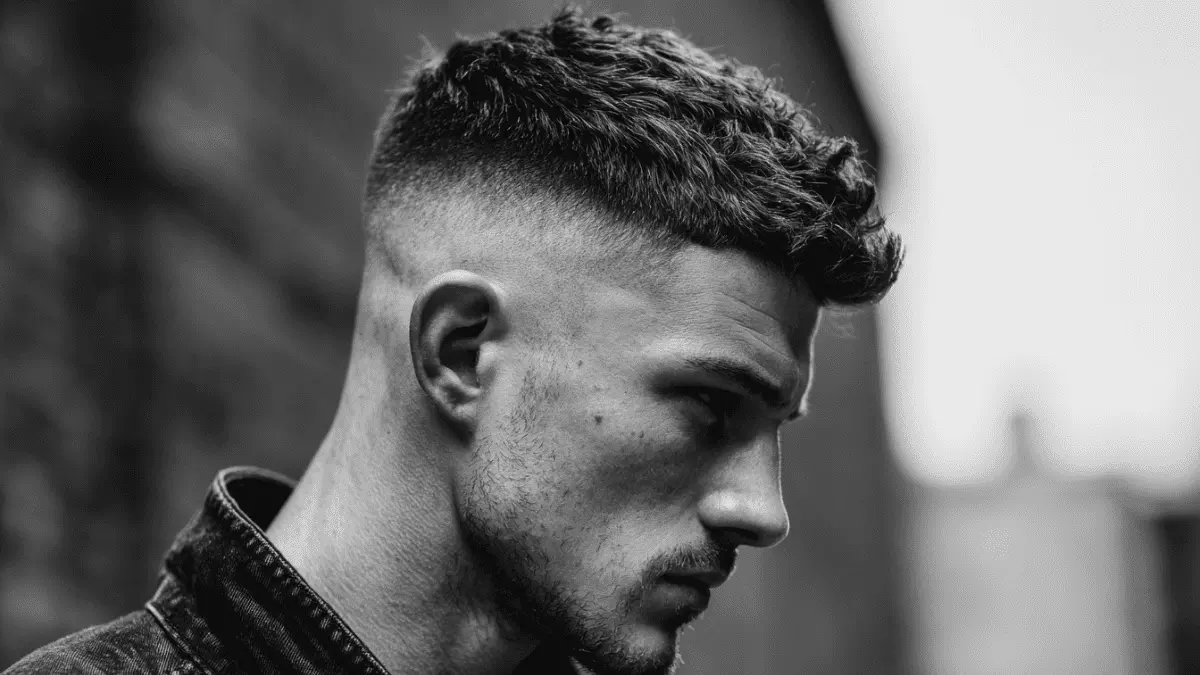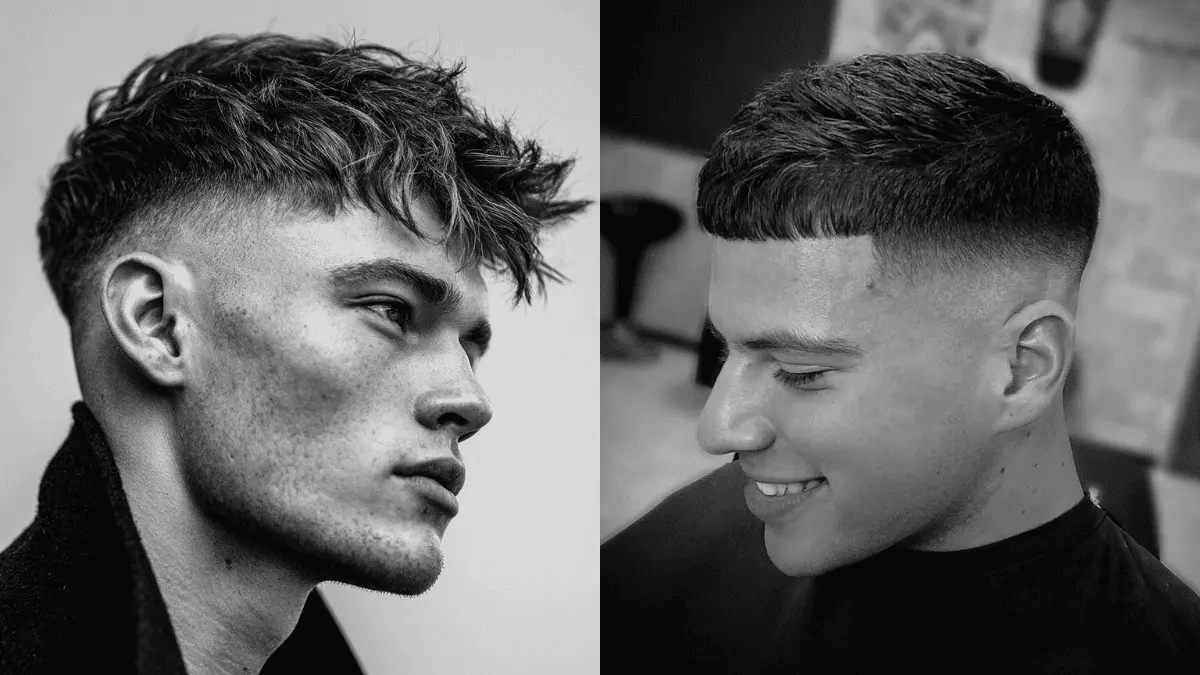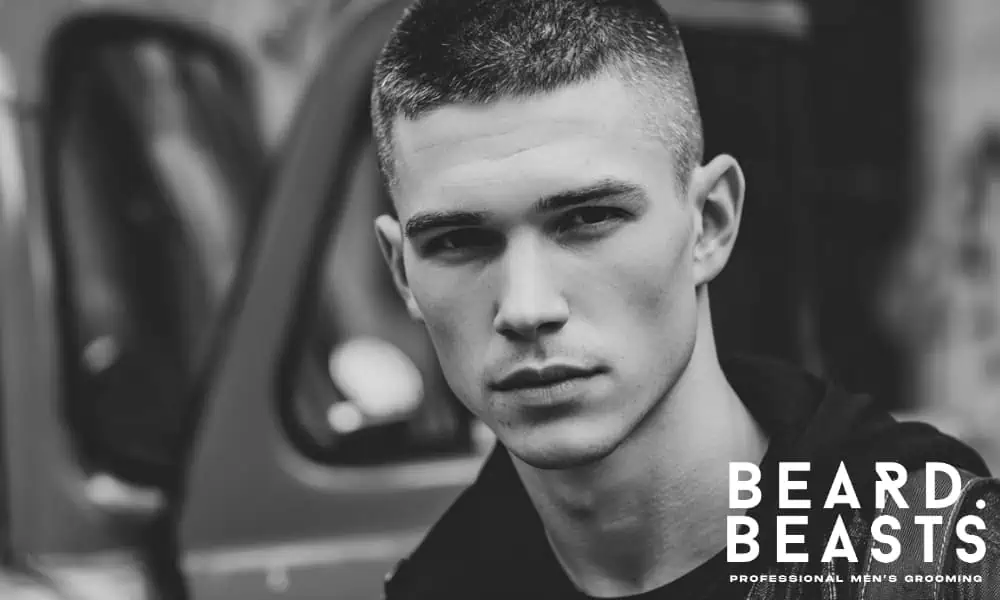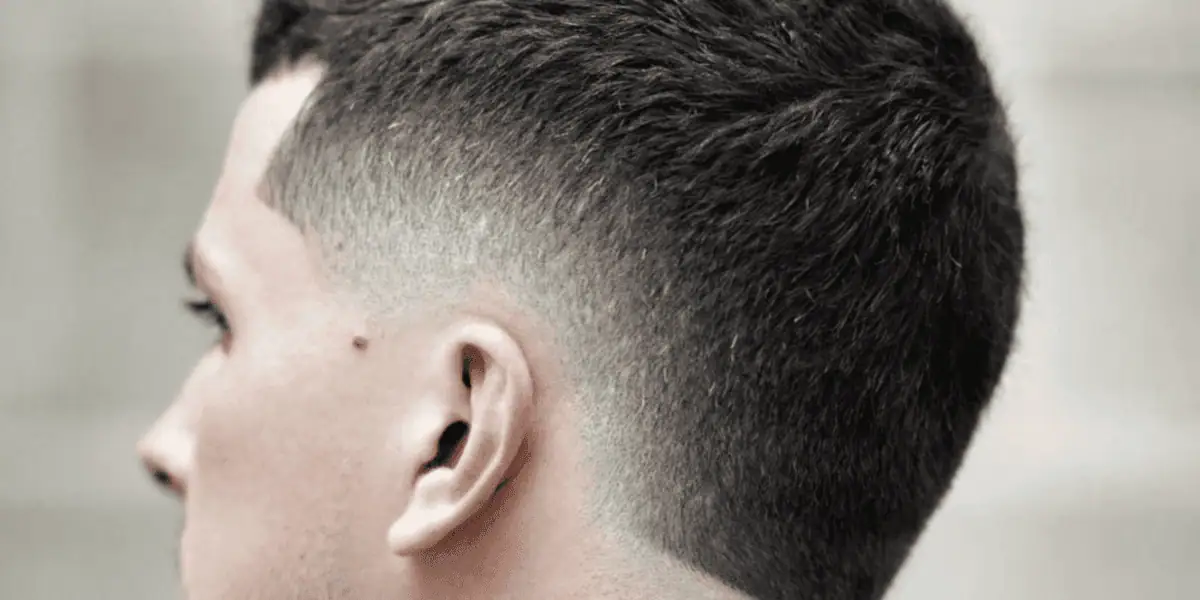
Burst fade haircuts work because they tighten the sides without flattening the whole haircut. That curved fade around the ear clears bulk where hair usually kicks out, but still leaves enough weight on top to stop the cut feeling stripped out or generic.
That is why a good burst fade looks better than a lot of standard fades. It controls the side profile without draining the haircut of all its character. But it is also one of the easiest fades to get wrong. Take it too high, stretch it too far back, or leave the wrong amount of weight above it, and the whole shape starts falling apart.
Not every burst fade is worth trying. Some look excellent. Some feel too aggressive. Some grow out cleanly. Some barely survive the first week. These are the versions that actually matter.
The Best Burst Fade Haircuts That Are Actually Worth Considering
Below are the burst fade haircuts that matter, along with what actually sets them apart.
Bald Burst Fade

The bald burst fade is where the fade stops being forgiving. Skin around the ear exposes everything, so if the blending is off, the bald burst fade looks off immediately.
I only like this when the top has enough strength to balance the skin exposure. If the hair on top is weak, flat, or too light, the fade starts looking harsher than it should.
Low Burst Fade

This is one of the safer and smarter burst fade options. The fade stays tight to the ear instead of climbing too high, which means the cut keeps shape without looking too aggressive.
For most men, this is the easiest place to start. It gives you control around the ear, keeps enough darkness above the fade, and usually grows out better than the louder versions.
Short Hair Burst Fade

Short hair puts the fade front and center. There is less top length to distract from the blend, which means the curve around the ear has to be clean and the weight above the fade has to be handled properly.
The short hair burst fade suits men who want something tidy, efficient, and easy to manage. It is less about styling and more about clipper work being right from every angle.
Mid Burst Fade

The mid burst fade usually gives the best balance. It creates contrast, clears side bulk, and still leaves enough weight above the fade to stop the haircut feeling hollow.
If a man is not sure which burst fade to get, this is often the version I would point him toward first. It is sharper than the low variation, but not as unforgiving as the high or skin variations.
Long Hair Burst Fade

This is where the burst fade gets more interesting. The fade removes bulk at the sides while the top carries real weight, movement, and presence.
When the balance is right, it looks excellent. When it is wrong, the haircut turns messy fast. This version only works if the top is being styled properly and the barber knows how to remove bulk without killing the shape.
High Burst Fade

The high burst fade removes more side weight and pushes attention upward fast. That can look excellent on thick hair with texture, especially if the head shape can carry stronger contrast.
It can also go wrong quickly. Take it too high into the ridge and the haircut starts looking too empty through the sides. This is not the version I would call universally flattering.
Skin Burst Fade

This one depends entirely on clean transitions. The move from bare skin into hair has to stay smooth all the way around the ear or the whole effect falls apart.
It can look very sharp, but it is one of the fastest burst fade haircuts to lose its edge once growth starts showing. I would only go for this if keeping it fresh is realistic for you.
Burst Fade with Straight Hair

Straight hair shows everything. That is the strength of it and the danger of it. If the burst is placed well and the blending is sharp, the cut looks crisp. If not, every bad line shows.
The top usually needs some texture or direction. Without that, straight hair can make a burst fade look too flat and too stiff very quickly.
Burst Fade with Curly Hair

This is one of the strongest pairings. Curly hair naturally builds width around the side of the head, and the burst fade removes that bulk right where it usually becomes a problem.
The mistake is taking the top too short and killing the curl pattern. Leave enough length for the curls to still do something useful and this version is very hard to beat.
Burst Fade with Wavy Hair

Wavy hair suits burst fades because the curved fade keeps the sides tidy without flattening the natural movement on top. It gives the cut shape without forcing it into something too rigid.
This is one of the easier variations to live with. The waves do a lot of the work on their own once the outline around the ear is cleaned up properly.
Burst Fade Buzz Cut

This is minimalism with some actual shape to it. The buzz cut keeps things simple, and the burst fade stops the whole thing from feeling too flat or too plain.
The burst fade buzz cut works well for men who want a very low-effort haircut but still want some structure. Just do not expect it to stay sharp for long without regular cleanups.
Textured Burst Fade

Texture and burst fades usually work well together. The fade keeps the profile tight, and the texture stops the haircut from feeling too neat or too stiff.
For a lot of men, this is one of the better modern versions. The top has enough grit to keep the haircut alive, and the burst fade does not have to carry everything on its own.
Burst Fade with Highlights

This one can look very good or very cheap. There is not much middle ground. If the lightness follows the movement of the top and does not compete with the fade, it adds some depth.
If it starts pulling attention away from the shape, the haircut gets busy fast. I would always rather keep this subtle.
Burst Fade V Cut

The V cut sharpens the neckline and gives the burst fade a stronger back profile. It can look very sharp when the fade is tight and the neckline is kept fresh, especially if the rest of the haircut is already clean and controlled.
I would not call it essential, though. This is one of those details that looks great for a few days, then loses most of its effect once growth softens the shape. If you are not keeping the haircut fresh, the V cut usually turns into extra fuss rather than extra style.
Burst Fade Double V

The double V is louder and a lot less forgiving. It makes the back of the haircut more of a focal point, which means symmetry has to be right or the whole thing starts looking off.
I think this only works if you actually want that level of detail and are willing to maintain it. Otherwise, it feels like too much decoration on a haircut that already has enough going on around the ear.
Burst Fade with Design

Designs bring attention fast, which is exactly the problem. They can look sharp for a few days, then lose their shape much faster than most men expect.
I would only go here if you actually like that level of detail and are willing to keep it touched up. Otherwise the shape of the burst fade is usually enough on its own.
Burst Fade with Messy Hair

This works because the fade keeps order while the top stays looser. The contrast is what makes it look good.
The key here is not over-styling it. A messy top only works when it still looks like the haircut has some control underneath it.
Side Burst Taper Fade

This is a softer, easier version of the burst fade. The taper fade smooths the transition and makes the whole thing feel less aggressive.
For men who want shape without the stronger contrast of a full burst fade, this is one of the better real-world choices. It grows out better too.
Burst Fade Mullet

This is not a haircut for half-commitment. The burst fade cleans up the side profile and gives the mullet some structure, which is exactly why this combination has become more popular with the younger generation.
When it works, it has real character. When it does not, it just looks unfinished. The back has to feel like a choice, not an accident.
Burst Fade Faux Hawk

This version leans on tension. The burst fade tightens the sides while the center keeps height and texture, which pulls the eye inward and makes the cut feel more aggressive.
I think this works best when the top has grit, not stiffness. Too neat and it loses the whole reason for getting it.
Burst Fade French Crop

The French crop gives you control at the front, and the burst fade stops the side profile from looking dead. That is why this pairing works better than a lot of men expect.
It is especially useful when the crop fringe is doing some work for the hairline. It is a good lower-effort option, but only if the front density is strong enough to carry it.
Burst Fade Blowout

The blowout version puts volume front and centre. The burst fade clears the sides so the top can expand without making the whole head look too wide or too heavy.
It can look excellent on thick hair, but I would not recommend it to men who want a low-effort haircut. Without some heat styling and a bit of control, the top can lose shape fast and the whole thing starts feeling unfinished.
Burst Fade with Quiff

The quiff brings height at the front, and the burst fade clears the sides so that height actually has room to work. That can look very strong when the top length and density are right.
I would not call it low effort, though. The top has to be built well, and it usually needs a bit of styling to stop the shape from collapsing.
Burst Fade Slick Back

A slick back with a burst fade can look sharp, but it only works when the top is controlled and the product stays restrained. The fade tightens the side profile so the slicked-back shape does not feel too heavy or too full through the head.
I would be careful with this one, though. Too much shine and it starts looking dated fast. Too much length and the top gets heavy instead of controlled. When it is cut well and styled well, it looks strong. When it is overworked, it goes greasy and tired very quickly.
Burst Fade Comb Over

This version adds direction through the top while the burst fade keeps the sides neat. It is cleaner than a standard comb over and usually has a bit more personality.
It is not a disguise haircut though. If the density is dropping too much, the comb over effect starts looking forced very quickly.
Burst Fade Blonde Hair

Blonde hair changes how the fade reads because the blending tends to show differently in lighter hair.
That can look excellent when the barber is sharp. It can also lose its sharpness quickly if the cut is not precise. Texture on top usually helps keep this version from feeling too soft.
Low Taper Burst Fade

This is a quieter version of the burst fade, and that is exactly why it works for a lot of men. The taper softens the edges around the sideburn and neckline while the burst still gives the area around the ear some shape.
I like this for men who want control without turning the haircut into a statement. It grows out more cleanly than the sharper versions and does not need the same level of babysitting.
Burst Fade Fringe

The fringe adds weight at the front. The burst fade keeps the sides from getting too full and balances the whole thing out.
This can work well if you like forward styles and the front of your hair is strong enough to support it. If the fringe is weak, the haircut starts losing its point.
Mid Taper Burst Fade

The mid taper burst fade sits in a very useful middle ground. It gives you more shape than a low taper version, but it does not hit as hard as a full high burst fade.
This is one of the more balanced real-world options. It removes enough side bulk to sharpen the profile, but it still leaves enough softness that the haircut does not feel too severe once it starts growing out.
Burst Fade with Full Beard

This is a strong combination when the fade flows properly into the beard. That transition matters more than men think.
If the beard is good and the fade is clean, the whole look has a lot of presence. If the beard is neglected, it ruins the haircut fast.
Burst Fade Afro

This is one of the strongest burst fade versions for Black men when the barber understands shape and proportion. The burst fade removes bulk at the sides and around the ear, while the afro on top keeps the haircut full, bold, and properly balanced.
The key is proportion. Too much fade and the top starts looking disconnected. Get the balance right and this cut looks powerful without losing its shape.
Burst Fade with Short Beard

This pairing works because neither side tries to overpower the other. The short beard adds enough lower-face weight to balance the fade, while the burst keeps the side profile clean and stops the whole thing from feeling too heavy.
I usually prefer this to a burst fade with an overgrown beard. It looks tighter, easier to maintain, and less likely to drift into that over-styled barber-photo look that falls apart in real life.
Which Burst Fade Haircuts Fail More Than Men Realise
Some burst fades sound better than they perform.
Heavy design work is one of them. It looks sharp for a few days, then softens fast and starts looking like leftover detail rather than a haircut choice. A double V or overworked neckline usually falls into the same category.
A burst fade with too much product is another problem. Once the top gets too glossy or too stiff, the haircut starts feeling forced instead of sharp. That is especially true with quiffs, slick backs, and longer burst fades.
That is my rule with burst fades.
The shape should stay the main event. Anything that starts distracting from the curve, the outline, or the weight balance usually weakens the cut.
How to Choose the Right Burst Fade
Do not choose a burst fade from one photo and assume it will translate.
The first decision is fade height. Low and mid burst fades are easier to live with and more forgiving on different skull shapes. High and bald versions look stronger at first, but they show growth faster and punish bad placement harder.
Then there is density. Thick hair can usually carry stronger contrast and more top weight. Fine hair usually needs more care because taking the fade too high can make the top look weaker by comparison. Curly and Afro-textured hair often benefit most because the fade removes bulk while the top keeps shape. Straight hair needs stronger blending because every line shows.
Then comes the real question.
How much work are you actually willing to do?
If the answer is very little, do not ask for a long burst fade quiff and pretend you are going to style it every morning. The right burst fade is the one that still works once the barber is gone.
What to Tell Your Barber
Most bad burst fades start with vague instructions.
Do not just say “burst fade” and hope the rest gets figured out. A barber still needs to know how compressed you want it, how high it should sit, and how much weight should stay above it.
Useful things to say:
- Keep the burst tight around the ear, not stretched too far back.
- Do not take it too high into the ridge.
- Leave enough weight above the fade so it does not look hollow.
- Blend it softly into the beard.
- Keep the top textured, not too neat.
- I want the sides controlled, not stripped flat.
That kind of language gives the barber something real to work with. It also makes it much easier to avoid getting a fade that technically qualifies as a burst fade but does not actually suit you.
How It Starts Growing Out
This is the part haircut galleries ignore.
A burst fade usually looks best in the first few days. By day five, skin and bald versions start losing some of their snap. By day ten, the area around the ear is already getting softer. By week three, most burst fade haircuts have either been refreshed or they are drifting.
Low and mid burst fades buy you more time. High and skin versions do not.
The awkward phase usually shows up around the ear first. The line gets fuzzy, the cleared-out area starts darkening again, and the haircut loses the clean separation that made it look good in the first place.
How to Keep a Burst Fade Looking Sharp
This is not a haircut you get and ignore.
Most burst fades need touching up every two weeks if you want the shape to stay crisp. Skin and high versions usually need it sooner. Once the outline around the ear goes soft, the haircut stops looking sharp and starts looking grown out in the wrong way.
Product should support the cut, not bury it. A light matte cream, hair clay, or paste is usually enough depending on the top. Heavy shine products tend to make burst fades look too dressed and too stiff. I would rather see this haircut a little dry and textured than overworked and glossy.
A Few Straight Answers
If you are still weighing it up, these are the questions worth clearing up first.
What is a burst fade haircut?
A burst fade is a curved fade that wraps around the ear instead of running straight across the side of the head. That rounded blend tightens the side profile while still leaving weight where the haircut needs it.
What haircuts work best with a burst fade?
Burst fades work best with styles that keep real structure on top, like textured crops, quiffs, faux hawks, curly tops, afros, and certain mullets when the balance is right.
Is a burst fade attractive?
It is when the shape is right and the fade is kept in check. A good burst fade sharpens the profile and controls the sides without flattening the haircut.
How long does a burst fade stay looking good?
Usually around two to three weeks, depending on how tight it is. Skin and high versions lose their clean edge faster than lower ones.
The Beard Beasts Verdict
Burst fade haircuts work because they do something useful, not because they are trendy.
They bring order to the sides without draining the top of all its weight and character. That is why the good ones look better than a lot of ordinary fades. They clean the profile up, tighten the ear area, and still leave enough shape to stop the haircut feeling flat.
So my take is simple.
Keep the burst compressed. Do not take it too high unless the head shape and top length can handle it. Match the top to your actual routine. And if the barber cannot control the shape around the ear, pick a different fade.
When it is done properly, a burst fade is one of the better modern fades a man can get.