
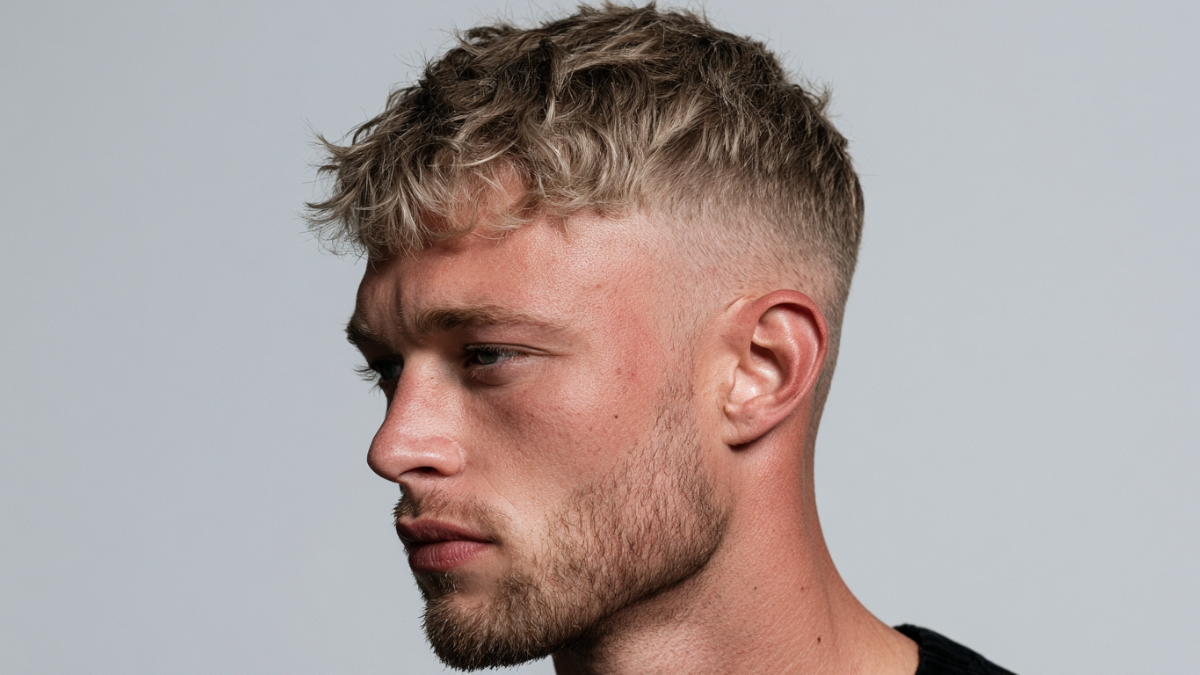
A messy crew cut should look like the texture is already there before you start styling it.
The basic crew cut already gives you the short, structured shape this version builds from.
That’s where this haircut either works or falls apart. If the top has been cut too evenly, you can keep adding clay and still end up with hair that looks stiff rather than naturally broken up.
In my opinion, the best versions need very little forcing. The cut should give you the movement first, then the product just helps hold onto it.

In this article
6 Messy Crew Cut Fade Styles
These messy crew cut fade styles show how much the haircut changes once you vary the fade height and work with the texture that’s already in your hair.
Messy Crew Cut with Mid Fade

If you’re unsure where to start, the mid fade is the version I’d recommend first.
It removes enough weight from the sides to make the messy top stand out, but it doesn’t create the same hard contrast you get from a skin fade or a very high fade.
That also helps the top and sides feel connected instead of making the textured hair look like it’s floating above the fade.
Messy Crew Cut with Skin Fade
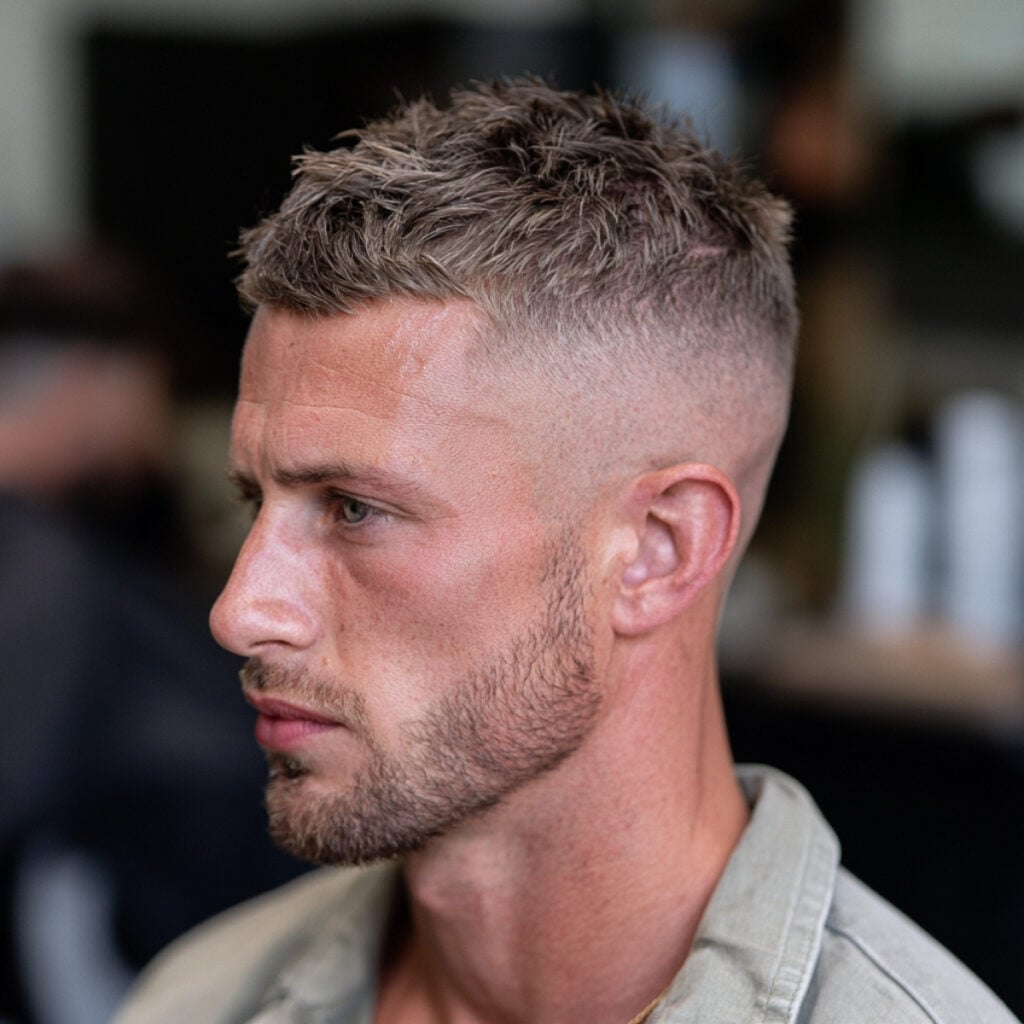
A skin fade takes the sides right down and makes the texture on top much more obvious.
That stronger contrast can look excellent, but I’d only choose it if you’re happy with the extra upkeep, usually a fresh trim every two weeks. Once the fade starts growing back, the haircut loses that fresh separation quickly.
It’s also less forgiving if the top hasn’t been textured properly. With so little hair left around the sides, any stiffness or heaviness through the top becomes much easier to notice.
Short Messy Crew Cut with High Fade

A short messy crew cut with a high fade keeps the top compact while taking the sides much higher around the head.
I like this when you want something short but still want the texture to be obvious. The shorter top also means there’s less hair to control in the morning.
The trade-off is that the high fade exposes more of your temples and head shape. If your hair is very fine or the top is cut too flat, the contrast can make the haircut look harsher than you expected.
Wavy Messy Crew Cut Fade

Wavy hair already gives this cut a lot of what it needs.
The natural bend through the top creates movement without relying on much product, so I’d avoid trying to smooth the wave out. Let it do the work.
I’d also be careful when drying it. If you brush or blow-dry the hair too smooth, you can remove the texture that made this version easier in the first place.
Curly Messy Crew Cut Fade

Curly hair gives the messy crew cut more height and separation through the top without needing much help.
Tighter curls usually benefit from a stronger fade because the difference between the dense top and shorter sides keeps the haircut from looking too uniform.
Looser curls give you more freedom with fade height. I’d choose the fade based more on how much contrast you want and how much of your temples you’re happy to expose.
Messy Crew Cut with Drop Fade

A drop fade curves lower behind the ear instead of running straight around the head.
That softer shape can work particularly well if your head is wider or rounder, because the fade follows the natural contour instead of cutting straight across it.
For me, this is one of the better choices if you want the messy crew cut to look less severe from the side while still keeping plenty of separation between the top and the faded area.
The Texture Has to Be in the Cut
A messy crew cut should already have some separation through the top before any product goes in.
If the top is cut too evenly, the hair tends to move as one block. That’s when you start reaching for more clay or paste, trying to force texture into a cut that was never given much movement to begin with.
What you want is some texture built into the haircut itself. Point-cutting, slicing or other texturizing techniques can break up the top so different sections fall at slightly different lengths instead of everything landing at the same level.
Straight hair usually shows the difference most clearly because there’s less natural movement helping the cut. Wavy or curly hair already brings some separation, but the top still needs to work with the way your hair naturally falls.
For me, that’s the real test. If the haircut only starts looking messy after a lot of product, I’d question the cut before blaming your styling.
The Fade Should Support the Top, Not Take Over
The fade changes how much attention the messy top gets, but I wouldn’t choose the highest or shortest option just because it looks more dramatic in a photo.
A mid fade is usually the safest place to start because it gives you enough contrast without taking too much off the sides. A skin fade pushes that contrast much harder and needs more upkeep, while a high fade shows more of your temples and head shape.
A drop fade makes sense if you want the sides to follow your natural shape more closely instead of cutting straight around the head.
The fade should make the top look better, not become the first thing you notice. If the sides are doing all the work and the top still looks flat or stiff, I’d change the balance rather than push the fade even further.
Most People Use Too Much Product
This is where a good messy crew cut can start looking worse very quickly.
You only need enough product to give the top a little control and keep the separation in place. Once the hair starts feeling heavy or sticking together, you’ve gone past the point where the product is helping.
I’d usually start with a dime-sized amount of matte clay or paste and work it through with your fingers rather than a comb. Keep the movement loose and avoid pressing everything flat or trying to place every section exactly where you want it.
The finish matters too. Anything too glossy or firm can make the haircut look fixed in place, which works against the whole point of keeping the top messy.
The biggest mistake is going back in with more product because one section doesn’t look perfect. A messy crew cut fade shouldn’t look perfect. Once the texture is there and the front is roughly where you want it, stop touching it.
The Morning After Usually Needs Water, Not More Clay
The next morning is where a lot of people make this cut harder to manage than it needs to be.
If one side has flattened overnight or the front is pointing in the wrong direction, I’d start with a little water rather than adding fresh product straight away. Wet the problem area, work it back into shape with your fingers, then let it dry before deciding whether it actually needs anything else.
What I’d avoid is layering new clay over yesterday’s product. That usually makes the hair feel thicker and duller, and the texture starts sticking together instead of breaking up naturally.
If there’s already a lot of product in the hair, wash it out and start again rather than trying to rescue it with another layer.
Water should be the first reset, in my experience. Product should only come back in if the hair still needs a little control once it’s dried.
Beard Beasts Verdict
A messy crew cut fade works best when most of the texture is already there before you reach for product.
I’d choose the fade based on how much contrast and upkeep you actually want, then keep the styling simple. The more you have to force the top into place every morning, the more I’d question whether the cut itself is doing enough.
For me, the best version is the one that still looks right when the hair moves a little, the fade has softened a little and the top isn’t perfectly arranged.
If you need a lot of clay just to make the haircut look messy, I’d fix the cut before buying another product.