
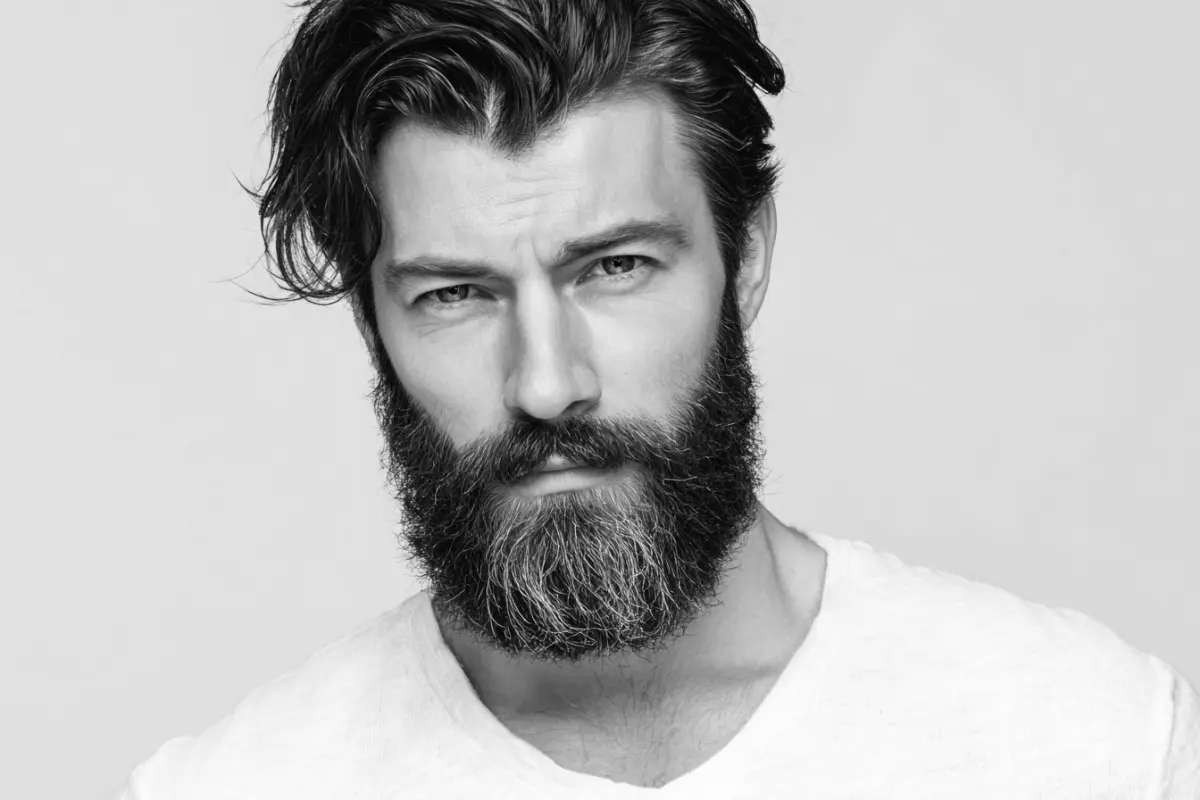
White hairs in the beard usually show up before a man is ready for them.
One near the chin. A few through the moustache. Then a patch near the jaw that shows up under any decent light and makes the whole beard look different.
That’s when most men start overreacting.
They pluck them, trim around them, or panic-buy beard dye and go too dark.
I don’t think white beard hairs are the real problem.
The problem is reacting to them badly.
Here is what white hairs in a beard actually change, and what I’d do before trying to hide them.

In this article
The First White Hairs Always Look Worse Than They Are
The first white hairs in a beard always feel worse than they look.

That’s because they usually show up where you notice every change: the chin, the moustache, the jaw, or the sideburns. One pale hair in the wrong place can pull your eye every time you look in the mirror.
It feels bigger than it actually is.
The contrast is what makes it stand out. If your beard is dark, one white hair can look brighter than everything around it. If the beard is coarse, that white hair can also look wirier, drier, or more stubborn than the rest.
That doesn’t mean the beard suddenly looks bad.
It just means your eye has found something new to obsess over.
I see this the same way I see a man noticing one uneven patch, one high cheek line, or one bit of moustache hanging over the lip. Once you notice it, you can’t stop looking at it. But most other people aren’t studying your beard that closely.
A few white hairs are usually not the problem.
The panic around them is.
White Hairs Make the Beard Look Different, Not Worse
White hairs change how a beard comes across.
They can make the beard look drier, rougher, or more uneven, even when the actual length hasn’t changed much. That’s why some men think the beard has suddenly gone messy when really the colour has just started showing more contrast.
This is where trimming matters, but not in the way most men think. I’d never single out individual white hairs for special treatment, that’s a separate problem covered further down. Trim the beard as a whole instead.
Keep the moustache off the lip. Keep the cheek line from getting too fuzzy. Keep the neckline where it belongs. If the chin and jaw have too much bulk, take that down carefully instead of attacking every white hair you can see.
The goal isn’t to hide the white.
The goal is to stop the beard looking neglected around it.
A beard that’s maybe ten or twenty percent white can still look sharp if the cheek line, neckline, and moustache are all kept tidy and the hair itself isn’t dry or brittle.
But if the moustache is heavy, the neckline is rough, and the beard is dry, the white hairs will make those problems stand out more.
That’s the difference.
The colour isn’t always the problem. It’s often just making a rough neckline or a heavy moustache harder to ignore.
Don’t Start Chasing Every White Hair

Plucking one white hair isn’t the end of the world.
Chasing all of them is where it gets stupid.
Once you start looking for every pale hair in the beard, you stop seeing the beard properly. You start pulling, trimming, picking, and overchecking, and before long the beard looks worse than it did with the white hairs left alone.
Plucking can irritate the skin. Trimming individual hairs can leave little dents. Keep doing it and you can end up with gaps that are far more obvious than the colour ever was.
I get why men do it.
One white hair near the chin can feel like it’s shouting at you. But removing one usually just makes you look for the next one.
That isn’t beard maintenance.
That’s panic.
If the white hairs bother you, deal with the whole beard instead. Keep the length shorter and even. Keep the outer lines tidy. Condition the beard hair so it doesn’t look dry and wiry.
But don’t turn every white hair into a separate job.
That’s how you make a normal change look like a problem.
Dye Only Works When It Doesn’t Look Like Dye

Beard dye isn’t the enemy.
Bad beard dye is.
The problem is that most men go too dark, too solid, or too even. They try to erase every white hair, and that’s usually what makes the beard look unnatural.
A beard isn’t meant to look like one flat block of colour.
Even dark beards have variation through the chin, moustache, cheeks, and jaw. When dye removes all of that, the beard can start looking painted on.
If you’re going to dye white hairs, go softer than you think.
Don’t match the darkest part of your beard. Match the overall colour, or go slightly lighter. It’s better for a few white hairs to show through than for the whole beard to look too dark against your face.
This matters even more around the moustache and chin, because that’s where dye can look harsh fastest, and it’s also where new white hair tends to show through soonest, so expect to touch it up every two to three weeks.
Good beard dye should make people think the beard looks better, not make them wonder if you dyed it.
If the dye becomes the first thing people notice, you have failed.
Some Beards Look Better With White Running Through Them
Some beards actually improve once a bit of white starts running through them. It can break up a heavy dark beard, add contrast, and make the beard more distinctive.
That doesn’t mean every man should let it go completely.
There’s a difference between white hairs that add something and a beard that looks dry, rough, or ignored. The colour can work in your favour, but only if the beard itself is being looked after.

I actually like a short boxed beard with a bit of white through the chin, as long as the edges are kept under control. A fuller beard with grey or white through the jaw can look better than one that has been dyed into one flat colour. Even a moustache can handle some white if the lip line is kept under control.
The white is rarely the actual issue.
It’s the condition around it.
If the beard is dry, the white hairs look wiry. If the neckline is rough, they make the whole beard look less cared for. If the cheek line is messy, the lighter hairs can make that mess easier to see.
But when the beard is trimmed properly and kept in decent condition, the white can work.
Sometimes it gives the beard more character than a flat dark colour ever could.
The Beard Beasts Verdict
White hairs in the beard aren’t the enemy.
The panic around them is usually what causes the damage.
Every overreaction covered above ends the same way: the beard looks worse than if the colour had just been left alone.
A few white hairs don’t ruin a beard. They just change how the beard looks. That means the edges, length, moustache, neckline, cheek line, and condition matter more.
Shape the beard as a whole rather than hair by hair, keep it conditioned, and stop chasing individual strands. If you do dye it, keep the result soft enough that it still looks like real hair.
For me, the best move is simple.
Treat the white hairs like part of the beard, not something you have to fight every morning.