
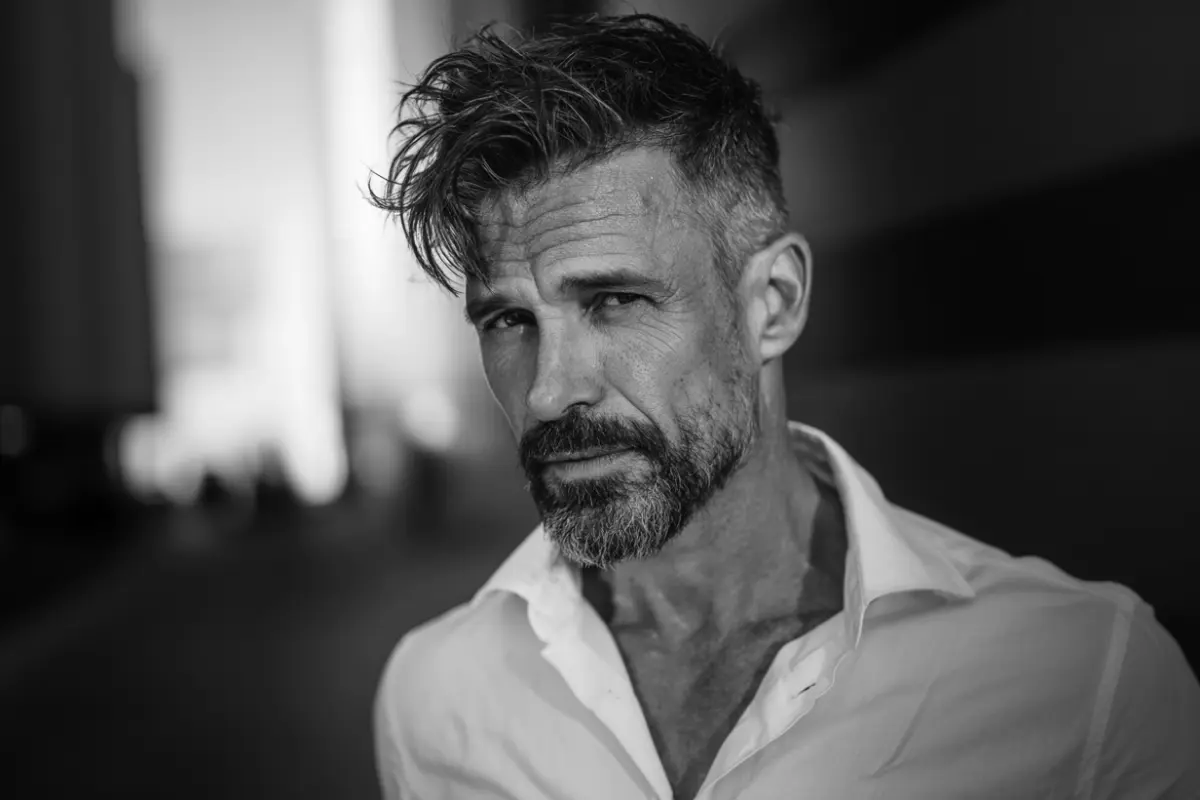
Haircuts for men over 40 stop being forgiving.
That is the real shift.
In your twenties, a decent barber could get away with a lot. The hair was usually thicker, easier to move, and less likely to expose weak decisions. After 40, that changes. Density softens. Grey hair turns rougher. Hairlines shift. Even men with plenty of hair usually notice it stops sitting the way it used to.
Ignore that, and the haircut starts dragging your whole face down.
This is why haircuts for men over 40 are not about chasing what used to work. They are about choosing shape, structure, and realism. The best ones sharpen the face, control rough texture, and make the hair look like it is still under control.
That is the job now.

In this article
Best Short Haircuts for Men Over 40
Short hair usually wins after 40 because it leaves less room for things to go wrong. Weak texture, thinning, soft edges, lazy upkeep. Done properly, short cuts clean all of that up fast.
The induction cut

The Induction Cut is a hard reset. Nearly no hair left. No softness. No room for excuses.
If your hair has turned patchy, weak, or badly uneven, this cuts straight through the problem. I would not recommend it to every man, because head shape matters more here than with almost anything else. But when it suits, it looks stronger than a man hanging on to tired fuzz.
The Burr Cut

This is where I would send a lot of men before a full shave.
The Burr cut is still very short, but it leaves just enough behind to soften the severity and keep the scalp from doing all the work. If the hair is thinning but not completely gone, the burr cut usually handles that better than men expect.
The Butch Cut

Blunt. Even. No styling to hide behind.
This one can look excellent, but only if the density still deserves that length. If the hair is thin all over, it can make every weak patch more obvious. If the density is still solid, though, it gives you a clean, no-nonsense short haircut without feeling overly severe.
The High and Tight

If the face is rounder or softer, the high and tight can sharpen everything up quickly. If the face is already long and narrow, it can make things look too drawn out.
It works best when you actually want contrast, not when you just want a short haircut and hope for the best. If you’re leaving some length on top, see how to style a high and tight so you know what that extra length will actually let you do.
The Short Textured Fade

One of the safest modern options after 40.
Texture on top breaks up weak density, and the fade keeps the sides clean without making the whole thing feel military. This is the kind of cut that can make thinning hair look smarter simply because it is no longer trying to sit neatly.
For a lot of men, this is where short hair starts making sense again.
The Full Shave

Sometimes this is the best haircut on the list. Not because it is fashionable, but because it stops the argument.
If the hair is hanging on badly, the full shave often looks younger than the half-committed alternatives. Men fight this for too long. Then they finally shave it and realise they should have done it earlier.
Not everyone suits it. More men suit it than they think.
Best Haircuts for Receding Hairlines After 40
A receding hairline is not the disaster. The disaster is the haircut pretending it is not there.
The Caesar Cut

The Caesar still works because it does one simple thing well. It brings the hair forward and softens the front edge.
I would keep this one tight. Too much fringe weight and it starts looking forced. Done properly, though, it can make recession look far less obvious without turning the whole haircut into a cover-up.
The French Crop

Better than the Caesar for most men.
The texture saves it. That rougher top and shorter fade stop the haircut from looking too neat, which matters once the hairline starts shifting. If you want a current haircut that handles recession well without making a fuss about it, this is one of the best choices on the page.
The Forward Swept Fringe

This one can work brilliantly or go wrong fast.
If the front still has usable density, the forward movement softens recession and helps break up the corners. If the front is already weak and stringy, though, this cut starts looking like it is trying to hide something. And once a haircut looks like it is hiding, you have already lost.
The Short Faux Hawk

This works when the middle still has strength.
That is the whole point. The center line gives the eye somewhere else to go, which makes the corners feel less important. I would keep it subtle. Men overdo this cut and end up with height that looks like compensation.
You want lift. Not theatre.
The Side-Swept Crew

Quietly one of the strongest options here.
It does not look like a recession haircut, which is exactly why it works so well. That small diagonal movement across the top softens the front line without making a show of it. If you want something controlled, sharp, and easy to live with, I would look here before I looked at anything more dramatic.
The Textured Crop

This is one of the best answers to recession and thinning at the same time.
Why? Because rough texture hides weakness better than tidy hair ever will. Hairlines look worse when the style is too neat. Once the top is broken up and the finish is matte, the eye stops focusing so hard on the missing bits.
That matters more than most men realise.
Professional Haircuts for Men Over 40
Professional should not mean boring. It should mean the haircut looks controlled and expensive without looking fussy.
The Classic Ivy League

This is still one of the best haircuts of all time.
You get shape, flexibility, and enough top length to keep it from feeling flat. It works well in offices, works well casually, and usually ages far better than sharper trend cuts. If a man wants one haircut that covers almost everything, this is always near the top of the list.
The Classic Side Part

Still good. Not automatic.
Too many men keep asking for side parts long after the hair has stopped supporting them. If the density is there, this can still look excellent. If the top has gone thin and flat, the side part can start exposing more than it helps.
I would only keep this if the hair still has enough body to justify it.
The Soft Swept Back

This is a much better option than a hard slick back for most men over 40.
It keeps movement in the hair. That matters. Once hair gets thinner or rougher, freezing it back with shine usually makes the weaknesses more obvious. The soft swept back works because it stays controlled without looking glued into place.
The Hard Part

I would be selective with this one.
On the right man, it sharpens everything. On the wrong man, it looks like too much haircut. If the hairline is already moving back or the top is softening, I usually would not bother. The line ends up making everything around it look weaker.
The Executive Contour

This can look excellent on the right head of hair.
It has authority. It has shape. It can make silver hair look expensive instead of old. But it needs real density and decent movement. On weak hair, it turns formal in the wrong way and starts aging the man instead of helping him.
Best Haircuts for Thinning Hair After 40
This is where honesty matters most.
The Modern Quiff

Only works if there is still enough hair at the front to build from.
If that density is there, the quiff can add lift and stop the scalp from showing too much. If it is not, the whole thing becomes a styling exercise built on air. I would keep this restrained. The older the man, the less forgiving an oversized quiff becomes.
The Messy Quiff

Usually better than the cleaner version.
That bit of disorder helps blur weaker areas, which is exactly what thinning hair needs. A messy quiff looks like texture. A neat quiff on thinning hair can look like strain.
The Short Pompadour

This one needs caution.
I know why men like the pompadour. It adds height. It looks strong in photos. But it demands more from the front hairline than a lot of men over 40 actually have. If the density is still there, fine. If not, I would not force it.
The Brush Up

Underrated.
It avoids hard part lines, gives the top some vertical movement, and does not need much styling to work. For men thinning across the top, this is often a smarter call than anything too neat or too directional.
The Spiky Texture Cut

This works because broken texture interrupts the light.
That is the real benefit. Smooth hair exposes thinning. Broken texture hides it better. The trick is not overdoing the spikes. Once it gets stiff or pointy, it starts looking dated very quickly.
The Textured Undercut

This is more selective than men think.
On the right man, it can look sharp because the sides are removed and the top still has enough density to carry the cut. On the wrong man, the contrast just exposes how little hair is left up top. I would only go here when the top still has some real strength.
Best Haircuts for Grey Hair
Grey hair changes everything because it changes texture before most men realise it has.
The Slick Back

This is a dangerous cut in the best and worst sense.
On thick grey hair, it can look strong and sharp. On weaker hair, it turns every recession point and scalp line into the main event. I would not call it a safe option, but I would call it a very good one when the hair still supports it.
The Short Comb Over

This is often better than people give it credit for.
The sweep gives structure, the length stays manageable, and the whole thing helps grey hair look tidier without becoming stiff. The mistake is making the comb over too neat. Once it gets too polished, it starts looking older than it should.
The Fade Comb Over

This is the stronger version.
The fade keeps the sides sharp and makes grey hair feel more current. For men with salt-and-pepper colour and decent top density, this can be one of the best combinations on the page. The contrast does a lot of work for you.
The Undercut Slick Back

This is bold, and I would only recommend it when a man can actually carry that boldness.
Strong features help. Strong density helps even more. When those things are in place, it can look excellent. When they are not, it looks like too much haircut for the hair available.
Medium and Long Hairstyles for Men Over 40
Longer hair can still work after 40. But this is where denial starts showing fastest.
The Bro Flow

This only works when the hair still deserves the length.
That is the blunt truth. If the density and movement are still there, the bro flow can look relaxed and strong. If the hair is thinning, dry, or weak through the ends, this style starts looking tired very quickly.
The Layered Shag

The layered shag needs a good barber.
When the layers are right, it gives medium-length hair movement and grit without turning messy. When the layers are bad, it just looks random. On straight or wavy hair with decent density, it can look excellent.
The Wavy Surfer Cut

Only worth doing if the wave is real.
If the texture is natural, this can feel relaxed without looking lazy. If you have to fake the wave every morning, I would move on. Men over 40 need less performance from their haircut, not more.
The Textured Mullet

This is not a safe haircut, and that is fine.
On the right man, it can look sharp and current. On the wrong man, it looks like a haircut trying to prove it has personality. I would only recommend it to men who genuinely suit that kind of edge.
The Medium Pompadour

More presence, more work, more risk.
If the density is still there, this can look very good. If not, it becomes another style asking more from the hair than the hair can actually give. I would rather see a man in a great quiff than a struggling pompadour.
The Mod Cut

Niche, but good when it lands.
It needs the right hair, the right face, and the right confidence. I would not call it universal, but I would call it useful for men who want a sharper, more individual medium-length shape without going too loose.
The Shoulder-Length Sweep

This can look excellent when the hair is still healthy.
It can also expose every weakness once the length stops being supported by density. That is the line. If the ends are going thin and stringy, cut it. Shoulder length only works when the hair still has something to say.
The Man Bun (Tied Back Knot)

This is not a disguise for weak long hair.
Too many men use it that way. If the hair is strong enough, fine. If tying it back exposes scalp and weak temples, I would not pretend the man bun is solving anything.
The Half-Up Tie (Practical & Stylish)

Usually better than the full bun because it keeps some softness around the face.
It still depends on decent quality through the length, though. If the hair has already gone limp or thin, this does not rescue it.
The Rocker Shag (Wispy & Layered)

This works best when the man wearing it can carry some roughness.
Not every man can. That matters. Done right, it looks lived-in with purpose. Done badly, it just looks scruffy.
The Long Slick Back (European Sophistication)

Very unforgiving.
If the density, hairline, and texture are all there, this can look refined and sharp. If they are not, the haircut exposes everything. I would be honest with yourself before choosing this one.
Hair Maintenance After 40
This is where men often start losing ground without noticing.
Grey hair gets drier faster. Thinning hair needs shape or it looks flatter every month. Dry scalp makes every haircut look worse. Trims matter more after 40 because a haircut starts looking tired much faster once the shape goes soft.
This is not vanity.
It is maintenance.
The men who keep looking sharp after 40 are usually not luckier. They are just more consistent. Better trims. Better moisture. Better product choices. Less denial.
That is usually the difference.
Frequently Asked Questions About Haircuts for Men Over 40
If your hair has changed, these are the questions worth clearing up before you choose the next cut.
What is the best haircut for men over 40?
There is no single winner, but short to medium cuts with texture on top and cleaner sides usually do the most work. They add structure, handle thinning better, and usually stay easier to manage.
Should men over 40 have long hair?
Yes, if the hair is still strong enough to carry it. If it has gone thin, dry, or stringy, long hair usually makes the weakness more obvious.
What haircuts should men over 40 avoid?
Very flat styles, overly slick finishes, and anything that depends on density you no longer have. After 40, honesty matters more than trend.
What hair shade makes men look younger after 40?
Usually whatever still looks natural. Grey and salt-and-pepper often look better than obvious dye. Once colour looks fake, it starts aging a man in a different way.
The Beard Beasts Verdict
The best haircuts for men over 40 are not about trying to get your twenties back.
They are about choosing a cut that works with the hair you actually have now. That means respecting the density, the texture, the hairline, and the amount of effort you are realistically willing to make.
That is the difference between a haircut that helps and one that quietly works against you.
So my view is simple.
Stop asking your barber for the version of you that used to exist. Choose the cut that looks right on the man you are now. That is usually when a haircut starts looking sharp again.